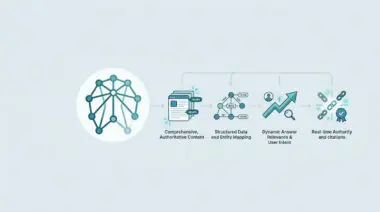
Key Points
- Overcoming the Attribution Deficit: Implement Semantic Entity Injection to secure visibility in AI Overviews, where 83% of citations bypass traditional top-10 organic rankings.
- RAG-Friendly Semantic Chunking: Utilize Pinecone Serverless and OpenAI Embeddings v4 to process content into 300-500 token blocks, eliminating vector drift during LLM retrieval.
- Automated Fact-Verification Pipelines: Integrate Grounding with Google Search APIs to pre-verify claims, leveraging statistics addition as the primary signal for AI citation confidence.
Table of Contents
The Invisible Wall of Generative Search
The harsh reality of modern search architecture is that generative engines actively ignore your highest-quality, meticulously researched content.
We call this the Attribution Deficit. It occurs when long-form content lacks the granular, machine-readable fact density required to trigger high confidence scores in Large Language Models.
Without structured entity mapping, AI agents simply cannot parse the expertise buried within your paragraphs. To bridge this gap, technical SEO must evolve toward Semantic Entity Injection and Citation Reinforcement.
This architectural shift transforms passive web pages into active data nodes. By engineering content specifically for AI ingestion, brands can forcefully inject their entities into the semantic layer of generative search.
Decoding the Metrics of Machine-Readable Authority
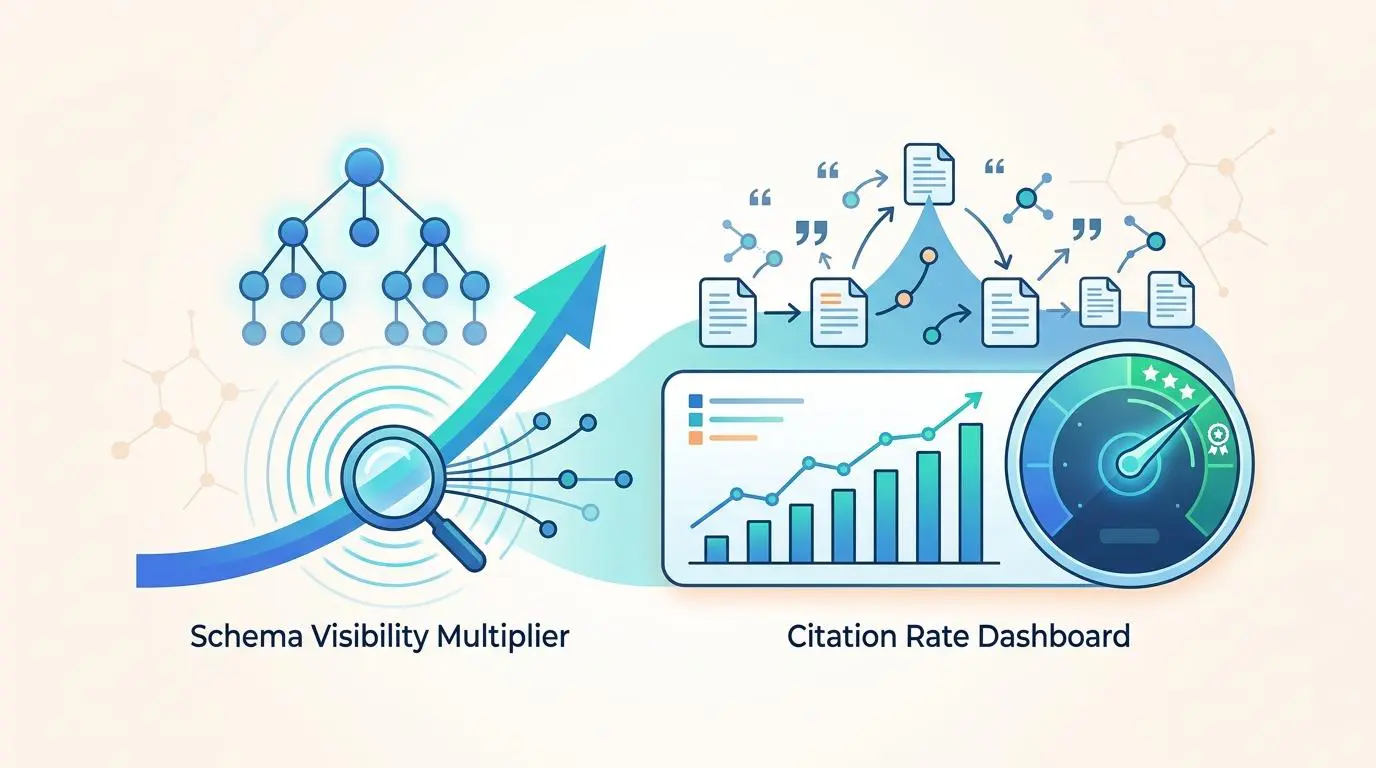
To understand the sheer scale of the Generative Engine Optimization (GEO) shift, we must analyze how retrieval models currently evaluate source authority.
Recent benchmark studies reveal an astonishing 83% Non-Top-10 Citation Rate. This means the vast majority of citations in AI Overviews are pulled from pages that fail to rank in traditional organic top-tier results.
This paradigm shift is further validated by Ahrefs research in 2026, which found that 28.3% of the most-cited pages by ChatGPT possess zero visibility in traditional Google search.
AI search visibility is now an entirely independent architectural requirement. It demands distinct optimization layers, such as granular FAQ schema and JSON-LD structured data.
Industry data confirms that pages utilizing these structured formats experience a massive visibility multiplier. Furthermore, the Princeton GEO framework proved that statistics addition is the single highest signal for increasing AI citation probability.
Plain-text competitors simply cannot compete with mathematically structured, fact-dense semantic nodes.
Engineering for the AI Overview Era

Google AI Overviews now trigger on nearly half of all global search queries. This massive footprint has fundamentally altered the traffic distribution landscape across the web.
Brands currently experience a catastrophic collapse in organic click-through rates for informational queries when they fail to secure a citation within the AIO carousel. Traditional link-based SEO is now mathematically ineffective for a vast portion of search volume.
To optimize for this, content engineers must simulate how models synthesize answers by passing data through advanced LLM APIs. This allows architects to measure entity salience before publishing.
Simultaneously, generative answer engines are seeing explosive user growth and high citation rates per response. Optimizing for these platforms requires aggressive Semantic Entity Injection to guarantee inclusion in their retrieval index.
Structuring RAG-Friendly Semantic Chunks
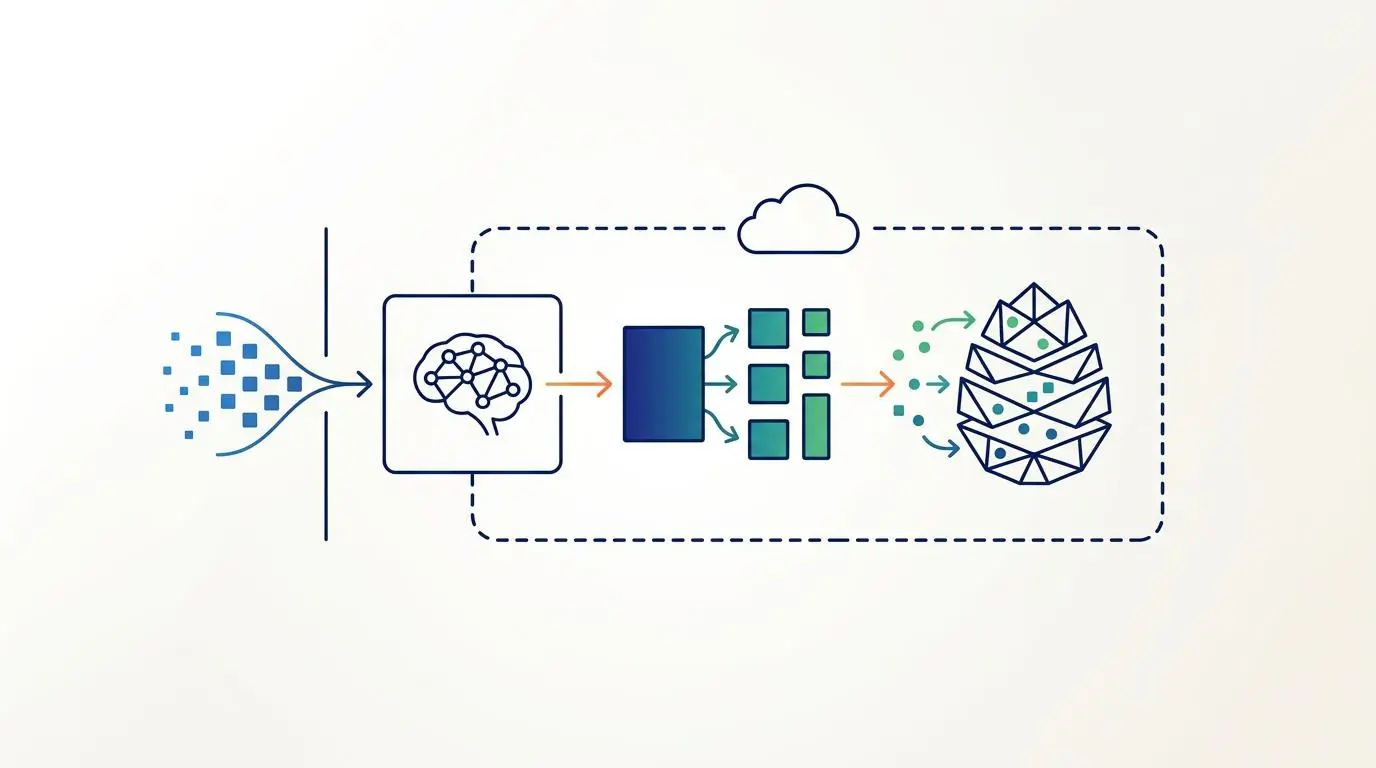
Modern GEO workflows have abandoned monolithic long-form content in favor of modular, RAG-friendly architecture. Large HTML blobs cause severe vector drift during retrieval.
When vector drift occurs, AI agents fail to extract relevant answers from sprawling pages, leading to low attribution despite high domain authority. The solution lies in precise semantic chunking.
Technical architects now utilize advanced vector databases and embedding models to parse content into mathematically distinct blocks. Automation focuses on creating tight, 300 to 500-token semantic chunks.
These tightly scoped chunks maintain perfect context for vector search engines. By serving pre-processed, isolated facts, websites become highly optimized data sources for modern AI search interfaces.
Real-Time Entity Resolution Automation

Static content creates a dangerous entity mismatch in the AI era. There is a systemic lag between brand activity and AI knowledge updates, resulting in severe LLM hallucinations.
When generative engines hallucinate about legacy products or defunct services, brand trust plummets. To combat this, enterprise workflows now mandate automated entity resolution.
Architects deploy automated Wikidata syncing alongside knowledge graph APIs. This ensures that brand entity nodes and product specifications are updated on a continuous basis.
This continuous data pipeline provides AI engines with real-time verification of expertise signals. It forces the LLM to overwrite outdated weights with fresh, structurally validated entity relationships.
Fact-Checking Pipelines for Citation Confidence
AI search engines actively penalize hallucination-prone domains at the retrieval level. Without automated fact verification, content generated by LLMs risks being filtered out of verified search responses entirely.
To guarantee inclusion, content engines now integrate grounding and fact-checking APIs directly into the publishing pipeline. This allows systems to pre-verify claims before deployment.
By ensuring every statistic and entity relationship is mathematically verifiable, brands achieve maximum citation confidence scores. This automated pipeline transforms raw text into an unassailable matrix of trusted data.
Citation Reinforcement relies heavily on this pre-validation. When an LLM detects high fact density backed by external consensus, it defaults to citing your semantic chunks over authoritative but unstructured competitors.
The Transition to Agentic SEO
The industry is rapidly pivoting from generative retrieval to Agentic SEO. Websites will soon be required to expose agent-ready endpoints using standardized context protocols.
This architectural evolution will allow autonomous AI agents to negotiate content inclusion directly. These agents will execute transactions autonomously without ever parsing standard DOM elements.
To survive this transition, brands must master Semantic Entity Injection today. The websites that structure their knowledge graphs now will become the foundational data layers for the autonomous agents of tomorrow.
Navigating the intersection of Generative Engine Optimization, AI search architecture, and workflow automation requires a sharp strategy. To future-proof your brand’s visibility in LLMs and scale with precision, connect with Andres at Andres SEO Expert.
Frequently Asked Questions
What is the Attribution Deficit in generative search?
Attribution Deficit occurs when high-quality, long-form content lacks the granular, machine-readable fact-density needed to trigger high confidence scores in LLMs. Without structured entity-mapping, AI agents fail to parse the expertise, causing the content to be ignored in generative responses.
Why do AI Overviews cite pages that do not rank in the traditional top 10?
Generative models use different retrieval metrics than traditional search. Research shows an 83% Non-Top-10 Citation Rate, meaning AI engines prioritize fact-density and structured data nodes over traditional link-based authority, often citing pages with zero traditional search visibility.
How does semantic chunking improve AI citation probability?
Semantic chunking breaks monolithic content into 300-500 token blocks. This modular architecture prevents vector drift during retrieval, ensuring AI agents can accurately extract specific facts. Pre-processed, isolated chunks are more likely to be used by vector search engines like Perplexity.
What is the impact of Google AI Overviews on organic CTR?
AI Overviews trigger on approximately 48% of global queries, causing a catastrophic 61% collapse in organic CTR for informational searches that do not secure a citation in the AIO carousel. This makes citation reinforcement a critical requirement for maintaining traffic.
How does automated entity resolution prevent LLM hallucinations?
By syncing brand data with Wikidata and the Google Knowledge Graph API, automated entity resolution provides real-time verification of expertise signals. This ensures LLMs have access to fresh, structurally validated data, forcing them to overwrite outdated weights and reducing brand-related hallucinations.
What is the transition to Agentic SEO and the Model Context Protocol?
Agentic SEO involves preparing websites for autonomous AI agents that use the Model Context Protocol (MCP). Instead of parsing standard DOM elements, these agents negotiate content inclusion and execute transactions directly through Agent-Ready endpoints and structured knowledge graphs.