Key Points
- The Citation Gap: Traditional SEO tools miss 88% of AI-cited content because it originates from zero-volume, hidden sub-queries generated by LLMs.
- RAG-Friendly Architectures: Modern retrieval pipelines require contextual folding and semantic chunking to satisfy the hyper-specific, multi-hop queries produced during fan-out.
- Predictive Intent Sharding: By 2027, search optimization will transition to real-time data-node management, pre-calculating fan-out branches before user prompts finish.
Table of Contents
The Invisible Search Engine
Imagine relying on a dusty library card catalog to find a modern digital masterclass. Meanwhile, the librarian has already read every book, synthesized the best answers, and is quietly whispering them to the patron next to you. This perfectly illustrates the shift from traditional search engine optimization to Generative Engine Optimization (GEO).
We are no longer trying to rank a single page in a static index. Instead, we are trying to earn a recommendation from an incredibly fast, highly opinionated AI assistant.
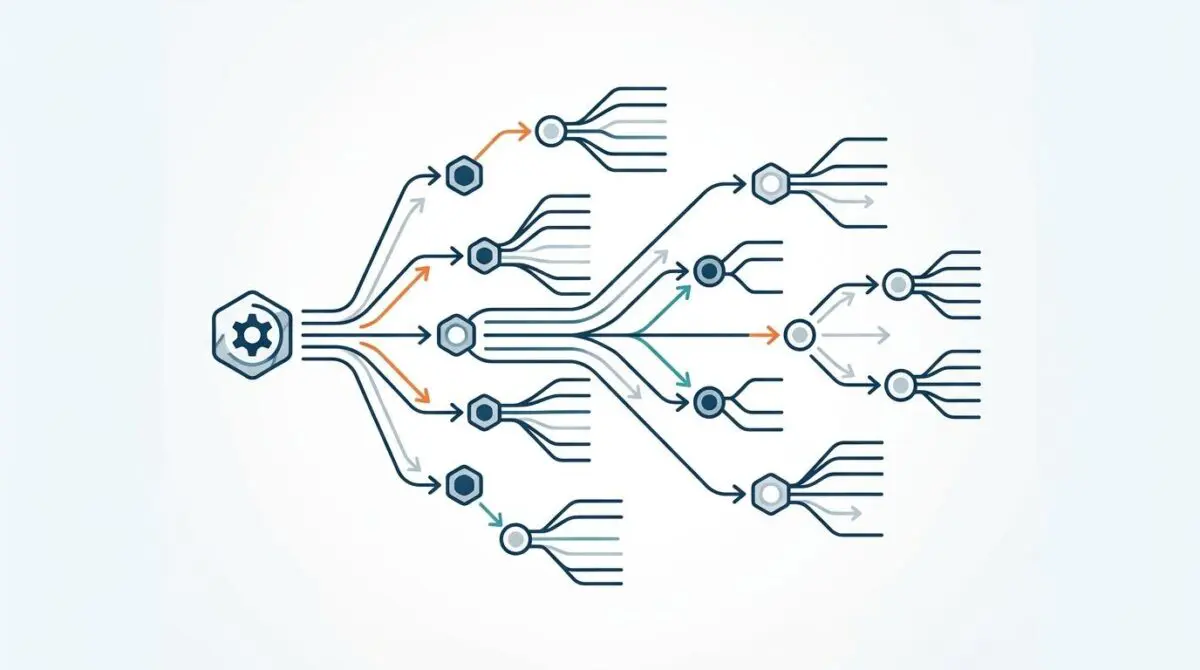
At the heart of this transition lies a hidden mechanism known as the query fan-out process. When a user asks an AI assistant a complex question, the engine does not just look for one keyword.
It instantly explodes that single prompt into dozens of invisible, parallel searches. This allows the AI to gather facts, verify claims, and build a comprehensive, multi-layered answer.
This creates a massive technical friction point we call the Citation Gap. Currently, 88% of AI-cited content originates from these hidden fan-out sub-queries. These queries possess absolute zero search volume in traditional keyword tools.
Legacy SEO audits are completely blind to these retrieval paths. This leaves major brands entirely omitted from modern AI Overviews because they simply do not speak the machine’s new language.
Decoding the Metrics Behind the Citation Gap

To truly grasp the magnitude of Query Fan-out Optimization (QFO), we must look at how generative engines scale their data retrieval. An AirOps research report from March 2026 revealed a staggering reality about modern search behavior.
They found that 95% of the sub-queries generated during the fan-out process show zero monthly search volume in legacy tools like Ahrefs or Semrush.
This metric fundamentally breaks the traditional keyword research model. You cannot optimize for what you cannot measure using old-school volume metrics.
Furthermore, as of mid-2026, top-tier generative engines like Gemini and GPT-5 operate on a 1:12 Intent Expansion Ratio. This means they routinely decompose a single human prompt into 8 to 12 parallel retrieval queries to ensure accurate multi-source grounding.
The complexity does not stop at volume or expansion ratios. As of early 2026, the average length of a ChatGPT fan-out query has doubled from 6 to 12 words.
Generative engines are actively prioritizing hyper-specific, long-tail precision over broad keyword matching to reduce synthesis hallucinations. If your content strategy is still chasing high-volume, short-tail keywords, you are missing the actual retrieval paths these AI agents use.
Rethinking AI Overviews and Perplexity

Google’s AI Mode and engines like Perplexity rely heavily on query fan-out to determine brand mentions and establish factual authority. When a user asks for the best enterprise software, the AI generates 2 to 5 hidden queries behind the scenes.
These background checks are designed to cross-reference claims across multiple authoritative domains. Only then does the engine present a final verdict to the user.
Because of this, optimization now requires targeting Consensus Clusters rather than single keywords. The challenge is that 66% of these synthetic queries are unpredictable by nature.
They are dynamically generated based on the specific context of the user’s prompt. This makes rigid keyword mapping obsolete in the era of generative intelligence.
This creates a severe real-world friction point for established companies. Brands ranking in the number one spot on traditional search engine results pages are frequently omitted from AI Overviews.
They fail to appear because their content lacks the structural depth required. It simply cannot satisfy the parallel consensus check queries triggered during the fan-out process.
Engineering RAG-Friendly Content Architectures
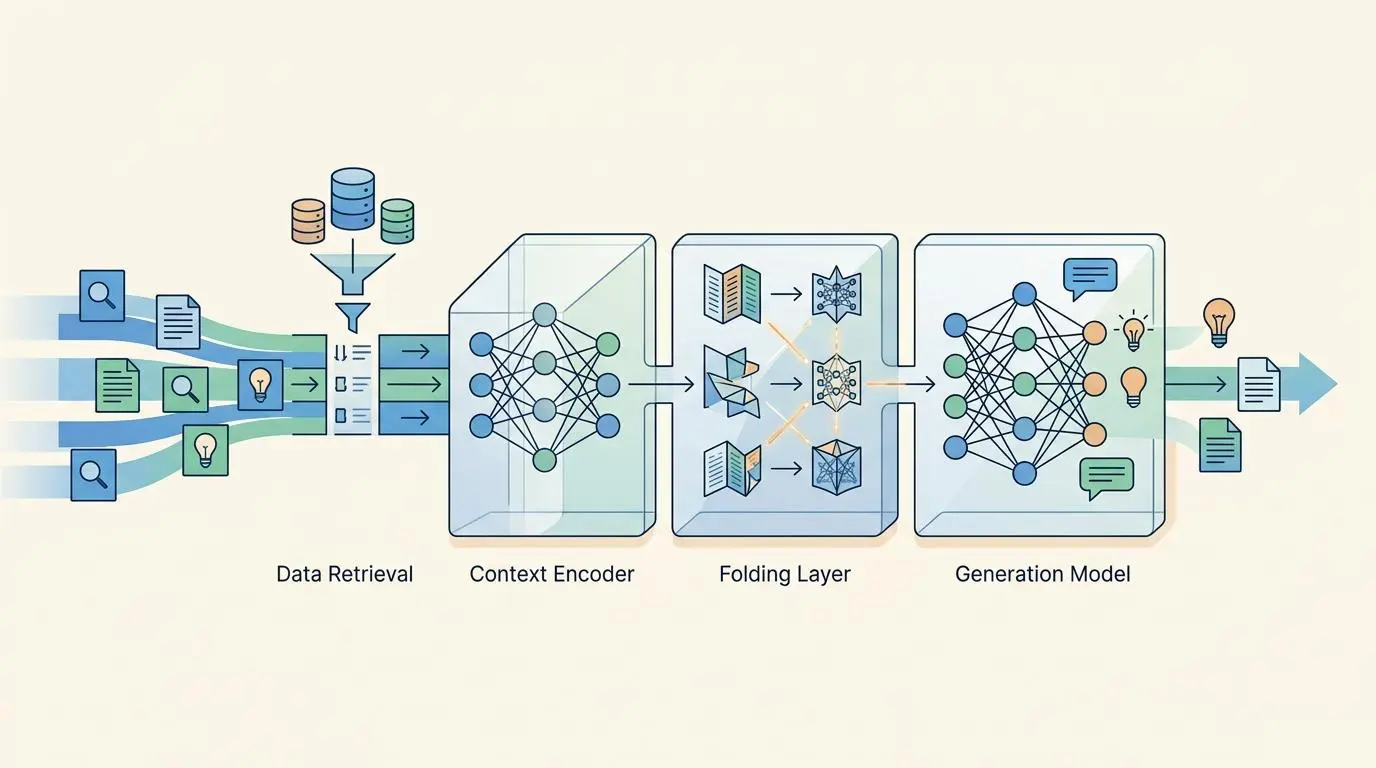
Modern Retrieval-Augmented Generation (RAG) pipelines in 2026 have evolved into a sophisticated four-step lifecycle. This process involves Decomposition, Synthetic Generation, Parallel Retrieval, and Synthesis.
To handle the massive token pressure created by multi-hop fan-out retrievals, advanced vector database systems like Qdrant and pgvector now prioritize Contextual Folding.
Contextual folding allows the AI to compress and store relationships between different pieces of information efficiently. However, many content architectures are not built to support this level of granular data extraction.
As a result, naive RAG systems experience a 40% retrieval failure rate when scanning traditional, monolithic web pages.
This failure occurs because static chunking methods cannot satisfy the hyper-specific, fanned-out queries generated by the AI. These queries often target distinct technical specifications, niche use cases, or price-anchoring data.
When this data is buried in long, unstructured paragraphs, the AI struggles to extract it. To survive, content must be semantically chunked and formatted as distinct, machine-readable data nodes.
Automating Entity Resolution for Knowledge Graphs

During the fan-out process, AI agents frequently inject Entity Qualifiers into their hidden searches. Terms like vs, reviews 2026, and pricing are automatically appended to verify brand-attribute associations.
To make sense of this scattered data, retrieval systems rely heavily on Knowledge Graph APIs to map out digital relationships.
These APIs help the AI resolve Ghost Entities, which are fragmented or hallucinated concepts created during deep fan-out branches. If your brand’s digital footprint does not explicitly connect your products to these qualifiers, the AI struggles.
It cannot build a coherent picture of your authority. The machine needs clear, unambiguous signals to trust your data.
The real-world consequence of this ambiguity is a total loss of narrative control. If a brand’s Knowledge Graph signals are weak, AI agents will bypass the company’s owned assets entirely.
Instead, they route their fan-out queries to third-party review aggregators like G2 or Reddit. This allows external communities to dictate the brand’s story to the end user.
Mapping Conversational Queries to Atomic Intents
The way humans interact with AI is inherently conversational and complex. Users frequently submit compound prompts that contain multiple questions, constraints, and conditions within a single sentence.
To process this, the initial prompt is automatically broken into atomic sub-queries using ‘RAG-Fusion’ and ‘Step-Back Prompting’ logic.
In 2026, AI search agents deploy specialized Routing LLMs to handle this workload. These routing models act as digital traffic controllers, mapping high-level user intent to specialized data silos.
They ensure that a question about enterprise pricing goes directly to a financial database. Meanwhile, a question about API features goes straight to technical documentation.
Traditional content often fails to address these Atomic Intents generated during the decomposition phase. Marketing pages tend to be too broad and fluffy.
This results in high retrieval rates but incredibly low citation rates. The synthesis engine ultimately discards the content for being too vague to answer the specific sub-query.
The Dawn of Predictive Intent Sharding
By 2027, the generative search industry will fully transition to Search as Code (SaC) and Predictive Intent Sharding. Search engines will no longer wait for a user to finish typing.
Instead, they will execute recursive self-improvement loops to pre-calculate fan-out branches in milliseconds. This allows them to anticipate the user’s needs before they are fully articulated.
This evolution effectively moves search optimization away from traditional, page-level keyword stuffing. The future belongs to real-time data-node management.
Brands must structure their knowledge bases to instantly feed predictive AI retrieval paths. Those who adapt will become the default answers for the next generation of digital assistants.
Navigating the intersection of Generative Engine Optimization, AI Search architecture, and workflow automation requires a sharp strategy.
To future-proof your brand’s visibility in LLMs and scale with precision, connect with Andres at Andres SEO Expert.
Frequently Asked Questions
What is the query fan-out process in Generative Engine Optimization?
Query fan-out is a mechanism where an AI assistant instantly explodes a single user prompt into dozens of invisible, parallel searches. This allows the engine to gather facts, verify claims across multiple sources, and synthesize a comprehensive answer rather than relying on a single static index entry.
Why do legacy SEO tools fail to capture AI search visibility?
Traditional tools are blind to the ‘Citation Gap’ because 95% of the sub-queries generated during the AI fan-out process have zero monthly search volume in legacy keyword databases. These tools cannot measure the hyper-specific, long-tail retrieval paths that generative engines use to build their responses.
What is the Intent Expansion Ratio for modern AI engines?
As of 2026, top-tier generative engines like Gemini and GPT-5 operate on a 1:12 Intent Expansion Ratio. This means a single human prompt is routinely decomposed into 8 to 12 parallel retrieval queries to ensure multi-source grounding and reduce the risk of synthesis hallucinations.
How does RAG-friendly content architecture improve AI citation rates?
RAG-friendly architecture uses semantic chunking and machine-readable data nodes to support ‘Contextual Folding.’ This prevents the 40% retrieval failure rate common in monolithic web pages, ensuring that AI agents can accurately extract specific technical data or price-anchoring information during the retrieval phase.
How do Knowledge Graph signals impact brand narrative control in LLMs?
AI agents use Knowledge Graph APIs to resolve entity qualifiers and associations. If a brand’s digital signals are weak or ambiguous, the AI will bypass owned assets and route fan-out queries to third-party aggregators like Reddit or G2, leading to a total loss of narrative control for the brand.
What are Atomic Intents in the context of AI search?
Atomic Intents are the highly specific, individual questions derived from a complex user prompt using logic like ‘RAG-Fusion.’ If content is too broad or vague, it may be retrieved but ultimately discarded by the synthesis engine for failing to precisely answer these decomposed sub-queries.