Key Points
- Automated Data Synthesis: Integrating LLMs transforms raw accounting data into digestible narrative summaries for instant executive review.
- Enhanced Security Protocols: Utilizing restricted Chat IDs and self-hosted automation instances ensures strict compliance with SOC2 and GDPR standards.
- Actionable Chat Interfaces: The shift toward interactive messaging apps allows leaders to approve budgets and trigger payments directly from their daily reports.
Table of Contents
- The Invisible Tax of Manual Extraction
- The Data Driven Shift in Financial Operations
- Eliminating the Daily Reporting Friction
- Synthesizing Insights with AI Agents
- Securing Financial Data in Transit
- Democratizing Automation with No-Code
- Preventing Silent Failures and Broken Flows
- Measuring the True ROI of Automation
- The Future of Actionable Financial Agents
The Invisible Tax of Manual Extraction
Your leadership team is likely making critical operational decisions using week-old financial data simply because pulling fresh numbers takes too long. The daily grind of manual export-transform-load cycles from accounting software creates a massive bottleneck for growing companies. This severe reporting lag leaves decision-makers operating in the dark during crucial market shifts.
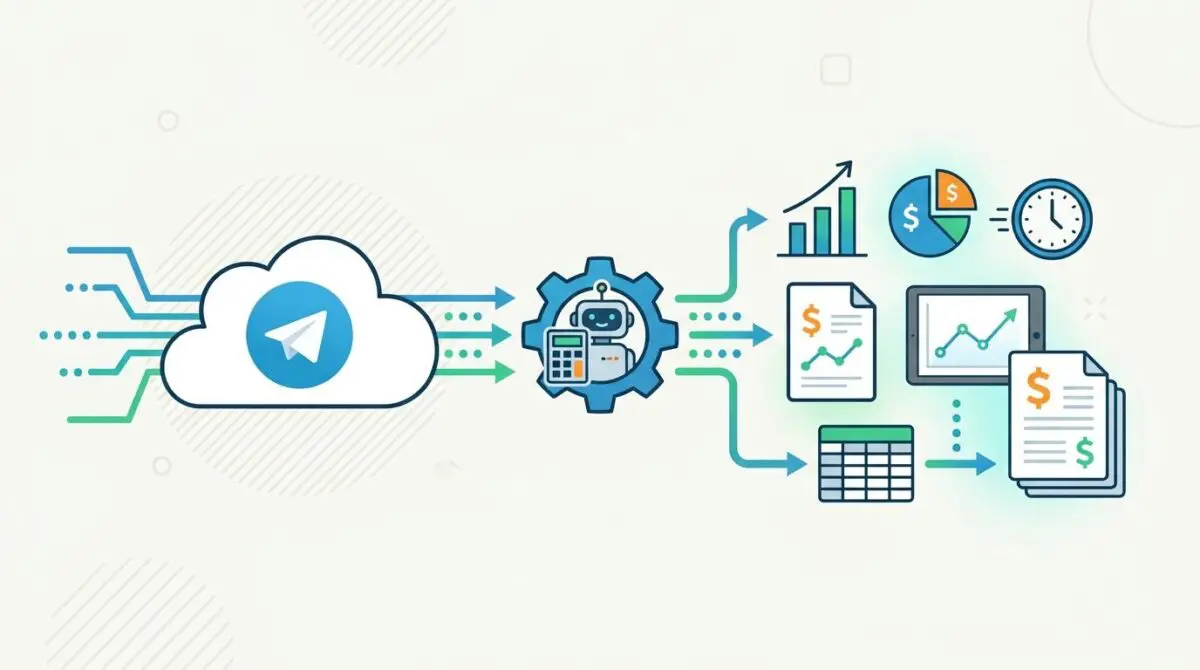
Agentic financial reporting via the Telegram Bot API completely eliminates this archaic workflow. By deploying intelligent automation, businesses can instantly synthesize complex data streams into actionable morning briefings. This modern architecture guarantees that executives start every single day with absolute financial clarity.
The Data Driven Shift in Financial Operations
Market Intelligence & Data
Automated Financial Adoption
According to a 2025 Gartner report, 72% of mid-market enterprises have shifted to real-time or daily automated financial reporting to combat economic volatility.
Time Reclaimed by CFOs
A 2026 McKinsey Global Institute study found that automated data synthesis for reporting saves finance leaders an average of 12.5 hours per week.
Narrative Data Preference
Research from Deloitte’s 2025 AI Insights report indicates that 94% of business owners prefer AI-narrated text summaries over spreadsheet attachments.
Workflow Automation Market
The global market for low-code workflow automation tools specifically targeting financial operations is projected to reach $6.8 billion by the end of 2026 according to IDC.
The push for immediate visibility is reshaping how companies operate at a fundamental level. Based on the 2025 Gartner report on the shift to real-time financial reporting, an overwhelming majority of mid-market enterprises have abandoned legacy monthly statements. They are now embracing daily automated workflows to stay agile during economic volatility.
Time remains the most expensive asset in any financial department. Reclaiming over a dozen hours per week allows financial officers to pivot from tedious data extraction to high-level strategic forecasting. This massive reduction in manual effort directly translates to leaner operational costs and faster decision-making.
Raw spreadsheets are universally disliked by busy executives who need immediate clarity. Business owners overwhelmingly prefer concise, AI-narrated text summaries that highlight exactly what matters most. This preference is highly practical, especially since technical constraints like Telegram’s 4096-character limit for messages force automations to deliver only the most critical insights.
The exponential growth of the workflow automation market highlights a permanent shift away from heavy enterprise software. Low-code platforms are empowering operations managers to build custom financial pipelines without relying on massive IT budgets. This democratization of technology ensures that businesses of all sizes can access enterprise-grade reporting capabilities.
Eliminating the Daily Reporting Friction

Business leaders often carry the heavy mental load of logging into multiple disparate dashboards every single morning. Navigating between various accounting and payment platforms just to understand the daily cash position is an exhausting ritual. This fragmented approach creates a massive reporting lag where decisions are based on outdated numbers.
Business owners and financial directors typically waste up to six hours weekly on manual data extraction. They are trapped in endless export-transform-load cycles that drain their energy and focus. The sheer volume of repetitive clicking and downloading creates unnecessary friction in the daily workflow.
Modern automation platforms completely eliminate this bottleneck. By triggering scheduled daily pulse workflows, these tools gather data across all platforms simultaneously. The result is a unified, accurate financial snapshot delivered automatically before your morning coffee.
Synthesizing Insights with AI Agents

Sending a raw CSV file to a messaging app is rarely helpful for a busy executive. Raw data is often ignored because leaders need synthesized insights rather than a wall of numbers requiring manual interpretation. Without context, raw metrics fail to tell the true story of a company’s financial trajectory.
This is where integrating large language models changes the game entirely. Agentic financial reporting via the Telegram Bot API transforms cold data into a fluid, narrative executive summary. The AI acts as a digital analyst, highlighting cash flow anomalies and burn rate trends in plain language.
Recent industry studies reveal that organizations using agentic summaries see a massive increase in executive engagement with internal communications. When data is easy to read and instantly accessible, leadership teams actually use it. This seamless integration ensures that critical financial narratives are never lost in translation.
Securing Financial Data in Transit
Handling sensitive company financials requires absolute precision and ironclad security protocols. The risk of exposing personally identifiable information or proprietary revenue metrics through third-party clouds is a valid concern for any operations director. Sending sensitive data across the internet demands a highly secure pipeline.
To mitigate these risks, developers leverage the Telegram Bot API using strictly restricted chat IDs and robust IP whitelisting. This ensures that the automated daily report can only be delivered to authorized executive devices. The communication channel becomes a locked vault, inaccessible to outside actors.
Self-hosted automation instances are heavily preferred over cloud-only software platforms. Hosting the automation infrastructure internally helps companies maintain strict data sovereignty and compliance standards. This architectural choice guarantees that your financial data never rests on shared, public servers.
Democratizing Automation with No-Code
Historically, building a custom financial bot required hiring expensive developers to write complex API scripts. This financial barrier kept advanced automation out of reach for many growing businesses. The reliance on specialized coding talent made workflow updates slow and cumbersome.
The landscape has drastically changed with the rise of intuitive visual automation platforms. Operations managers can now visually map out complex data flows and build robust bots in under thirty minutes. The visual interface completely removes the need for traditional programming syntax.
These platforms also introduce critical human-in-the-loop financial approvals. A bot can automatically compile the daily report, but it will pause and ask an operations manager for confirmation before broadcasting it to the executive team. This perfect blend of automation and human oversight ensures absolute data accuracy.
Preventing Silent Failures and Broken Flows
Automation is only valuable when it is reliable, and poorly designed workflows are prone to silent failures. A broken flow means the daily report simply does not arrive, leaving the executive team with zero visibility during critical morning meetings. These silent errors quickly erode trust in the automated system.
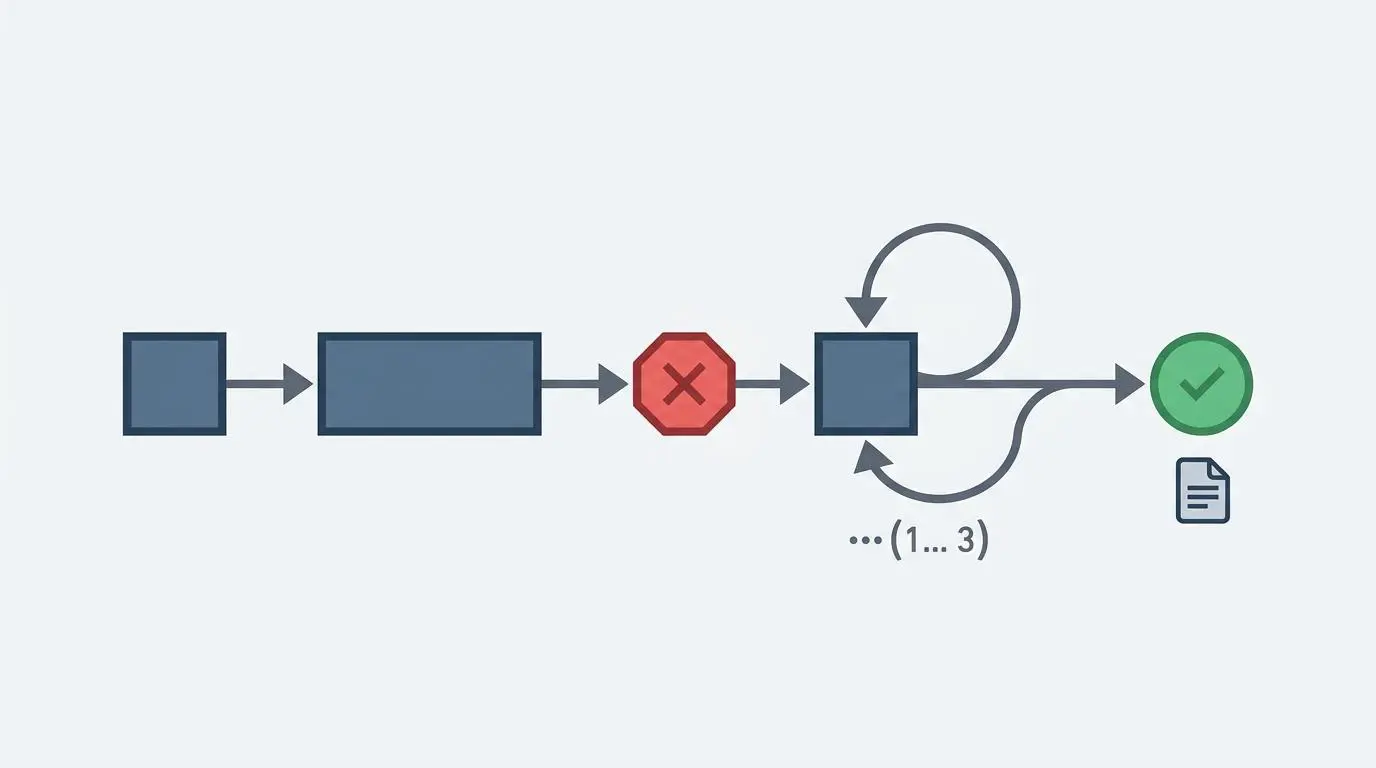
One common pitfall involves hitting aggressive API rate limits from banking data providers. When a workflow attempts to pull too much data at once, the provider blocks the request entirely. Developers must implement smart retry logic and pagination to handle these limits gracefully.
Additionally, large data payloads can easily exceed character constraints within messaging platforms. Designing the workflow to intelligently truncate data or split messages is essential for consistent delivery. Proper error handling ensures the bot notifies the administrator immediately if a data pull fails.
Measuring the True ROI of Automation
The high cost of paying skilled human capital to perform repetitive copy-paste tasks is a massive drain on company resources. Highly educated financial professionals should not spend their days moving numbers between software tabs. This manual labor represents a significant opportunity cost for the business.
Replacing manual reporting tasks with a streamlined bot saves an average of fifteen hours per month per department. This reclaimed time can be redirected toward strategic tax planning, budget optimization, and financial forecasting. The return on investment is immediate and highly measurable.
Furthermore, automated systems do not take vacations, call in sick, or make typographical errors. The consistency and accuracy of a machine-driven workflow far surpass human capabilities in repetitive data entry. Investing in automated reporting infrastructure yields compounding dividends in operational efficiency.
The Future of Actionable Financial Agents
The current state of automated reporting is highly efficient, but the next evolution will completely redefine executive workflows. Financial bots are rapidly transitioning from read-only notification systems to fully actionable agents. The communication channel will soon become a centralized command center for financial operations.
Executives will leverage interactive mini apps to engage directly with the daily report interface. If the morning summary highlights an overdue vendor invoice, leadership can trigger the payment securely within the chat window. Budget allocations and expense approvals will be executed with a single tap from a mobile device.
Navigating the intersection of technology, workflows, and operational efficiency requires a sharp strategy. To future-proof your business architecture and scale with precision, connect with Andres at Andres SEO Expert.
Frequently Asked Questions
What is Agentic Financial Reporting?
Agentic Financial Reporting uses intelligent AI agents to automate the synthesis of complex financial data streams into actionable narrative briefings. This modern architecture eliminates manual export-transform-load cycles and provides leadership teams with absolute financial clarity every morning.
How can a Telegram Bot improve financial decision-making?
By leveraging the Telegram Bot API, businesses can deliver automated daily pulse reports directly to authorized executive devices. This removes the friction of logging into multiple disparate dashboards and ensures that decisions are based on real-time data rather than week-old reports.
Is it secure to send sensitive company financials through Telegram?
Yes, security is maintained by using restricted Chat IDs and robust IP whitelisting to ensure reports are only delivered to authorized users. Additionally, hosting automation infrastructure like n8n internally helps companies maintain strict GDPR and SOC2 data sovereignty.
Why are AI-narrated summaries preferred over traditional spreadsheets?
Research indicates that 94% of business owners prefer AI-narrated text because it provides synthesized insights and highlights critical trends in plain language. AI agents act as digital analysts, transforming cold data into a fluid narrative that is easier to interpret than raw CSV files.
What tools are used to build these financial automation workflows?
Modern low-code platforms such as n8n, Make.com, Relay.app, and Activepieces are used to democratize automation. These tools allow operations managers to visually map complex data flows and include human-in-the-loop approvals to ensure high data accuracy.
How do you prevent errors like broken data flows or silent failures?
To ensure reliability, developers implement smart retry logic and pagination to handle API rate limits from banking providers. Workflows are also designed to intelligently truncate data to stay within Telegram’s 4096-character limit, preventing delivery failures.