Key Points
- Generative AI-Driven Construction Orchestration dismantles the data tax, utilizing LLMs and computer vision to reduce administrative hours by up to 50%.
- Predictive Scheduling Engines and real-time site monitoring simulate thousands of project sequences, enabling a responsive approach to dynamic jobsite constraints.
- Agentic Construction and semantic site intelligence allow autonomous networks to resolve design conflicts and orchestrate supply chains without human intervention.
Table of Contents
The Chaos of the Modern Jobsite
The invisible cost of manual work is bleeding construction budgets dry before the foundation is even poured. Project managers lose countless hours chasing down fragmented data silos and waiting on delayed site-to-office reports.
This administrative friction creates a massive productivity gap across the industry. Large-scale projects routinely finish 20% behind schedule and up to 80% over budget simply because critical information remains inaccessible.
The solution to this operational chaos is Generative AI-Driven Construction Orchestration. By unifying disconnected workflows, this technology transforms static blueprints and delayed reports into a living, automated ecosystem.
The Data Backing the Transformation
Market Intelligence & Data
AI Adoption Pivot
According to SORCI 2026 data, AI adoption in the construction sector skyrocketed from 37.8% to 66.7% in a single year as firms moved from experimentation to essential operations.
Generative AI Growth
Precedence Research verified in 2026 that the global generative AI in construction market will maintain a 34.18% CAGR through 2035, driven by rapid cloud service integration.
Safety Incident Reduction
According to a 2026 report by Tommaso Maria Ricci, firms using computer vision-based safety monitoring have documented a reduction in safety incidents exceeding 40%.
2026 Market Value
Mordor Intelligence reports that the AI in construction market size is estimated at $12.94 billion in 2026, up from $11.1 billion in 2025.
According to recent industry data, the pivot from 37.8% to 66.7% AI adoption marks a critical turning point. Firms no longer treat artificial intelligence as a speculative experiment but as a core operational necessity to survive razor-thin margins.
This rapid integration proves that automated orchestration is becoming the new baseline for competitive bidding.
The explosive trajectory of this technology is undeniable, as the global generative AI in construction market will maintain a 34.18% CAGR through 2035. This growth is heavily driven by rapid cloud service integration, allowing even mid-sized contractors to access enterprise-grade machine learning tools.
As cloud infrastructure becomes more robust, the barrier to entry for advanced project management systems continues to plummet.
Beyond efficiency, the integration of computer vision is fundamentally changing jobsite risk profiles. Recent reports highlight a staggering 40% reduction in safety incidents for firms utilizing these visual monitoring systems.
By proactively identifying hazards before they escalate, companies protect their workforce while simultaneously lowering crippling insurance premiums.
The financial footprint of this technological shift is expanding rapidly, with the AI in construction market size estimated at $12.94 billion in 2026. This jump from $11.1 billion in 2025 represents a massive influx of capital directed specifically at solving stubborn logistical bottlenecks.
Investors and enterprise leaders alike recognize that intelligent automation is the most reliable path to profitability.
Thematic Deep Dives into Orchestration
Eradicating the Construction Data Tax

Construction project managers currently drown in a massive data tax that stifles high-level decision-making. A single large-scale project can easily generate over 10,000 documents across its lifecycle.
This forces highly paid teams to manually search through thousands of PDFs for critical compliance, insurance, and specification details. This endless administrative burden severely limits the capacity of senior leaders to manage the physical build and anticipate structural challenges.
Modern tools actively dismantle this bottleneck using advanced computer vision and large language models. These systems automate manual takeoffs and rapidly scan dense contract documents for compliance risks.
By offloading this cognitive load to AI, project teams reduce their administrative hours by an impressive 30% to 50%.
Dynamic Scheduling and Smart Site Monitoring

Static Gantt charts and human-only site monitoring simply cannot adapt to the dynamic, high-risk nature of active commercial jobsites. When unexpected weather shifts or global supply chains stall, traditional schedules break down instantly.
This fragility causes cascading delays across every trade, turning minor setbacks into multi-million dollar scheduling conflicts. The modern construction environment requires a fluid, highly responsive approach to logistics, material staging, and worker safety.
Predictive scheduling engines are revolutionizing how project sequences are planned and executed. These platforms simulate thousands of potential paths based on real-time constraints such as labor availability, weather patterns, and material supply.
Simultaneously, computer vision systems provide real-time PPE compliance alerts and restricted-zone monitoring to prevent accidents before they occur.
The Bottom Line of Workflow Compression
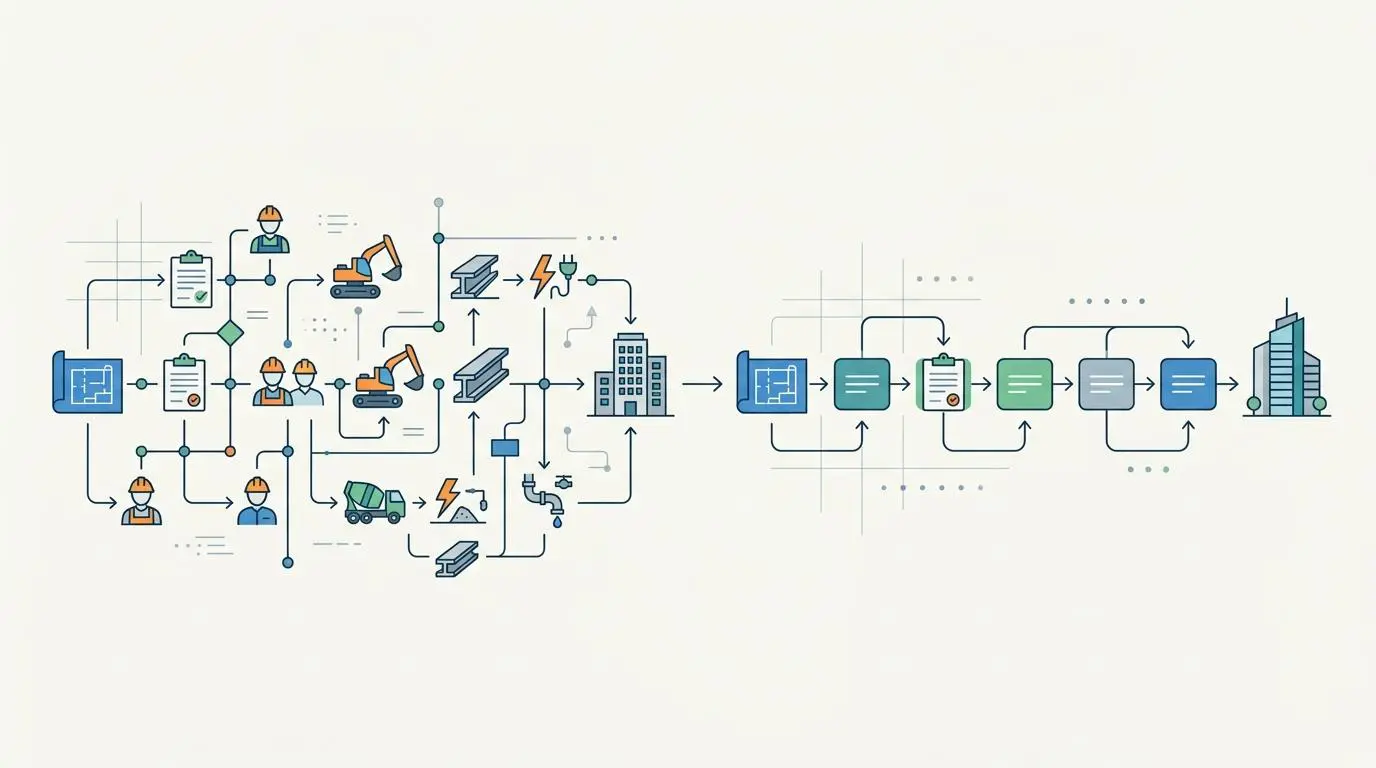
Razor-thin margins in the commercial construction sector leave absolutely zero room for error. The typical 5% project cost loss caused by rework and scheduling delays is no longer an acceptable industry standard.
Every miscommunication, misplaced document, or delayed material delivery directly erodes the profitability of the entire build. To combat this financial drain, early adopters of AI construction management platforms report remarkable 10% to 25% cost reductions in project delivery.
The market is aggressively shifting toward workflow compression, supported by billions in venture capital flowing into AI and ML startups. In this new financial landscape, AI generates a verified 1.14% revenue uplift for every new technological tool implemented on site.
Bridging the Talent Gap with Digital Crew Members
The aging workforce and a severe talent shortage have created an operational bottleneck that manual processes can no longer support. The industry currently faces a massive labor deficit of nearly 500,000 workers.
This demographic shift directly threatens the viability of future infrastructure projects and urban development. Artificial intelligence is stepping in as a highly capable digital crew member to bridge this critical gap.
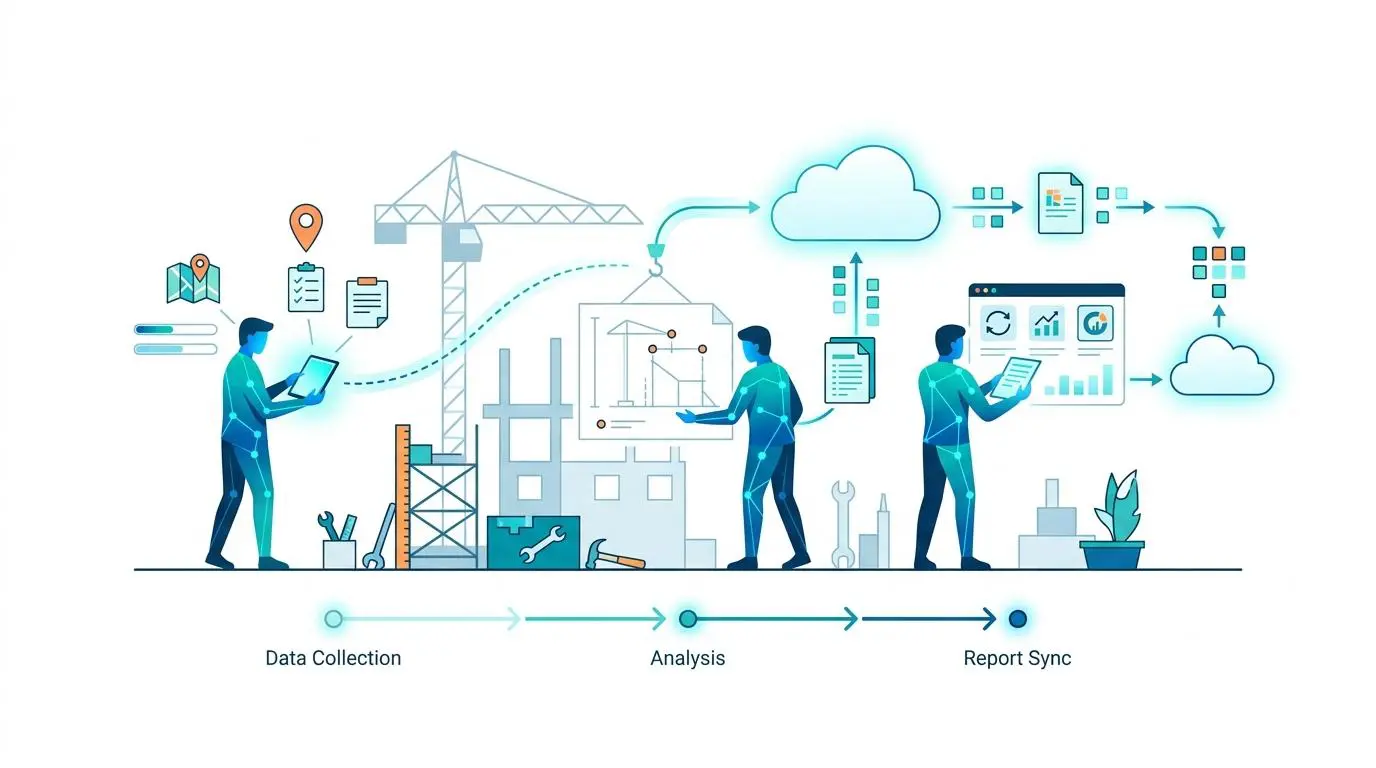
Rather than replacing skilled trades, AI agents automate tedious reporting and progress tracking through ambient capture via voice and video. This strategic offloading allows senior superintendents to focus their valuable time on mentoring younger staff and solving complex site problems.
The Dawn of Agentic Construction and Robotics
Manual site inspections have historically been intermittent, subjective, and highly error-prone. This leads to progress reporting that is often weeks out of date by the time it reaches stakeholders.
This lack of real-time visibility prevents agile decision-making and completely obscures critical path delays until it is too late. The next evolution solving this is agentic construction, where networks of AI agents operate across design and engineering to orchestrate supply chains autonomously.
Autonomous drone-based quantity surveying and robotic site monitoring are moving rapidly from experimental pilots to standard commercial practice. Robotic platforms now continuously scan environments to feed perfectly accurate spatial data back to the central orchestration engine.
Semantic Site Intelligence and Beyond
The industry is rapidly approaching an era of semantic site intelligence, where project managers can query physical jobsites like a database using natural language. This capability enables real-time BIM model adjustments and automated materials procurement driven entirely by autonomous AI agents.
Isolated AI pilots have officially evolved into cohesive networks of AI agents. These systems now operate across design, engineering, and construction in fully connected digital ecosystems.
These intelligent networks allow massive commercial projects to seamlessly resolve design conflicts and orchestrate complex schedules without requiring continuous human intervention. The future of the built environment belongs to those who embrace this automated orchestration today.
Navigating the intersection of modern technology, software architecture, and business growth requires a sharp strategy. To future-proof your tech stack and scale with precision, connect with Andres at Andres SEO Expert.
Frequently Asked Questions
How does Generative AI improve construction project efficiency?
Generative AI unifies fragmented data silos and automates manual takeoffs, which can reduce administrative burdens by 30% to 50%, allowing project managers to focus on physical site progress.
What is the impact of AI on jobsite safety?
According to 2026 data, firms utilizing computer vision-based safety monitoring have documented a reduction in safety incidents exceeding 40% by proactively identifying hazards and monitoring PPE compliance.
How much is the AI in construction market expected to grow?
The global generative AI in construction market is estimated to reach $12.94 billion by 2026 and is projected to maintain a 34.18% CAGR through 2035 as the industry moves toward essential AI operations.
Can AI help address the construction labor shortage?
AI acts as a digital crew member to bridge a projected 500,000-worker deficit by 2026. It automates tedious reporting and progress tracking, allowing skilled trades and senior staff to focus on high-value mentorship and site problems.
What is agentic construction in the context of modern jobsites?
Agentic construction refers to networks of AI agents and autonomous robotics—such as drones and platforms like Boston Dynamics Spot—that orchestrate supply chains and perform real-time, accurate spatial data surveying.
What financial ROI do firms see from AI orchestration?
Early adopters report cost reductions in project delivery ranging from 10% to 25%, alongside a verified 1.14% revenue uplift for every new technological tool implemented on site.