Key Points
- Agentic Orchestration: Mistral’s Temporal-powered ‘Workflows’ engine provides the state persistence required to move multi-agent AI pipelines from prototype to production.
- Physics-Grounded RAG: The release of Mistral Forge bypasses generic retrieval by enabling full-lifecycle supervised fine-tuning on highly proprietary, regulated datasets.
- Compute Optimization: Dedicated infrastructure at the Les Ulis data center eliminates the VRAM compute tax by optimizing hardware specifically for sparse MoE architectures.
Table of Contents
The High Cost of Borrowed Brainpower
Renting frontier AI models today feels like living in a luxury hotel to manage your daily life. The amenities are spectacular, but you never own the furniture, privacy is nonexistent, and the daily rate will eventually drain your budget.
For years, enterprises have accepted this costly compromise. Organizations routinely trade their digital sovereignty and massive amounts of capital just to access top-tier inference capabilities.
This reliance on generic, third-party infrastructure creates a dangerous friction point. It leaves companies vulnerable to data exposure and severely cripples their ability to scale AI operations profitably.
Mistral AI La Plateforme has emerged as the definitive architectural solution to this bottleneck. By providing a vertically integrated, sovereign ecosystem, it allows enterprises to finally build, own, and deploy autonomous workflows.
Organizations can now achieve this without paying the exorbitant compute tax of traditional frontier models.
Decoding the ROI of Sovereign Compute

Mistral AI saw its annual recurring revenue skyrocket from $20 million to $400 million in a single year by early 2026. This staggering financial leap, verified by CEO Arthur Mensch, is far more than a vanity metric for investors.
This massive surge represents a fundamental shift in how global organizations allocate their enterprise AI budgets. Companies are actively abandoning bloated, one-size-fits-all models in favor of highly optimized infrastructures that protect proprietary data.
A critical driver of this adoption is the massive 256,000-token context window of the Mistral 3 model family. Verified by NVIDIA technical specifications, this memory capacity allows an entire technical manual or codebase to be processed in a single prompt.
The efficiency of this processing is powered by their sparse Mixture-of-Experts (MoE) architecture. This design drastically reduces the computational load while maintaining frontier-level reasoning capabilities.
For organizations needing localized control, this same efficiency scales down to open-weight Small Language Models (SLMs) like ‘Ministral 3’. It proves that massive token windows do not require massive hardware footprints.
Orchestrating Autonomous Agentic Pipelines
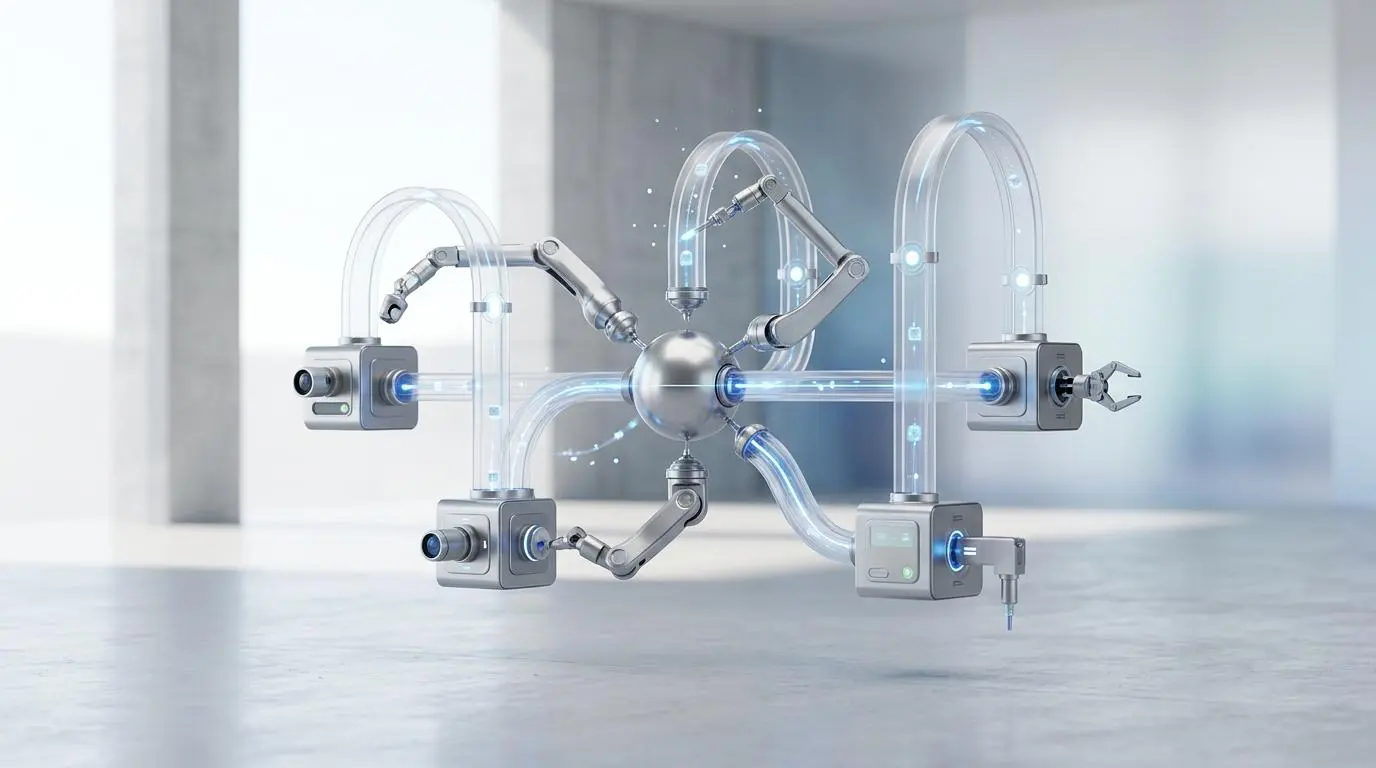
Enterprises consistently struggle to move agentic proofs-of-concept into real-world production. Standard LLM calls simply lack the state persistence and observability required for long-running, complex business processes.
When an AI agent needs to pause a workflow, wait for a database update, and resume a task three hours later, standard stateless APIs fail. This inevitably leads to broken pipelines, lost data, and frustrated engineering teams.
Mistral directly addressed this bottleneck with the launch of ‘Workflows’ in public preview in April 2026. This Temporal-powered orchestration engine is natively built into the Mistral Studio.
It enables developers to construct highly durable, fault-tolerant agentic pipelines using a streamlined Python-based SDK. If a server crashes mid-task, the workflow remembers its exact state and resumes seamlessly upon reboot.
Furthermore, this engine integrates directly into the ‘Le Chat’ interface. This allows for critical human-in-the-loop approvals, ensuring that autonomous agents can safely execute high-stakes operations under strict human supervision.
Forging Physics-Grounded Proprietary RAG
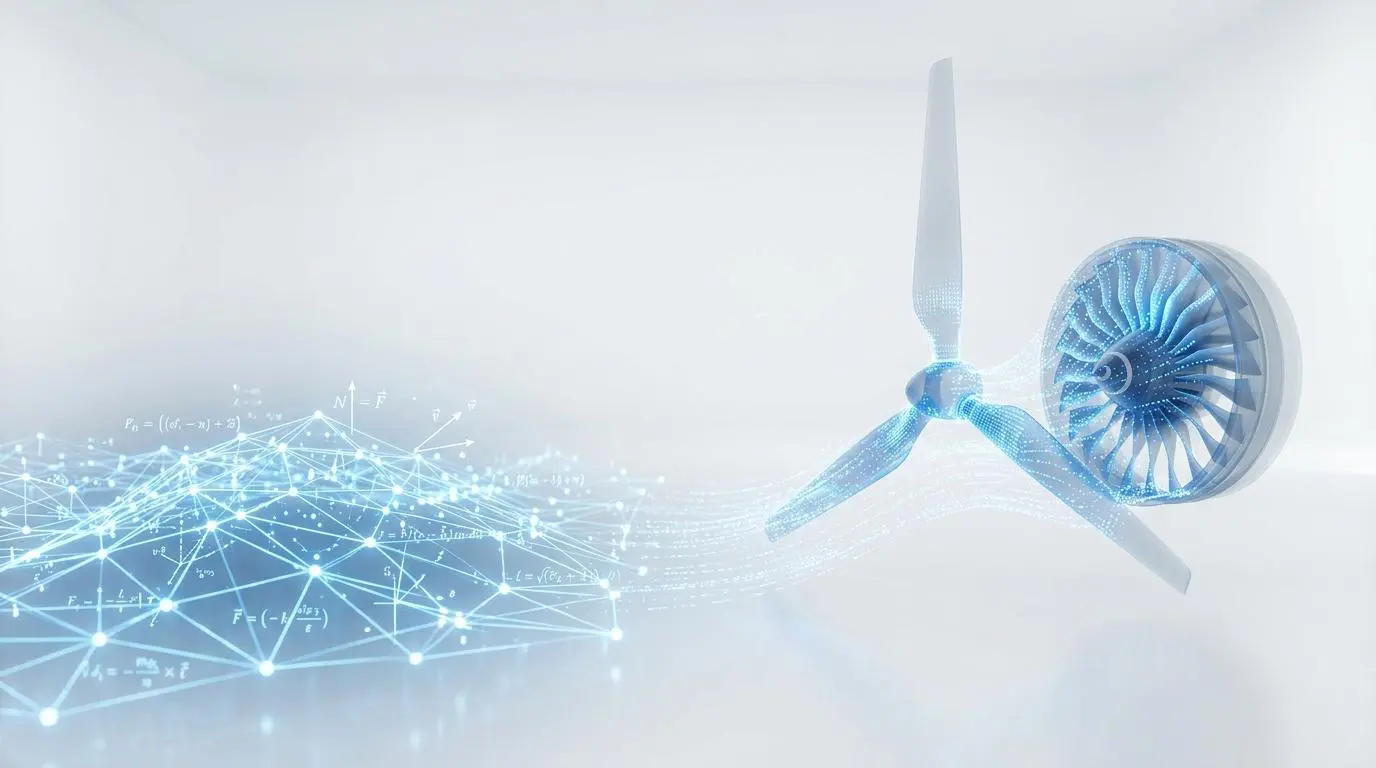
Generic Retrieval-Augmented Generation (RAG) is highly effective for basic customer service bots. However, it often fails catastrophically to capture deep domain expertise in regulated industries like aerospace or quantitative finance.
In these sectors, accurate, physics-grounded reasoning and strict policy alignment are mandatory. A hallucination in a standard chatbot is a minor annoyance, but a hallucination in an aviation maintenance workflow is a disaster.
The release of ‘Mistral Forge’ in March 2026 allows enterprises to bypass the limitations of basic RAG. It supports full-lifecycle custom training directly on proprietary, air-gapped datasets.
This includes advanced supervised fine-tuning (SFT) and reinforcement learning (RL) capabilities. Paired with the ‘Search Toolkit’ launched in May 2026, organizations can now deploy optimized, production-ready search pipelines that understand deeply technical contexts.
Mistral pushed this even further by introducing ‘Physics AI’ through the integration of Emmi AI in May 2026. As revealed at the Mistral AI Now Summit 2026, this created a new class of foundational models that accurately predict physical system behaviors.
This innovation eliminates massive simulation bottlenecks in industrial engineering. It is already empowering partners like ASML and Airbus to run real-time, physics-grounded AI queries that standard RAG architectures could never support.
Defeating the VRAM Compute Tax
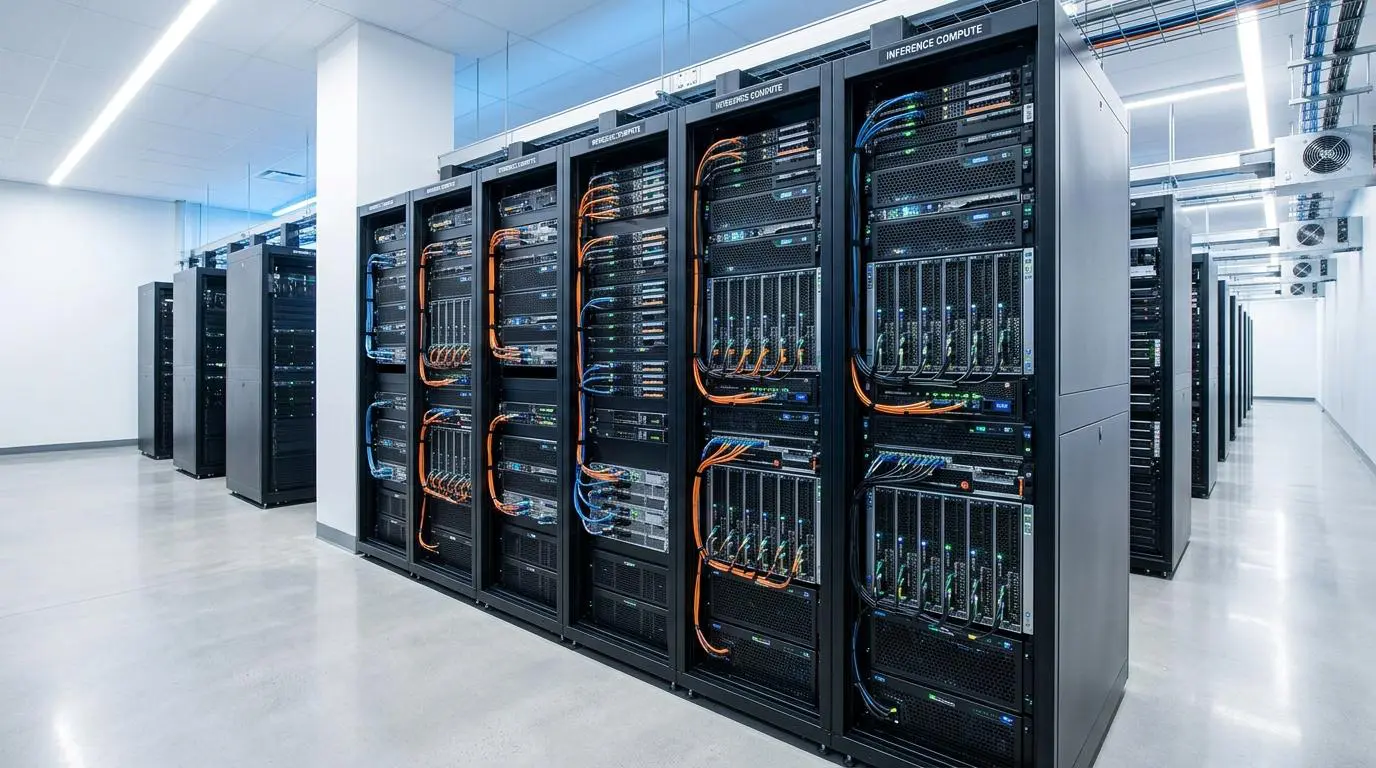
The massive VRAM requirements of traditional frontier models create a severe compute tax. This financial burden makes large-scale enterprise deployment economically unviable for most organizations.
Without specialized architectures and direct hardware control, companies are forced to over-provision expensive GPU clusters. Much of this hardware sits idle during low-traffic periods, quietly bleeding capital.
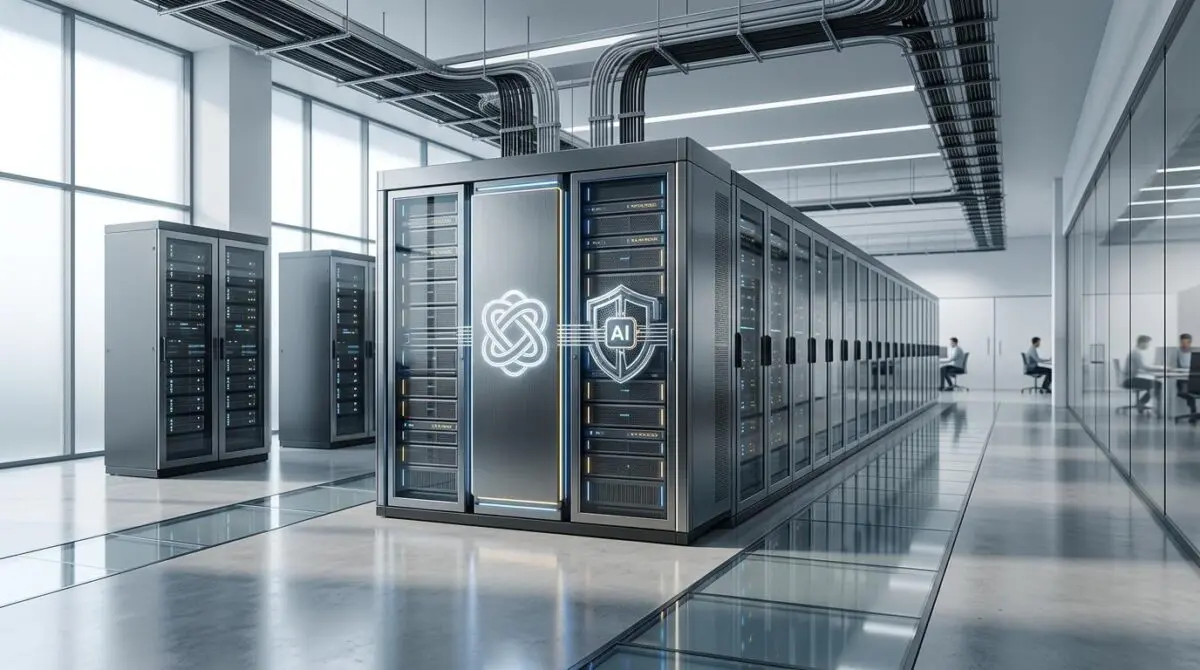
Mistral is actively expanding its vertical stack to solve this with ‘Mistral Compute’ and the upcoming Les Ulis data center in Q3 2026. This 10 MW facility is entirely dedicated to high-efficiency inference.
This infrastructure is custom-optimized for the ‘Mistral Large 3’ model. By leveraging a sparse Mixture-of-Experts (MoE) architecture, the system activates only 41 billion parameters per token out of a total 675 billion.
This drastically reduces the active memory footprint and energy consumption per query. Enterprises can now achieve frontier-level cognitive performance at a fraction of the traditional hardware cost.
Escaping Vendor Lock-in with Dual-Track Deployment
Organizations today face an ever-present threat of vendor lock-in with purely proprietary AI models. When a company builds its entire infrastructure around a closed ecosystem, it immediately loses its leverage.
This lock-in prevents IT leaders from migrating workloads to local or sovereign infrastructure as strict regional regulatory requirements evolve. It forces them to adapt to the provider’s roadmap rather than their own.
Mistral maintains a highly strategic dual-track deployment strategy to combat this. They offer API-exclusive frontier models like ‘Mistral Large 3’ and ‘Mistral Medium 3.5’ via La Plateforme for maximum performance.
Simultaneously, they release powerful open-weight models under the permissive Apache 2.0 license. This ensures that if a company needs to pull a workload entirely in-house for compliance reasons, they have the architectural freedom to do so immediately.
The Dawn of Physics-Native Industrial AI
By 2027, Mistral is projected to transition from a standard model provider to a ‘Physics-Native’ industrial AI titan. Leveraging its strategic acquisition of Emmi AI, the company is embedding real-time simulation capabilities directly into the inference layer.
This will allow digital twin technologies in aerospace and semiconductor manufacturing to operate autonomously, predicting physical failures before they occur. The future of enterprise AI is no longer just about generating text; it is about simulating reality.
Navigating the intersection of Enterprise AI, infrastructure scaling, and workflow automation requires a sharp strategy. To future-proof your company’s AI operations and scale with precision, connect with Andres at Andres SEO Expert.
Frequently Asked Questions
What is the context window capacity of the Mistral 3 model family?
The Mistral 3 model family features a 256,000-token context window, allowing enterprises to process massive technical manuals or entire codebases in a single prompt for more accurate results.
How does Mistral’s sparse Mixture-of-Experts (MoE) architecture reduce compute costs?
The MoE architecture optimizes compute by activating only a subset of parameters per token—specifically 41 billion out of 675 billion for Mistral Large 3—which drastically reduces the active memory footprint and energy consumption.
What are Mistral Workflows and how do they support AI agents?
Mistral Workflows is a Temporal-powered orchestration engine that enables developers to build durable, stateful agentic pipelines. It ensures that complex AI processes can pause, wait for data, and resume without losing state, even after server reboots.
How does Mistral Forge improve RAG accuracy for technical industries?
Mistral Forge allows for full-lifecycle custom training, including supervised fine-tuning (SFT) and reinforcement learning (RL) on air-gapped datasets, enabling physics-grounded reasoning and strict policy alignment that basic Retrieval-Augmented Generation cannot match.
What is Mistral’s Physics AI and how is it used in industry?
Powered by the integration of Emmi AI, Mistral’s Physics AI uses foundational models to predict physical system behaviors. This allows for real-time simulation and digital twin management in high-stakes sectors like aerospace and semiconductor manufacturing.
Does Mistral AI offer open-weight models for sovereign deployment?
Yes, Mistral maintains a dual-track strategy by releasing powerful open-weight models under the Apache 2.0 license, such as the Ministral 3-8B, alongside their API-exclusive frontier models to prevent vendor lock-in and support local deployment.