




Key Points
- Semantic Chunking: Deploy edge vector databases like Pinecone to serve pre-chunked, high-embedding-score micro-summaries directly to LLM crawlers.
- Entity Resolution: Implement Schema.org v24.2 entity relationship properties to sync local brand graphs with the Enterprise Knowledge Graph API.
- Attribution Pruning: Utilize cryptographic authorship metadata to bypass Google’s similarity penalties and prevent citations from bleeding to high-authority aggregators.
Table of Contents
The Invisible Content Crisis
The harsh truth about modern search is that standard HTML structures actively sabotage your visibility inside Google’s Gemini 2.0 RAG pipelines. We call this critical failure point the Semantic Gap. It occurs when legacy web architecture fails to provide the deterministic semantic density required for Large Language Models to confidently extract and cite your data.
Traditional search engine optimization relied heavily on keyword frequency and backlink velocity to signal relevance. However, generative engines operate on vector proximity and embedding scores, rendering old tactics obsolete. If an LLM cannot instantly parse your content into clean, mathematical relationships, it simply moves on to a competitor.
The architectural antidote to this crisis is RAG-driven AIO Attribution Optimization. By structuring your site as a queryable vector database rather than a collection of static documents, you force the AI to prioritize your content chunks. This re-engineers your entire delivery pipeline to serve the exact semantic payloads that generative models crave.
Generative Latency And Zero-Click Metrics
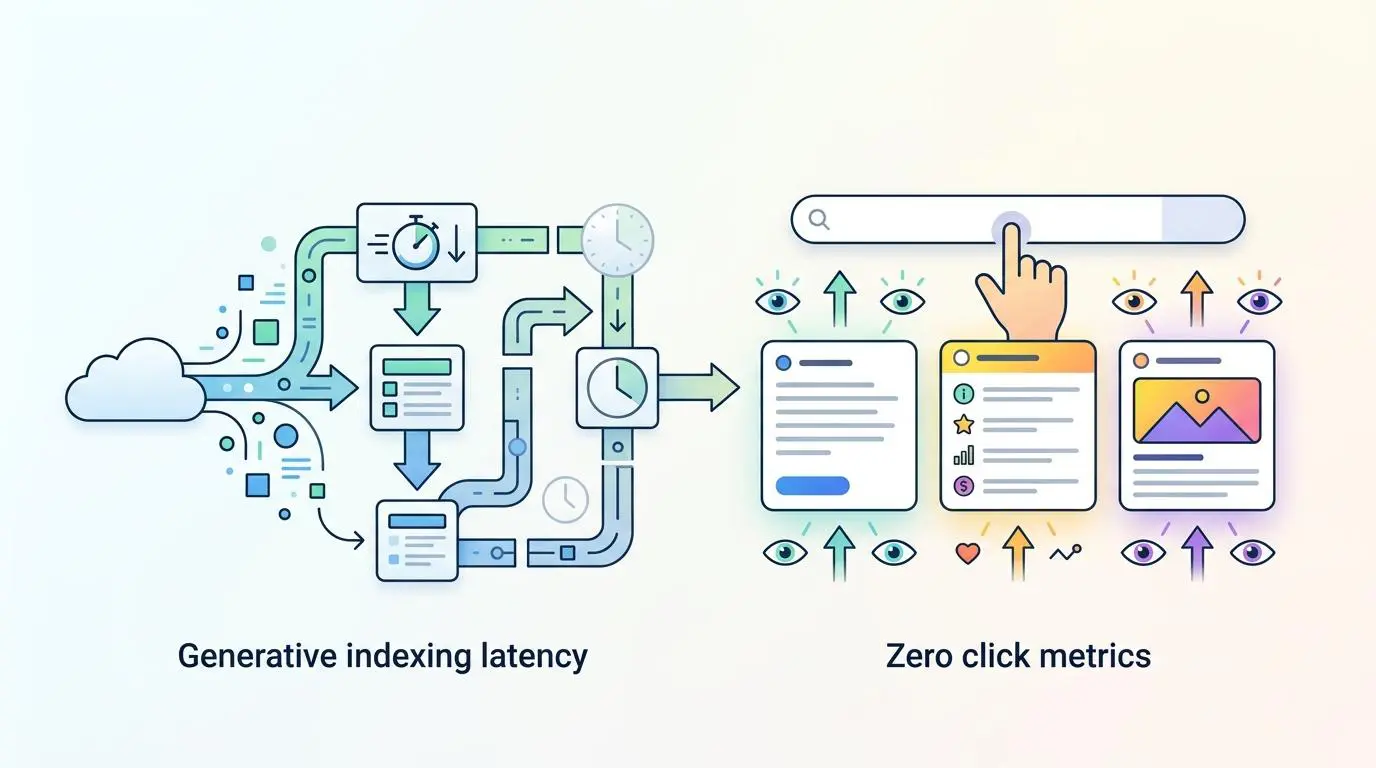
The shift toward generative retrieval is mathematically unforgiving for publishers relying on outdated infrastructure. A recent industry report revealed that a vast majority of informational search queries now result in a full zero-click resolution via AI Overviews. This massive behavioral shift necessitates a complete pivot toward brand-mention optimization over traditional traffic acquisition.
This reality is especially stark considering AI Overviews reduce clicks by 58% across traditional organic blue links. You are no longer fighting for raw traffic; you are fighting for deterministic LLM citation within the summary itself. If your brand is not mentioned in the generative output, you effectively do not exist for that query.
Furthermore, recent search engine updates established a strict 1.2-second Generative Indexing Latency Threshold. Pages exceeding this server response time are entirely excluded from real-time AI Overview updates. If your server lags, the LLM defaults to cached, potentially outdated aggregator data instead of your original research.
To combat this latency exclusion, publishers are actively seeking new monetization and visibility pathways. Emerging AI publisher programs now prioritize fast, structured data retrieval from trusted nodes. Speed is no longer just a user experience metric; it is the fundamental entry ticket to the generative index.
Inference Efficiency And Token Truncation

Advanced search console reports recently introduced Inference Impressions to the technical SEO toolkit. This critical metric reveals exactly how often your content is ingested by the LLM during the retrieval phase. Crucially, it tracks ingestion even if your data never makes it into the final generative output.
The primary friction exposed by this data is content invisibility caused by high token-per-query computational costs. Verbose, unstructured web pages are increasingly truncated before reaching the final synthesis layer. The LLM simply stops reading your page once it hits its allocated token budget for that specific retrieval branch.
To survive this truncation, developers must integrate directly with modern generative APIs. This integration allows engineering teams to simulate exactly how long-context window models chunk and process their site data. You can observe exactly where the model stops parsing your paragraphs.
This simulation workflow allows architects to optimize for Inference Efficiency. By rewriting headers and paragraphs to be exponentially more semantically dense, you ensure the most critical facts are front-loaded. Maximizing your Inference Efficiency guarantees your core entities survive the token truncation threshold.
Edge Vector Databases And Semantic Chunking
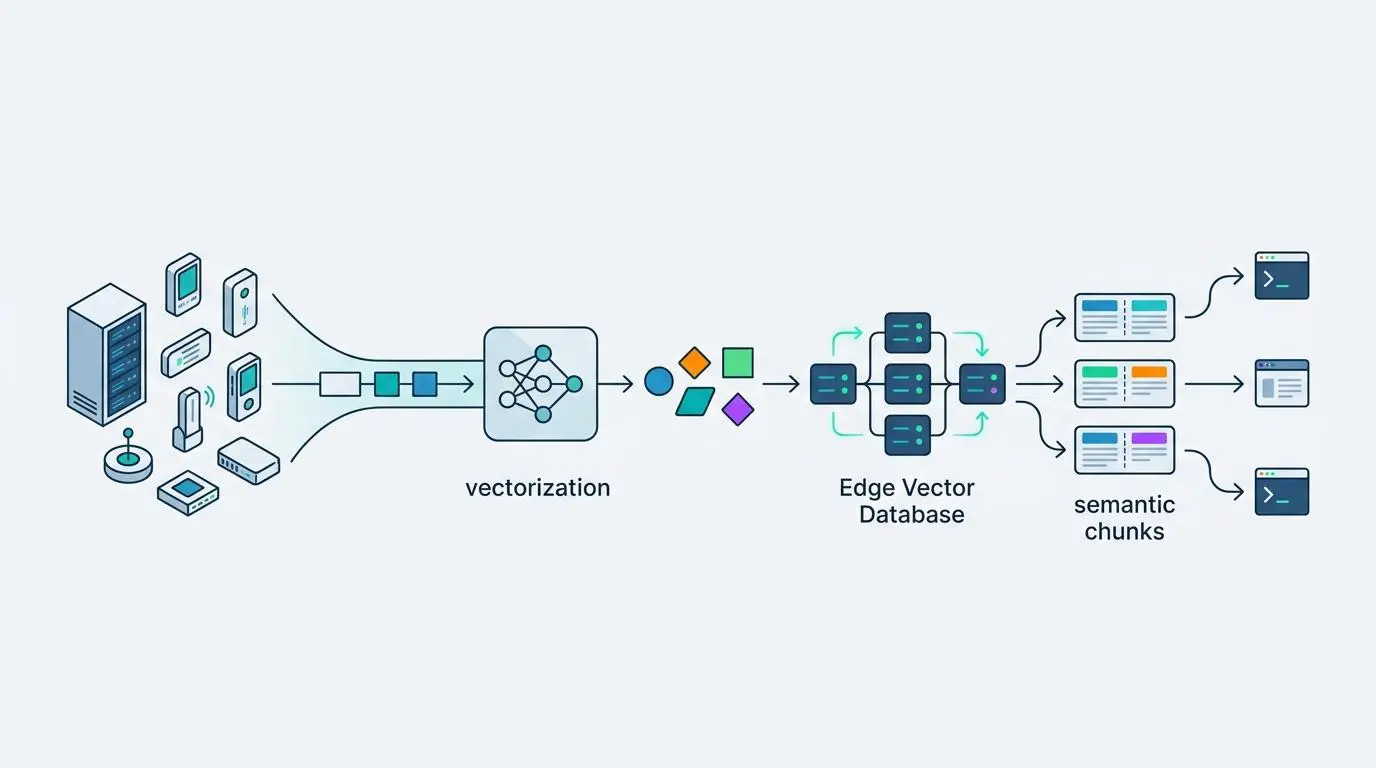
Legacy CMS architectures simply cannot natively handle the delivery of semantic blocks required by modern generative search engines. Traditional databases deliver monolithic HTML pages, which forces the LLM to spend valuable compute power extracting the relevant text. This architectural limitation is forcing a massive shift toward Headless SEO.
In this new paradigm, every paragraph, list, and table is treated as a highly queryable vector object rather than a static piece of text. Sites are now deploying advanced vector databases directly at the edge to serve these objects. This decouples the visual presentation of the website from the semantic payload delivered to the AI crawler.
This edge infrastructure serves pre-chunked, high-embedding-score content blocks directly to search engine crawlers and other AI agents. By automating the creation of micro-summaries via advanced APIs, engineering teams guarantee their content is pre-digested. The LLM does not have to think; it simply ingests the perfect answer.
This semantic chunking drastically reduces the computational load on the search engine’s end. When you save the search engine compute power, you are rewarded with higher retrieval priority. RAG-friendly architecture is the ultimate competitive advantage in a token-constrained search ecosystem.
Schema v24 And Knowledge Graph Sync
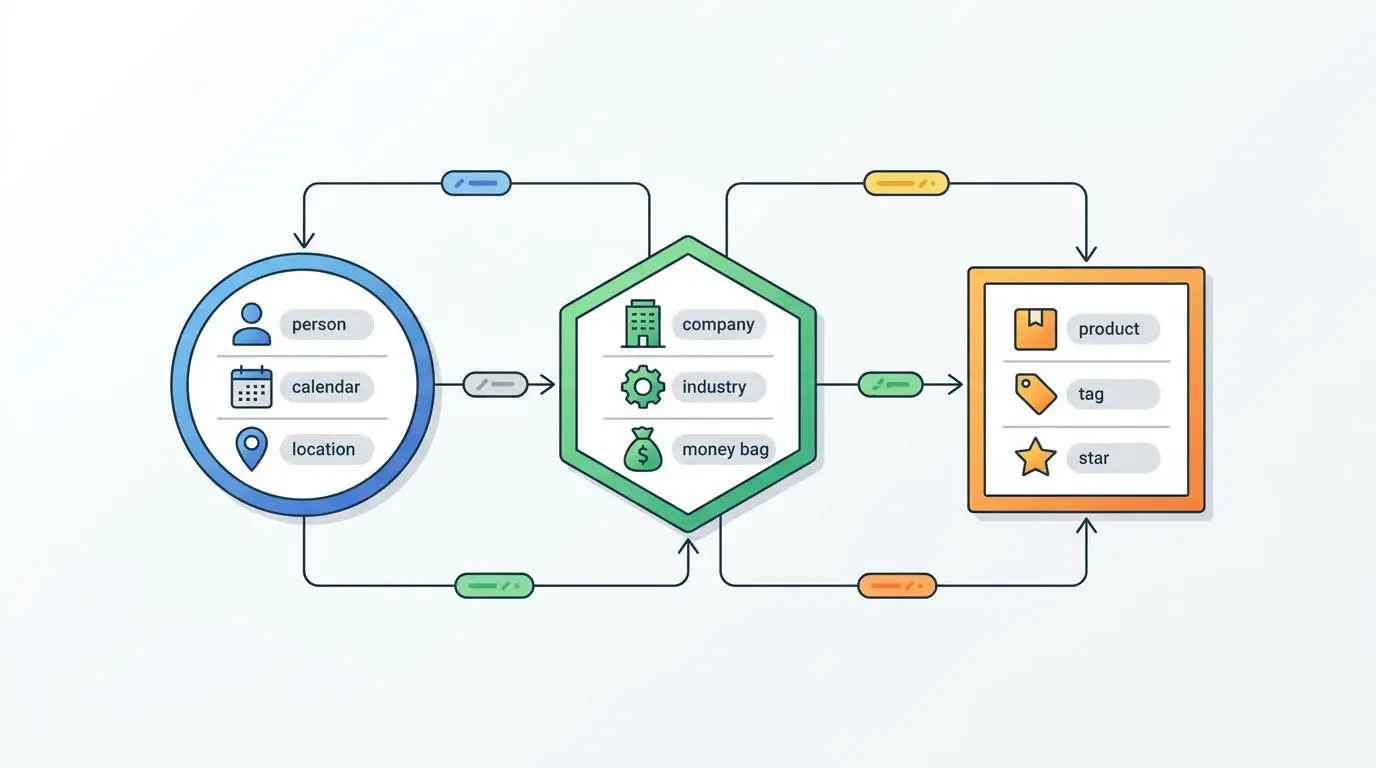
Severe brand dilution occurs when AI Overviews associate a company with incorrect industry categories or competitor products. This usually stems from missing or orphaned data links scattered across the brand’s digital footprint. It is the equivalent of a massive library completely lacking a proper cataloging system.
The latest schema updates introduce explicit entity relationship properties designed specifically to solve this LLM disambiguation problem. These new properties allow search engines to mathematically map your brand to the correct topical clusters with absolute certainty. It removes the guesswork from semantic entity resolution.
Forward-thinking organizations are deploying automation scripts to sync their local brand graphs with major knowledge graphs in real-time. Utilizing updated enterprise APIs ensures automated entity monitoring across all digital touchpoints. This prevents hallucinated brand associations from polluting your search presence.
By controlling the entity graph, you control the narrative within the AI Overview. When the LLM understands exactly who you are and what you do, your RAG attribution scores skyrocket. Automated knowledge graph synchronization is no longer optional for enterprise brands.
Cryptographic Authorship And The EEAT Bottleneck
The modern E-E-A-T bottleneck is a frustrating reality for original publishers investing heavily in primary research. AI engines frequently identify correct facts but attribute them to higher-authority aggregators rather than the original source. This happens because the aggregator possesses stronger site-wide authority signals, confusing the LLM’s attribution logic.
Recent technical whitepapers revealed that AI Overviews now utilize a ruthless mechanism known as Attribution Pruning. This system automatically strips citations from sources whose content has a high similarity score compared to higher-authority nodes. Unoriginal phrasing, or even accurately quoted material, is now penalized at a mathematical level.
To reclaim proper attribution, modern crawlers now prioritize sites that provide cryptographic proof of authorship. By implementing specialized metadata headers and signed HTTP exchanges, publishers can mathematically prove they originated the data. This bypasses the traditional domain authority metrics that favor massive aggregators.
Simultaneously, new infrastructure enables the real-time validation of these source trust scores. Proving cryptographic authorship is the only definitive way to bypass the aggregator bias. It secures your rightful citation in the final generative output, protecting your intellectual property.
The Token Budget Horizon
In the near future, the entire discipline of Generative Engine Optimization will shift from traditional content creation to Token Budget Optimization. Publishers will fiercely compete to provide the most semantically dense data in the fewest possible tokens. Fluff, filler, and verbose storytelling will actively harm your search visibility.
Search engines are already preparing to introduce token efficiency as a core ranking signal for generative search. Sites that deliver high-fidelity answers with minimal computational overhead will dominate the AI Overview ecosystem. The future of SEO belongs to those who treat content as clean, efficient code.
Navigating the intersection of Generative Engine Optimization, AI Search architecture, and workflow automation requires a sharp strategy. To future-proof your brand’s visibility in LLMs and scale with precision, connect with Andres at Andres SEO Expert.
Frequently Asked Questions
What is the Semantic Gap in generative search?
The Semantic Gap is a critical failure point where legacy web architecture fails to provide the deterministic semantic density required for LLMs to extract data. To resolve this, sites must transition from static documents to queryable vector-based structures that facilitate RAG-driven AIO Attribution Optimization.
How does Google’s 1.2-second latency threshold impact SEO visibility?
Under the January 2026 update, pages that exceed a 1.2-second Generative Indexing Latency Threshold are excluded from real-time AI Overview updates. This makes server response speed a fundamental requirement for inclusion in the generative index, as slow pages force LLMs to rely on cached aggregator data instead.
What are Inference Impressions in Google Search Console?
Inference Impressions measure the frequency at which content is ingested by an LLM during its retrieval phase, regardless of whether the data appears in the final output. This metric helps developers identify content truncation issues caused by high token-per-query computational costs.
Why is Edge Vector Database integration necessary for Headless SEO?
Deploying vector databases like Pinecone or Milvus at the edge allows sites to deliver pre-chunked, high-embedding-score content blocks. This architectural shift decouples semantic payloads from visual presentation, reducing the computational load on AI crawlers and securing higher retrieval priority.
How does Schema v24.2 prevent brand dilution in AI Overviews?
Schema v24.2 introduces explicit entity relationship properties that mathematically map a brand to its correct topical clusters. By syncing local brand graphs with the Google Knowledge Graph, organizations can eliminate ambiguity and prevent AI models from hallucinating incorrect brand associations.
What is Attribution Pruning and how can publishers mitigate it?
Attribution Pruning is an AI mechanism that strips citations from sources whose content has a Similarity Score above 95% compared to higher-authority sites. Publishers can avoid this by using cryptographic authorship signals and signed HTTP exchanges to provide mathematical proof of original data provenance.