Key Points
- Semantic Abstracts: Search engines now require zero-computation factual blocks; failing to provide these results in total exclusion from primary AI Overviews.
- Citation Pipelines: As zero-click searches dominate, brands must optimize their Reference Probability to prevent authority aggregators from stealing direct attribution.
- Ghost Query Mapping: Traditional keyword tools miss conversational follow-ups, requiring synthetic dialogue trees to capture hidden AI search intents.
Table of Contents
The Invisible Cost of Instant Answers
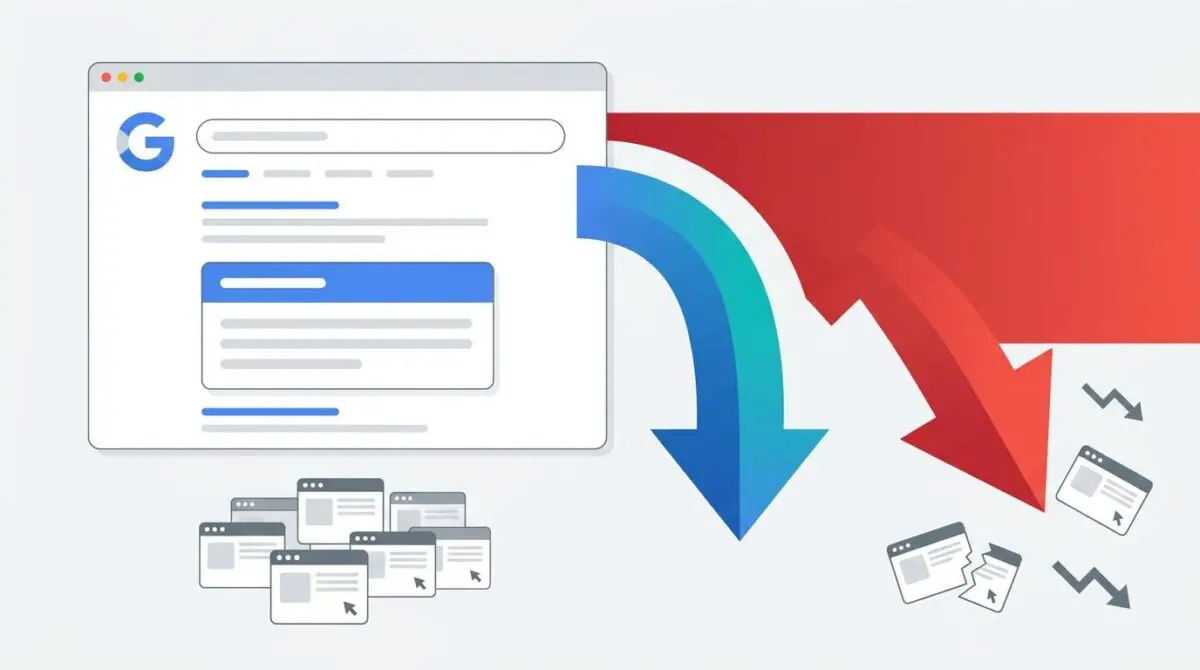
Every day, a silent erosion of your digital footprint occurs. Potential customers ask AI assistants questions, receive perfect answers, and never actually visit your website.
This is the harsh reality of the modern search landscape. We are witnessing a catastrophic decoupling of user intent fulfillment from traditional web sessions. Generative AI engines now satisfy over seventy percent of informational queries directly within the search results.
Imagine cooking a gourmet meal, only for a delivery app to intercept the customer at the door. They hand over a perfectly written summary of how the food tastes and take all the credit. This phenomenon is known as AIO-Driven Attribution Disruption.
Because user questions are answered instantly, traditional click-based tracking becomes completely obsolete. Top-of-funnel conversion paths are starving. Brands are left wondering why their high-quality content no longer drives traffic.
The Metrics Behind the Zero-Click Shift
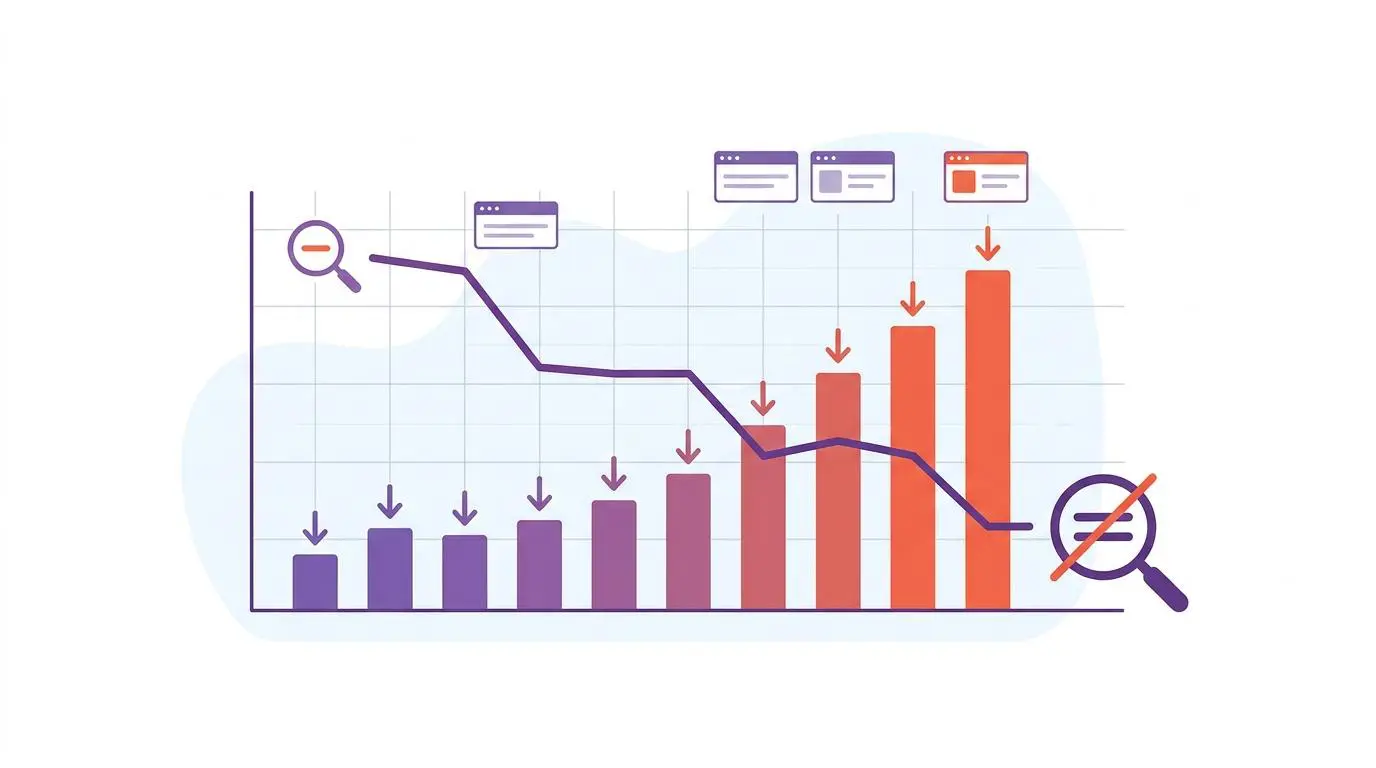
To truly understand the scale of AIO-Driven Attribution Disruption, we must examine the data redefining digital visibility. According to SparkToro’s 2026 zero-click search study, nearly 74 percent of all US-based mobile searches resulted in zero clicks. This is largely due to the saturation of AI Overviews.
This staggering zero-click rate proves users no longer need to browse through blue links. The search engine itself has become the ultimate destination. However, the challenge extends beyond the sheer volume of zero-click searches.
The real issue is the incredible speed at which AI models ingest and serve this information.
Research from the BrightEdge Generative Parser research on AI Overviews reveals a startling fact. Content updated via IndexNow is reflected in Google AIO citations within an average of 4.2 seconds. This attribution latency metric highlights a hyper-accelerated ecosystem.
If your content lacks structure for instantaneous machine reading, you will be excluded from the AI Overview entirely. Brands must adapt to this millisecond-paced environment or face complete invisibility.
Mastering the Semantic Abstract

The architecture behind Google’s Gemini 1.5 Pro and Perplexity’s sonar-huge model relies heavily on dynamic Retrieval-Augmented Generation. These advanced models are designed to ingest high-density factual blocks via JSON-LD schemas.
To keep pace, automated pipelines now utilize the OpenAI o1-preview API. This technology pre-summarizes site content into digestible atomic facts. It creates a semantic abstract that allows for significantly faster LLM indexing.
Large Language Models are inherently lazy readers. They prioritize content that can be parsed with zero computational overhead. Failing to provide this semantic abstract frequently results in exclusion from the primary AIO response window.
This exclusion causes a total loss of visibility for that specific query. Fortunately, recent industry studies reveal a fascinating shortcut to solving this friction.
Google’s AIO now heavily prioritizes Schema-Decoupled Text for its immediate answers. This strategy involves placing a direct, concise answer in the very first 150 characters of a standard HTML div tag.
By adopting this simple structural change, websites drastically improve their visibility. They increase their probability of being the primary cited source by 62 percent compared to traditional long-form content.
Reclaiming Your Brand Equity
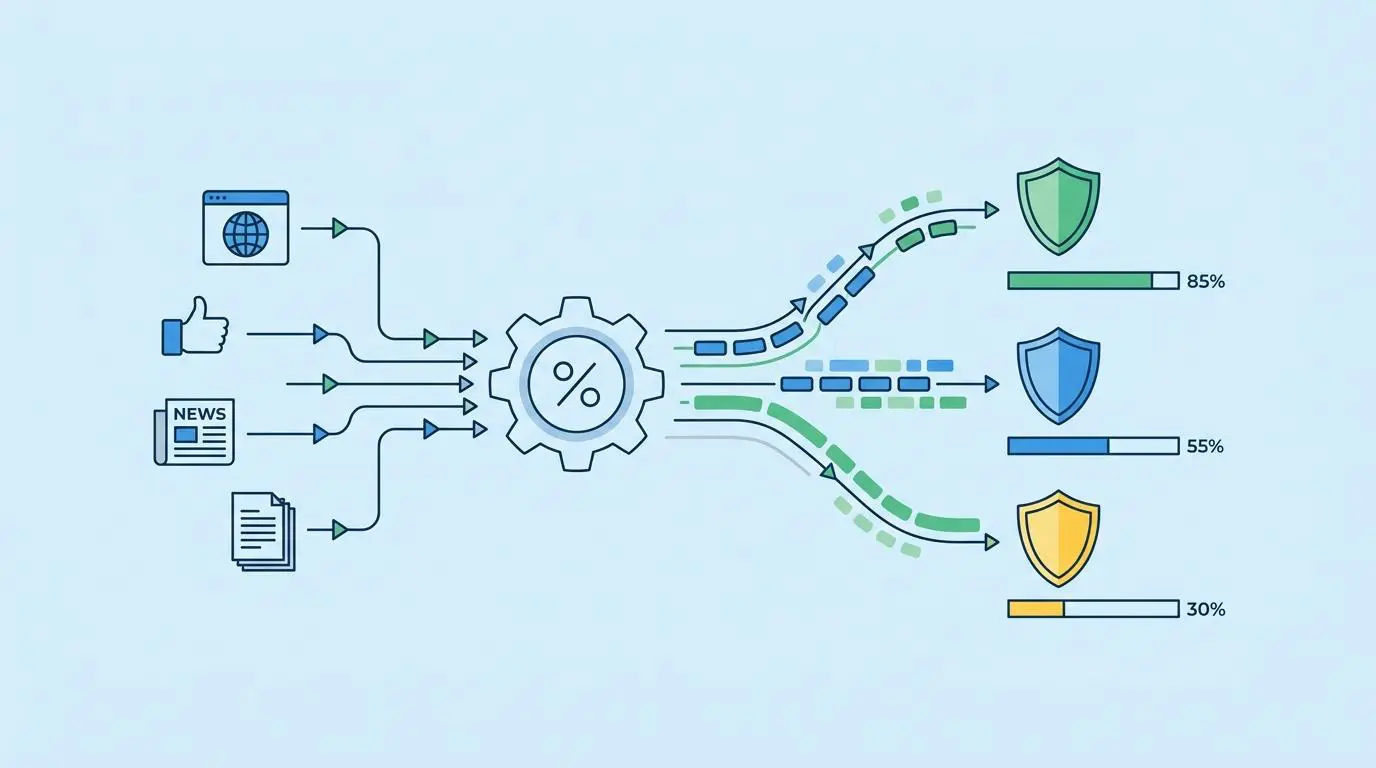
The modern search landscape has introduced a new currency for digital authority. It relies on Citation Score APIs from third-party tools like BrightEdge and Botify. These tools measure the Reference Probability of a URL within a Large Language Model’s context window.
Reference Probability is calculated by analyzing your content’s semantic proximity to the consensus ground truth of a topic. However, this system creates a massive real-world friction point for original creators.
Imagine writing a groundbreaking research paper, but the library only credits the person who summarized the dust jacket. Your brand might be the original source of a fact. Yet, AI engines often attribute the information to secondary aggregators.
These aggregators typically possess higher legacy domain authority. This dynamic causes a severe brand-equity leak. The original creator gets zero-clicked and zero-credited in the AI Overview.
To combat this, brands must engineer their content to be the undeniable ground truth. This involves creating highly structured, proprietary data points. Aggregators cannot easily rephrase these without losing the core semantic meaning.
Capturing Conversational Ghost Queries

Search behavior has evolved from fragmented keywords into fluid, multi-turn interactions. Users no longer just ask what a problem is. They immediately follow up by asking how to fix it.
These conversational pathways are now mapped using advanced APIs to generate synthetic dialogue trees. This mapping allows forward-thinking SEOs to optimize for hidden questions. You can now target the second and third queries in a user’s journey.
These hidden questions are known as Ghost Queries. They are the natural follow-up questions users ask the AI assistant. Crucially, they never actually appear in traditional search volume databases.
AI Search often answers these follow-ups immediately within the same session. As a result, standard keyword research tools are entirely blind to them. If you only optimize for the initial query, you lose the user during the conversational follow-through.
By building synthetic dialogue trees, brands can anticipate the entire conversation. You can embed the answers to Ghost Queries directly into your semantic abstracts. This ensures the AI keeps citing your brand as the conversation deepens.
Measuring Share of Model
With traditional traffic metrics collapsing, enterprises are turning to advanced APIs to automate the monitoring of Brand Association Vectors. This new methodology tracks how often a brand is mentioned in an AIO response relative to its competitors.
Crucially, this tracking happens without a single traditional click ever being recorded. It measures pure mental availability. It also tracks your brand presence within the AI’s generated output.
Brands are currently experiencing a frustrating paradox. They see healthy mental availability growth in the real world. Meanwhile, their traditional analytics dashboards show a massive decline in organic sessions.
This discrepancy has created a crisis in marketing ROI reporting. Executives are panicking over lost traffic. They often do not realize their brand is actually dominating the zero-click AI Overviews.
To survive this shift, marketing teams must abandon outdated click-through rates. They must adopt Share of Model metrics. This allows them to accurately report on their true digital footprint and conversational influence.
The Dawn of Agentic Commerce
The digital landscape is shifting drastically from Generative Engine Optimization to Agentic Commerce Optimization. We are moving rapidly beyond zero-click summaries. We are entering an era of zero-click transactions.
In this near future, AI agents will autonomously perform research and compare products. They will even execute checkouts within a single headless session. The brand’s only role will be providing a real-time API endpoint for the autonomous agent.
Navigating the intersection of Generative Engine Optimization, AI Search architecture, and workflow automation requires a sharp strategy. To future-proof your brand’s visibility in LLMs and scale with precision, connect with Andres at Andres SEO Expert.
Frequently Asked Questions
What is AIO-Driven Attribution Disruption?
AIO-Driven Attribution Disruption is the decoupling of user intent fulfillment from traditional website visits, occurring when Generative AI engines satisfy queries directly on search results pages, rendering traditional click-based tracking obsolete.
How do I optimize content for Google AI Overviews?
Optimization requires utilizing Schema-Decoupled Text by placing direct answers in the first 150 characters of HTML tags and ensuring technical indexing via IndexNow to minimize attribution latency for AI citations.
What are Ghost Queries in conversational AI search?
Ghost Queries are the hidden second and third follow-up questions users ask in multi-turn AI interactions. Because these do not appear in traditional keyword databases, brands must use synthetic dialogue trees to anticipate and answer them.
What is a semantic abstract in the context of LLM indexing?
A semantic abstract is a high-density factual block, often delivered via JSON-LD, that allows Large Language Models to ingest content with zero computational overhead, increasing the likelihood of being cited in primary response windows.
How is Share of Model (SoM) calculated?
Share of Model is measured using Brand Association Vectors to track how often a brand is mentioned in AI-generated outputs relative to competitors, focusing on mental availability rather than traditional organic sessions.
What does Agentic Commerce Optimization involve?
Agentic Commerce Optimization prepares brands for a future where autonomous AI agents research and execute transactions via headless sessions by providing real-time API endpoints for agent interaction.