Key Points
- Agentic Orchestration: Advanced computer-use APIs allow models to navigate interfaces autonomously, though dynamic UI elements still pose workflow challenges.
- Enterprise Data Integration: VPC-resident plugins enable secure data indexing, but strict data sovereignty needs are driving a shift toward localized model stacks.
- Multimodal Fusion: Native vision-audio-text architectures eliminate cascaded latency, delivering real-time voice interactions under 300 milliseconds.
Table of Contents
The Brain Behind the Operation
Think of traditional AI as a brilliant but forgetful intern who requires exact instructions for every single step. Now, imagine replacing that intern with a seasoned project manager who understands the end goal and can autonomously assign tasks. This manager can operate complex software and course-correct when things inevitably go wrong.
This fundamental shift in digital work is powered by the GPT-class Agentic Reasoning Engine. It serves as the sophisticated architectural core driving the modern ChatGPT experience. This engine transforms the technology from a simple conversational chatbot into a proactive digital worker capable of executing multi-step enterprise workflows.
Instead of merely answering questions, the engine actively plans and executes comprehensive solutions. However, this evolution introduces a major hurdle known as the Reasoning-Latency Paradox. Businesses must constantly balance the need for lightning-fast responses against the massive computing time required for deep problem-solving.
Solving this paradox is the key to unlocking true enterprise automation. It ensures that complex logical reasoning can occur without grinding daily operations to a halt.
Measuring the Impact of Autonomous Logic

To truly understand the power of this new engine, we must examine the numbers driving its cognitive leap. The GPT-5.5 model supports a massive context window of over one million tokens. This consists of 922K input and 128K output tokens, allowing the AI to hold the equivalent of dozens of dense corporate manuals in active memory.
This massive context scale is exactly what powers advanced autonomous tools like the OpenAI Operator. It allows the system to hold vast amounts of workflow history in memory while navigating complex software environments. This effectively eliminates the amnesia that plagued earlier iterations of conversational AI.
As a result, long-running tasks remain perfectly aligned with the original user intent. Furthermore, this deep reasoning capability is proven by a staggering 90% accuracy score on the SimpleBench benchmark. This far surpasses the human average in complex logical reasoning tasks.
For enterprise leaders, this translates directly into reduced compute costs and fewer operational errors. It also establishes an unprecedented level of trust in automated decision-making.
Orchestrating Digital Workforces
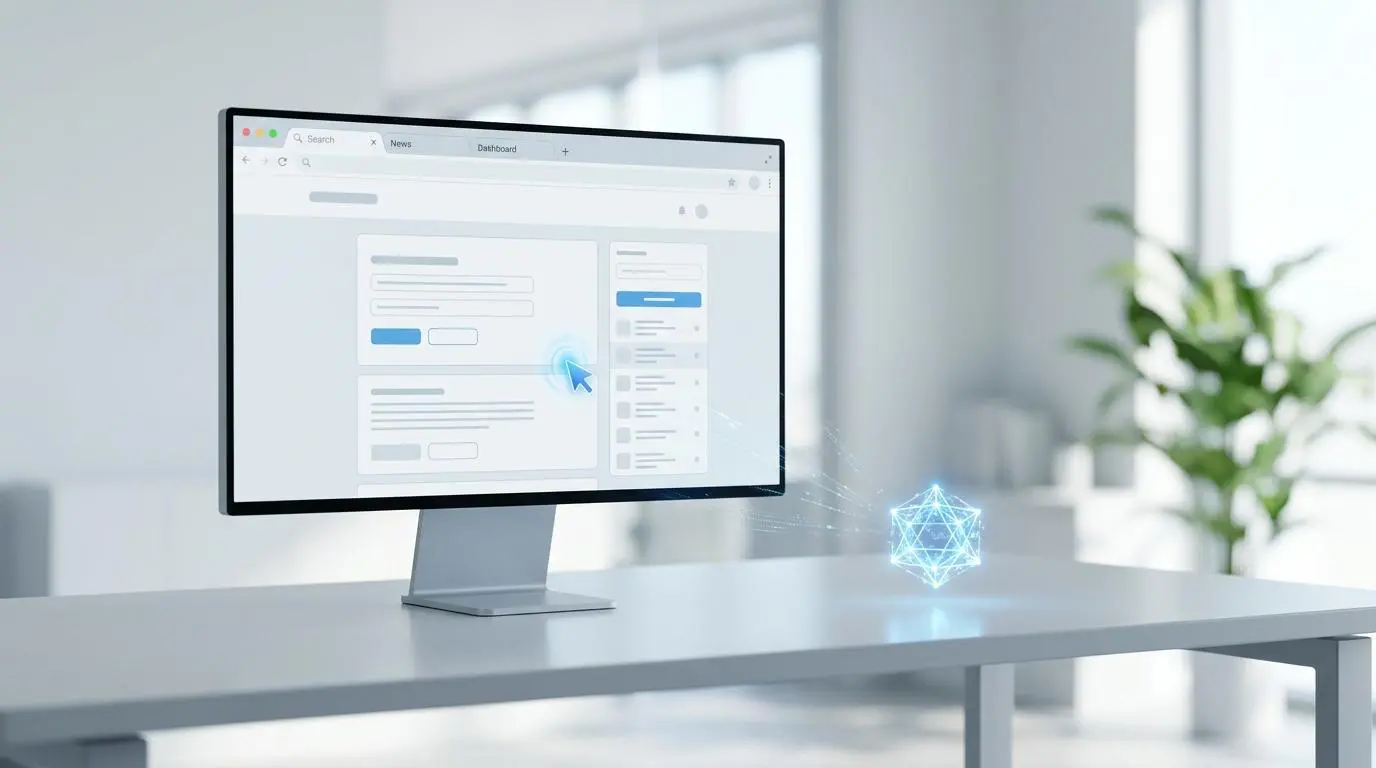
The true magic of the GPT-class Agentic Reasoning Engine lies in its ability to control external software. Fully integrated autonomous agents now utilize Computer-Use APIs to execute browser-based tasks directly. Recent updates to the Codex platform took this a step further, allowing these agents to build interactive enterprise workspaces completely autonomously.
Instead of humans clicking through endless menus, the AI acts as a universal remote control for the web. It can log into a CRM, extract customer data, and cross-reference it with inventory systems. It can then generate a final report without a single human keystroke.
This level of orchestration turns fragmented software stacks into a unified, intelligent machine. Despite these advancements, real-world friction still exists on the production floor. High failure rates often occur when the AI encounters dynamic UI elements, such as multi-layered dropdowns or pop-up modals.
These unpredictable web designs lead to agentic stalls, where workflows break during live execution. This ultimately requires human intervention to get the automation back on track.
Securing Proprietary Knowledge

For an AI to be truly useful, it needs access to a company’s deepest, most proprietary knowledge. Recent ChatGPT Enterprise updates tackled this by introducing default plugin sharing within Codex. This feature enables teams to index local data via shared VPC-resident plugins.
It successfully maintains the model’s grounding in private knowledge bases. To make this data retrieval even smarter, the latest memory upgrades employ a recursive prioritization algorithm. This system automatically prunes contradictory or stale user preferences.
This effectively doubles the usable memory capacity for premium users, ensuring the AI only references the most accurate company guidelines. Yet, enterprise data sovereignty remains a massive dealbreaker for heavily regulated industries.
Recent audits show many firms are actively swapping cloud-native retrieval systems for localized Llama 4 stacks. This pivot ensures that personally identifiable information never leaves the company’s private perimeter. It highlights a growing divide between cloud convenience and absolute data security.
Fusing Senses for Real-Time Action

The way we interact with machines is shifting from typing to talking, and from reading to seeing. The GPT-5.5 model features native vision-audio-text fusion, utilizing a unified speech-to-speech architecture. This eliminates the latency typical of older, cascaded pipelines that had to translate speech to text, process it, and translate it back to speech.
By processing all these senses simultaneously, the engine targets sub-300 millisecond response times for voice interactions. This creates a fluid, conversational dynamic that feels entirely human. An engineer can point a camera at a malfunctioning server rack and simply ask the AI what is wrong.
They will receive an instant, context-aware spoken diagnosis. However, processing the real world in real-time is incredibly resource-intensive. High VRAM and tokenization costs for multi-minute, high-resolution video streams often force these models to downsample the media.
This necessary compression can lead to the loss of granular temporal details. It makes precise generative video analysis difficult for highly technical use cases.
Balancing Freedom with Ironclad Security
Giving an AI the power to browse the web and execute commands introduces significant security vulnerabilities. To combat this, OpenAI introduced Lockdown Mode as an optional, advanced security setting. It restricts network-enabled capabilities like live web browsing and file downloads to prevent data exfiltration.
The primary threat this addresses is indirect prompt injection, where malicious instructions are hidden in external web pages or documents. If an autonomous agent reads a compromised document, it could unwittingly execute harmful commands against the company’s own infrastructure.
The real-world friction here is a delicate balancing act. Hardening the attack surface against these hidden injections significantly reduces the model’s autonomous utility. Enterprise IT teams are forced to make a difficult trade-off.
They must choose between giving the AI the agency it needs to be useful and enforcing the safety protocols required to protect corporate assets.
The Screenless Future of Enterprise Work
By 2027, ChatGPT is projected to transition entirely from a browser-centric interface to a state of Ambient Agency. Powered by screenless, voice-first wearable hardware, the AI will anticipate user intent through continuous audio-visual environmental context. The keyboard and monitor will no longer be the primary bottleneck for human-computer interaction.
Navigating the intersection of Enterprise AI, infrastructure scaling, and workflow automation requires a sharp strategy. To future-proof your company’s AI operations and scale with precision, connect with Andres at Andres SEO Expert.
Frequently Asked Questions
What is the GPT-class Agentic Reasoning Engine?
The GPT-class Agentic Reasoning Engine is the sophisticated architectural core that transforms AI from a basic chatbot into a proactive digital worker. It allows the system to autonomously plan, execute, and course-correct through multi-step enterprise workflows rather than simply responding to individual prompts.
What is the Reasoning-Latency Paradox in AI automation?
The Reasoning-Latency Paradox is a major enterprise challenge where businesses must balance the need for near-instant responses against the significant computing time required for the AI to perform deep, methodical problem-solving. Solving this paradox is essential for high-speed automated decision-making.
How do Computer-Use APIs improve enterprise orchestration?
Computer-Use APIs allow autonomous agents to act as a universal remote control for the web. They enable the AI to interact directly with browser-based tasks, such as logging into CRMs, extracting data, and cross-referencing inventory systems without requiring human manual input.
Why are companies adopting localized Llama 4 stacks over cloud AI?
To ensure absolute data sovereignty, especially in regulated industries, firms are swapping cloud-native systems for localized Llama 4 stacks. This ensures that personally identifiable information (PII) and proprietary knowledge remain within the company’s private perimeter rather than being processed in the public cloud.
What is AI Ambient Agency and how does it affect the future of work?
Ambient Agency refers to a state where AI operates through screenless, voice-first wearable hardware to anticipate user intent via environmental context. By 2027, this is projected to replace browser-centric interfaces, removing the keyboard and monitor as the primary bottlenecks for human-computer interaction.