Key Points
- Multi-Agent Orchestration: Utilizing the Agentic Protocol to spawn specialized sub-agents eliminates single-agent logic loops.
- Context Engineering: Actively pruning redundant tokens prevents information retrieval decay in massive 1M-token workflows.
- Reason-Based Governance: Constitutional AI 2.0 cures the Over-refusal Problem, allowing secure execution of complex audits.
Table of Contents
The Memory Leak of the Mind
Just a year ago, deploying an AI agent felt like managing a brilliant but hyperactive intern who would forget their initial instructions halfway through a task. Today, we orchestrate autonomous systems capable of running for days without losing the plot. This dramatic shift is redefining how enterprise infrastructure handles massive, multi-step operations.
The core bottleneck holding back true automation has always been context rot. This reasoning decay occurs in long-horizon workflows where large language models lose instruction adherence as they accumulate million-token execution histories. It is like trying to hold a deep conversation in a crowded room where every new sentence eventually drowns out the original topic.
To solve this critical issue, Anthropic introduced the Claude 4 Agentic Reasoning Framework. This architecture acts as the ultimate stabilizer for enterprise AI, ensuring that logic remains crisp and execution stays on track regardless of workflow depth.
Quantifying the Cognitive Leap

When evaluating enterprise AI deployments, raw reasoning power and context capacity are the primary metrics dictating true operational efficiency. The latest iteration of this framework has set a new benchmark for autonomous problem-solving. Specifically, Claude Opus 4.6 achieved an impressive 80.8% SWE-bench Verified Success Rate in resolving real-world GitHub issues.
This milestone means the model is no longer just predicting text; it is successfully compiling, testing, and iterating on code at a senior engineering level. Furthermore, the architecture now natively supports massive data ingestion. As of the May 2026 update, Anthropic’s Opus 4.8 and Sonnet 4.6 models support a one-million token context window natively at standard pricing.
However, navigating legacy systems requires more than just reading code; it demands active manipulation of virtual environments. This is where Claude’s ‘Computer Use’ API becomes a critical component, allowing models to interact with complex desktop interfaces just like a human operator. Together, these capabilities reduce inference latency and drastically lower the compute cost required for complex migrations.
Orchestrating the Digital Symphony
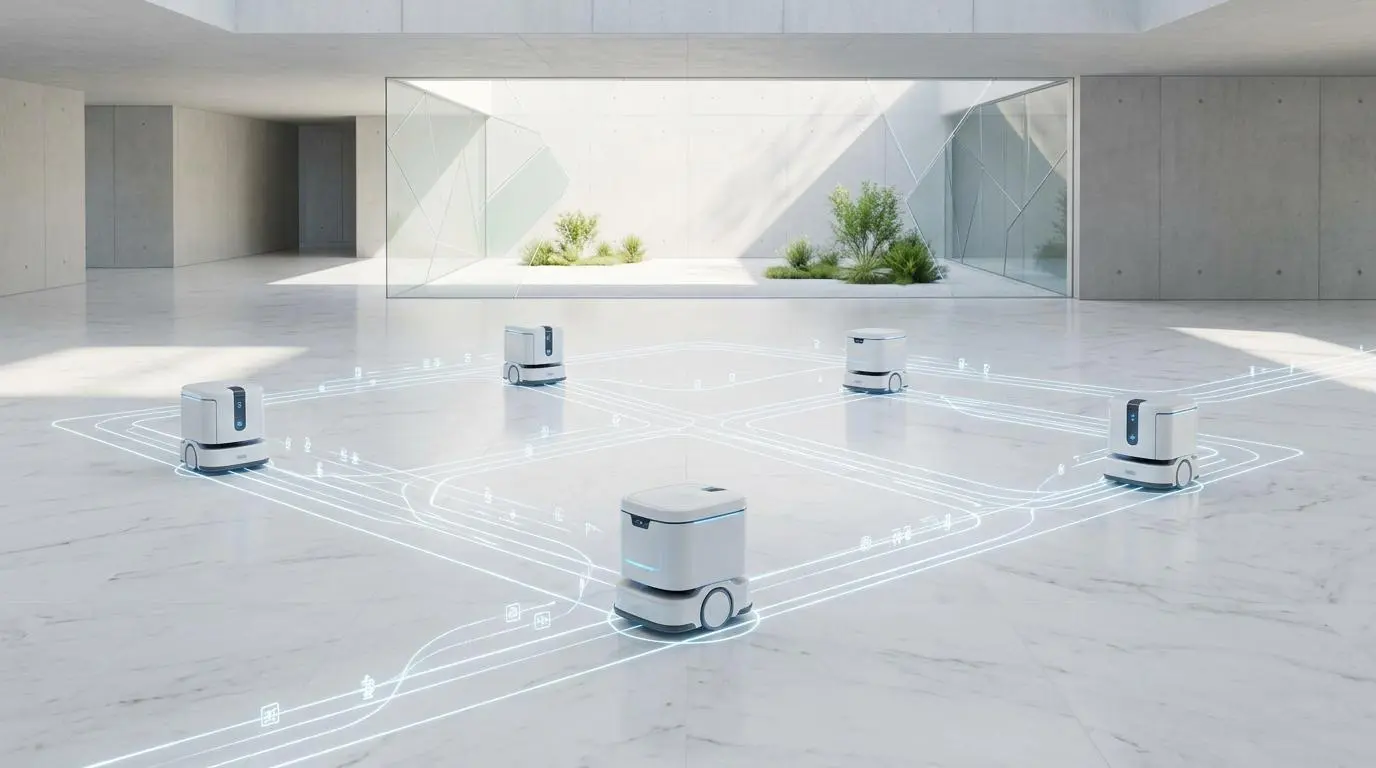
Single-agent bottlenecks often lead to frustrating logic loops and stalled execution during complex enterprise software migrations. Relying on one model to handle everything is like asking a single chef to chop, boil, bake, and serve simultaneously. Eventually, the cognitive load becomes too heavy, and the entire operation grinds to a halt.
The May 2026 launch of Agent Teams within the Claude 4.8 Opus API completely changes this dynamic. It allows for the native spawning and parallel coordination of highly specialized sub-agents. This multi-agent swarming distributes the workload efficiently across the entire system.
To prevent cross-agent state synchronization latency, the system utilizes a proprietary Agentic Protocol. This protocol seamlessly synchronizes state across specialized workers, such as a researcher and a coder, within a single session. The result is a perfectly coordinated digital brigade that executes complex workflows without dropping a single task.
Taming the Terabyte Ocean

Even with massive million-token windows, models inevitably experience information retrieval decay right in the middle of the context. It is similar to a brilliant librarian getting hopelessly lost in the middle aisles of a massive, unmapped library. Because of this, traditional retrieval-augmented generation remains absolutely necessary for navigating multi-terabyte internal data lakes.
Anthropic tackled this friction with their Context Engineering framework, released in early 2026. This system provides platform primitives for context editing and memory tools. It allows developers to actively prune redundant tokens, ensuring the model maintains peak performance and instruction adherence over long horizons.
However, this massive context capability comes with an economic twist known as the Opus 4.7 Tokenizer Density Shift. Anthropic introduced a new tokenizer that generates up to 35% more tokens for the same input text compared to previous versions. While per-token pricing remained stable, the effective enterprise cost per request rose significantly, forcing architects to be highly strategic with their data payloads.
Replacing Fences With Compasses

In high-stakes fields like automated cybersecurity or financial forensic auditing, rigid safety guardrails often block legitimate autonomous actions. This over-refusal problem severely hampers agentic utility. It is like trying to drive a high-performance sports car with an emergency brake that randomly engages at every minor pothole.
To fix this, Anthropic published the New Constitution, also known as Constitutional AI 2.0, in January 2026. This comprehensive framework fundamentally shifted Claude’s alignment from strict, rule-based constraints to fluid, reason-based principles.
Instead of hitting a hardcoded wall, the model can now generalize ethical decisions in novel, agentic scenarios where traditional rules fail. This allows enterprise agents to safely execute complex, multi-step forensic audits without constantly halting for human overrides.
Giving Eyes and Hands to Algorithms
Modern APIs are incredible, but countless enterprise workflows still rely on legacy ERP systems that lack modern endpoints. The Claude Computer Use API bridges this gap by allowing models to perceive and control virtual desktops via screenshot analysis and mouse event injection. It effectively gives eyes and hands to the algorithm.
However, vision-based UI automation naturally suffers from high latency and pixel-level inaccuracies. Navigating a legacy interface visually is like trying to walk through a dark room by feeling the furniture instead of just turning on the light. It requires a meticulous reason-act-verify loop to ensure accuracy.
This continuous verification process can consume significant token budgets compared to traditional script-based robotic process automation. Enterprise architects must carefully weigh the token costs of cognitive automation against the sheer operational agility it provides when dealing with outdated software environments.
The Dawn of Sub-Agentic Kernels
By 2027, the enterprise landscape will shift away from traditional API-called agents toward sub-agentic kernels. In this near future, Claude-based reasoning will be integrated directly into the operating system’s background processes. This will enable autonomous, multi-day task execution with zero human intervention and seamless local state persistence.
Navigating the intersection of enterprise AI, infrastructure scaling, and workflow automation requires a sharp strategy. To future-proof your company’s AI operations and scale with precision, connect with Andres at Andres SEO Expert.
Frequently Asked Questions
What is Context Rot in autonomous AI workflows?
Context Rot is the reasoning decay that occurs in long-horizon autonomous tasks where large language models lose instruction adherence as tools and agents accumulate million-token execution histories. The Claude 4 Agentic Reasoning Framework was designed specifically to stabilize these workflows and maintain logic over long periods.
How effective is Claude Opus 4.6 at resolving software engineering tasks?
Claude Opus 4.6 has set a new industry benchmark with an 80.8% SWE-bench Verified Success Rate. This indicates the model is capable of compiling, testing, and iterating on real-world GitHub issues at a level comparable to senior engineering talent.
What is the Opus 4.7 Tokenizer Density Shift?
The Tokenizer Density Shift refers to a 2026 update where Anthropic’s new tokenizer generates up to 35% more tokens for the same input text compared to previous versions. While per-token pricing remains stable, this shift effectively increases the enterprise cost per request by approximately 35%.
How does the Claude Computer Use API automate legacy ERP systems?
The Computer Use API (Beta v2026) allows AI models to perceive and control virtual desktops via screenshot analysis and mouse/keyboard event injection. This enables models to interact with legacy software that lacks modern APIs by utilizing a Reason-Act-Verify loop.
What are the benefits of Constitutional AI 2.0 for enterprise agents?
Constitutional AI 2.0, or the New Constitution, shifts Claude’s alignment from rigid, rule-based constraints to fluid, reason-based principles. This helps solve the Over-refusal Problem, allowing enterprise agents to perform complex, high-stakes tasks like forensic audits without being blocked by hardcoded safety walls.
What are Sub-Agentic Kernels in the context of 2027 AI strategy?
Sub-Agentic Kernels represent the next evolution of AI infrastructure where Claude-based reasoning is integrated directly into operating system background processes. This architecture enables autonomous, multi-day task execution with local state persistence and minimal human intervention.