Key Points
- Massive Context Ingestion: Process up to 1,000,000 tokens instantly to analyze entire enterprise codebases without losing semantic coherence.
- Autonomous Orchestration: Deploy an Advisor-Executor agent framework that automatically decomposes and executes complex, multi-step engineering tasks.
- Zero-Data-Retention Security: Ensure strict HIPAA and SOC 2 compliance through audited, regional data residency environments that prevent model-training leakage.
Table of Contents
The Corporate Memory Bottleneck
Imagine hiring a brilliant executive assistant who forgets every conversation, project detail, and company policy the second they walk out of the room. This frustrating dynamic is exactly what modern organizations face when deploying consumer-grade AI across complex departments.
We call this the Enterprise Knowledge Symmetrization Gap. It represents the deep conflict between needing an AI to understand massive amounts of proprietary data and the strict security requirement that none of that data can be retained. The Anthropic Claude Enterprise Platform was engineered specifically to solve this exact bottleneck.
It transforms disjointed AI chatbots into secure, autonomous engines that actually remember how your business operates. Enterprise leaders are rapidly discovering that scaling intelligence requires more than just a clever prompt interface. It requires a fundamental shift in how corporate memory is processed, governed, and deployed across everyday workflows.
Measuring the Automation Shift
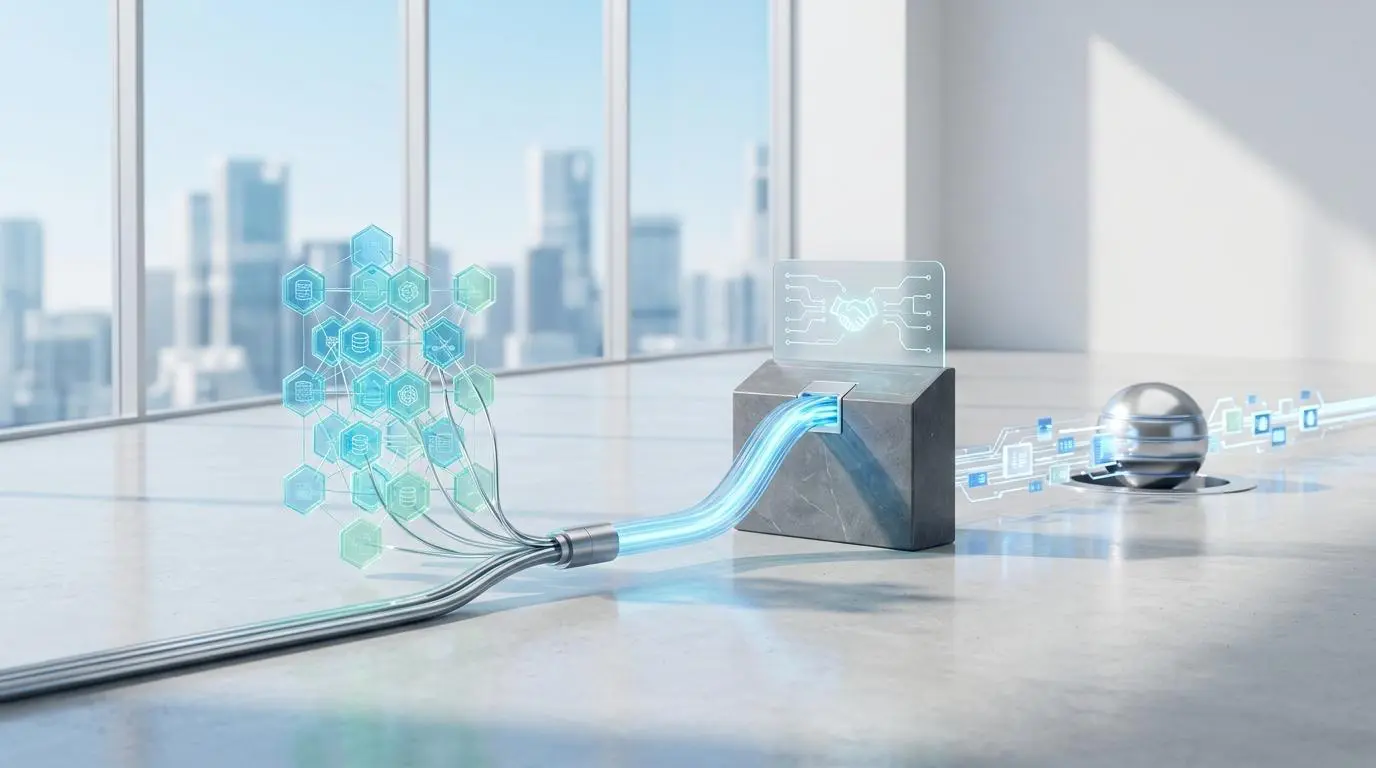
By April 2026, Anthropic reached a staggering $30 billion annualized revenue run-rate. This massive financial milestone is driven largely by enterprise teams abandoning fragmented AI tools for cohesive, scalable infrastructure.
The real engine behind this adoption is Claude Opus 4.6 and its groundbreaking 1,000,000-token context window. This milestone allows companies to ingest massive proprietary repositories instantly without losing the broader picture.
To connect this vast memory directly to internal databases like Snowflake without complex middleware, developers rely heavily on the Model Context Protocol (MCP). This zero-configuration connectivity is revolutionizing how data is synthesized.
Furthermore, when structured APIs fall short in executing tasks across legacy systems, the platform bridges the gap natively. Organizations are automating these stubborn, interface-bound workflows using the Computer Use API. The combination of these technologies dramatically reduces inference latency while driving unprecedented operational efficiency.
Autonomous Team Orchestration
Manual oversight of complex, multi-step engineering logic remains the primary bottleneck for scaling artificial intelligence. Human operators simply cannot babysit every single micro-task a model performs without defeating the purpose of automation entirely.
The Claude Managed Agents framework introduces a brilliant Advisor-Executor pattern to solve this exact scaling issue. Think of the Advisor as a master general contractor who receives a massive project goal. This lead coordinator model instantly decomposes the main objective into smaller sub-tasks, dispatching them to parallelized worker agents.
New Agent View APIs allow human managers to monitor these concurrent, long-running sessions seamlessly. This eliminates the need for constant human intervention while providing automated dashboard updates for complete project transparency.
When an enterprise transitions from chat-based assistance to dispatchable goal completion, the entire operational paradigm shifts. Teams are no longer spending hours prompting an AI; they are simply assigning outcomes and walking away. This fundamental shift allows engineering and operations teams to reclaim thousands of hours previously lost to manual task management.
Furthermore, Anthropic has launched a research preview known as Dreaming to enhance this orchestration. This background agentic process allows Claude to asynchronously review past user sessions and extract strategic lessons. It autonomously updates its internal project memory to improve future performance without requiring any new human fine-tuning data.
Eliminating the Fragmentation Trap

Traditional Retrieval-Augmented Generation systems frequently suffer from severe semantic fragmentation. This happens when the global context of a project is lost because documents are chopped into tiny, disconnected vector chunks.
It is like shredding a technical manual into a thousand pieces and hoping the AI can tape it back together perfectly. The Claude 4.x series models bypass this limitation entirely with their massive context window capacities.
Native million-token environments enable the model to maintain absolute coherence across entire enterprise codebases in a single prompt. This means developers no longer have to compromise on the depth of the information they feed into the system.
Coupled with the latest connectivity protocols, this creates zero-config bridges to internal enterprise databases and GitHub repositories. Teams can synthesize real-time knowledge without ever losing the nuanced, overarching logic of their proprietary architecture.
In the past, engineering teams spent countless hours building complex vector databases just to make their AI semi-functional. These legacy RAG architectures were expensive to maintain and notoriously prone to hallucinating critical details.
By eliminating the need to chunk data, Anthropic has effectively obsoleted an entire category of cumbersome middleware. This streamlines the deployment pipeline, allowing enterprises to launch internal AI tools in days rather than months.
Ironclad Governance and Compliance
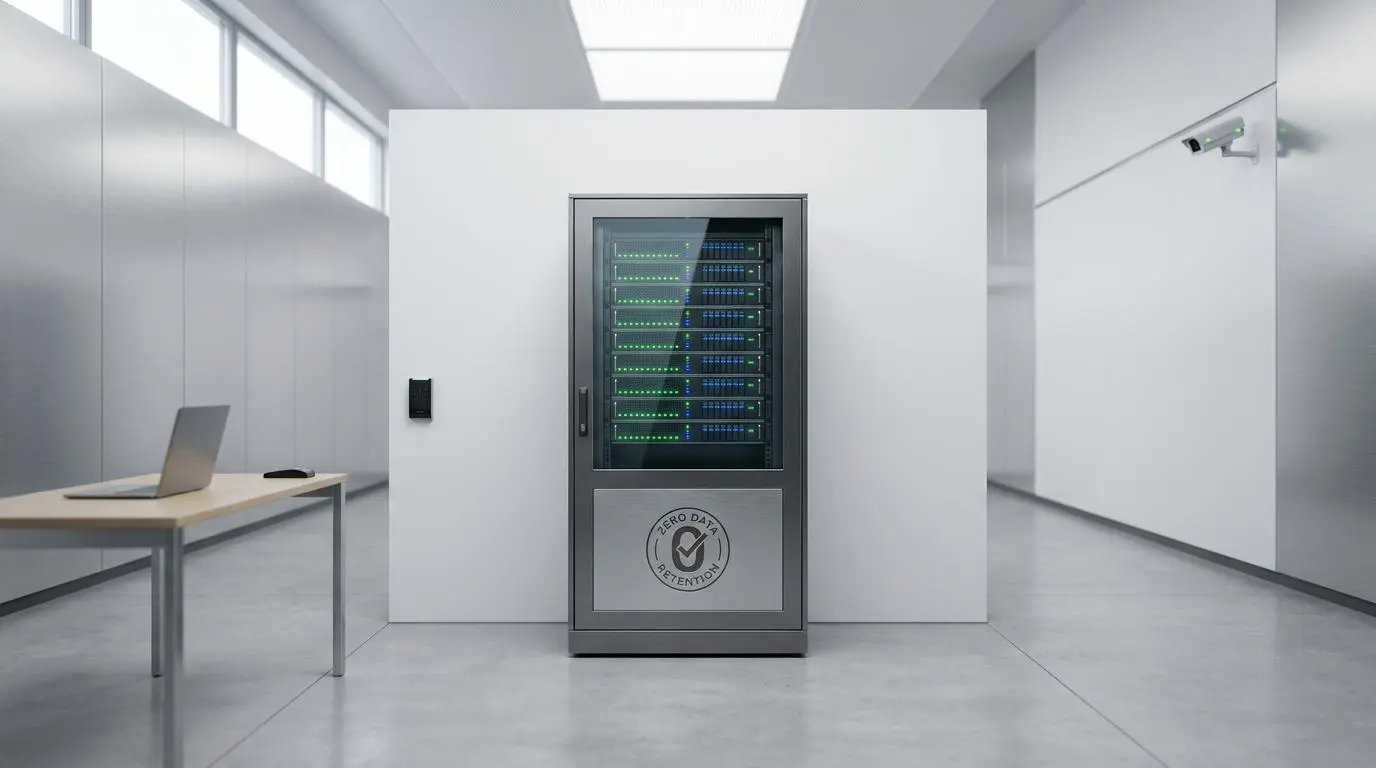
Regulated industries like pharmaceuticals and finance have historically been blocked from meaningful AI adoption. Strict data retention policies and fear of proprietary information leaking into public training data created an insurmountable wall.
The Anthropic Claude Enterprise Platform completely removes this friction through sophisticated engineering. Featuring audited zero-data-retention architectures, the platform ensures that your proprietary inputs disappear the moment the session ends.
The introduction of HIPAA-ready tiers includes mandatory Business Associate Agreements and regional EU data residency as a contractual default. This guarantees that sensitive financial models or patient data never leave designated geographic boundaries.
Furthermore, enterprise security teams gain absolute visibility into agent behaviors across the entire corporate network. The integrated Trust Center connects directly with standard SIEM tools to provide real-time audit logs for all automated actions.
Security leaders no longer have to choose between innovation and data protection. The zero-data-retention architecture ensures that intellectual property remains strictly within the company’s control at all times.
By defaulting to regional EU data residency, Anthropic also solves the complex web of international data sovereignty laws instantly. This proactive approach to compliance is why the platform is rapidly becoming the gold standard for enterprise risk management.
The End of Legacy Interface Friction
Significant portions of enterprise operations remain trapped in legacy graphical user interfaces that completely lack modern API hooks. You cannot automate a workflow if the software refuses to talk to your modern infrastructure through standard code.
Computer-use agents solve this notorious last-mile automation problem by acting as digital employees. By leveraging upgraded visual processing capabilities, Claude turns into an execution platform capable of navigating legacy ERP systems visually.
It clicks, types, and scrolls through interfaces exactly like a human operator would. This eliminates the need for expensive, fragile middleware integrations that frequently break during system updates.
In recent benchmarks, Claude Opus 4.7 achieved an OSWorld-Verified score of 78.0 percent. This significantly exceeds the human baseline for autonomous desktop navigation, proving its reliability in complex environments.
Traditional Robotic Process Automation tools were incredibly brittle, breaking the moment a button moved on a screen. Cognitive automation represents RPA 2.0, where the agent actually understands the visual context of the interface it is navigating.
If a pop-up appears or a menu changes, the AI dynamically adjusts its execution path without requiring human reprogramming. This resilient approach to desktop automation unlocks massive ROI for companies burdened by decades-old software infrastructure.
The Dynamic Thinking Horizon
By 2027, this platform will evolve into Dynamic Thinking environments powered by Anthropic’s massive 5 GW compute agreement with Google and Broadcom. Models will autonomously scale their own inference compute per-token based on the specific difficulty of a task.
This effectively shifts enterprise AI from generating static responses to performing iterative background reasoning for complex professional tasks. The days of simple chatbots are over, replaced by deeply integrated cognitive engines that anticipate business needs.
As iterative background reasoning becomes the standard, AI will handle up to 50 percent of professional knowledge tasks autonomously. Organizations that fail to adopt these dynamic thinking environments will quickly find themselves outpaced by competitors leveraging autonomous workflows.
Navigating the intersection of Enterprise AI, infrastructure scaling, and workflow automation requires a sharp strategy. To future-proof your company’s AI operations and scale with precision, connect with Andres at Andres SEO Expert.
Frequently Asked Questions
What is the Enterprise Knowledge Symmetrization Gap?
The Enterprise Knowledge Symmetrization Gap is the conflict between an organization’s need for AI to process vast amounts of proprietary data and the strict security requirement that none of that data be retained. Claude Enterprise solves this via an audited zero-data-retention architecture.
How does the 1,000,000-token context window improve corporate memory?
The massive context window allows Claude to ingest entire repositories or codebases in a single prompt. This eliminates the need for traditional RAG systems that chunk data into small pieces, preventing semantic fragmentation and maintaining global coherence across complex projects.
What is the purpose of the Model Context Protocol (MCP)?
The Model Context Protocol (MCP) provides zero-configuration connectivity between Claude and internal enterprise databases like Snowflake or GitHub. It allows developers to synthesize real-time knowledge directly without building complex, custom middleware integrations.
How does the Advisor-Executor pattern scale autonomous workflows?
In this orchestration framework, a lead Advisor model decomposes a project goal into sub-tasks and dispatches them to parallelized worker agents. This allows teams to assign outcomes rather than manual prompts, reclaiming thousands of hours lost to task management.
Can Claude Enterprise automate legacy software without APIs?
Yes, through the Computer Use API. Claude can visually navigate legacy ERP systems and graphical user interfaces by clicking, typing, and scrolling like a human operator. This cognitive automation is more resilient than traditional RPA because it understands the visual context of the interface.
What compliance standards does the Claude Enterprise Platform support?
The platform includes HIPAA-ready tiers with mandatory Business Associate Agreements (BAAs), regional EU data residency defaults, and zero-data-retention architectures, making it suitable for highly regulated industries like finance and healthcare.