Key Points
- Semantic Chunking Validation: Implementing H-Structure content formatting ensures your facts are cleanly extracted within Perplexity’s 512-token RAG windows, bypassing enterprise CMS DOM noise.
- Automated Freshness Protocols: Leveraging API-driven updates to refresh statistical data points within a 60-day rolling window triggers a 3.3x reranking priority in AI retrieval indices.
- Knowledge Graph Anchoring: Mapping on-site entities directly to 2026 Wikidata IDs via JSON-LD satisfies the XGBoost quality gate, preventing competitor attribution and entity hallucination.
Table of Contents
The Extractability Barrier in AI Search
Think of traditional search engines like scanning a dusty library catalog, where you hunt for a book based on a few broad keywords.
Generative Engine Optimization, however, is like earning a direct recommendation from a highly trusted personal assistant who has already read every book in the world.
This monumental shift requires a completely new approach to how we structure digital information. We are no longer optimizing for human scrolling, but rather for instant machine comprehension and rapid retrieval.
The greatest hurdle modern brands face in this new landscape is the extractability barrier. Perplexity’s retrieval-augmented generation pipeline prioritizes high-density fact nodes over traditional keyword-stuffed documents.
This means that highly authoritative content often fails to rank simply because it is not structured for modular ingestion by large language models.
Your insights might be brilliant. However, if the AI cannot cleanly extract them, you simply do not exist in the generative search ecosystem.
Decoding the Retrieval Metrics of AI Engines

To truly master AI search visibility, we must look at the raw data driving the retrieval pipelines. Recent industry analysis reveals a massive 32% semantic concept density gap in modern generative engines.
This means that content cited by Perplexity contains significantly more explicit semantic concepts per hundred words compared to uncited content.
The AI is actively filtering out marketing fluff. Instead, it prioritizes dense, highly structured factual signals.
This filtering process is highly sophisticated and relies on advanced machine learning models to grade your content in real-time.
Perplexity’s retrieval pipeline includes a specific XGBoost quality gate that mandates a strict minimum entity clarity threshold.
If your content fails to meet this threshold, secondary aggregator sources are de-ranked by up to 65% in favor of primary observation signals. You can explore the granular mechanics of this filtering process by studying recent industry research on how these algorithms score your pages.
Furthermore, historical authority is no longer enough to guarantee a top citation. Recent data reveals a powerful 3.3x freshness multiplier governing the current search landscape.
Content that has been updated within the last 60 days receives a massively higher reranking priority in Perplexity’s real-time index.
If your facts are stagnant, the engine will simply bypass your site for a more recently updated source.
Structuring Content for Semantic Chunking
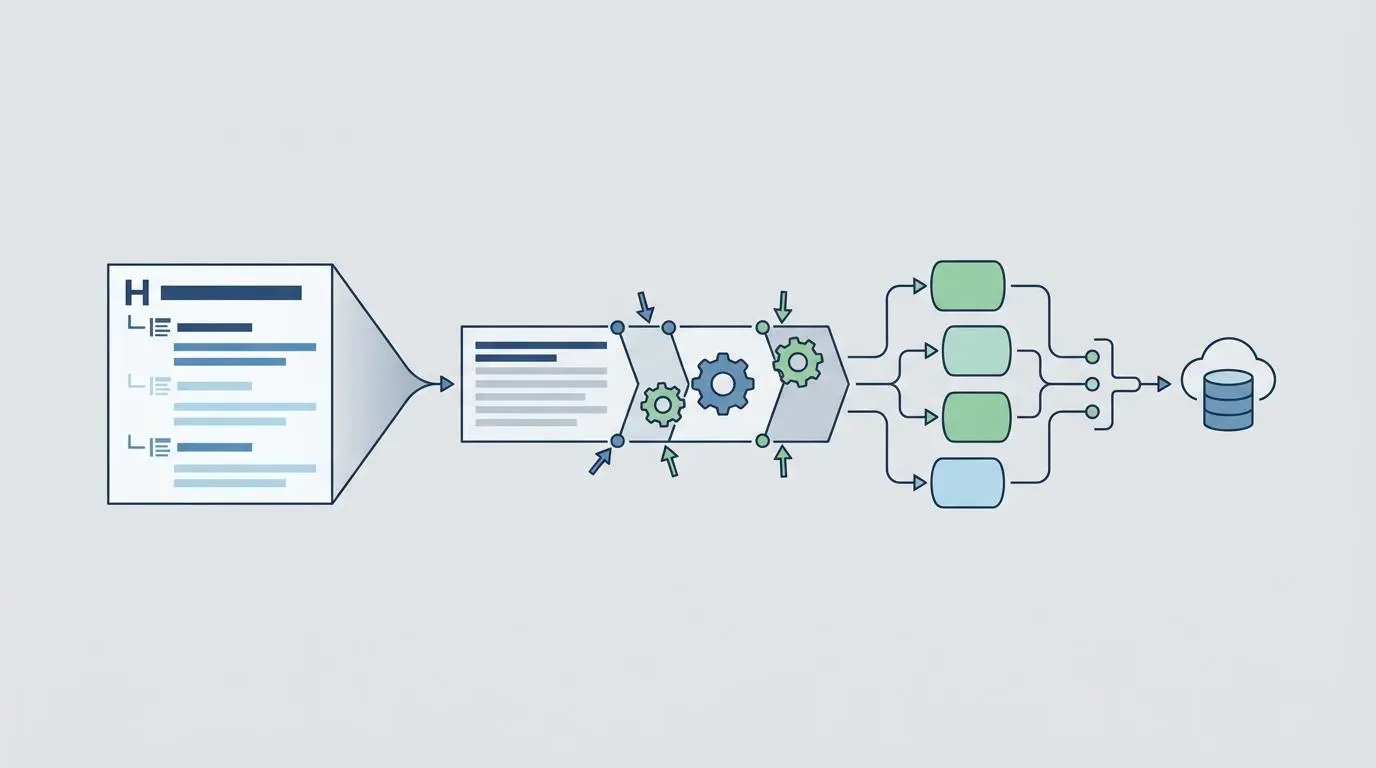
Perplexity utilizes a rigorous six-stage retrieval-augmented generation pipeline to process and deliver answers.
At the heart of this system is the L3 reranker, which meticulously evaluates your content for entity density and direct answer architecture.
To survive this evaluation, your website must serve information in perfectly sized, digestible pieces. Think of your website like a giant warehouse where the AI is a forklift; if your pallets are too wide for the aisles, your inventory stays hidden forever.
Optimization for this pipeline requires implementing what we call H-Structure semantic chunking.
This architectural approach ensures that your core facts are easily retrievable within the strict 512-token windows that large language models use to parse text.
By organizing your content under clear, hierarchical headings, you create a seamless map for the AI to follow. This structural clarity is the absolute foundation of modern generative visibility.
Unfortunately, the real-world friction of enterprise technology often destroys this pristine structure. Most enterprise content management systems inject excessive DOM noise and unnecessary boilerplate code into every page.
This bloated code disrupts the semantic continuity of LLM parsers as they attempt to read your site.
Consequently, brands suffer a devastating 45% lower citation rate simply because their content is not modular enough for the engine to digest cleanly.
Winning the Freshness Bias With Automation
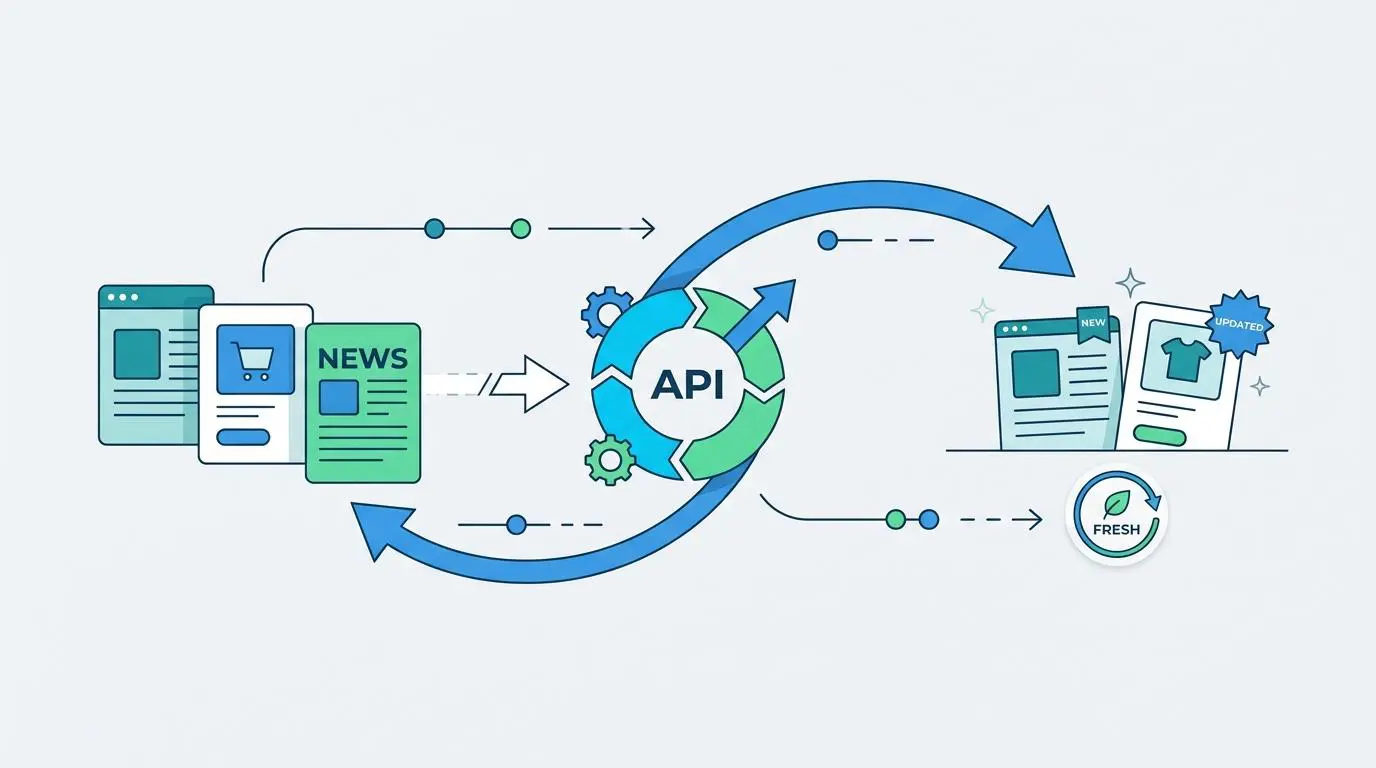
As we noted with the freshness multiplier, AI search engines possess a ravenous appetite for the most current data available.
The engine exhibits a massive bias for content updated within a 60-day rolling window, treating older information with extreme skepticism.
An AI engine treats stagnant content like yesterday’s weather report, assuming it is no longer relevant to the user’s immediate query.
To maintain citation dominance, forward-thinking brands are deploying API-driven freshness protocols.
These automated systems programmatically update lastmod tags and refresh statistical data points across the website without human intervention.
By constantly feeding the engine updated signals, you trick the crawler into viewing your domain as a highly active, real-time data source. This continuous pinging is essential for staying at the top of the L3 reranking queue.
Without these automated protocols, static evergreen content suffers from a silent killer known as programmatic decay.
This occurs when LLM crawlers actively de-prioritize older nodes in your architecture over time.
Even if your older article is factually superior and more comprehensive, the engine will often cite a newer, less authoritative source simply because its timestamp aligns with the freshness bias.
Eliminating Hallucinations Through Entity Mapping

The XGBoost quality gate we discussed earlier does not just look for semantic density; it specifically filters for absolute entity clarity.
When an AI reads your content, it needs to know exactly who or what you are talking about without any room for misinterpretation.
It is the difference between telling a delivery driver you live in the blue house versus giving them exact GPS coordinates. Ambiguity is the ultimate enemy of generative engine optimization.
Programmatic SEO workflows must now incorporate advanced JSON-LD schemas to map on-site entities directly to external databases.
By linking your brand and product names to their corresponding 2026 Wikidata and Knowledge Graph IDs, you eliminate all ambiguity during the extraction phase.
This precise mapping tells the AI exactly which real-world entity owns the facts presented on the page.
When you fail to provide this explicit mapping, you invite disaster in the form of entity hallucination.
Ambiguous brand names confuse the language model, causing it to mix up your data with similar-sounding companies.
This real-world friction frequently results in the AI taking your hard-earned research and attributing it entirely to a competitor with a stronger, clearer knowledge graph presence.
Navigating Crawler Security and Rate Limits
Perplexity does not rely on a single web crawler to build its vast intelligence network.
Instead, it utilizes a sophisticated multi-bot system consisting of PerplexityBot for initial indexing and Perplexity-User for live, browser-based retrieval.
Understanding the distinct roles of these two agents is critical for ensuring your content actually reaches the end user. If your server blocks either of these bots, your generative visibility instantly drops to zero.
Modern best practices require dynamic web application firewall automation to manage this traffic safely.
Security teams must configure their systems to perform daily JSON IP-range fetches directly from the source to avoid accidental rate-limiting.
You must integrate these automated updates by referencing official daily IP lists to ensure uninterrupted access for the crawlers.
The real-world friction here lies in overly aggressive security configurations that treat AI agents like malicious scrapers.
Firewalls often block the Perplexity-User agent during deep, real-time research threads initiated by human users.
This results in complete source exclusion, where the engine cannot verify your facts live, even if your content is already sitting perfectly structured in the main index.
The Dawn of Source-Agent Sandboxes
The landscape of generative engine optimization is evolving at a breakneck pace, and the static web pages of today will soon be obsolete.
By 2027, the industry will experience a massive shift toward source-agent sandboxes.
Websites will no longer just host content; they will host specialized, sandboxed APIs designed specifically for AI consumption.
These advanced endpoints will allow Perplexity’s research agents to execute site-side code and access real-time databases securely.
This evolution will guarantee verifiable, zero-hallucination responses by letting the AI pull raw data directly from the source.
Brands that begin structuring their architecture for this reality today will hold an insurmountable advantage in the generative search wars of tomorrow.
Navigating the intersection of Generative Engine Optimization, AI Search architecture, and workflow automation requires a sharp strategy.
To future-proof your brand’s visibility in LLMs and scale with precision, connect with Andres at Andres SEO Expert.
Frequently Asked Questions
What is the extractability barrier in AI search visibility?
The extractability barrier is a hurdle where high-quality content fails to rank because it is not structured for modular ingestion by large language models. AI engines prioritize high-density fact nodes over traditional keyword-stuffed documents, meaning brilliant insights must be cleanly extractable to exist in the generative ecosystem.
How does content freshness impact Perplexity retrieval rankings?
Modern AI engines apply a 3.3x freshness multiplier to content. Documents updated within a 60-day rolling window receive significantly higher reranking priority in real-time indexes, as the L3 reranker treats stagnant content with skepticism regarding its immediate relevance.
What is H-Structure semantic chunking for GEO?
H-Structure semantic chunking is an architectural approach that organizes content into clear, hierarchical headings to fit within the 512-token windows used by LLM parsers. This structural clarity ensures that core facts are easily retrievable by the engine’s forklift-like retrieval mechanisms.
How can entity mapping prevent AI hallucinations for brands?
By using JSON-LD schemas to link brand and product names to Wikidata or Knowledge Graph IDs, you provide absolute entity clarity. This mapping eliminates ambiguity during the extraction phase, ensuring AI models attribute research and facts to the correct real-world entity rather than a competitor.
What is the XGBoost quality gate in AI search algorithms?
The XGBoost quality gate is a machine learning filter used in retrieval pipelines to mandate strict entity clarity thresholds. Content that fails to meet these semantic concept density standards can be de-ranked by up to 65% in favor of more structured primary observation signals.
Why should I distinguish between PerplexityBot and Perplexity-User?
PerplexityBot is used for initial indexing, while Perplexity-User is an agent for live, browser-based retrieval initiated by human queries. If a firewall blocks either agent, the engine cannot verify facts in real-time, causing your content to be excluded from generative answers even if it is already indexed.