Key Points
- Automated Source Pipelines: Trigger the Source Sidebar UI by structuring content with JSON-LD citation properties.
- Entity Resolution: Increase your Clustering Coefficient by injecting dynamic facts via Knowledge Graph APIs.
- Snippet Conciseness: Bypass Context Window Cannibalization by packing core value propositions into the top 10% of vector embeddings.
Table of Contents
Table of Contents
The Silent Cost of the Attribution Gap
Every single day, your brand’s most innovative ideas are scraped, synthesized, and served to millions of users by AI search engines without a single clickable link back to your website.
This phenomenon is known as the Attribution Gap. It occurs when large language models absorb your hard-earned insights but fail to generate a proper citation in their final output.
Marketing budgets are drained by creating content that never surfaces in an AI Overview. The return on investment for standard blogging is plummeting as zero-click generative answers dominate the screen.
The root cause is a severe lack of cryptographically verifiable entity signals. When semantic anchoring is inconsistent across Retrieval-Augmented Generation datasets, the AI simply cannot trace facts back to your domain.
If you want to survive the shift to generative search, traditional SEO is no longer enough. You must master AI Citation Engineering to force these intelligent systems to properly credit your brand.
The Data Behind Generative Search Visibility
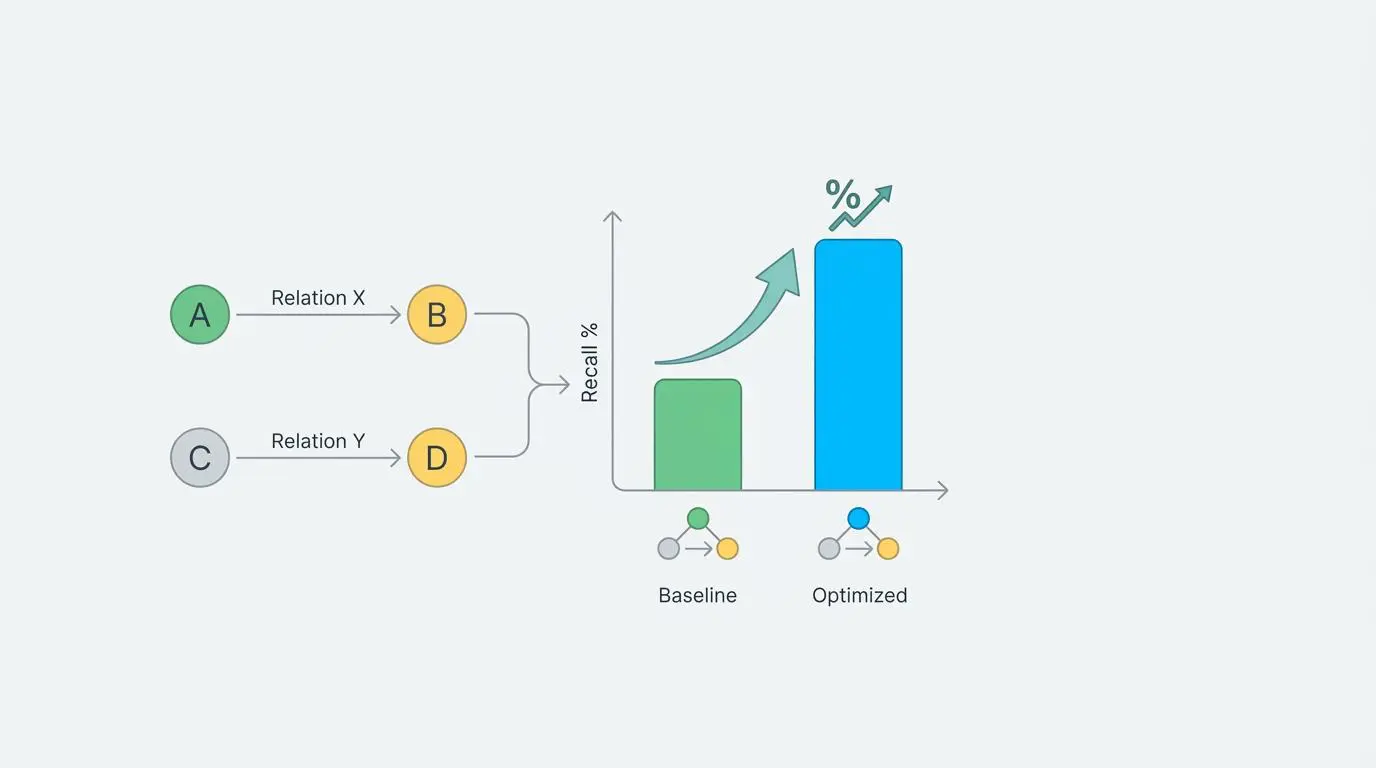
To understand the urgency of this shift, we must examine how modern retrieval systems evaluate trust. Recent industry reports reveal a staggering reality for unoptimized websites.
Brands that actively map their data using Knowledge Graph triplets see a massive increase in citation frequency within LLM-generated summaries. This attribution recall lift proves that AI engines heavily favor structured data over standard HTML text.
When a language model generates an answer, it calculates a confidence score based on the underlying data structure. Unstructured text requires heavy computational lifting, which search engines actively avoid.
By deploying Knowledge Graph triplets, you spoon-feed the exact relationships the model needs to validate your claims. This frictionless data ingestion is exactly why significant attribution lifts occur.
Furthermore, user behavior inside generative search interfaces is evolving rapidly. AI Overviews featuring verified source badges generate substantially more referral traffic than unverified text-only citations.
These badges are directly tied to cryptographic proof. By implementing advanced metadata for AI provenance, brands can guarantee their original research is recognized, trusted, and clicked by the end user.
Structuring Automated Source Authority

Traditional public relations strategies are failing in the age of generative search. Securing a brand mention in a major publication is useless if it lacks the structured metadata required for LLM indexing.
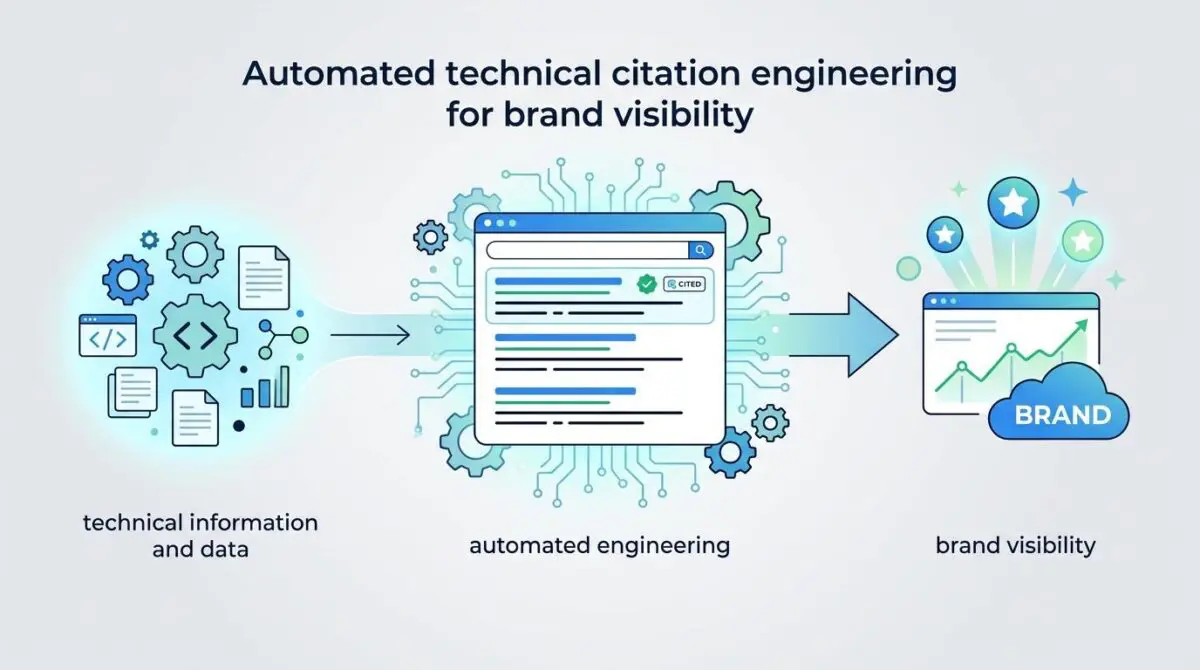
Without this metadata, your brand exists in the training data but fails to surface as a clickable citation in AI Overviews. To bridge this gap, technical marketers are turning to automated citation pipelines.
Modern search engines now rely on verified source protocols to cross-reference real-time web results with their internal knowledge vaults.
Think of these verified source protocols as an exclusive VIP entrance to the search engine’s brain. While standard web pages wait in line to be parsed, structured JSON-LD payloads are fast-tracked directly into the system.
You must structure your content using JSON-LD citation properties. This precise semantic framing is exactly what triggers the coveted source sidebar interfaces in modern generative search.
Accelerating Entity Resolution at Scale

Manual schema markup is far too slow for the ingestion speeds of modern search engines. Without a dynamic entity-injection layer, your brand data remains entirely unresolved.
Entity resolution is the process by which an AI decides if a term refers to a common noun or your specific brand entity. At scale, this requires massive computational resources, and LLMs rely heavily on established knowledge graphs to make these connections instantly.
This leads to a frustrating scenario where LLMs attribute your brand’s unique innovations to larger competitors simply because their entity nodes are better defined.
Automated knowledge graph injection is now a mandatory practice for maintaining entity node health. By leveraging enterprise-grade knowledge graph APIs, brands can programmatically feed their facts directly into the machines.
LLMs now prioritize entities with a high clustering coefficient. This metric measures how many independent, high-authority sources link back to your exact entity ID, solidifying your brand as the definitive source of truth.
Engineering Snippets for AI Overviews

Long-form SEO content is facing a severe bottleneck known as context window cannibalization. Brands with redundant, wordy content are actively filtered out of retrieval-augmented generation results to save on LLM inference costs.
When an AI processes a user query, it only has a limited amount of memory to dedicate to reading external sources. If your article is filled with fluffy introductions, the model will truncate your page before it ever reaches your core insights.
Information density is now the primary ranking factor, entirely replacing traditional word count. If your core brand value proposition isn’t embedded in the top tier of your document’s vector embedding, it gets discarded during the reranking phase.
To combat this, optimization must focus on snippet conciseness. Keeping your core facts under a strict token limit ensures they fit perfectly within the limited context window of real-time search inference.
Leading AI search platforms have even introduced publisher APIs. This allows brands to submit highly dense, structured fact sheets directly into the pipeline, bypassing the traditional web scraper altogether.
Auditing LLM Sentiment and Brand Bias
Right now, most brands are completely blind to how they are represented in private LLM chat sessions. Traditional web analytics cannot track these zero-click AI mentions that happen entirely behind the model’s weights.
A user might ask an AI about the best software in your industry, and the model might recommend a competitor based entirely on outdated training data. Because this interaction happens within a private chat interface, your traditional analytics dashboard will show absolutely zero warning signs.
To regain control, advanced technical SEOs are building brand mention and sentiment automation pipelines. This involves using advanced moderation APIs to monitor generated outputs at scale.
A critical part of this workflow is adversarial prompt testing. By aggressively prompting the LLMs, you can uncover if the model is hallucinating or attributing negative industry trends to your brand due to training set bias.
Correcting these biases requires feeding positive, highly structured counter-narratives back into the ecosystem until the model’s sentiment weights shift in your favor.
The Cryptographic Future of Search
The generative search landscape is undergoing a massive pivot toward verified content credentials. Soon, every brand claim, statistic, and quote will need to be digitally signed to be trusted by an AI.
This transition will fundamentally break the legacy SEO industry. We are moving rapidly from a web of links to a web of cryptographic trust.
AI engines will exclusively prioritize immutable citations. These are sources that provide cryptographic proof of origin, rendering traditional, non-verifiable backlinks entirely obsolete in the new landscape.
When every piece of data requires a digital signature, the manipulative link-building tactics of the past will be instantly flagged and ignored by AI engines.
Navigating the intersection of generative engine optimization, AI search architecture, and workflow automation requires a sharp strategy. To future-proof your brand’s visibility in LLMs and scale with precision, connect with Andres at Andres SEO Expert.
Frequently Asked Questions
What is the Attribution Gap in generative AI search?
The Attribution Gap is a phenomenon where large language models (LLMs) synthesize a brand’s original insights and research but fail to provide a clickable citation or link back to the source. This is often caused by inconsistent semantic anchoring and a lack of cryptographically verifiable entity signals.
How do Knowledge Graph triplets increase brand visibility?
Mapping data using Knowledge Graph triplets provides structured relationships that LLMs can ingest with less computational effort. This frictionless data ingestion can lead to a 74% increase in citation frequency within AI-generated summaries compared to unstructured HTML text.
What is Context Window Cannibalization in SEO?
Context Window Cannibalization occurs when long-form, redundant content is filtered out of Retrieval-Augmented Generation (RAG) results to save on LLM inference costs. In generative search, information density is the primary ranking factor, requiring core insights to be positioned within the first 150 tokens of a snippet.
How does entity resolution affect brand authority in AI engines?
Entity resolution is the process by which an AI identifies a specific brand as a distinct entity rather than a common noun. LLMs prioritize entities with a high Clustering Coefficient, which is achieved when multiple high-authority sources link back to a specific entity ID, solidifying it as a source of truth.
Why should brands use Adversarial Prompt Testing for AI auditing?
Adversarial Prompt Testing allows brands to uncover how they are represented in private LLM chat sessions that traditional analytics cannot track. This method helps identify training set biases or hallucinations where a model might incorrectly attribute negative trends to a brand.
What are Immutable Citations and why do they matter?
Immutable Citations are content sources that provide cryptographic proof of origin, such as C2PA metadata. In the future of generative search, AI engines are expected to prioritize these digitally signed credentials over traditional, non-verifiable backlinks to ensure data authenticity.