




Key Points
- Automating self-service RMA workflows eliminates the 24-48 hour return deadzone, directly boosting customer retention and reducing support ticket volumes.
- Webhook-to-label integrations utilizing platforms like Make and EasyPost bypass the need for custom coding, enabling instant, condition-based label generation.
- Implementing real-time address validation APIs prevents costly carrier correction surcharges and minimizes automated label generation failures at scale.
Table of Contents
- Escaping the E-Commerce Return Deadzone
- The Financial Weight of Reverse Logistics
- Eradicating Manual Database Cross-Referencing
- Deploying Webhook-to-Label Workflows
- Designing Zero-Touch Customer Portals
- Preventing API Rate Limits and Address Errors
- Calculating the Micro-Economics of Instant Returns
- The Era of Dynamic Dispositioning
Escaping the E-Commerce Return Deadzone
The invisible tax of e-commerce growth extends far beyond rising advertising costs. It often manifests as the silent, agonizing wait time trapped inside the return deadzone.
This 24 to 48-hour purgatory occurs when a customer requests a return, yet human agents must manually approve the request and generate shipping documentation.
By implementing self-service RMA and automated shipping label generation, brands can instantly bypass this operational bottleneck and reclaim thousands of wasted hours.
The Financial Weight of Reverse Logistics
Market Intelligence & Data
Customer Retention Impact
According to a 2025 Statista report, 74% of e-commerce shoppers state they will not return to a brand after a single negative or slow return experience.
Total Return Cost Burden
The National Retail Federation reported in early 2026 that the annual cost of returns in the US e-commerce market has surpassed $550 billion, making automation a survival necessity.
Labor Time Saved
Research by Digital Commerce 360 in 2026 indicates that automated self-service portals save an average of 12 minutes of manual labor per return processed.
Label Accuracy Rate
A 2025 Supply Chain Dive analysis found that API-driven label generation maintains a 92% accuracy rate compared to only 76% for manual data entry workflows.
The speed at which a brand handles a return directly dictates its future relationship with that buyer. When a shopper is forced to wait days for a simple shipping label, the resulting psychological friction can permanently sever their loyalty.
In fact, 74% of consumers feel retailers need to improve their returns experience, proving that a seamless reverse logistics flow is no longer optional.
The sheer volume of merchandise flowing backward through the supply chain has reached critical mass, threatening the profitability of scaling brands.
As industry data highlights, the annual cost of returns in the US market reached $743 billion, creating an unsustainable financial burden for teams relying on human intervention.
Automation is now a fundamental survival mechanism to process these massive volumes without proportionately scaling human support teams.
Every manual return requires support agents to pivot between storefronts, ERPs, and carrier portals. This fragmented process consumes an average of 12 minutes per ticket, quietly draining productivity from high-value tasks.
By automating RMA approvals and label generation, businesses instantly reclaim this lost time, allowing customer service teams to focus on proactive relationship building.
Human data entry is inherently flawed, especially when copying and pasting complex shipping addresses under pressure.
API-driven label generation bypasses this entirely, maintaining a 92% accuracy rate by directly pulling validated data from the initial order.
This precision eliminates costly carrier surcharges and prevents the logistical nightmare of packages lost in transit due to typographical errors.
Eradicating Manual Database Cross-Referencing
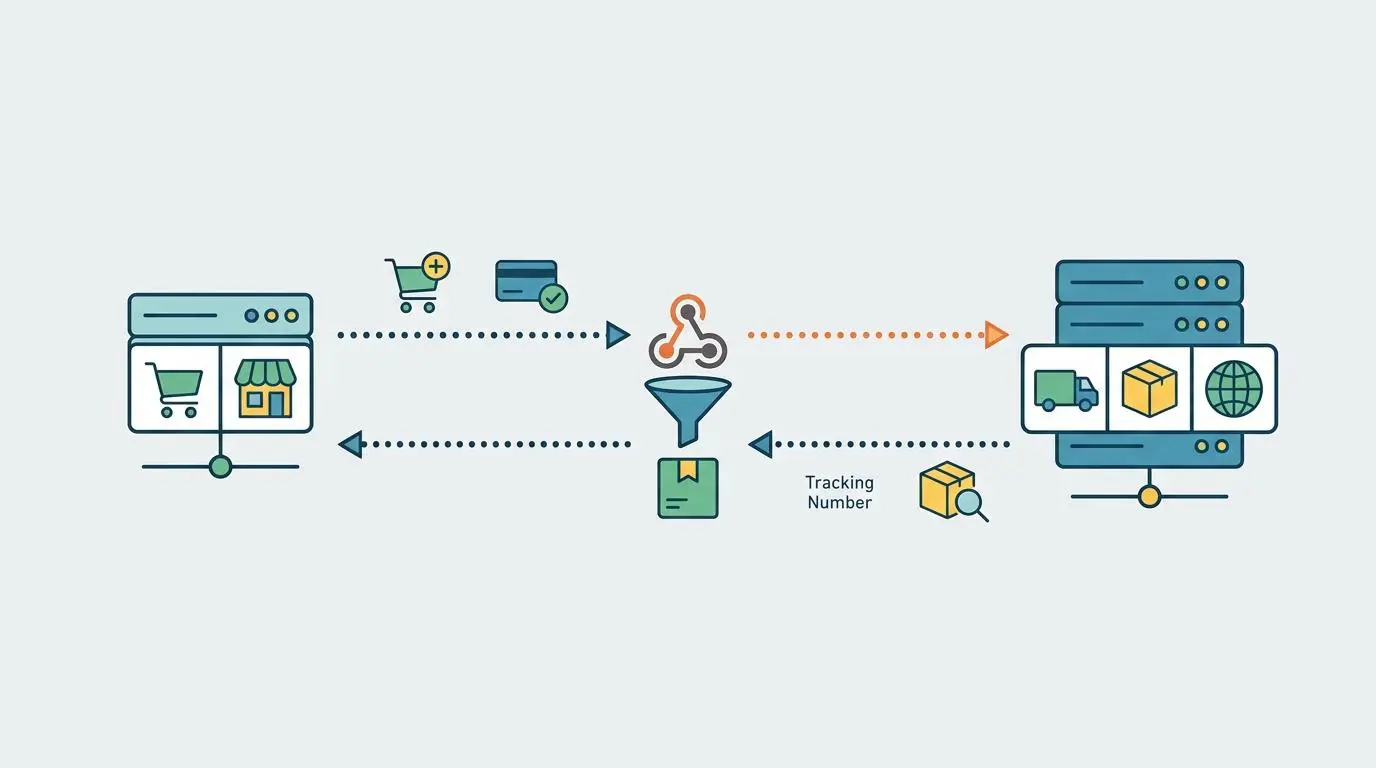
For many growing brands, managing returns feels like operating a chaotic digital switchboard.
Staff members are forced to manually verify order dates in Shopify, cross-reference item eligibility in ERPs like NetSuite, and then type addresses into UPS or FedEx portals.
This labor-intensive workflow creates a massive operational lag that frustrates customers and occupies up to 20% of a support team’s daily bandwidth.
The true friction lies in bridging these disconnected e-commerce and shipping databases for every single return request.
Deploying Webhook-to-Label Workflows

The era of requiring expensive, custom-coded API integrations to connect storefronts with shipping carriers is officially over.
Modern automation platforms like Make and Zapier now utilize elegant webhook-to-label flows to instantly bridge platforms like WooCommerce and EasyPost.
These systems listen for specific triggers, such as a customer submitting a return form, and immediately pass the data payload to the carrier API.
Advanced tools like Relay.app even allow for sophisticated branching logic to handle edge cases without human input.
For example, if an item’s value exceeds a specific threshold, the system can route an approval request to Slack, while lower-value items generate labels instantly.
Designing Zero-Touch Customer Portals
A truly optimized return experience removes the support agent from the equation entirely, empowering the customer to self-serve.
Integrating portals like Loop Returns or AfterShip directly into the customer account page creates a frictionless, zero-touch environment.
These intelligent portals automatically evaluate complex rulesets, checking return windows and non-returnable tags in milliseconds.
If the request meets the criteria, the system issues a downloadable PDF or a scannable QR code label in under 60 seconds.
This instant gratification eliminates the high churn risk associated with waiting for manual support approval, transforming a negative product experience into a positive brand interaction.
Preventing API Rate Limits and Address Errors

While automated label generation is powerful, scaling these workflows introduces new technical vulnerabilities.
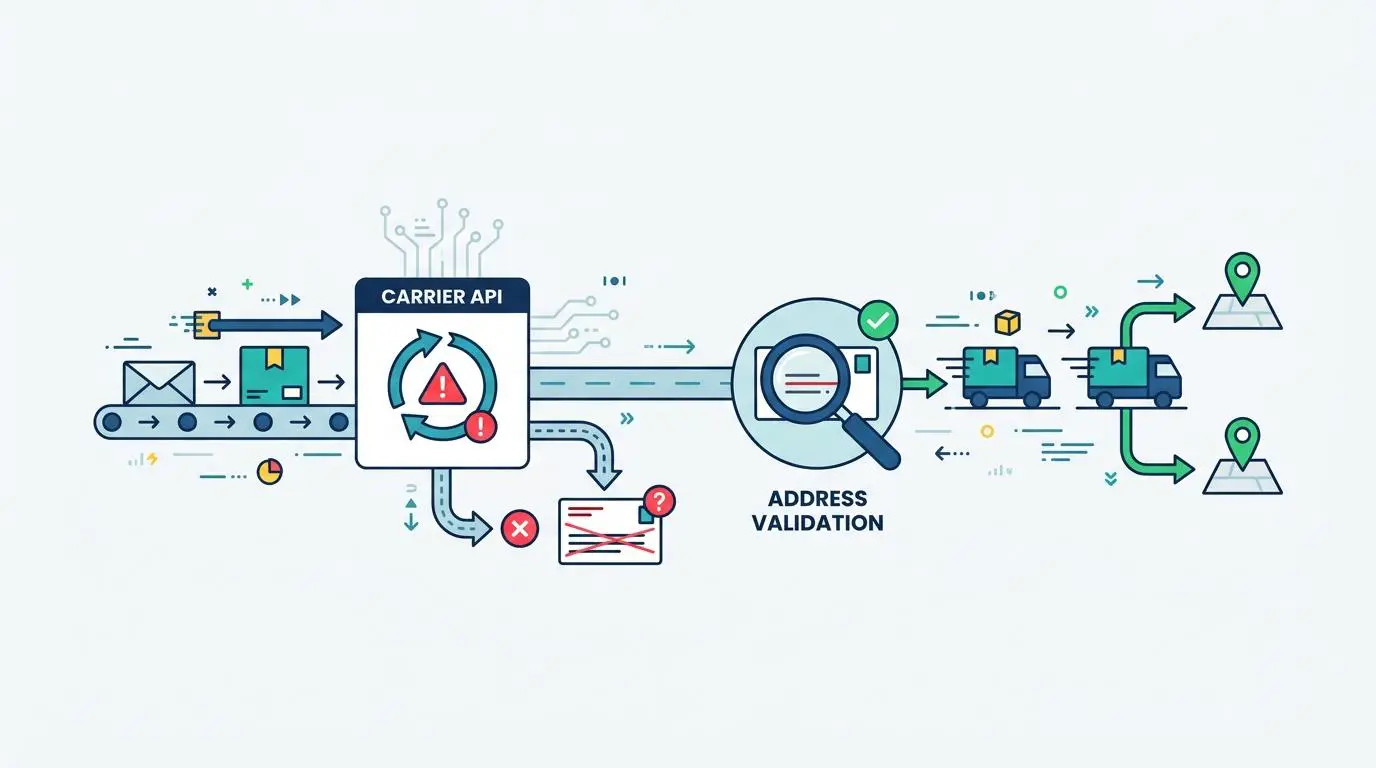
Address validation failures remain the primary cause of automated label errors, often resulting in expensive carrier correction surcharges.
To mitigate this, high-volume systems now integrate tools like Loqate or the Google Maps API to perform real-time address validation before a label is even requested.
Another critical pitfall is encountering carrier API rate limits during peak return seasons, which can cause mass label generation failures.
Implementing robust error-handling logic and retry delays ensures that temporary API outages do not break the entire self-service experience.
Calculating the Micro-Economics of Instant Returns
The financial argument for automating reverse logistics becomes undeniable when analyzing the per-ticket cost.
Transitioning from manual handling, which typically costs between $12 and $18 in labor per return, to an automated flow drops the expense to mere pennies in API usage.
Beyond the direct cost savings, the total processing time plummets from an agonizing three days to under five minutes.
This micro-economic shift is crucial for e-commerce brands looking to scale sustainably.
It completely removes the financial burden of hiring additional support staff simply to keep pace with growing sales and return volumes.
The Era of Dynamic Dispositioning
The future of reverse logistics is moving far beyond simple label generation into the realm of intelligent decision-making.
We are rapidly approaching an era of dynamic dispositioning, where AI agents analyze return reasons and customer lifetime value in real-time.
These systems will autonomously decide whether to generate a physical shipping label or grant a returnless refund to minimize carbon footprints and transit costs.
Furthermore, adaptive routing technologies will utilize machine learning to switch return carriers mid-request, actively avoiding local hub congestion or weather delays.
By embracing these automated architectures today, brands can transform their return deadzone into a highly optimized engine of customer retention.
Navigating the intersection of technology, workflows, and operational efficiency requires a sharp strategy. To future-proof your business architecture and scale with precision, connect with Andres at Andres SEO Expert.
Frequently Asked Questions
What is the e-commerce return deadzone?
The return deadzone is the 24 to 48-hour period where a customer’s return request sits in manual queue purgatory waiting for an agent to approve the RMA and generate a shipping label. This delay is a primary cause of customer churn and brand friction.
How does automated label generation improve reverse logistics?
Automation reduces the per-return labor cost from an average of $12–$18 down to mere pennies in API fees. It also increases shipping label accuracy to 92% by pulling validated data directly from the storefront, eliminating human data entry errors.
Can brands automate returns without custom coding?
Yes. Using automation platforms like Make, Zapier, or Relay.app, brands can deploy webhook-to-label workflows that connect storefronts to shipping carriers instantly. These no-code or low-code solutions bridge the gap between order databases and carrier portals.
What are the technical benefits of a zero-touch customer portal?
Zero-touch portals like Loop or AfterShip automatically check return windows and item eligibility in milliseconds. They provide customers with instant gratification through downloadable PDF or QR code labels in under 60 seconds without human intervention.
How do you prevent carrier API rate limits in automated systems?
Scalable return systems implement error-handling logic and retry delays to manage carrier API rate limits during peak seasons. Integrating address validation tools like Loqate or Google Maps API also prevents failures caused by invalid shipping data.
What is dynamic dispositioning in returns management?
Dynamic dispositioning is an AI-driven strategy where systems analyze return reasons and customer lifetime value to decide the most efficient outcome, such as issuing a standard return label, routing to a specific hub, or granting a returnless refund.