Key Points
- Credit-Aware Branching: Implement dynamic budget caps in n8n to prevent runaway X API costs during high-volume prospect analysis.
- Critic Agent Verification: Deploy GPT-4o-mini as a secondary QA layer to eliminate LLM hallucinations when API endpoints return empty arrays.
- Semantic Prospect Graphs: Transition from single-tweet hooks to RAG-based personalization by mapping entities across a prospect’s historical timeline.
Table of Contents
The Inbox Reality Check
The hidden tax of modern link building is the silent destruction of domain reputation by AI-native spam filters. Every time a generic email leaves your outbox, it risks triggering a cascading penalty across your digital infrastructure. This dynamic forms the core of the Personalization-Volume Paradox.
Sending high-velocity outreach often triggers aggressive spam filters due to a lack of genuine semantic relevance. Conversely, manually personalizing every message drops campaign velocity to a crawl and makes link acquisition mathematically unviable. The modern inbox now acts as a digital immune system that actively hunts and neutralizes low-reasoning bot traffic.
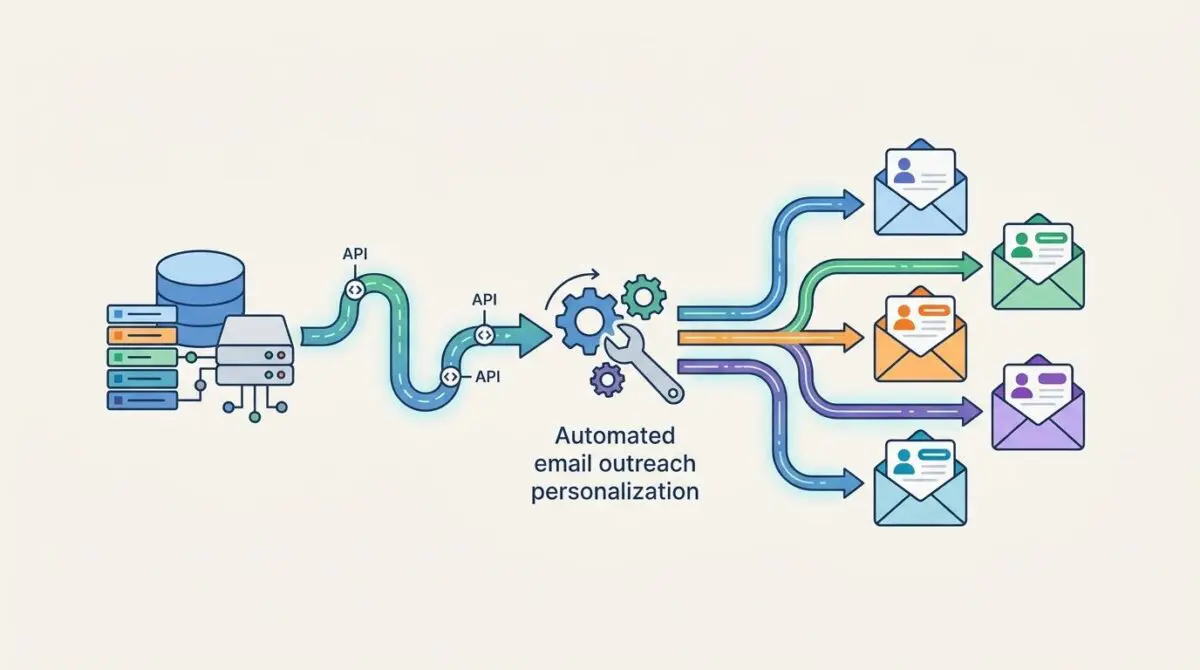
To survive this landscape, automated digital PR must evolve far beyond basic templates. By architecting intelligent API-driven workflows, we can inject high-entropy human signals into our outreach at scale. This approach transforms a cold email from commercial noise into a hyper-relevant touchpoint.
Quantifying the Outreach Shift
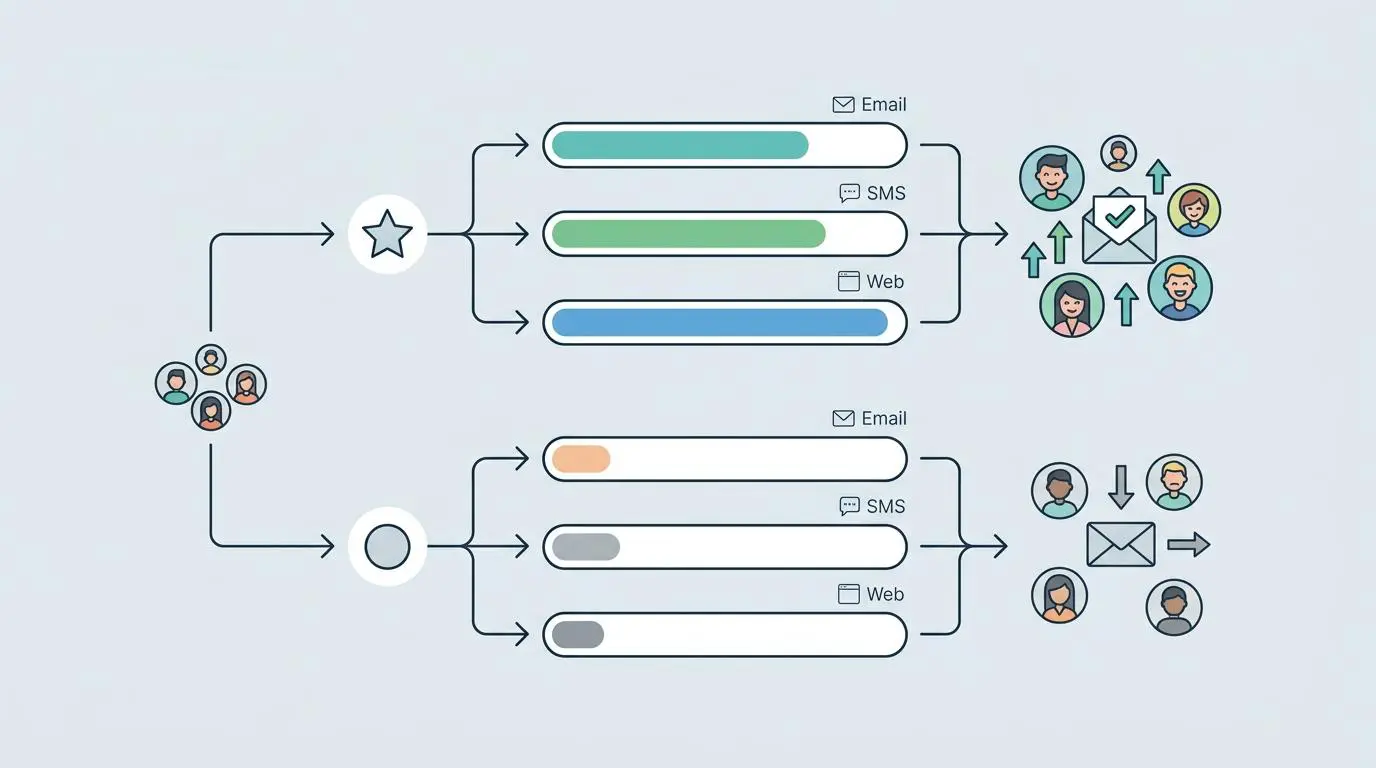
The mathematical difference between generic outreach and programmatic personalization is staggering. According to the Mailforge 2026 Cold Email Benchmark Report, campaigns utilizing real-time API-driven personalization achieve up to a 45% reply rate. This sharply contrasts with the 3.4% average for generic sequences, proving that volume without relevance is wasted effort.
This massive leap in engagement is largely driven by the sheer volume of contextual data we can now process affordably. For instance, OpenAI’s GPT-4.1 mini features a 1-million-token context window. This allows n8n workflows to ingest a prospect’s entire historical tweet archive for deep persona mapping, ending the era of single-signal personalization.
Furthermore, recent platform analyses verify that highly personalized campaigns using multiple dynamic custom fields see massive increases in replies over standard merge-tag outreach. By blending tweet sentiment, entity references, and timeline hooks, automated systems can perfectly mimic high-effort manual research.
Bypassing Spam with Social Signals
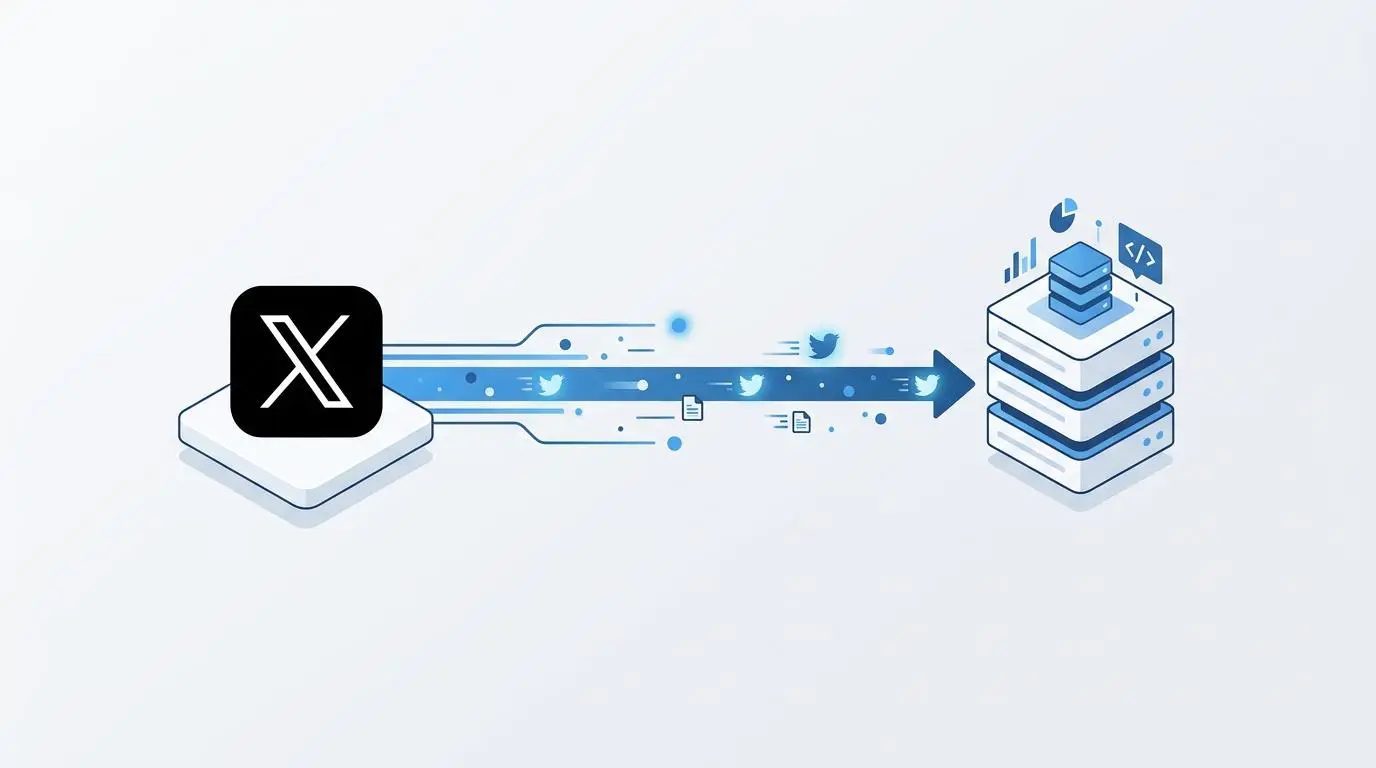
Traditional outreach relies on generic merge tags that modern AI-native inboxes immediately flag as commercial noise. To bypass these intelligent filters, your outreach requires high-entropy signals that prove the sender is a high-reasoning entity. We achieve this by tapping directly into X API v2 endpoints.
Using the user tweet timeline endpoint, modern workflows fetch up to 100 recent posts from a prospect. This raw data is then passed as a JSON payload directly to GPT-4o. By utilizing structured outputs, the AI generates highly specific conversational hooks.
Inside n8n, the X node orchestrates this data retrieval seamlessly. The structured JSON ensures that generated hooks fit perfectly into pre-defined outreach templates without breaking formatting. The result is an email referencing a specific recent thought the prospect shared, instantly establishing credibility.
Architecting Cost-Effective API Workflows
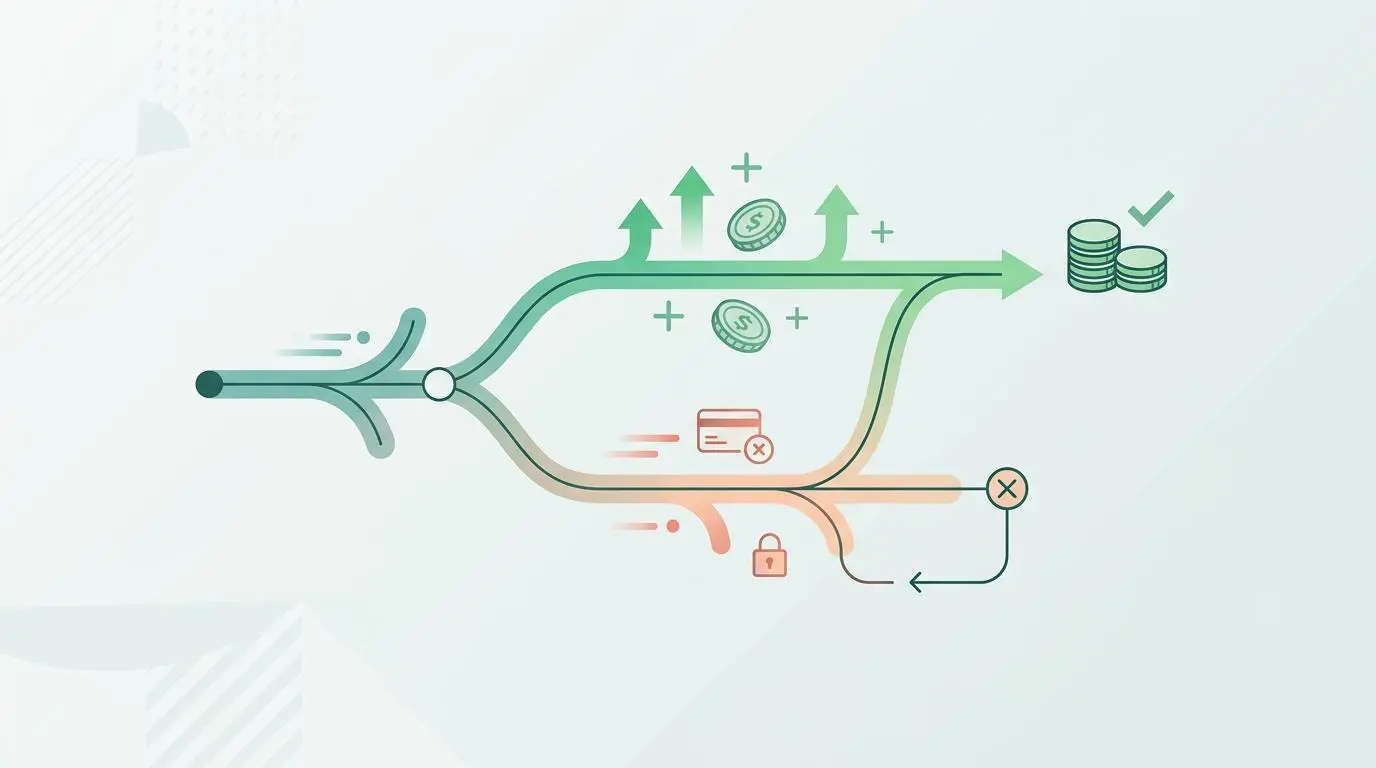
While data extraction is powerful, API cost-efficiency has become the new operational bottleneck. The transition of the X API to a pay-per-use model means indiscriminate data pulling can drain your budget overnight. Fetching data for thousands of prospects without intent verification is a critical architectural flaw.
To solve this, advanced n8n workflows now implement Credit-Aware Branching. This system dynamically checks API usage against a budget threshold managed in external spreadsheets. If the cost exceeds the limit, the workflow automatically halts or reroutes the process to a cheaper data source.
Additionally, high-intent filters are deployed before any API call is made. The system first verifies if the target domain meets strict SEO metrics and relevance scores. Only pre-qualified targets trigger the paid X API extraction, protecting your budget while maximizing return on investment.
Deploying Critic Agents to Stop Hallucinations

One of the most dangerous risks in automated outreach is LLM hallucination. When an API returns an empty array or an error, standard AI models often invent a recent tweet to satisfy the prompt. Sending an email praising a non-existent post instantly destroys your brand reputation.
To combat this, we deploy GPT-4o-mini as a Critic Agent within the n8n pipeline. After the primary model generates the email hook, the workflow sends the draft back to this secondary agent. The Critic Agent focuses entirely on verification and quality assurance.
The Critic compares the generated hook against the raw API-fetched JSON payload. It ensures the contextual anchor is entirely factual and directly tied to a real social signal. If a hallucination is detected, the Critic flags the output and the workflow falls back to a safe generalized template.
Building Semantic Prospect Graphs
Personalizing an email based on a single isolated tweet often feels shallow and opportunistic. True semantic enrichment requires connecting multiple data points to form a cohesive narrative. We achieve this by extracting entities like people, products, and locations from the prospect feed using advanced NLP tools.
These extracted entities are stored in a vector database to build a comprehensive Prospect Graph. This architecture allows for Retrieval-Augmented Generation during the outreach creation phase. The AI can now reference themes and concepts spanning the prospect’s last six months of activity.
By connecting a recent tweet about industry challenges to the prospect’s actual professional bio and recent funding news, the outreach becomes multi-dimensional. It proves to the recipient that you understand their broader business context, dramatically increasing the likelihood of a high-value backlink exchange.
The Dawn of Autonomous SDR Agents
The landscape of link acquisition is rapidly shifting from automated pipelines to fully Autonomous SDR Agents. These agents utilize multi-modal APIs to analyze a prospect’s video tweets, podcast appearances, and broader digital footprint. The focus is moving from instant email outreach to building synthetic rapport over time.
These agents engage in low-stakes social interactions, such as liking and replying to posts, for days before an automated email is ever triggered. This pre-warming phase ensures that when the outreach finally hits the inbox, the sender is already a recognized entity.
Navigating the intersection of technical SEO, programmatic architecture, and workflow automation requires a sharp strategy. To future-proof your site architecture and scale with precision, connect with Andres at Andres SEO Expert.
Frequently Asked Questions
How does API-driven personalization improve cold email reply rates?
API-driven personalization utilizes real-time data from sources like the X API to create hyper-relevant hooks. According to 2026 benchmarks, these campaigns can achieve up to a 45% reply rate, compared to the 3.4% average seen with generic, template-based outreach.
What is the Personalization-Volume Paradox in link building?
The Personalization-Volume Paradox is the conflict between sending enough emails to make link acquisition mathematically viable and the need for high-quality personalization to avoid AI-native spam filters. Modern automation resolves this by using intelligent workflows to scale human-like signals.
How do Critic Agents prevent AI hallucinations in outreach?
Critic Agents are secondary AI models, such as GPT-4o-mini, that perform quality assurance by comparing generated email hooks against raw JSON payloads. If the hook references a non-existent tweet or event, the agent flags the hallucination and triggers a fallback process.
What is a Semantic Prospect Graph in Digital PR?
A Semantic Prospect Graph is a technical architecture that stores extracted entities—such as people, products, and locations—in a vector database. This allows for Retrieval-Augmented Generation (RAG), enabling the AI to reference a prospect’s historical activity over several months for multi-dimensional relevance.
Why is Credit-Aware Branching important for API workflows?
Credit-Aware Branching is a cost-management strategy in n8n workflows that checks API usage against pre-set budget thresholds. It ensures that expensive data extraction only occurs for high-intent targets who have already passed strict SEO and relevance filters.
What are Autonomous SDR Agents in link acquisition?
Autonomous SDR Agents are the next evolution of outreach automation. They use multi-modal APIs to build “synthetic rapport” by interacting with a prospect’s social content—such as likes and replies—for several days before sending a direct email, increasing the likelihood of a positive response.