Key Points
- Stateful Agent Sessions: The Antigravity framework eliminates long-horizon task failure by maintaining context across thousands of iterative cycles in secure Linux sandboxes.
- Dynamic Model Swapping: Gemini Nano 3.0 bypasses reasoning degradation by loading modular neural blocks into RAM on-demand, achieving cloud-parity logic on local devices.
- In-Database Inference: Native BigQuery Vector Search integration eliminates ETL overhead, reducing enterprise RAG retrieval latency by 40 percent.
Table of Contents
The Babel Fish Problem of Modern AI
Imagine trying to bake a complex wedding cake, but your recipe is written in French, your oven only understands Japanese, and your ingredients are labeled in Morse code.
This is exactly what happens inside traditional AI systems when they try to process text, audio, and video simultaneously. The industry calls this modality fragmentation. It is an architectural bottleneck where different data types are forced through disconnected translators.
Because these systems rely on discrete encoders, crucial context gets lost in translation. A sarcastic tone of voice might not match the transcribed text, leading to massive semantic information loss.
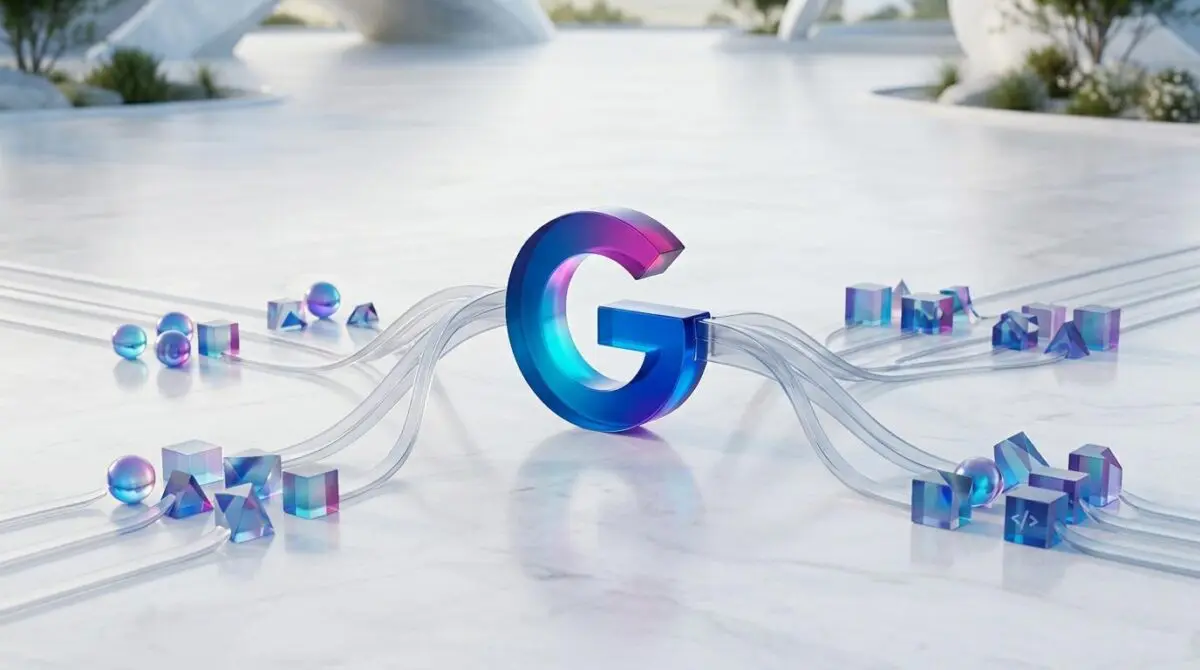
Enter the Native Multimodal Reasoning Engine. By processing every data type simultaneously from the ground up, Google Gemini acts as a universal translator. It eliminates clunky hand-offs between different models, allowing for seamless understanding across all formats.
For enterprise leaders, this is not just a neat technical trick. It is the foundation for a completely new era of workflow automation where data silos finally collapse.
Breaking Speed Limits With Quantifiable AI ROI

The shift to a unified architecture radically transforms operational efficiency. In February 2026, Google DeepMind revealed that Gemini 3.1 Pro achieved a staggering 77.1 percent score on the ARC-AGI-2 benchmark. This represents a massive increase in raw reasoning performance over its predecessor.
This leap in benchmark scores proves that the model is moving from simple pattern recognition to genuine cognitive deduction. Enterprise teams can now trust the engine to handle nuanced financial modeling or complex legal analysis without constant human supervision.
What does this mean for your business? It means the model spends less time hallucinating and more time solving complex logic problems accurately. However, cloud reasoning is only half the battle when it comes to enterprise adoption.
Local execution is where everyday workflows truly accelerate. Benchmarks from Qualcomm in March 2026 show Gemini Nano 3.0 hitting a blazing 93 tokens per second on premium hardware. This lightning-fast generation is directly supported by the Android ‘AI Core’ system, allowing devices to analyze heavy documents locally without pinging a cloud server.
When devices process 93 tokens per second locally, the cost of cloud compute plummets. Organizations can deploy intelligent applications to millions of users without bankrupting their server budgets.
Orchestrating Autonomous Agent Workflows
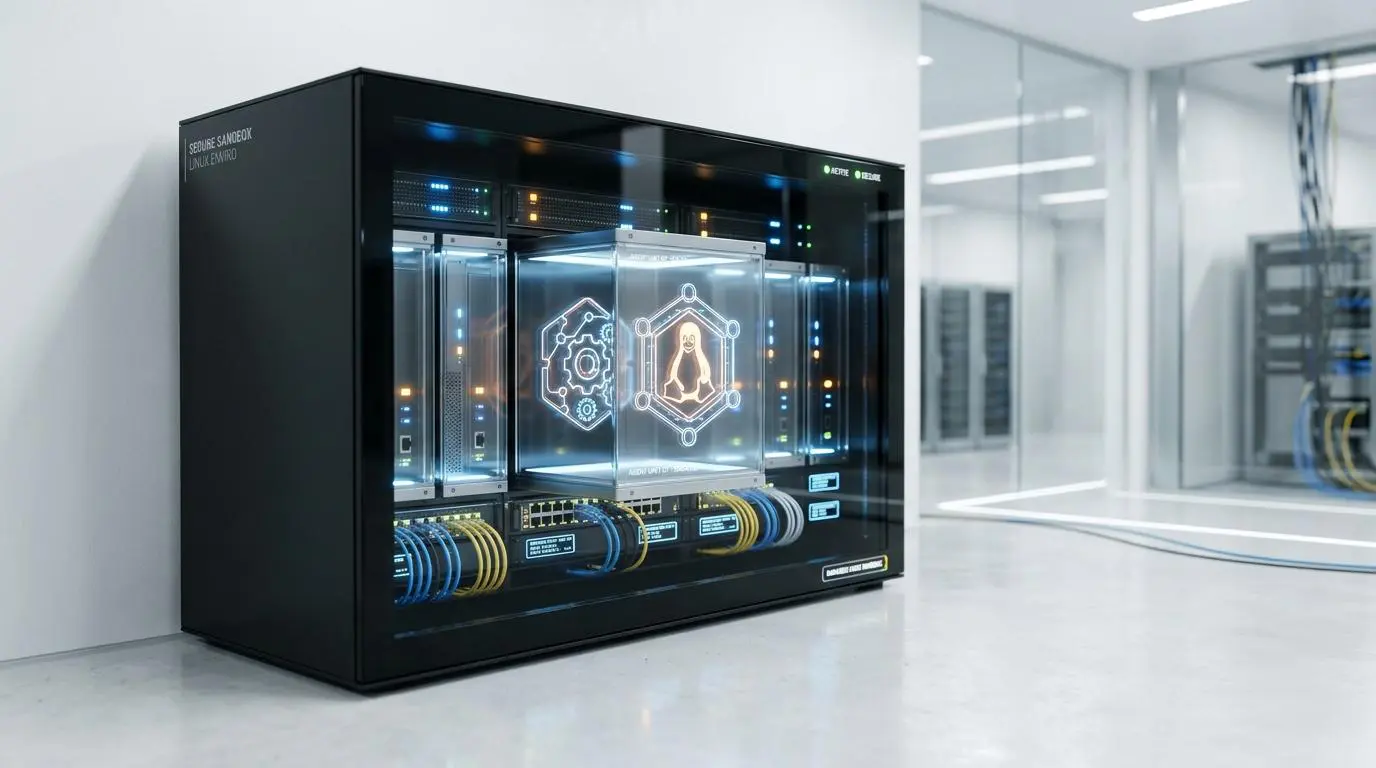
Building AI agents that can actually finish what they start has historically been a nightmare. Traditional agents suffer from corporate amnesia, forgetting their initial instructions halfway through a long-horizon task.
Google tackled this head-on in May 2026 with the Gemini Enterprise Agent Platform. They introduced the Antigravity agent harness, a managed Linux sandbox environment designed specifically for autonomous code execution.
Think of the Antigravity harness as an indestructible digital office for your AI. Even if a complex coding task takes hours, the environment remains completely stable and secure.
This framework leverages Agent Sessions to maintain perfect state persistence. Instead of starting from scratch every few minutes, the system remembers context across thousands of iterative reasoning cycles. It uses the Managed Agents API to manipulate real-time tools without dropping the ball.
This is a massive win for development teams. By eliminating the friction of manual state management, engineers can deploy autonomous workers that independently debug code, manage databases, and optimize infrastructure.
Bringing Heavy Compute to the Edge

Pushing powerful AI onto mobile devices used to require aggressive compression, which often lobotomized the model’s logic. This reasoning degradation meant on-device AI was fast but ultimately useless for complex tasks.
Gemini Nano 3.0 changes the rules of gravity with a technique called Dynamic Model Swapping. Instead of forcing the entire model into memory at once, it loads specific neural blocks into RAM only when they are actively needed.
Dynamic Model Swapping is essentially a highly efficient brain that only wakes up the exact neurons it needs for the task at hand. It preserves battery life while delivering unprecedented analytical power.
By capping out at a peak of 1.2GB of RAM, this modular approach maintains logic parity with massive cloud models. It enables real-time vision processing and local PDF analysis in under two seconds, completely bypassing network latency.
For field workers and remote teams, this means having a brilliant assistant available even in dead zones. Whether analyzing technical manuals offline or processing real-time sensor data, the intelligence never drops out.
The industry has quickly taken notice of this leap in local power. In June 2026, Apple announced a massive architectural shift for Apple Intelligence. They revealed that their new core foundation models are built in direct collaboration with Google, leveraging the Gemini family to bring high-level reasoning and native multimodal support to premium iOS devices.
Rethinking Enterprise Data Retrieval

Connecting AI to multi-petabyte corporate datasets usually results in fragile pipelines. High retrieval latency and strict data residency laws often break traditional Retrieval-Augmented Generation (RAG) setups.
The Gemini Enterprise Agent Platform solves this by bringing the brain directly to the data. Through native BigQuery Vector Search integration and new Memory Banks, developers can bypass external vector stores entirely.
Data residency compliance is no longer a roadblock for global enterprises. Because the data never leaves the secure boundaries of the database, security teams can breathe a sigh of relief.
By simply calling native SQL generation functions, teams can trigger deep reasoning right inside their existing data estate. This in-database inference eliminates costly extraction processes and reduces latency by roughly 40 percent.
This architectural shift fundamentally changes how companies monetize their historical data. Information that was previously too slow or expensive to analyze can now be queried conversationally in milliseconds.
Unifying Generative Creative Pipelines
Creating synchronized multimedia content has traditionally required a small army of editors. Manual post-production to sync AI-generated video, lip movements, and sound effects is painfully labor-intensive.
The release of Gemini Omni introduced a unified all-modality model that shatters this workflow. Because it understands audio, vision, and text natively, it can generate lip-synced video and spatial audio in a single inference pass.
This level of native integration means the AI understands the emotional tone of a scene, matching the lighting and sound design perfectly. It removes the friction of stitching together disparate media assets.
The new Video-to-Image API even allows creators to pass entire YouTube URLs as multimodal context. This lets the engine instantly generate cinematic movie posters or interactive infographics, fully automating the creative pipeline from prompt to final render.
Marketing teams can now spin up hyper-personalized, multimodal campaigns at unprecedented speed. What used to take a production studio weeks can now be rendered during a single coffee break.
The Dawn of Physical World Simulation
The trajectory of Gemini is moving far beyond simple digital task execution. By 2027, this architecture is projected to evolve into Embodied World Models.
Instead of just analyzing text or video, the AI will perform physical simulation-based reasoning. It will predict the real-world physical outcomes of robotic actions in fully realized 3D environments before a single gear turns.
This leap into physical simulation will redefine manufacturing, logistics, and spatial computing. Enterprises that master digital multimodal reasoning today will be the ones controlling the physical automated systems of tomorrow.
Navigating the intersection of Enterprise AI, infrastructure scaling, and workflow automation requires a sharp strategy. To future-proof your company’s AI operations and scale with precision, connect with Andres at Andres SEO Expert.
Frequently Asked Questions
What is the “Babel Fish Problem” in modern AI development?
The Babel Fish Problem, or modality fragmentation, occurs when AI systems use separate, disconnected encoders for text, audio, and video, causing crucial semantic context to be lost. Google Gemini solves this with a Native Multimodal Reasoning Engine that processes all data types simultaneously.
How does Gemini 3.1 Pro perform on reasoning benchmarks?
In February 2026, Gemini 3.1 Pro achieved a score of 77.1 percent on the ARC-AGI-2 benchmark. This represents a 100 percent increase in raw reasoning performance over its predecessor, moving from simple pattern recognition to genuine cognitive deduction.
What is the Antigravity agent harness in the Gemini Enterprise Agent Platform?
The Antigravity harness is a managed Linux sandbox environment designed for autonomous code execution. It provides a stable and secure digital workspace that allows AI agents to maintain perfect state persistence across thousands of iterative reasoning cycles.
How does Gemini Nano 3.0 optimize local AI execution on mobile devices?
Gemini Nano 3.0 utilizes Dynamic Model Swapping, a technique that loads specific neural blocks into RAM only when they are actively needed. This allows the model to cap peak memory usage at 1.2GB while delivering speeds of up to 93 tokens per second on premium hardware.
How does BigQuery integration improve enterprise AI data retrieval?
By integrating native Vector Search and Memory Banks, the Gemini Enterprise Agent Platform allows for in-database inference via the ‘ML.GENERATE_TEXT’ SQL function. This architecture reduces retrieval latency by 40 percent and ensures data residency compliance by keeping data within the secure database boundary.
Does Google Gemini provide reasoning capabilities for Apple Intelligence?
As of June 2026, Apple has established a partnership with Google to build core foundation models for Apple Intelligence. These models leverage the Gemini family to provide high-level reasoning and native multimodal support for premium iOS devices.