Executive Summary
- Centralized coordination of distributed services and API endpoints to achieve complex operational goals.
- Implementation of conditional logic and state management within stateless automation environments.
- Optimization of resource allocation and error handling for high-volume AI content generation pipelines.
What is Orchestration?
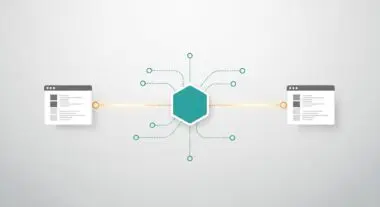
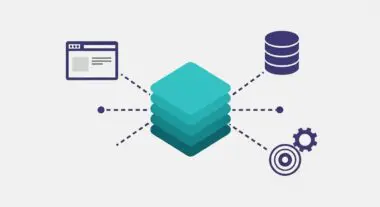
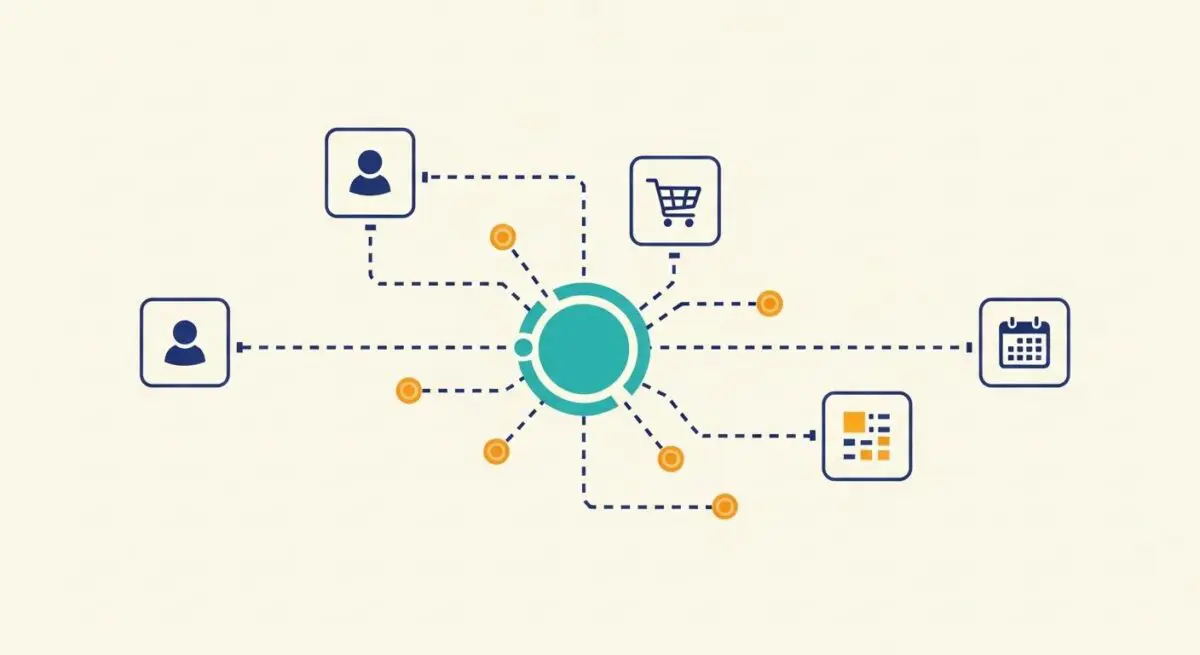
Orchestration refers to the centralized coordination and management of complex automated tasks, workflows, and systems. Unlike simple automation, which typically handles a single, linear task (e.g., a single trigger-action pair), orchestration involves the synchronization of multiple disparate services, APIs, and data streams to achieve a broader operational objective. In the context of AI and digital infrastructure, it serves as the logic layer that governs how various autonomous agents and microservices interact, ensuring that data flows correctly between systems while maintaining state and handling exceptions.
At its core, orchestration manages the lifecycle of a process. This includes sequencing tasks based on conditional logic, managing authentication across different platforms, and ensuring that the output of one process is correctly formatted as the input for the next. For enterprise-level AI operations, orchestration is the framework that allows for the deployment of scalable, resilient, and self-healing workflows that can operate without manual intervention.
The Real-World Analogy
Imagine a professional symphony orchestra. Each musician is an expert at their specific instrument—the violinist, the cellist, and the percussionist represent individual automated tools or APIs. While each musician can play their part perfectly in isolation, they require a conductor to ensure they play in the correct sequence, at the right tempo, and in harmony with one another. Without the conductor (the Orchestrator), the individual talents result in noise rather than music. Orchestration is the conductor that ensures every technical component “plays” its part at exactly the right moment to create a cohesive result.
Why is Orchestration Critical for Autonomous Workflows and AI Content Ops?
In high-scale AI content operations, orchestration is the difference between a fragmented series of scripts and a robust production engine. It is critical for stateless automation, where the system must remember the progress of a multi-step task (such as generating, optimizing, and publishing 1,000 articles) even if individual components fail. Orchestration engines manage API payload efficiency by filtering and transforming data before it reaches the next node, reducing latency and compute costs.
Furthermore, for programmatic SEO and GEO (Generative Engine Optimization), orchestration allows for the simultaneous execution of data scraping, LLM processing, and CMS injection. It provides the necessary serverless architecture scaling to handle spikes in data volume, ensuring that rate limits are respected through intelligent queuing and retry logic, which is essential for maintaining uptime in professional environments.
Best Practices & Implementation
- Implement Centralized Error Handling: Design workflows with global catch-blocks and retry logic to manage API timeouts and transient network failures without crashing the entire pipeline.
- Maintain State Persistence: Use external databases or state-management tools to track the progress of long-running workflows, allowing for restarts from the point of failure.
- Decouple Logic from Execution: Keep the orchestration logic (the “how”) separate from the individual service integrations (the “what”) to allow for easier updates and tool swaps.
- Monitor Latency and Bottlenecks: Use telemetry to track the execution time of each step in the orchestrated workflow to identify and optimize slow-performing API calls.
Common Mistakes to Avoid
One frequent error is hard-coding dependencies, which creates a brittle system where the failure of a single minor API endpoint halts the entire operation. Another mistake is the lack of centralized logging; without a unified view of the orchestrated process, debugging complex, multi-step failures becomes nearly impossible. Finally, many organizations fail to implement rate-limit awareness, leading to blocked IP addresses or throttled accounts when scaling AI-driven content tasks.
Conclusion
Orchestration is the foundational architecture that transforms isolated automated tasks into a scalable, resilient AI production system. By centralizing control and managing state, it enables the execution of complex, high-volume workflows essential for modern digital dominance.