Key Points
- Snowpipe Streaming-driven ELT pipelines eliminate the 24-48 hour latency gap by providing sub-5-second row-level ingestion for multi-location retail data.
- Snowflake’s Multi-Location Resilience ensures exactly-once data ingestion and uninterrupted BI dashboarding even during regional cloud provider outages.
- Integrating Cortex Analyst and the Horizon Catalog empowers branch managers to query governed real-time inventory using natural language without writing SQL.
Table of Contents
- The Invisible Drain on Multi-Location Retail
- Quantifying the Cost of Delayed Decisions
- Bridging the Knowing-Acting Gap
- Achieving Sub-Second Synchronization Mastery
- Empowering Branch Managers with AI Agents
- Overcoming Schema Drift and Silent Failures
- Governing Global Context Without Sacrificing Speed
- Maximizing ROI with Right-Time Ingestion
- The Autonomous Future of Retail Operations
The Invisible Drain on Multi-Location Retail
Every minute your point-of-sale data sits idle in a local branch server, an invisible tax drains your bottom line. Retailers operating across multiple locations hemorrhage revenue simply because a sudden stock depletion at one branch cannot be communicated to the central warehouse fast enough to trigger a replenishment.
This self-inflicted operational lag forces regional managers to rely on yesterday’s batch updates to make today’s critical inventory decisions. The ultimate solution to reclaim this lost time and eliminate manual reconciliation is deploying Snowpipe Streaming-driven ELT Pipelines.
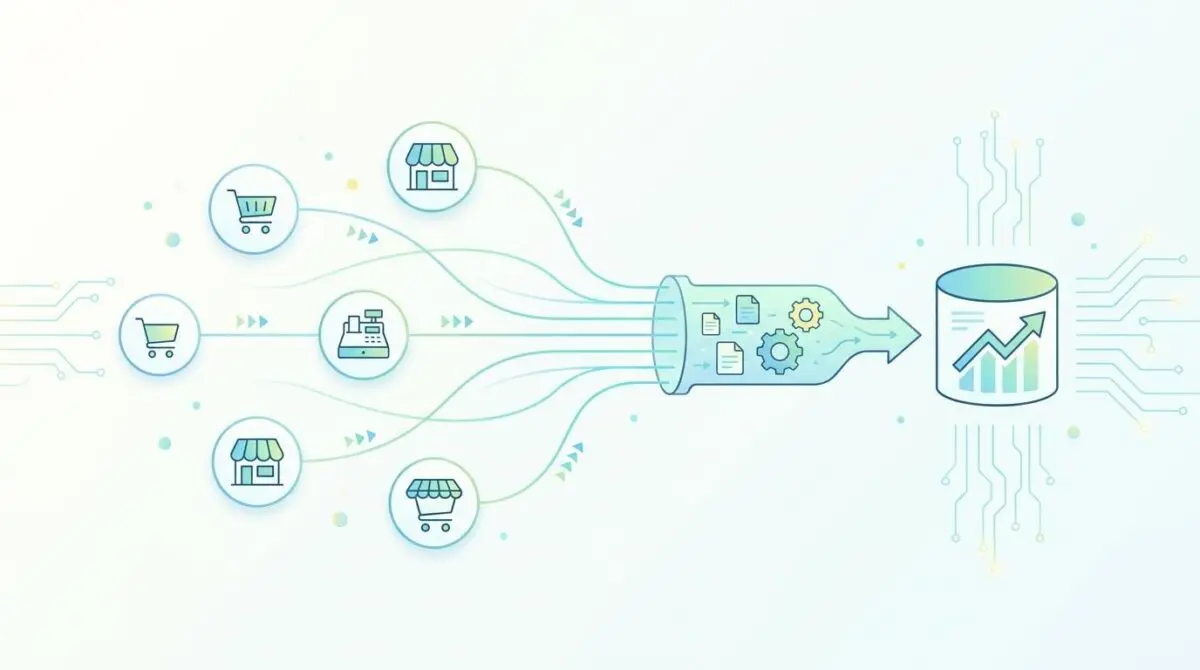
By continuously streaming transactional data into a centralized Snowflake warehouse, organizations unlock instant BI dashboarding that scales effortlessly across hundreds of global locations. This architectural shift transforms reactive operations into a proactive, data-driven ecosystem.
Quantifying the Cost of Delayed Decisions
Market Intelligence & Data
The Latency Tax
According to the 2026 Supply Chain Resilience Study by Incisiv, slow decision-making from data lag costs the global retail industry five cents on every dollar of revenue.
Weekly Time Recovery
A May 2026 Gartner survey of 210 CSOs found that AI-driven data automation saves sales leaders an average of 4.8 hours per week on reporting and administrative tasks.
Velocity Improvement
Gartner predicts that by 2029, organizations using AI-driven real-time enablement will achieve 40% faster sales stage velocity than those using traditional batch methods, based on their April 2026 research.
Growth Multiplier
According to a May 2026 Gartner report, organizations that reinvest the time saved by AI automation into high-value activities are 3.1 times more likely to exceed their lead-to-opportunity goals.
The five percent latency tax is not just a theoretical metric; it represents hard revenue lost to stockouts and mispriced inventory. When multi-location sales data lags behind real-world transactions, retail operators are forced to make reactive rather than proactive decisions.
This operational delay effectively penalizes companies for their inability to process information at the speed of consumer demand. Reclaiming nearly five hours a week transforms branch managers from administrative data entry clerks back into strategic sales leaders.
This recovered time is the direct result of eliminating manual CSV exports and fragmented local reporting processes. By automating the data ingestion layer, operational teams can focus entirely on customer experience and localized inventory optimization.
Gartner predicts a massive velocity improvement for organizations embracing real-time data architectures. To achieve this speed, modern engineering teams orchestrate tools like Cortex Analyst to retrieve, reason over, and unlock end-to-end agentic workflows across their entire retail network.
This effectively eliminates the manual bottlenecks that traditionally slow down sales cycles and inventory turnover. Reinvesting the administrative hours saved by automation creates a powerful growth multiplier for multi-location businesses.
Instead of manually reconciling spreadsheets, data leaders can flow governed semantic context directly into the Snowflake Horizon Catalog and Cortex Analyst. This ensures that every automated decision is backed by a single, unified source of truth across all global branches.
Bridging the Knowing-Acting Gap
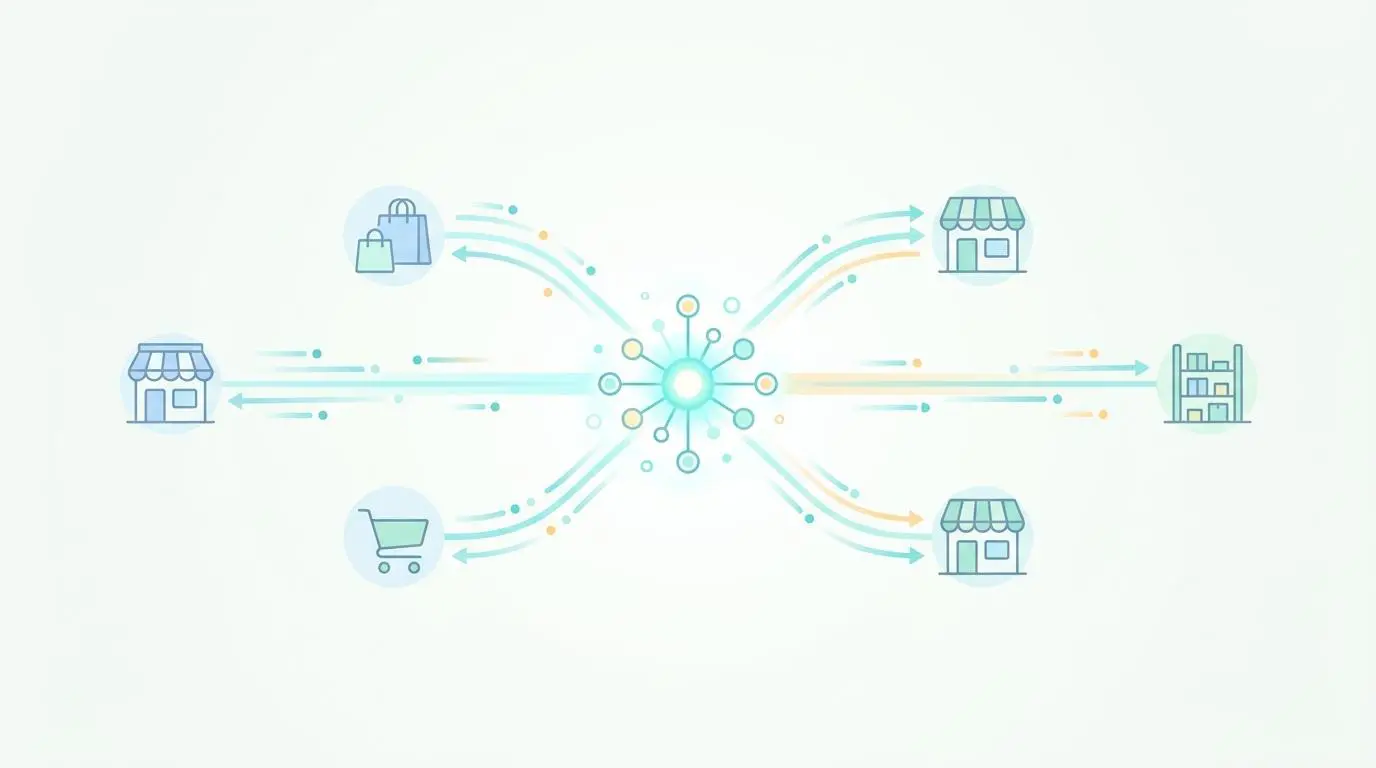
Retailers historically manage a severe disconnect where sales executed at one branch fail to influence inventory routing at another for up to two days. This delay creates a localized blindness that forces logistics teams to overstock warehouses just to act as a buffer against unpredictable demand.
When business intelligence tools attempt to query this fragmented data during peak hours, the resulting P99 query latency often causes dashboards to time out entirely. To combat this, modern ELT pipelines leverage Snowflake’s interactive warehouses equipped with the newly released Fallback Warehouse support from May 2026.
This architectural upgrade ensures that complex multi-location reconciliation queries are instantly routed to standby compute clusters if the primary warehouse experiences a sudden spike in concurrent BI requests. The result is a seamless dashboard experience that never drops a query, even on Black Friday.
When dashboards load instantly, branch managers no longer abandon data-driven decisions in favor of gut feel during high-pressure sales periods. They can trust the metrics on their screen to accurately reflect the reality on the shop floor.
- P99 Query Latency: The metric defining the slowest one percent of database responses during peak loads.
- Fallback Warehouses: Standby compute clusters that automatically activate to prevent dashboard timeouts.
- Knowing-Acting Gap: The detrimental time delay between a real-world event and the resulting operational response.
Achieving Sub-Second Synchronization Mastery
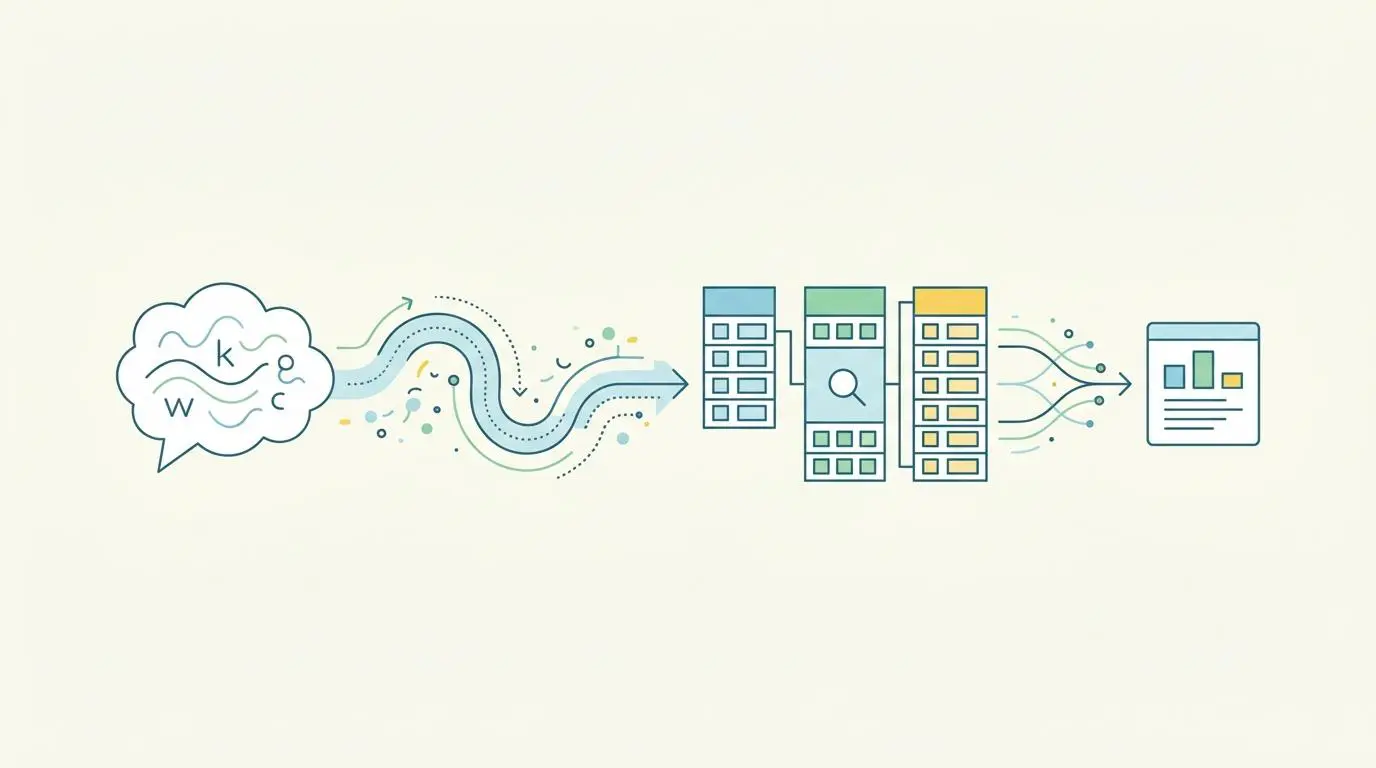
Transitioning from legacy batch processing to modern streaming architectures requires a fundamental shift in how data is ingested. Snowpipe Streaming now supports direct, row-level ingestion into Snowflake tables with sub-5-second latency.
This eliminates the need for intermediate cloud storage staging areas, drastically reducing the architectural complexity of moving point-of-sale data from local branches to the central warehouse. As of March 12, 2026, Snowflake’s ‘Multi-Location Resilience’ feature allows data pipelines to fail over between cloud providers with zero-engineering overhead.
This ensures dashboards remain live even during major hyperscaler outages. This capability utilizes Multi-Location Storage Integrations to guarantee exactly-once ingestion semantics across distributed regions.
Historically, data duplication and at-least-once ingestion errors required data engineers to perform manual SQL reconciliation after every pipeline failure. With these new resilience features, the pipeline automatically deduplicates records in transit, ensuring pristine data quality without human intervention.
- Row-Level Ingestion: The process of streaming individual database rows instantly rather than waiting for large batch files.
- Multi-Location Resilience: The ability for pipelines to seamlessly failover across different cloud providers.
- Exactly-Once Semantics: A strict data guarantee ensuring records are never duplicated or lost during transmission.
Empowering Branch Managers with AI Agents
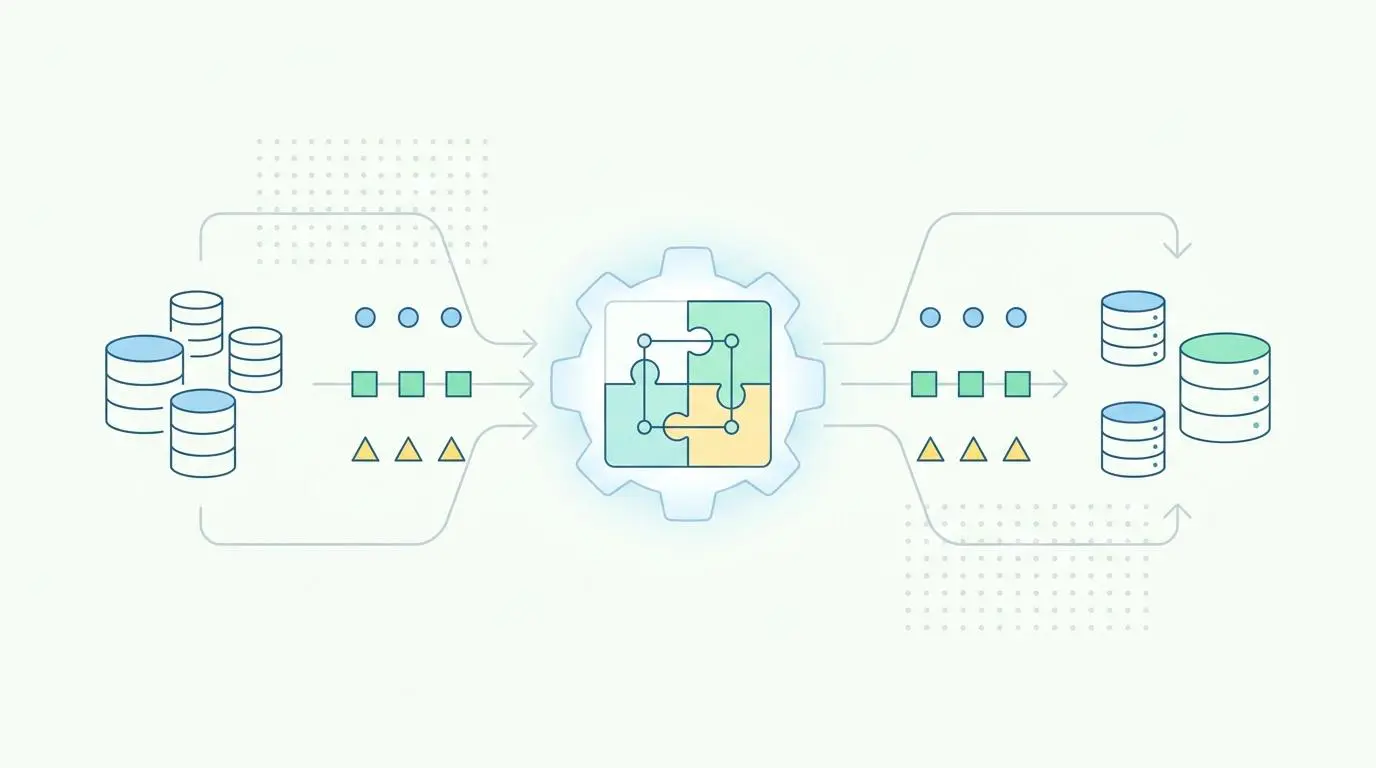
The traditional BI dashboard, while powerful, still requires a certain level of data literacy to navigate effectively. Non-technical branch managers are often data rich but insight poor because they cannot write the complex SQL required to join disparate location tables.
To solve this, organizations are deploying Snowflake Intelligence agents natively over their sales schemas. Launched in mid-2026, these autonomous agents allow operations teams to query real-time stock and sales metrics using plain natural language via Cortex Analyst.
A store manager can simply ask their interface to identify which nearby branches have excess inventory of a specific SKU, and the agent instantly generates the exact insights required. Companies like Huel have successfully reduced their time-to-insight from days to mere minutes by implementing these agentic workflows.
By removing the technical barrier to entry, every frontline worker becomes a highly capable data analyst.
- Cortex Analyst: An AI-driven interface allowing natural language queries against complex relational databases.
- Time-to-Insight: The total duration required to turn raw data into an actionable business decision.
- Snowflake Intelligence Agents: Autonomous bots designed to monitor, query, and act upon live data streams.
Overcoming Schema Drift and Silent Failures
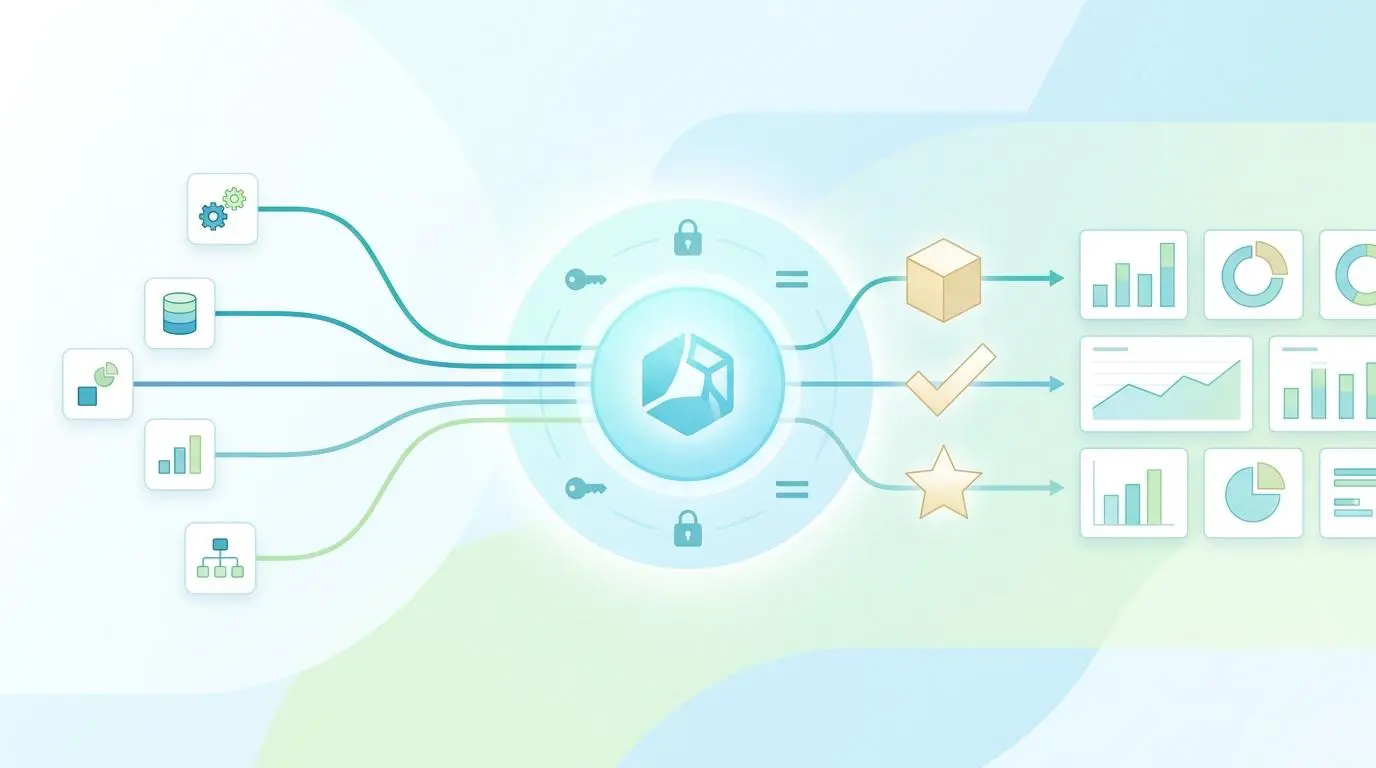
One of the most persistent threats to multi-location data consolidation is schema drift. When a single franchise updates its local point-of-sale software to capture a new customer metric, it introduces an unexpected column into the data stream.
In legacy setups, this unannounced change instantly breaks the central ETL pipeline, causing silent failures that often go unnoticed until a month-end report reveals missing regional data. To eradicate this fragility, the 2026 versions of ELT orchestration tools like Fivetran and Airbyte now feature AI-assisted schema mapping.
These platforms dynamically detect incoming column changes and automatically alter the destination Snowflake tables on the fly. The synchronization process continues uninterrupted while alerting the data engineering team to the structural update.
This automated resilience ensures that localized software updates never compromise global operational visibility. Data engineers are freed from the tedious task of manually updating pipeline configurations every time a branch modifies its local database.
- Schema Drift: Unplanned structural changes in source data that traditionally break rigid data pipelines.
- Silent Failures: Pipeline crashes that fail to trigger immediate alerts, leading to unnoticed data loss.
- AI-Assisted Mapping: Dynamic algorithms that automatically adjust target database structures to match source changes.
Governing Global Context Without Sacrificing Speed
As data flows rapidly from hundreds of locations into a central repository, maintaining strict governance and privacy becomes a critical challenge. Historically, local branch managers would bypass slow central warehouse permissions by exporting multi-location data into local CSV or Excel files.
This shadow IT practice inevitably leads to severe compliance risks and dangerous PII leaks. The Snowflake Horizon Catalog, updated in June 2026, introduces a powerful centralized semantic layer known as Horizon Context.
This feature ensures that both AI agents and human analysts share a single, strictly governed definition of metrics like net sales and regional revenue across all global operations. By enforcing these semantic rules at the warehouse level, organizations can deliver blazing-fast BI access without compromising security.
Users get the instant data gratification they need directly within the secure platform, entirely eliminating the temptation to extract sensitive data into local spreadsheets.
- Horizon Context: A centralized semantic layer ensuring consistent metric definitions across an entire organization.
- Shadow IT: The unauthorized use of local software or files to bypass official corporate IT systems.
- PII Leaks: The accidental or malicious exposure of personally identifiable information due to poor data governance.
Maximizing ROI with Right-Time Ingestion
The high cost of always-on compute for traditional streaming architectures historically made real-time BI a financially unviable option for low-margin retail businesses. Companies were forced to compromise, settling for hourly or daily batch loads simply to keep their cloud infrastructure bills manageable.
Automated consolidation into Snowflake now allows for Right-Time Ingestion, a strategic approach that perfectly balances compute costs with data freshness requirements. By leveraging Snowpipe Streaming’s new per-GB pricing models introduced in late 2025 and 2026, organizations only pay for the exact volume of data actively moving through the pipeline.
Moving from a rigid hourly batch schedule to an optimized Snowpipe Streaming architecture has been shown to reduce overall compute costs by up to fifty percent. This dramatic cost reduction transforms real-time operational visibility from a luxury expense into a high-ROI necessity.
- Right-Time Ingestion: The strategic calibration of data streaming speeds to balance operational need with compute cost.
- Per-GB Pricing: A consumption-based billing model that charges only for the actual volume of data processed.
- Always-On Compute: Legacy streaming architectures that burn budget continuously regardless of actual data volume.
The Autonomous Future of Retail Operations
By late 2026, the standard multi-location retail workflow will shift fundamentally from real-time business intelligence to fully Agentic Operations. Dashboards, while currently essential, will soon take a backseat to autonomous AI agents that continuously monitor Snowflake data streams in the background.
These specialized agents will possess the authority to trigger cross-location inventory rebalancing and execute dynamic price adjustments directly within local POS systems without any human intervention. By removing the human bottleneck entirely, organizations will effectively eliminate the decision-making latency that has plagued the retail industry for decades.
The businesses that thrive in this upcoming era will be those that build a flawless, streaming-first data foundation today. Preparing your architecture for autonomous agents is the only way to ensure lasting competitive dominance.
Navigating the intersection of technology, workflows, and operational efficiency requires a sharp strategy. To future-proof your business architecture and scale with precision, connect with Andres at Andres SEO Expert.
Frequently Asked Questions
What is the “latency tax” in multi-location retail operations?
The latency tax refers to the estimated 5% revenue loss caused by slow decision-making and data lag. In multi-location retail, this occurs when stock depletion at one branch isn’t communicated to the central warehouse fast enough, leading to stockouts and operational inefficiencies.
How does Snowpipe Streaming improve data synchronization across global locations?
Snowpipe Streaming enables sub-5-second, row-level ingestion directly into Snowflake tables. This eliminates the need for intermediate cloud storage staging and legacy batch processing, allowing real-time visibility into transactions across hundreds of global branches.
What role do AI agents play in modern retail business intelligence?
Tools like Snowflake Cortex Analyst allow non-technical branch managers to use natural language queries to access real-time stock and sales metrics. These agentic workflows reduce the “time-to-insight” from days to minutes by removing the need for manual SQL coding or complex dashboard navigation.
How can retailers prevent dashboard timeouts during high-traffic events like Black Friday?
Retailers can use Snowflake’s Fallback Warehouse support, which automatically routes complex reconciliation queries to standby compute clusters if the primary warehouse experiences a spike in concurrent requests. This ensures P99 query latency remains low and dashboards stay responsive.
What is the advantage of AI-assisted schema mapping in ELT pipelines?
AI-assisted schema mapping detects unplanned structural changes in source data—known as schema drift—and automatically adjusts the destination Snowflake tables on the fly. This prevents “silent failures” where localized point-of-sale updates would otherwise break the central data stream and cause data loss.
How does Right-Time Ingestion reduce cloud infrastructure costs for retail businesses?
Right-Time Ingestion balances data freshness with compute costs by utilizing per-GB pricing models. Instead of running expensive “always-on” compute for batch loads, organizations only pay for the actual volume of data processed, reducing overall compute costs by up to 50%.