Key Points
- Real-Time Engagement: Autonomous Lead Qualification eliminates the manual triage bottleneck by analyzing form submissions and responding within the critical five-minute window.
- Dynamic Enrichment: Signal-Based GTM Workflows leverage AI orchestrators to enrich inbound data with hundreds of external signals before it ever hits the CRM.
- Secure Processing: Zero-retention AI APIs allow highly regulated industries to safely score sensitive lead data without risking compliance violations or model training leakage.
Table of Contents
- The Golden Five Minute Bottleneck
- The Quantitative Shift to AI Intent Scoring
- Eradicating Web Form Data Graveyards
- Moving Beyond Rigid Point Allocation
- The Connective Tissue of Modern CRMs
- Hyper-Personalizing the Follow-Up Sequence
- Navigating Zero-Retention Protocols
- Integrating Slack Approval Mechanisms
- Propensity Orchestration and the Dark Funnel
The Golden Five Minute Bottleneck
The invisible tax of manual triage is quietly bleeding your sales pipeline dry every single day.
When a high-intent buyer submits a web form, a countdown clock starts ticking instantly. Industry data consistently shows that responding within the first five minutes is critical to securing a meeting.
Yet, the reality inside most revenue teams is a chaotic scramble of manual verification and data entry. Sales development representatives wade through thousands of junk submissions just to find a single viable prospect.
This creates a massive sales-marketing chasm where up to sixty percent of sales capacity is wasted on low-intent inbound leads. High-intent buyers go cold while your team performs the robotic work of cross-referencing LinkedIn profiles and company sizes.
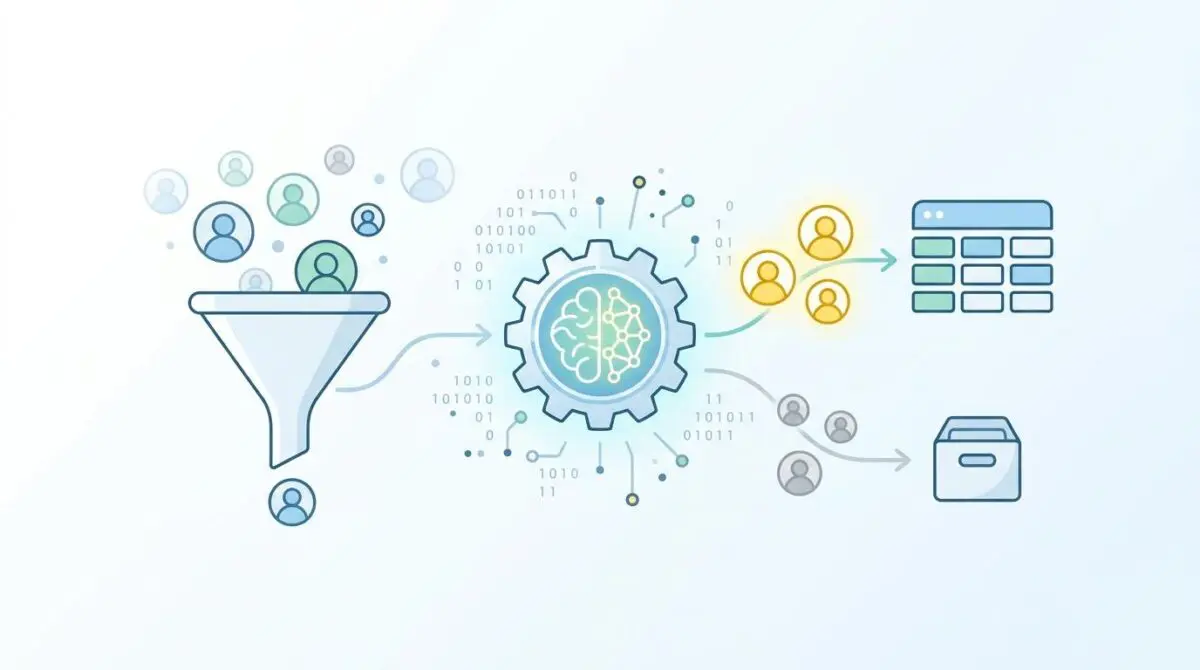
The solution to this operational hemorrhage is deploying autonomous lead qualification and signal-based go-to-market workflows. By removing humans from the initial triage phase, revenue teams can reclaim thousands of hours and ensure every legitimate prospect is engaged instantly.
This is not about replacing your sales team. It is about empowering them with a system that processes, scores, and routes inbound demand at machine speed.
The Quantitative Shift to AI Intent Scoring
Market Intelligence & Data
AI Scoring Adoption
According to the 2026 Digital Applied B2B report, 61% of B2B teams now utilize AI for lead scoring, a significant rise from just 23% two years prior.
Conversion Rate Lift
The 2026 Amra & Elma Revenue Intelligence report found that predictive lead scoring systems are driving a 75% increase in total conversion rates for enterprise sales teams.
SDR Efficiency Gain
A 2026 Monday.com analysis reveals that sales teams using AI scoring now spend 80% of their day talking to qualified leads, up from just 30% under manual systems.
Processing Cost Reduction
Organizations implementing AI-native lead qualification typically experience a 60% to 80% reduction in lead-processing costs within the first year as reported by LeadSquared in 2026.
B2B revenue teams are rapidly moving away from manual scoring matrices. The massive adoption rate jump from twenty-three percent to sixty-one percent reflects a fundamental behavioral change in go-to-market operations.
Teams are leveraging advanced large language models to parse complex intent signals instantly. This demand for high-accuracy analysis is exactly why platforms like Anthropic’s Claude recorded a staggering 1,858% growth in desktop conversations between late 2025 and early 2026.
The seventy-five percent conversion rate lift is not just a vanity metric on a dashboard. It represents the complete death of the cold, unverified lead.
By the time an account executive speaks to a prospect, predictive systems have already mapped their pain points and purchasing authority. Leading enterprise solutions like Salesforce Agentforce and HubSpot Breeze are at the forefront of this shift, turning raw form data into actionable pipeline gold without human intervention.
When sales representatives spend eighty percent of their day talking to highly qualified buyers, the unit economics of a business change completely. Under manual systems, reps acted as human routers, wasting hours verifying email addresses and checking basic firmographics.
Now, AI agents handle the rote verification instantly. This frees human sellers to focus entirely on building relationships, negotiating complex deals, and closing revenue.
Processing cost reductions of up to eighty percent highlight the sheer operational bloat of legacy lead workflows. When you remove the need for massive offshore triage teams and disjointed point solutions, your technology stack becomes significantly leaner.
This newfound cost efficiency allows revenue leaders to reinvest capital into actual growth initiatives rather than funding administrative overhead.
Eradicating Web Form Data Graveyards

Static web forms have historically functioned as data graveyards for B2B companies.
A prospect submits their information, and it sits in a queue waiting for a human to notice it. Within minutes, that lead begins to decay as the prospect loses interest or opens a competitor’s website.
Manual triaging creates a severe bottleneck where high-intent buyers go completely cold. Sales development representatives are forced to wade through thousands of spam submissions just to find one legitimate meeting opportunity.
Modern automation completely eradicates this friction by deploying specialized AI agents. Tools like Retell AI and 11x, specifically utilizing their Julian agent, are now configured to respond to inbound forms in under twenty seconds.
This hyper-fast response time prevents lead abandonment and capitalizes on peak buyer interest. The system acknowledges the submission, asks clarifying qualification questions, and keeps the prospect engaged while background enrichment occurs.
Moving Beyond Rigid Point Allocation

Traditional rules-based scoring is far too rigid for modern go-to-market motions.
Assigning ten arbitrary points for an ebook download fails to capture the semantic nuances of a prospect’s actual buying intent. It treats a junior intern and a senior decision-maker with the exact same level of urgency.
Today’s AI-agent integration leverages large language models to parse unstructured form comments dynamically. When a prospect types a custom message into a form field, the AI analyzes the specific vocabulary and urgency of their pain points.
The system then instantly cross-references this unstructured data with live signals from LinkedIn and Crunchbase. It evaluates recent company funding rounds, hiring velocity, and specific job title seniority.
This creates a dynamic, multi-dimensional intent score that accurately reflects the prospect’s likelihood to buy. It ensures that your sales team only focuses on accounts showing genuine, immediate commercial interest.
The Connective Tissue of Modern CRMs
Legacy customer relationship management platforms lack native agility.
They often require expensive, time-consuming custom development to integrate real-time AI scoring. This creates a massive barrier to entry for teams trying to modernize their revenue operations without a massive engineering budget.
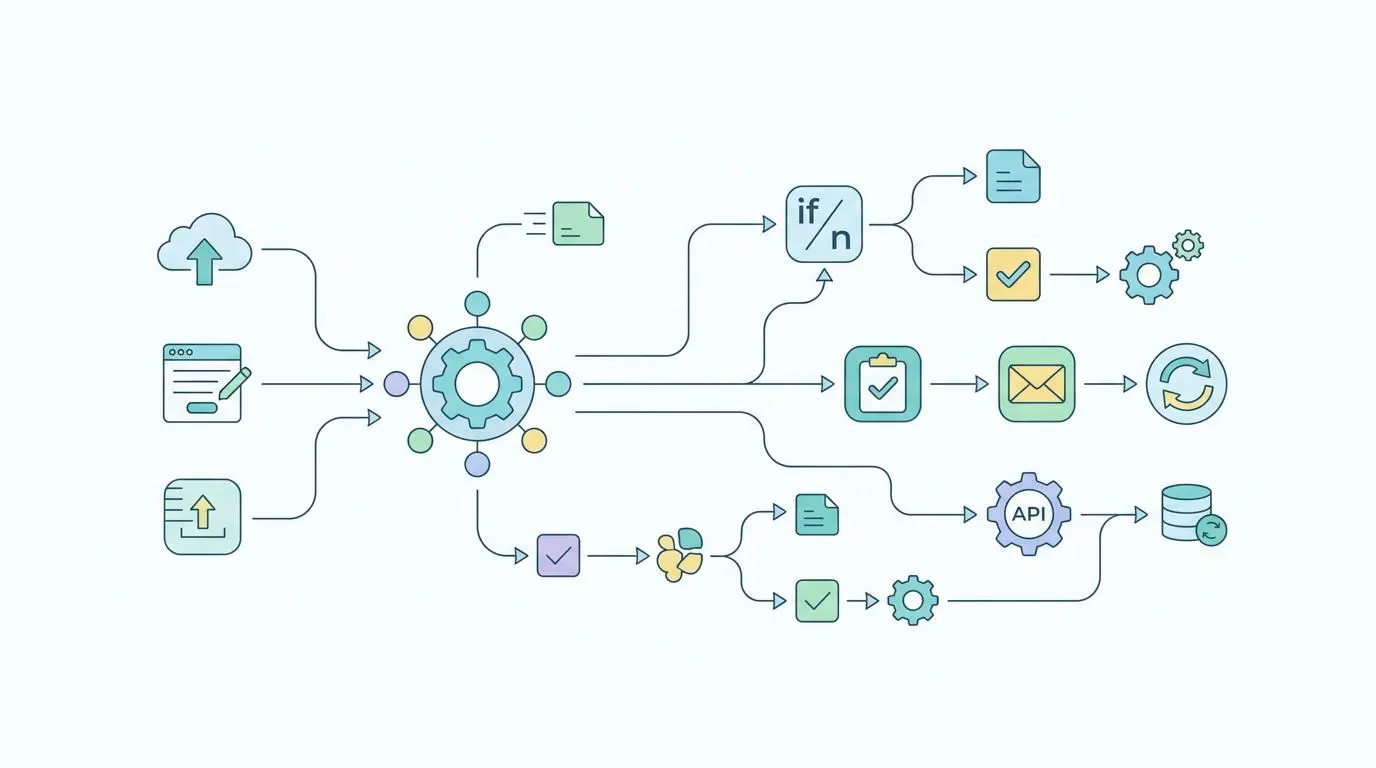
The no-code and low-code revolution has provided the perfect workaround for this friction. Workflow orchestrators like n8n and Clay now serve as the vital connective tissue between static web forms and advanced AI models.
These platforms catch the webhook from the form submission and run it through a complex enrichment waterfall. They append the lead data with over seven hundred external signals, including current tech stack usage and recent executive changes.
All of this deep data enrichment happens in milliseconds before the lead ever hits your CRM. By the time the record is created in your database, it is fully fleshed out and ready for immediate sales action.
Hyper-Personalizing the Follow-Up Sequence

Generalized follow-up sequences are a guaranteed way to kill conversion momentum.
When a highly qualified lead receives a generic, templated email after submitting a form, their engagement drops instantly. AI-scored leads require hyper-personalized, human-sounding outreach to maintain trust and interest.
Marketing and content pipelines are shifting their focus from raw lead volume to signal volume. Top-quartile performers use AI to route leads into highly specific, one-to-one nurture tracks based on the exact intent detected during qualification.
If the AI detects a prospect struggling with compliance issues, the automated sequence instantly sends a relevant case study on regulatory success. If the intent score indicates a focus on cost reduction, the messaging pivots to return on investment metrics.
This dynamic content routing ensures that every touchpoint feels bespoke and highly relevant to the buyer. It bridges the gap between automated speed and authentic human connection.
Navigating Zero-Retention Protocols
Security and privacy concerns have historically blocked AI adoption in highly regulated sectors.
B2B enterprises in finance and healthcare often refuse to implement AI qualification due to fears of data leakage. They cannot risk personally identifiable information being absorbed into a public large language model.
The rise of zero-retention AI application programming interfaces has completely solved this compliance roadblock. Providers now offer strict enterprise agreements where data is processed entirely in memory and immediately discarded.
Additionally, PII-redaction layers strip sensitive information like phone numbers and exact names before the payload reaches the scoring model. The AI evaluates the behavioral and firmographic signals without ever seeing the restricted data.
This allows enterprise teams to leverage the full power of autonomous lead qualification while maintaining strict adherence to complex regulatory frameworks.
Integrating Slack Approval Mechanisms
Fully autonomous systems are powerful, but they are not infallible.
AI models can still misinterpret irony, sarcasm, or highly complex enterprise corporate structures. Routing a massive, strategic enterprise account entirely through an automated sequence can sometimes backfire.
This is where the human-in-the-loop factor becomes critical for high-value accounts. Revenue teams are implementing Slack-based hot lead approval workflows to maintain quality control.
When the AI identifies a tier-one target, it generates a concise summary of the lead’s intent and pings a dedicated Slack channel. The account executive reviews the summary and simply clicks a thumbs-up emoji.
That single human action triggers the rest of the automation, instructing the AI agent to immediately schedule a meeting via routing tools like Calendly or Chili Piper. It perfectly balances machine speed with human oversight.
Propensity Orchestration and the Dark Funnel
The future of revenue operations is moving far beyond reactive form processing.
We are witnessing the evolution from basic lead scoring to full propensity orchestration. AI models will soon stop waiting for inbound submissions and start predicting them before they happen.
By analyzing cross-platform dark funnel signals, these systems will identify exactly which accounts are researching your solution in stealth mode. The automation will then proactively orchestrate outreach precisely when the buyer’s intent peaks.
This shift will transform go-to-market teams from reactive order-takers into predictive revenue engines. The companies that build this infrastructure today will own their respective markets tomorrow.
Navigating the intersection of technology, workflows, and operational efficiency requires a sharp strategy. To future-proof your business architecture and scale with precision, connect with Andres at Andres SEO Expert.
Frequently Asked Questions
What is the five-minute rule in lead response?
The five-minute rule refers to the critical window for responding to high-intent inbound leads. Industry data shows that meeting conversion rates drop significantly if a prospect is not engaged within five minutes of submitting a web form, making autonomous lead triage essential for modern sales teams.
How does AI lead scoring differ from traditional rules-based scoring?
Traditional scoring relies on rigid point allocation for basic actions, while AI lead scoring uses large language models to analyze unstructured form data and semantic intent signals. This creates a more dynamic and accurate profile of a buyer’s actual commercial interest and authority.
Can enterprise companies use AI lead qualification without compromising PII security?
Yes, enterprise teams can implement zero-retention protocols and PII-redaction layers. These security measures allow AI agents to process behavioral and firmographic signals without ever permanently storing sensitive personal information in the scoring model.
What role do no-code orchestrators like n8n and Clay play in GTM workflows?
Platforms like n8n and Clay act as the connective tissue between web forms and CRMs. They run enrichment waterfalls in real-time, appending leads with hundreds of signals like funding news or tech stack usage before the record is even created for the sales team.
What is a human-in-the-loop Slack approval mechanism?
A human-in-the-loop mechanism is a hybrid workflow where AI identifies tier-one leads and pings an account executive in Slack. The AE can then approve the automated follow-up sequence with a single click, ensuring human oversight for high-value strategic accounts.
How does predictive propensity orchestration differ from reactive lead scoring?
Reactive scoring waits for a lead to submit a form, whereas predictive propensity orchestration analyzes dark funnel signals to identify accounts researching solutions in stealth. This allows teams to proactively engage buyers exactly when their intent peaks.