Key Points
- Zero-Touch Provisioning: Ship pre-configured hardware and automatically sync identities across your entire SaaS stack on day one.
- AI-Agent Orchestration: Utilize task-specific AI to trigger system access and update payroll records without human intervention.
- Zero-Trust Security: Enforce least-privilege access automatically based on real-time HRIS role changes to eliminate zombie accounts.
Table of Contents
- The Silent Drain On Global Talent
- The Metrics Driving Autonomous Experiences
- AI-Agent Orchestration And Cross-System Syncs
- Erasing The Monday Morning Scramble
- Zero-Trust Identity Governance
- Measuring Readiness And ROI
- The Financial Drain Of Attrition
- Human-In-The-Loop Hardware Approvals
- The Era Of Predictive Readiness
The Silent Drain On Global Talent
Imagine your company just finalized hiring 500 new engineers across three continents, and Monday morning is rapidly approaching. In a traditional setup, this triggers a chaotic avalanche of IT tickets, procurement delays, and frantic messages across departments. This administrative bottleneck is exactly where top-tier global talent begins to sour on their new employer.
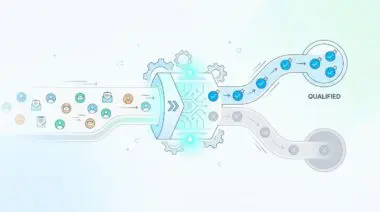
We call this the Silence and Stall gap. It occurs when eager new hires spend their critical first week waiting for access to basic tools, effectively halting their momentum. Currently, nearly half of all new enterprise employees wait over seven days just to receive essential workstation logistics.
This delay is not just an inconvenience; it actively damages retention and costs businesses millions. Frustrated by disorganized starts, twenty percent of these employees will leave within their first forty-five days. To reclaim this lost time and scale operations securely, modern businesses are deploying Enterprise Automated Onboarding & Provisioning Ecosystems.
These ecosystems replace fragmented, manual tasks with seamless, interconnected workflows. By bridging HR, IT, and Finance systems, these architectures ensure that every global hire is fully equipped and ready to contribute from the moment they log in.
The Metrics Driving Autonomous Experiences
Market Intelligence & Data
Agentic Shift
According to a 2026 Gartner forecast, 40% of enterprise software applications will include task-specific AI agents to manage complex workflows like onboarding.
Productivity Surge
Research from the Brandon Hall Group in 2025 indicates that organizations with a strong, automated onboarding process improve new hire productivity by over 70%.
Market Scale
The Business Research Company reports the global user provisioning market is expected to reach $13.76 billion in 2026 due to the rapid adoption of AI-driven identity governance.
Retention Anchor
A 2026 HR Cloud study confirms that enterprises using automated, structured onboarding improve new hire retention rates by 82% compared to manual processes.
The integration of artificial intelligence into daily operational workflows is completely redefining how businesses scale their workforce. Industry forecasts validate this shift, noting that 40% of enterprise software applications will include task-specific AI agents to handle these intricate workflows. This means the heavy lifting of data entry and cross-departmental coordination is moving from human hands to intelligent systems.
When employees are given immediate access to their tools, their ability to contribute accelerates dramatically. Furthermore, organizations with a strong, automated onboarding process improve new hire productivity by over 70%, proving that speed directly correlates with output. A frictionless start sets a psychological precedent for high performance.
The financial commitment to these technologies underscores their critical importance to modern infrastructure. The global user provisioning market is surging toward an impressive valuation of over thirteen billion dollars. This capital influx is driven entirely by the urgent need for robust, AI-driven identity governance in remote and hybrid environments.
Beyond immediate productivity, these systems serve as a powerful anchor for long-term employee loyalty. Enterprises utilizing structured, automated onboarding see retention rates soar compared to those relying on manual methods. By eliminating early frustrations, companies build immediate trust and protect their massive recruitment investments.
AI-Agent Orchestration And Cross-System Syncs

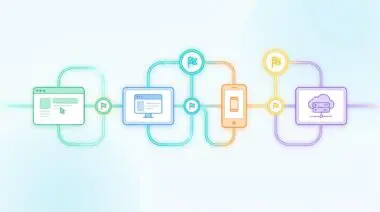
The traditional coordination bottleneck requires HR professionals to manually prompt IT, alert managers, and notify finance to complete a new hire’s journey. This fragmented approach guarantees dropped balls and delayed access. Today, intelligent ecosystems utilize advanced orchestration platforms to eliminate these silos entirely.
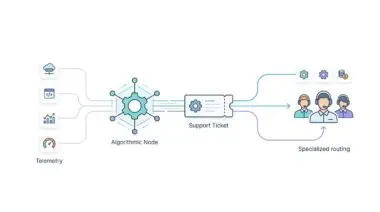
Tools like Rippling AI and Workato’s Agentic Framework act as the central nervous system for your software stack. When a candidate signs an offer letter in your applicant tracking system, these agents instantly trigger a cascade of backend events. They automatically format data entry into payroll systems and initiate system access protocols without a single human click.
These agents are context-aware, meaning they wait until specific prerequisites are met before moving to the next step. If a background check clears, the AI agent immediately provisions the corresponding software licenses based on the employee’s specific department and role.
Erasing The Monday Morning Scramble
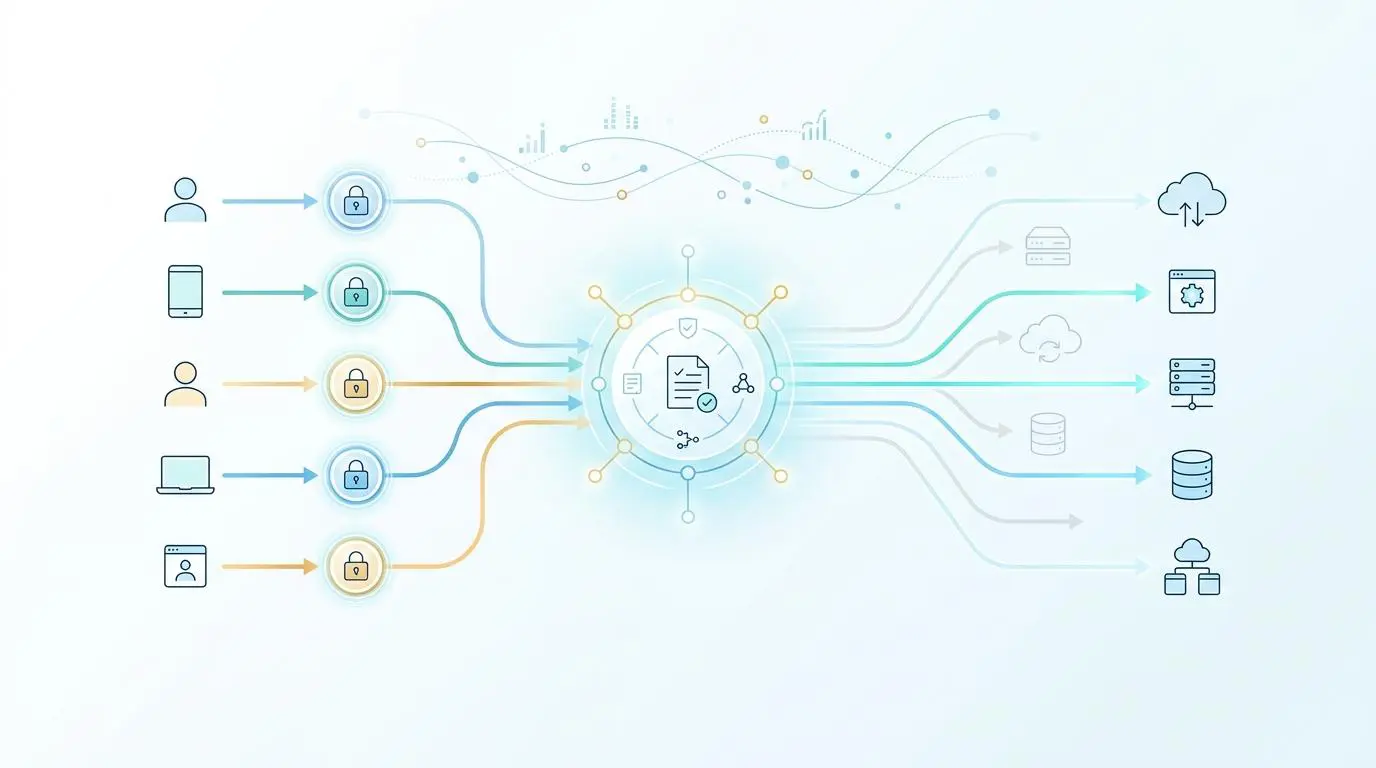
For IT departments, mass hiring events typically trigger a chaotic scramble to manually create accounts and configure hardware. This standard manual provisioning takes an average of five to ten days in complex enterprise environments. It is an unsustainable drain on highly paid technical resources.
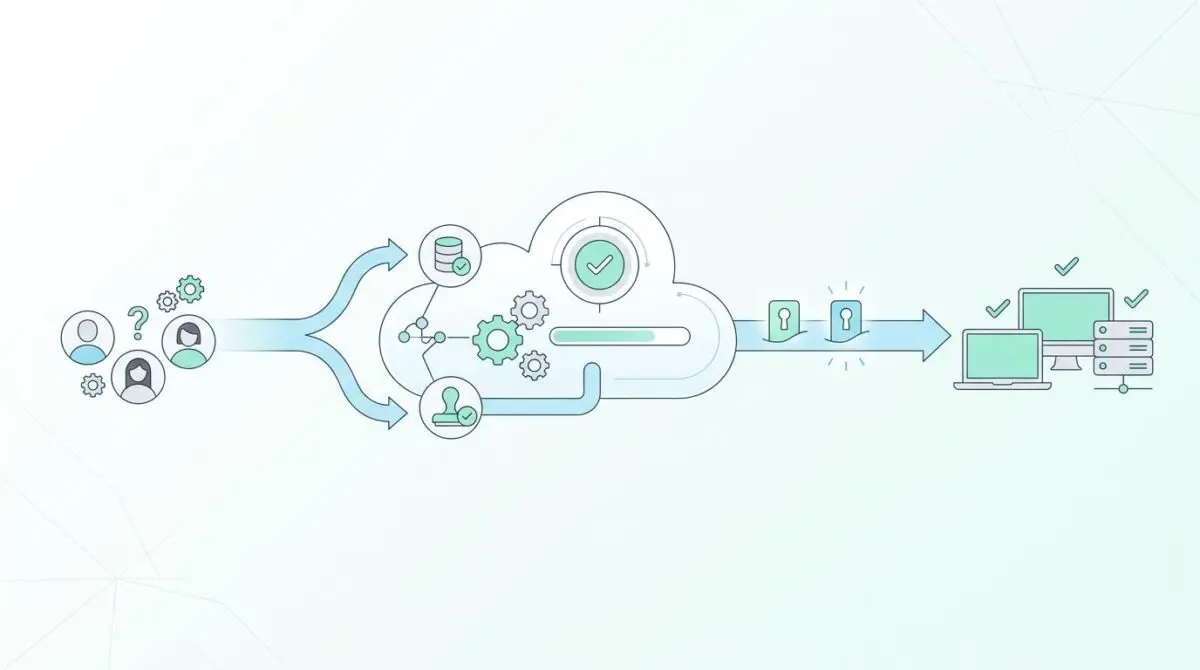
Modern workflows solve this through Zero-Touch Provisioning. This methodology allows IT teams to drop-ship pre-configured laptops directly from the manufacturer to the employee’s home. When the employee powers on the device, it automatically connects to the corporate network and downloads all necessary security policies.
Simultaneously, identity management systems sync the new user’s profile across half a dozen different SaaS tools instantly. By day one, the employee has a fully functional workstation, complete access to their required platforms, and IT hasn’t touched a single keyboard.
Zero-Trust Identity Governance

Security risks multiply exponentially when onboarding thousands of global employees manually. Compliance failures frequently occur due to delayed account deprovisioning or granting over-privileged access to new hires. To combat this, large enterprises are rapidly implementing Zero Trust-aligned identity provisioning.
Platforms like Okta and JumpCloud are central to this security posture. They enforce Least-Privilege access automatically, ensuring employees only receive the exact permissions required for their specific role. If an employee changes departments, the HRIS system updates, and the provisioning platform instantly adjusts their access levels.
This real-time synchronization prevents the creation of zombie accounts, which are a primary vector for corporate data leaks. By automating identity governance, enterprises maintain strict compliance standards while scaling their workforce effortlessly.
Measuring Readiness And ROI
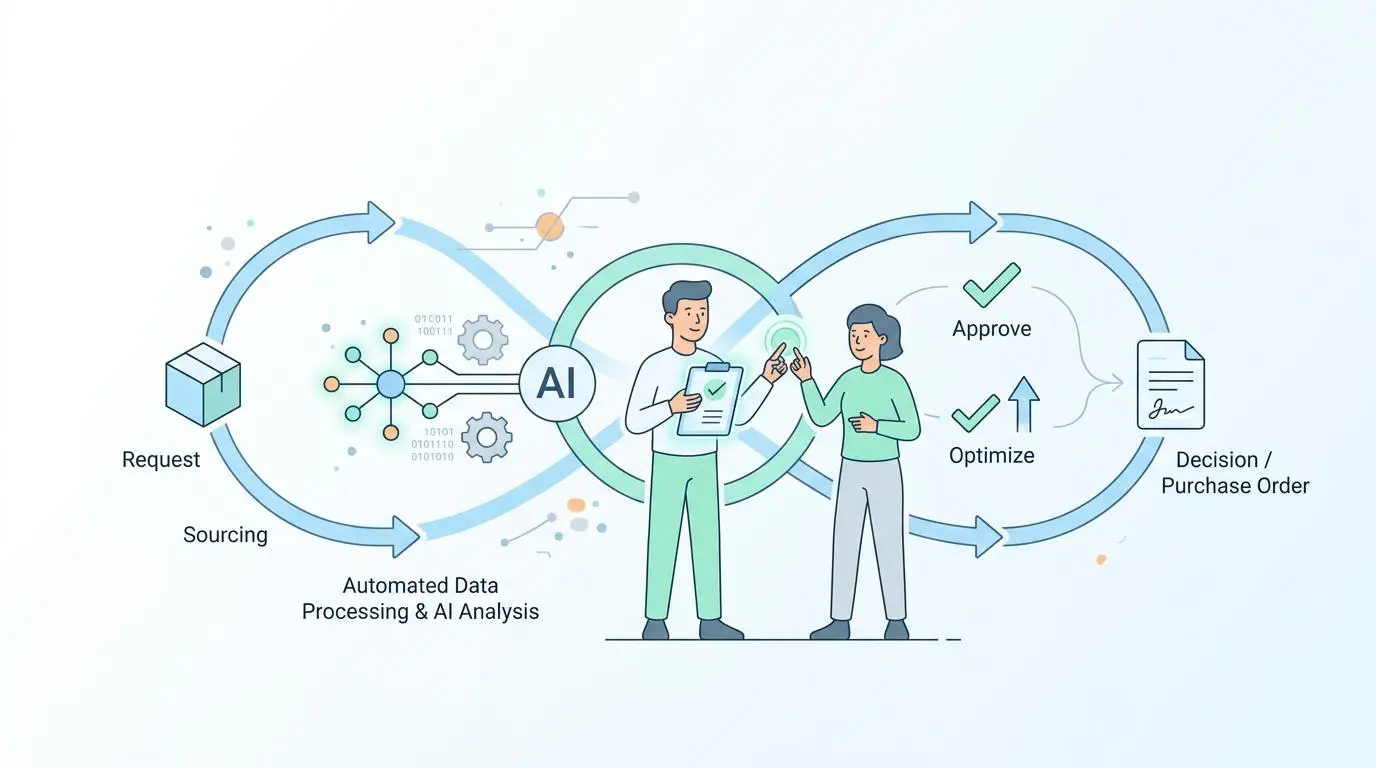
The hidden tax of manual onboarding is the high cost of unproductive ramp time. Currently, knowledge workers face a median duration of sixty-five days before they reach full productivity. AI-driven ecosystems directly attack this metric, cutting time-to-readiness by an average of four full days per employee.
This acceleration is further supported by intelligent self-service tools. Automated explainers and interactive logs now handle the repetitive questions that typically flood HR inboxes. In fact, recent reports reveal that nearly a third of new hires now rely more on AI-powered self-service tools than their human colleagues for onboarding guidance.
By shifting these basic inquiries to autonomous systems, companies reduce HR support tickets by a quarter. This massive reduction in administrative overhead allows human resources teams to focus on strategic culture-building rather than password resets.
The Financial Drain Of Attrition
Disorganized onboarding is a massive financial liability, leading directly to one in three new hires quitting within their first three months. Replacing a single salaried employee costs a business between ninety and two hundred percent of that individual’s annual salary. When multiplied across a global enterprise, this attrition represents a staggering financial loss.
Automated systems help mitigate this risk by monitoring the employee experience in real-time. Platforms like Enboarder utilize predictive analytics to identify subtle flight risks during the critical first ninety days. By tracking engagement with onboarding materials and system usage, these tools flag employees who may be struggling or disengaged.
Once a risk is identified, the system can automatically prompt managers to intervene with targeted support or schedule a check-in. This proactive approach transforms onboarding from a logistical checklist into a strategic retention mechanism.
Human-In-The-Loop Hardware Approvals
While artificial intelligence excels at logistics, fiscal responsibility still requires a human touch. A common delay in procurement occurs when high-cost hardware orders sit buried in an email inbox awaiting a manager’s signature. This breaks the automation chain and stalls the entire provisioning process.
Modern workflows solve this by integrating directly into the communication tools teams already use. By leveraging Slack and Microsoft Teams, provisioning systems can send instant approval requests directly to a manager’s chat window. The manager can review the hardware request and approve it with a single click from their phone.
This Human-in-the-Loop design ensures that financial oversight remains tight without slowing down the operational velocity. AI handles the complex routing and vendor communication, while humans remain the final, rapid checkpoint for high-value decisions.
The Era Of Predictive Readiness
The future of enterprise scaling lies in moving from reactive provisioning to Predictive Readiness. Soon, AI agents will analyze a new hire’s past project data, skill assessments, and team assignments to pre-emptively provision specific software modules. Advanced permissions will be granted before the employee even realizes they need them.
This shift will transform the first day of work from an administrative hurdle into a perfectly tailored launchpad. By eliminating the friction of access and hardware logistics, enterprises empower their talent to focus entirely on innovation and output.
Navigating the intersection of technology, workflows, and operational efficiency requires a sharp strategy. To future-proof your business architecture and scale with precision, connect with Andres at Andres SEO Expert.
Frequently Asked Questions
What is an Enterprise Automated Onboarding & Provisioning Ecosystem?
An Enterprise Automated Onboarding & Provisioning Ecosystem is a network of interconnected workflows that bridge HR, IT, and Finance systems. It replaces manual tasks with AI-driven agents that automatically grant software access and configure hardware, ensuring new hires are fully equipped to work the moment they log in.
How does automated onboarding improve employee retention?
Automated onboarding eliminates the “Silence and Stall gap,” where new hires wait days for essential tools. Research shows that structured, automated processes can improve new hire retention rates by 82% by building early trust and preventing the frustration that causes 20% of employees to leave within their first 45 days.
What are the benefits of Zero-Touch Provisioning for IT teams?
Zero-Touch Provisioning allows IT departments to ship pre-configured laptops directly to employees. When the device is turned on, it automatically installs security policies and software. This removes the 5-10 day manual configuration bottleneck and allows technical resources to focus on high-value tasks rather than repetitive hardware setup.
How does AI orchestration reduce new hire time-to-readiness?
AI orchestration platforms, like Rippling or Workato, act as a central nervous system that triggers background events based on data. By automatically formatting payroll entries and provisioning licenses as soon as an offer is signed, these systems cut time-to-readiness by an average of four days and boost productivity by over 70%.
What is the role of Zero Trust in automated identity governance?
Zero Trust-aligned identity provisioning ensures “Least-Privilege” access, meaning employees only receive permissions necessary for their specific role. Automation via platforms like Okta ensures that when an employee’s status changes in the HRIS, their access levels are updated instantly, preventing security risks like “zombie accounts.”