Key Points
- Eradicating the Ramp-Up Lag: Generative AI Behavioral Simulation Platforms provide 24/7 on-demand practice with dynamic buyer personas, drastically reducing the traditional 3-6 month onboarding period.
- Just-in-Time Pipeline Interventions: Modern platforms integrate directly with CRM systems to automatically trigger hyper-specific simulation modules the moment a live deal stalls.
- The Shift to Performance Digital Twins: By late 2026, AI will evolve from isolated practice environments into agentic shadow coaches that whisper real-time guidance during live customer calls.
Table of Contents
- The Cost of Forgotten Conversations
- Quantifying the Shift to Synthetic Practice
- Eliminating the Three-Month Ramp-Up Lag
- Engineering Unpredictable Digital Buyers
- Protecting the Balance Sheet from Turnover
- Rescuing Managers from Administrative Coaching
- Triggering Just-In-Time Pipeline Interventions
- Deploying Performance Digital Twins
- The Next Era of Cognitive Sales Development
The Cost of Forgotten Conversations
The invisible tax draining your sales department is not software bloat or travel expenses. It is the silent evaporation of institutional knowledge. Every time a new cohort of sales representatives leaves an intensive onboarding bootcamp, the clock starts ticking on a massive cognitive leak. Companies pour millions into developing intricate playbooks, only to watch their reps revert to bad habits the moment they hit the sales floor.
Traditional role-playing is fundamentally broken because it relies on human managers who are already stretched too thin. When managers cannot dedicate hours to realistic practice scenarios, reps are forced to practice on actual leads. This trial-by-fire approach burns through valuable pipeline and destroys customer trust.
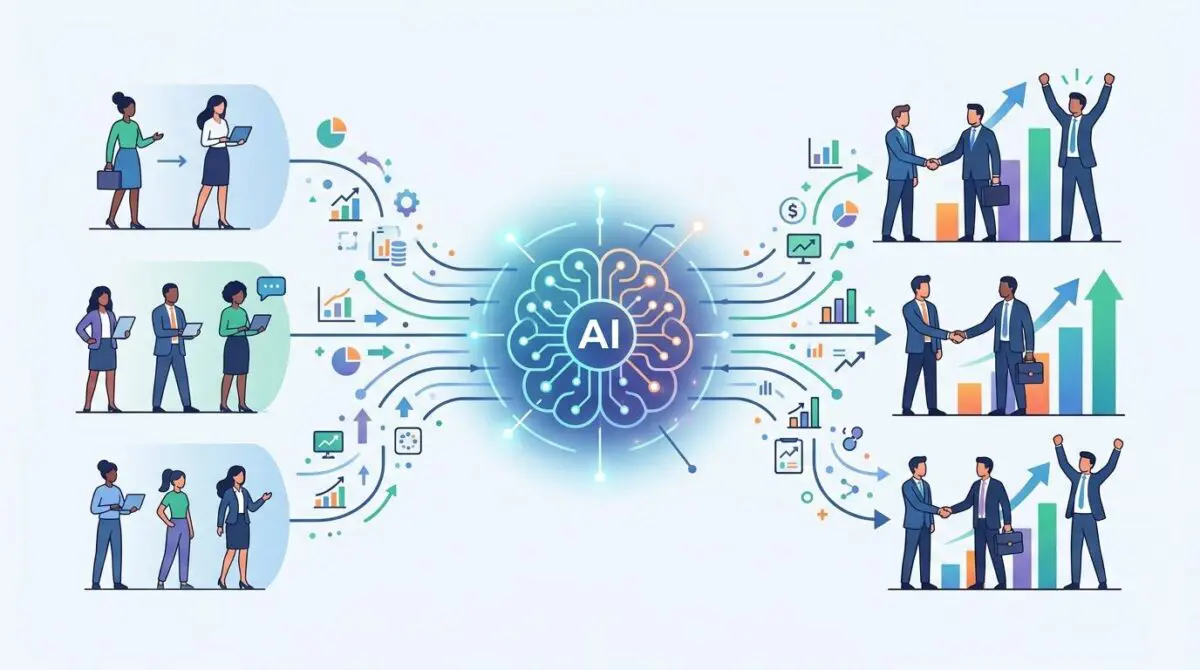
Enter Generative AI Behavioral Simulation Platforms. These intelligent systems act as the ultimate cognitive safety net for modern revenue teams. By providing highly realistic practice environments, they transform theoretical knowledge into deeply ingrained muscle memory before a rep ever picks up the phone.
Quantifying the Shift to Synthetic Practice
Market Intelligence & Data
Conversational Learning Growth
According to a May 2026 Skillsoft performance report, usage of its CAISY conversational AI simulation experience grew by 146% year-over-year.
Ramp-Up Time Reduction
A 2026 Careertrainer.ai industry analysis found that companies implementing AI roleplay for onboarding reported a 20% faster ramp-up time for new sales representatives.
AI Proficiency Mandates
Gartner predicted in March 2026 that 75% of enterprise hiring processes will include formal certifications for workplace AI proficiency by 2027.
AI Sales Tool Market Size
Verified data from a February 2026 Global AI-powered Sales Tool Market report valued the sector at $3,030.1 million as of 2025.
Enterprise adoption is surging as organizations realize the limitations of static video libraries and multiple-choice quizzes. The staggering 146% growth in conversational learning experiences like Skillsoft CAISY proves that interactive practice is becoming the new corporate standard. Companies are actively shifting their budgets away from passive content consumption toward active behavioral modification.
Reducing onboarding time by 20% is not just about operational speed. It is about fundamentally rewriting the retention curve. This rapid competency development acts as a direct antidote to the harsh reality where 87% of sales training is forgotten within 30 days. Synthetic practice ensures that knowledge is immediately applied and locked into a daily workflow.
The push for AI proficiency is rapidly moving from a nice-to-have skill to a mandatory hiring baseline. With Gartner predicting that 75% of hiring processes will require AI certifications, the ability to leverage AI coaching tools will soon define a professional’s career trajectory. Organizations must build these simulation ecosystems now to attract top-tier talent.
The $3.03 billion valuation of the AI sales tool market underscores a massive reallocation of enterprise capital. This financial footprint indicates that behavioral simulation is no longer an experimental fringe technology. It is the foundational architecture of the modern revenue engine, designed to derisk human performance at scale.
Eliminating the Three-Month Ramp-Up Lag
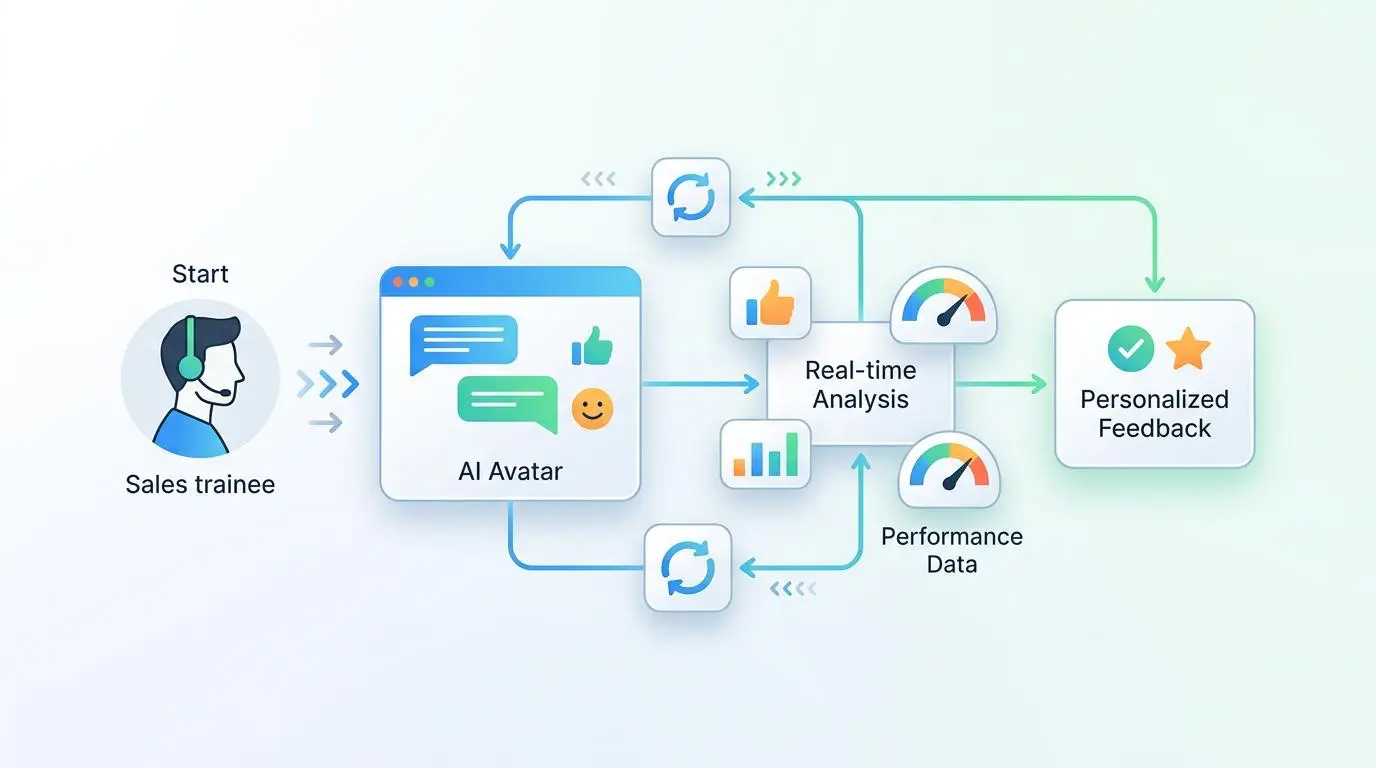
New sales hires typically face an agonizing ramp-up period of three to six months before they generate meaningful revenue. During this window, they are absorbing product knowledge but lack the conversational repetitions required to sound authoritative. Traditional role-play is a logistical nightmare because it requires synchronizing schedules with busy sales managers.
Because human managers spend less than 14% of their work week on actual coaching, reps are left to figure it out on their own. This inevitably leads to reps practicing their pitches on real, expensive leads. The result is a trail of burnt pipeline, frustrated prospects, and high turnover costs as struggling reps fail to meet quota.
Platforms like Pitchbase and SecondBody solve this by providing 24/7 on-demand practice environments. Trainees can interact with AI avatars that simulate highly specific buyer personas and industry-relevant objections. This allows a new hire to experience a year’s worth of conversational friction in their very first week.
Engineering Unpredictable Digital Buyers

Legacy training modules relied on static, branching-path videos that felt like primitive video games. Reps quickly learned the right answers by memorizing the patterns, completely defeating the purpose of the exercise. Real buyers are unpredictable, emotional, and rarely follow a scripted dialogue tree.
Modern platforms utilize Large Language Models to engineer dynamic personas with distinct psychological profiles. A rep might face The Skeptical CFO on Tuesday and The Passive-Aggressive IT Manager on Wednesday. This variable reinforcement ensures that no two roleplay sessions are ever identical, forcing the rep to actively listen and adapt.
The technology is advancing rapidly into the realm of emotional intelligence. UneeQ’s Synanim animation technology, released in early 2026, uses proprietary AI to generate digital humans with biometric responsiveness. The AI avatar’s pupil dilation and micro-gestures actually change in real-time based on the trainee’s level of perceived confidence or hesitation.
Protecting the Balance Sheet from Turnover

Sales turnover is a silent killer of corporate profitability, often costing 1.5 to 2 times an employee’s annual salary. When a rep fails, the company loses the recruitment costs, the base salary paid during ramp-up, and the massive opportunity cost of unclosed deals. Effective day-one readiness is therefore a critical balance sheet issue.
Investing in AI-driven management development provides an extraordinary hedge against this financial risk. For every dollar spent on these behavioral simulation platforms, companies are seeing an average return of seven dollars. This ROI is driven entirely by increased retention and accelerated performance metrics.
By prioritizing behavior change over generic video libraries, organizations create a culture of continuous competence. Reps feel supported because they have a safe space to fail and iterate. This psychological safety directly translates to higher job satisfaction and longer tenures.
Rescuing Managers from Administrative Coaching
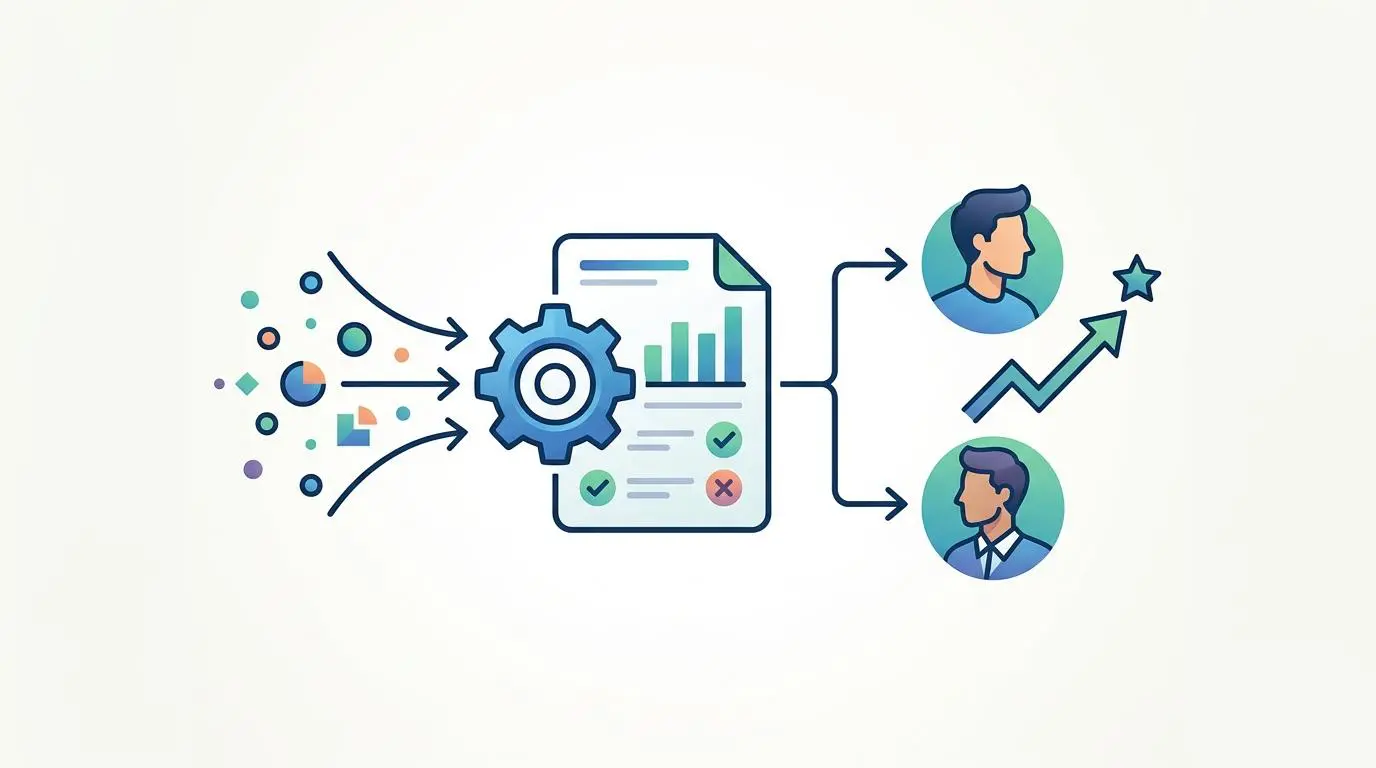
Sales managers are currently drowning in CRM dashboard cleanup and pipeline reconciliation. They are treated as glorified data entry supervisors rather than behavioral psychologists. This administrative burden leaves them with almost zero capacity to focus on the actual psychological development of their teams.
AI is not arriving to replace the sales manager. It is arriving to rescue them. Automated coaching platforms analyze thousands of data points from simulation sessions to flag highly specific skill gaps. Instead of guessing what a rep needs help with, the system provides a diagnostic report.
If the AI detects that a specific rep consistently struggles with pricing objections after the thirty-minute mark, the manager is alerted. The manager can then step in to provide highly targeted, high-value human mentorship. This elevates the manager’s role from a nagging supervisor to a strategic performance architect.
Triggering Just-In-Time Pipeline Interventions
Corporate training traditionally feels disconnected from the actual workflow. It is viewed as homework, completely divorced from the live deals a rep is trying to close. This separation guarantees low engagement and poor knowledge retention.
The most effective modern tech stacks integrate simulation tools directly with CRM data streams from Salesforce or HubSpot. This creates an ecosystem of Just-in-Time training. The software monitors the live pipeline and detects when a deal has stalled at a critical stage.
When an AI agent notices a stalled deal, it automatically assigns a micro-practice simulation tailored to that exact scenario. If the prospect’s last recorded objection was about implementation timelines, the rep must successfully navigate a five-minute simulation on that exact topic before their next scheduled call.
Deploying Performance Digital Twins
The gap between simulated practice and live execution is the final frontier of sales enablement. Even with hyper-realistic avatars, reps can still experience stage fright when a real multi-million dollar contract is on the line. The future of this technology aims to completely blur the line between practice and reality.
The industry is rapidly moving toward Agentic Training Systems. In this model, the AI does not just simulate a customer in a vacuum. It acts as a shadow coach during live, real-world calls. The system provides real-time, whispered prompts based on successful patterns it identified during the rep’s previous simulation sessions.
By late 2026, these platforms will evolve into Performance Digital Twins. An AI model of the sales rep will be trained on their historical call data to predict which upcoming deals they are most likely to lose. The system will then proactively deploy specific practice modules to patch those vulnerabilities before the live call ever happens.
The Next Era of Cognitive Sales Development
We are witnessing the end of the traditional, intuition-based sales floor. The integration of Generative AI Behavioral Simulation Platforms marks a permanent shift toward engineered cognitive readiness. Organizations that adopt these synthetic practice environments will build revenue teams that are practically immune to market volatility and unpredictable buyers.
The companies that win the next decade will not be those with the loudest sales pitches, but those with the most rigorous, AI-augmented practice ecosystems. By transforming abstract training into continuous, measurable behavioral modification, businesses can scale their revenue operations with unprecedented precision.
Navigating the intersection of modern technology, software architecture, and business growth requires a sharp strategy. To future-proof your tech stack and scale with precision, connect with Andres at Andres SEO Expert.
Frequently Asked Questions
What are Generative AI Behavioral Simulation Platforms?
Generative AI Behavioral Simulation Platforms are intelligent systems that provide realistic, scalable practice environments for revenue teams. They use advanced AI to simulate diverse buyer personas and objections, allowing sales representatives to build muscle memory and confidence before interacting with real prospects.
How does AI-driven roleplay reduce sales ramp-up time?
Research indicates that implementing AI roleplay can reduce ramp-up time by 20%. By providing 24/7 on-demand access to practice environments, new hires can experience a year’s worth of conversational friction in their first week, reaching competency much faster than through traditional methods.
What is the ROI of behavioral simulation platforms for sales?
Organizations investing in AI-driven behavioral simulation report an average return of seven dollars for every dollar spent. This ROI is driven by increased employee retention, reduced recruitment and training costs, and accelerated revenue generation from faster-ramping representatives.
Why is traditional sales training often ineffective?
Traditional training suffers from high decay rates, with 87% of knowledge often forgotten within 30 days. It typically relies on overburdened managers or static content that fails to replicate the unpredictable, emotional nature of real-world buyers.
What role will AI proficiency play in enterprise hiring by 2027?
Gartner predicts that 75% of enterprise hiring processes will include formal certifications for workplace AI proficiency by 2027. AI proficiency is transitioning from a competitive advantage to a mandatory baseline for professional sales roles.
What are Performance Digital Twins in sales enablement?
Performance Digital Twins are advanced AI models trained on a representative’s historical data. They predict which upcoming deals are at risk and proactively deploy specific practice modules to help the representative address those vulnerabilities before a live call.