Executive Summary
- Centralized database architecture for candidate lifecycle management and automated resume parsing using NLP.
- Integration with HRIS and ERP systems via RESTful APIs to ensure data consistency across the enterprise.
- Algorithmic screening and Boolean search capabilities to optimize recruitment funnel efficiency and reduce time-to-hire.
What is Applicant Tracking System (ATS)?
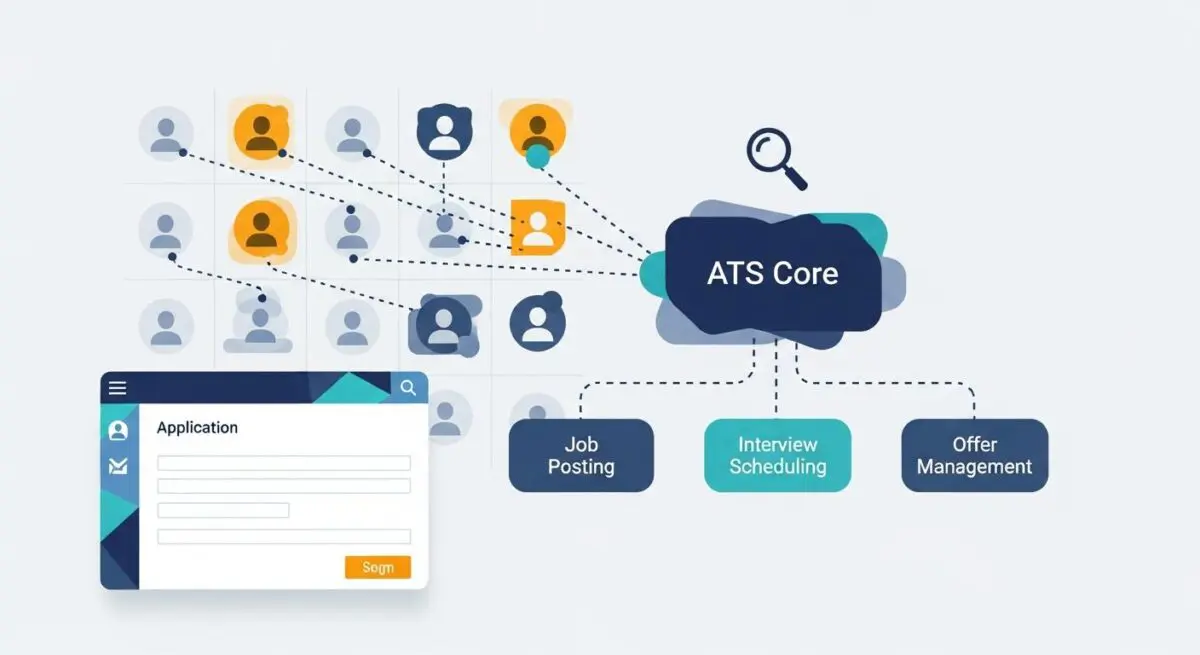
An Applicant Tracking System (ATS) is a specialized enterprise software application designed to manage the end-to-end recruitment lifecycle. It functions as a centralized repository for candidate data, facilitating the ingestion, organization, and evaluation of professional profiles at scale.
At its core, an ATS utilizes sophisticated parsing engines, often powered by Natural Language Processing (NLP), to extract unstructured data from resumes and convert it into structured formats. This allows for efficient querying, comparative analysis, and automated ranking across massive talent pools.
Modern ATS platforms are integral components of the Human Capital Management (HCM) tech stack. They interface with external job boards and internal Human Resource Information Systems (HRIS) to ensure seamless data flow and compliance with global labor regulations.
The Real-World Analogy
Imagine a massive international airport’s automated baggage handling system. Thousands of suitcases arrive from various locations, each with different shapes, sizes, and identification tags.
The ATS acts as the central control system that scans every tag, identifies the destination, and routes the luggage to the correct terminal without manual intervention. Without this system, ground crews would have to manually inspect every bag, leading to massive delays, lost items, and operational paralysis.
How Applicant Tracking System (ATS) Drives Strategic Growth & Market Competitiveness?
An ATS significantly reduces the Time-to-Hire metric by automating repetitive administrative tasks such as interview scheduling and status updates. By streamlining the initial screening phase, recruitment teams can focus their resources on high-value candidate engagement and strategic talent mapping.
Data integrity is a primary driver of strategic growth within the recruitment function. An ATS provides granular insights into sourcing channel effectiveness, allowing firms to reallocate marketing budgets toward high-performing job boards and social platforms.
The system also lowers the Cost-per-Hire by building a proprietary talent pipeline. Instead of paying for new leads for every vacancy, organizations can query their existing database for qualified silver-medalists from previous searches, maximizing the ROI of past recruitment spend.
From a compliance perspective, an ATS ensures that all hiring practices adhere to legal frameworks such as the EEOC in the United States or GDPR in Europe. This systematic approach mitigates the risk of costly litigation and protects the corporate brand reputation.
Furthermore, the integration of AI and machine learning within the ATS allows for predictive analytics. These tools can forecast future hiring needs based on historical turnover rates and business expansion plans, enabling proactive rather than reactive hiring.
Strategic Implementation & Best Practices
- Optimize Parsing Compatibility: Ensure all job descriptions and application forms are structured to be easily read by Natural Language Processing (NLP) algorithms. This involves using standard job titles and clear section headers to prevent data extraction errors during the ingestion phase.
- API-First Integration Strategy: Implement the ATS using a robust API layer to connect with existing CRM and ERP systems. This ensures that candidate data flows seamlessly into employee records upon successful onboarding, maintaining a single source of truth for all personnel data.
- Leverage Structured Data for SEO: Utilize Schema.org/JobPosting markup on the company’s career page to ensure job listings are correctly indexed by search engines and job aggregators. This increases organic visibility and reduces reliance on expensive paid advertising channels.
- Automated Workflow Triggers: Configure automated status updates and communication triggers to maintain candidate engagement throughout the funnel. This reduces the friction in the candidate experience and prevents top-tier talent from dropping out of the process due to lack of feedback.
Common Pitfalls & Strategic Mistakes
One frequent error is the implementation of overly restrictive keyword filters. This can lead to the false negative problem, where highly qualified candidates are rejected because their resumes do not contain specific, arbitrary terminology required by the algorithm.
Another mistake is failing to optimize the mobile application experience. Many enterprise ATS platforms have cumbersome interfaces that lead to high abandonment rates among top-tier talent who expect a frictionless digital experience on their mobile devices.
Data silos often occur when the ATS is not properly integrated with the broader HR tech stack. This leads to manual data entry errors, fragmented candidate journeys, and a lack of visibility into the long-term performance and retention of new hires.
Conclusion
The Applicant Tracking System is a fundamental pillar of modern talent acquisition architecture. Its ability to transform unstructured candidate data into actionable insights is essential for maintaining a competitive edge in the global labor market.