Executive Summary
- Modular Decoupling: Systems are built using independent, interchangeable components known as Packaged Business Capabilities (PBCs) connected via APIs.
- Agility and Scalability: Enables organizations to swap or upgrade specific functional modules without disrupting the entire enterprise ecosystem or incurring massive technical debt.
- Best-of-Breed Selection: Shifts the strategy from monolithic all-in-one suites to a curated stack of specialized services that optimize specific business outcomes.
What is Composable Architecture?
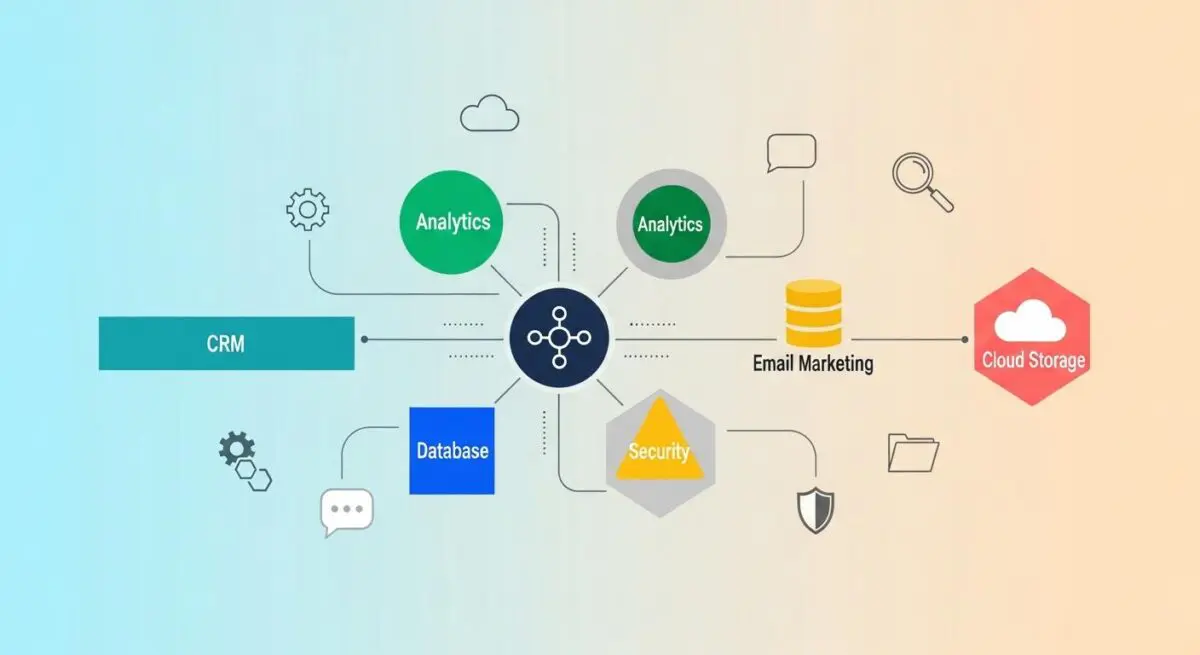
Composable architecture is a modern design philosophy where business applications are built from independent, interchangeable building blocks. This approach moves away from traditional monolithic software structures, where every component is tightly coupled and interdependent. In a composable environment, every functional element is treated as a discrete service that can be deployed, scaled, and managed independently.
At its core, this architecture relies on the principles of the MACH alliance: Microservices, API-first, Cloud-native, and Headless. By utilizing these four pillars, organizations can create a highly flexible tech stack that adapts to changing market conditions. The architecture treats business capabilities as modular units, often referred to as Packaged Business Capabilities (PBCs), which represent a well-defined business function such as a shopping cart, a payment gateway, or a customer profile manager.
This technical framework is essential for modern data analytics and digital marketing. It allows for a seamless flow of data between disparate systems through standardized APIs. By decoupling the presentation layer from the back-end logic, developers can deliver content and services across multiple channels, including web, mobile, IoT, and even AI-driven search interfaces, without re-engineering the core business logic.
The Real-World Analogy
Imagine a professional high-end stereo system compared to a basic all-in-one boombox. A boombox is a monolith; if the CD player breaks or the speakers become outdated, you must replace the entire unit. You are limited by the quality of the weakest component chosen by the manufacturer, and you cannot easily upgrade individual parts to meet new standards.
A composable architecture is like a high-end modular audiophile setup. You select the best amplifier from one brand, the highest-quality turntable from another, and premium speakers from a third. If a new digital streaming technology emerges, you simply swap out the receiver while keeping your expensive speakers and amplifier. Each piece performs its specific job perfectly, and they all communicate through standard cables and interfaces, allowing you to build a system that is far superior to any single-box solution.
How Composable Architecture Drives Strategic Growth & Market Competitiveness?
Composable architecture directly impacts a company’s bottom line by significantly reducing the time-to-market for new features. In a monolithic environment, a small change to the checkout process might require a full redeployment of the entire application, leading to long testing cycles and potential downtime. With a modular approach, teams can update a single microservice in isolation, allowing for continuous delivery and rapid experimentation.
From a strategic marketing perspective, this flexibility reduces Customer Acquisition Costs (CAC) by enabling highly personalized and performant user experiences. Because the architecture is headless, marketing teams can deploy new front-end experiences or landing pages that pull data from the same robust back-end services. This ensures consistency across the customer journey while allowing for the speed necessary to capitalize on emerging trends or seasonal shifts.
Data integrity and strategic decision-making are also enhanced. In a composable stack, data is not trapped in a proprietary vendor silo. Instead, it flows through APIs into a centralized data lake or warehouse, providing a single source of truth. This high-fidelity data allows for more accurate attribution models and better-informed budget allocations, as leaders can see exactly which components of their tech stack are driving conversions and which are underperforming.
Furthermore, composability protects the organization against vendor lock-in. If a third-party service provider increases their prices or fails to innovate, the business can replace that specific module with a competitor’s offering. This competitive leverage ensures that the enterprise remains at the cutting edge of technology without being held hostage by a single software vendor’s roadmap or pricing strategy.
Finally, the architecture supports the growing demands of AI-Search and Generative Engine Optimization (GEO). By structuring data in a modular, API-accessible format, businesses make it easier for AI crawlers and large language models to ingest and understand their offerings. This technical readiness ensures that the brand remains visible in the next generation of search and discovery platforms, maintaining a competitive edge in a rapidly evolving digital landscape.
Strategic Implementation & Best Practices
- Adopt an API-First Mindset: Ensure that every new component or service is designed with a robust, well-documented API as its primary interface to facilitate seamless integration.
- Define Packaged Business Capabilities (PBCs): Group related microservices into functional blocks that represent specific business goals, making them easier for non-technical stakeholders to understand and manage.
- Implement a Centralized Orchestration Layer: Use an API gateway or a service mesh to manage the communication, security, and data flow between various modules to prevent architectural chaos.
- Prioritize Headless Content Delivery: Separate your content management from your delivery channels to ensure that your brand can pivot to new devices or platforms without migrating your entire database.
- Establish Strong Governance: Create clear standards for data schemas and integration protocols to ensure that as the stack grows, all components remain compatible and performant.
Common Pitfalls & Strategic Mistakes
One frequent error is the creation of “Integration Spaghetti,” where too many microservices are connected in a disorganized web without a central orchestration strategy. This leads to high maintenance overhead and makes it difficult to troubleshoot performance bottlenecks. Organizations must invest in a strong middleware or orchestration layer to maintain visibility across the entire ecosystem.
Another common mistake is over-engineering the solution by decomposing systems into too many tiny services. This can lead to excessive latency and complexity that outweighs the benefits of modularity. Strategic leaders must find the right balance between granularity and manageability, focusing on functional PBCs rather than fragmented micro-functions that provide little incremental value.
Finally, many enterprise brands fail to account for the cultural shift required for composability. This architecture requires cross-functional teams that own specific business capabilities rather than traditional siloed IT departments. Without a shift in organizational structure and a commitment to continuous learning, the technical implementation of a composable stack will likely fail to deliver its promised agility.
Conclusion
Composable architecture represents the future of enterprise technology by replacing rigid monoliths with flexible, best-of-breed modules. This strategic shift empowers businesses to innovate faster, eliminate vendor lock-in, and build a resilient foundation for the AI-driven digital economy.