Executive Summary
- Automated Fraud Mitigation: Deployment of 3D Secure 2.0 and machine learning filters to identify high-risk transactions before they reach the settlement phase.
- Evidence-Based Representment: Systematic collection of digital footprints, including IP logs and delivery confirmations, to challenge illegitimate disputes via card network protocols.
- Network Compliance Monitoring: Continuous tracking of chargeback-to-transaction ratios to prevent placement in high-risk monitoring programs by Visa or Mastercard.
What is Chargeback Management?
Chargeback management is the technical and operational framework used by merchants to identify, prevent, and resolve payment disputes initiated by cardholders. It involves a complex interaction between the merchant, the acquiring bank, the card network, and the issuing bank to determine the validity of a transaction reversal.
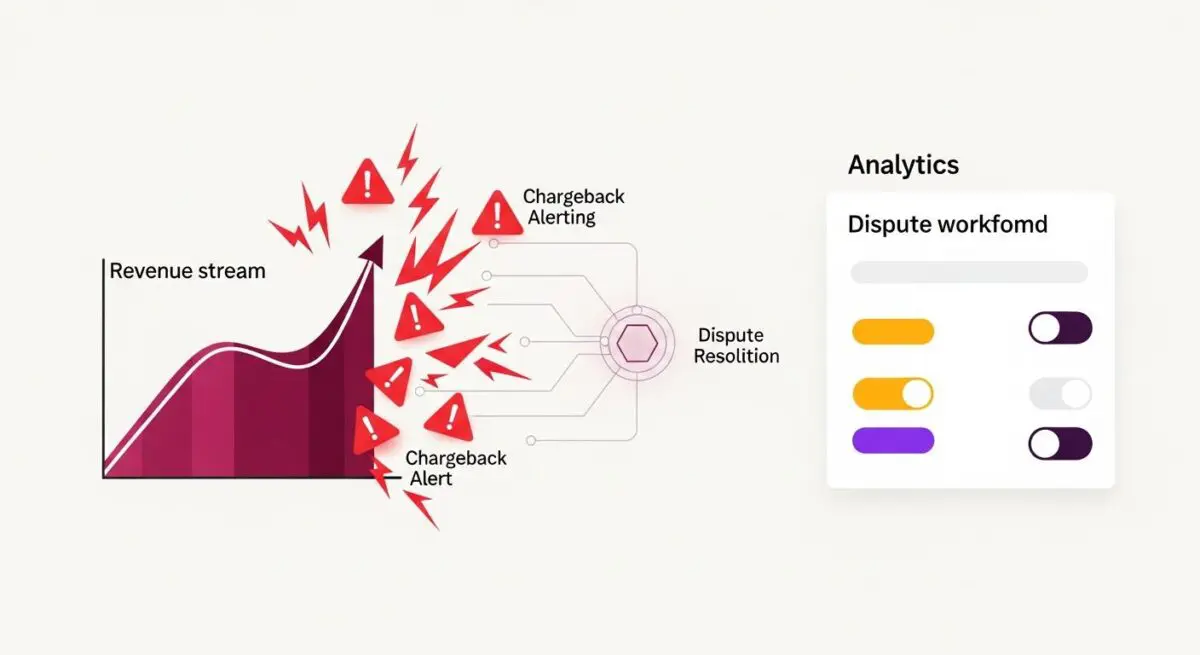
At its core, this process utilizes data-driven protocols to mitigate the impact of ‘friendly fraud,’ criminal fraud, and administrative errors. By leveraging automated tools and manual review processes, businesses can protect their revenue streams from unjustified clawbacks while maintaining a healthy relationship with payment processors.
Modern chargeback management systems integrate directly with payment gateways and CRM platforms to provide a holistic view of the transaction lifecycle. This integration allows for real-time monitoring of reason codes, which are standardized identifiers used by banks to categorize the nature of a dispute, such as ‘merchandise not received’ or ‘unauthorized transaction.’
The Real-World Analogy
Think of chargeback management as a sophisticated legal defense system for a high-end retail store. Imagine a customer walks into a store, purchases an expensive watch, and then later claims to their bank that they never actually entered the store or received the item.
In this scenario, chargeback management is the equivalent of the store’s high-definition security footage, the signed receipt, and the GPS tracking on the delivery vehicle. It is the organized collection of undeniable evidence that proves the transaction was legitimate and the service was rendered as promised.
Without this system, the merchant is essentially defenseless in a ‘he-said, she-said’ argument where the bank almost always sides with the consumer. Chargeback management provides the merchant with the ‘burden of proof’ necessary to win the case and keep their earned revenue.
How Chargeback Management Drives Strategic Growth & Market Competitiveness?
Effective chargeback management directly influences a firm’s bottom line by reducing the cost of lost goods and the associated administrative fees. Every chargeback carries a non-refundable fee from the processor, which can range from $15 to $100, regardless of whether the merchant wins the dispute.
By minimizing these occurrences, companies can significantly lower their operational overhead and improve their Customer Acquisition Cost (CAC) efficiency. When revenue is not being drained by fraudulent reversals, more capital is available for reinvestment into product development and market expansion.
Furthermore, maintaining a low chargeback ratio is critical for securing favorable processing rates. Merchants with high dispute rates are flagged as high-risk, leading to increased transaction fees, rolling reserves, or even the termination of their merchant accounts, which can be catastrophic for digital-first enterprises.
Strategic management also enhances the customer experience by identifying friction points in the fulfillment process. If a specific product consistently triggers ‘not as described’ chargebacks, the data provides a clear signal to the product team that there is a disconnect between marketing and reality.
Strategic Implementation & Best Practices
- Implement Multi-Layered Fraud Detection: Utilize Address Verification Service (AVS), Card Verification Value (CVV) checks, and 3D Secure 2.0 to validate the identity of the purchaser at the point of sale.
- Optimize Billing Descriptors: Ensure that the name appearing on the customer’s bank statement is easily recognizable and matches the brand name to prevent confusion-based disputes.
- Automate the Representment Process: Use specialized software to automatically compile transaction logs, shipping receipts, and communication history into a standardized rebuttal package for the issuing bank.
- Utilize Early Warning Alerts: Integrate with services like Ethoca or Verifi to receive notifications of disputes before they become formal chargebacks, allowing for a proactive refund and fee avoidance.
Common Pitfalls & Strategic Mistakes
One of the most frequent errors is the passive acceptance of chargebacks as a ‘cost of doing business.’ This mindset ignores the long-term damage to the merchant’s reputation with card networks and the missed opportunity to recover legitimate revenue through representment.
Another critical mistake is the failure to distinguish between criminal fraud and friendly fraud. While criminal fraud requires stricter front-end filters, friendly fraud—where a legitimate customer disputes a valid charge—requires a robust post-transaction evidence collection strategy and better customer service communication.
Finally, many enterprise brands suffer from data silos where the customer support team and the finance team do not share information. This lack of communication often results in a merchant refunding a customer while simultaneously fighting a chargeback, leading to a double loss of funds.
Conclusion
Chargeback management is a vital technical discipline that safeguards a merchant’s financial integrity and operational stability in the digital economy. By implementing rigorous data protocols and automated defense mechanisms, businesses can transform a defensive necessity into a strategic advantage for long-term growth.