Executive Summary
- Lean Startup Methodology is a systematic, scientific approach for creating and managing startups, emphasizing iterative product releases, validated learning, and rapid experimentation to reduce market risks and avoid unnecessary work.
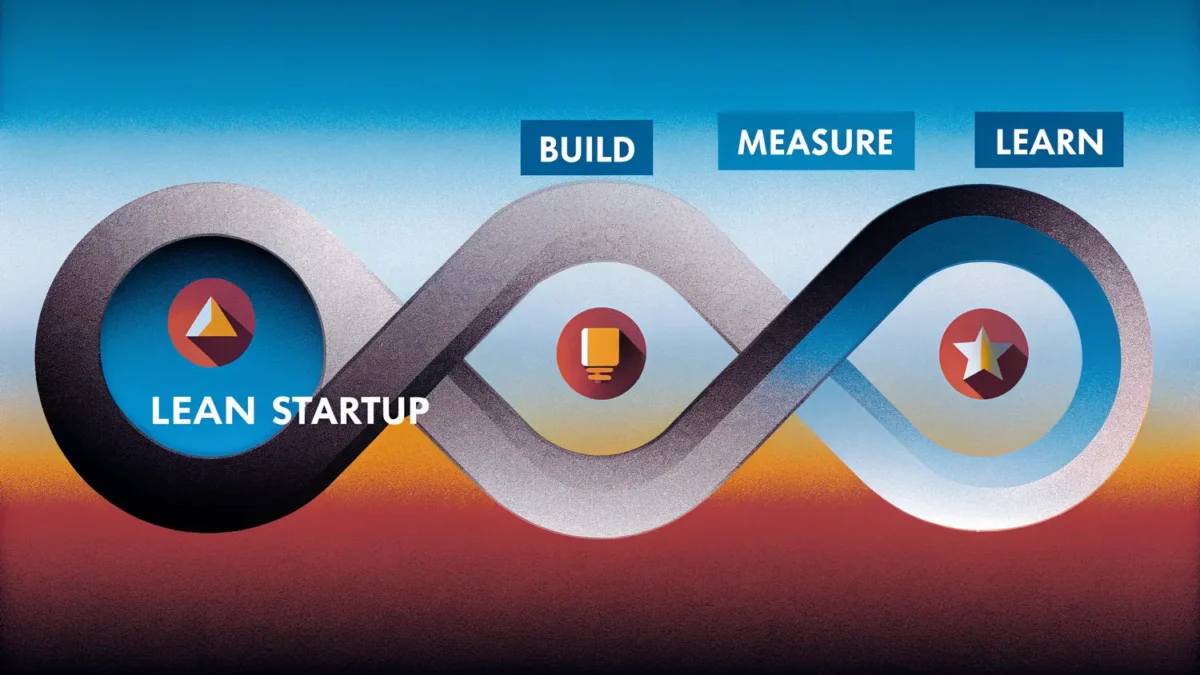
- Core components include the Build-Measure-Learn feedback loop, Minimum Viable Product (MVP), and pivot-or-persevere decisions, enabling data-driven strategy adjustments.
- Strategic impact includes faster time-to-market, efficient resource allocation, and higher product-market fit probability, directly influencing growth metrics and investor confidence.
What is Lean Startup Methodology?
Lean Startup Methodology is a framework for developing businesses and products that aims to shorten product development cycles and rapidly discover if a proposed business model is viable. It was popularized by Eric Ries in his 2011 book, The Lean Startup, and draws from lean manufacturing principles.
At its core, the methodology emphasizes validated learning through the Build-Measure-Learn feedback loop. Instead of building a complete product upfront, startups create a Minimum Viable Product (MVP) with just enough features to test key hypotheses with early adopters.
Data from real customer interactions then informs whether to pivot (change strategy) or persevere. This approach reduces waste, accelerates time-to-market, and increases the probability of achieving product-market fit.
The Real-World Analogy
Think of Lean Startup Methodology as a scientist conducting experiments rather than an architect drawing blueprints. An architect designs a building completely before construction, assuming all requirements are known upfront.
In contrast, a scientist forms a hypothesis, runs a small experiment, analyzes results, and adjusts the next experiment accordingly. Similarly, a lean startup treats its business model as a series of testable hypotheses, using MVPs as experiments to gather evidence before committing significant resources.
How Lean Startup Methodology Drives Strategic Growth & Market Competitiveness?
By focusing on validated learning, Lean Startup Methodology directly reduces the risk of building products nobody wants. This minimizes wasted capital and time, allowing startups to iterate faster than competitors using traditional waterfall development.
From a growth perspective, the methodology enables data-driven decisions on customer acquisition channels, pricing models, and feature prioritization. Companies can identify scalable and repeatable growth engines earlier, improving customer acquisition costs (CAC) and lifetime value (LTV).
Moreover, the emphasis on continuous deployment and rapid iteration fosters a culture of experimentation, which is critical for adapting to market shifts and maintaining competitive advantage in dynamic industries.
Strategic Implementation & Best Practices
- Define clear hypotheses: Before building any MVP, explicitly state your riskiest assumptions about customer problems, solution value, and channel viability. Use a structured format like the Lean Canvas to document them.
- Build the simplest MVP: Focus on the smallest set of features that can test your core hypothesis. Avoid feature creep; the goal is learning, not perfection. Use tools like landing pages, mockups, or concierge services to validate demand.
- Establish actionable metrics: Track leading indicators such as activation rate, retention, and referral behavior rather than vanity metrics like total downloads. Implement cohort analysis to measure true customer behavior over time.
- Schedule regular pivot-or-persevere meetings: Set a cadence (e.g., every two weeks) to review learning milestones and decide whether to pivot or continue. Base decisions on quantitative data and qualitative customer feedback, not gut feelings.
- Integrate continuous deployment: Automate testing and deployment to release code changes frequently (multiple times per day). This accelerates the Build-Measure-Learn loop and reduces cycle time for experiments.
Common Pitfalls & Strategic Mistakes
One frequent error is treating the MVP as a half-baked product rather than a learning vehicle. Teams may launch an MVP without clear success criteria, leading to ambiguous data and indecision. Always define what “validated” means before starting.
Another pitfall is ignoring qualitative feedback in favor of quantitative metrics alone. While numbers are crucial, direct customer interviews and usability tests often reveal why behaviors occur, enabling deeper insights for pivots.
Finally, organizations may apply the methodology too rigidly, failing to adapt its principles to their specific context. For example, hardware startups or regulated industries may need longer cycles; the core philosophy of iterative learning still applies but requires adjusted implementation.
Conclusion
Lean Startup Methodology provides a disciplined framework for reducing uncertainty and building sustainable businesses through rapid experimentation and validated learning. When implemented correctly, it enables startups to achieve product-market fit faster and more efficiently than traditional approaches.