Executive Summary
- Infrastructure Convergence: The transition from front-end disruption to deep-tier architectural integration.
- Regulatory Resilience: Shifting from regulatory arbitrage to embedded compliance as a competitive moat.
- Modular Interoperability: The rise of ‘plug-and-play’ core banking systems that prioritize scalability over legacy maintenance.
The Second Wave: Beyond Digital Wrappers
The first decade of financial technology was characterized by the ‘unbundling’ of traditional banking services. Startups focused on isolated verticals—payments, lending, or wealth management—often providing a sleek digital interface over legacy rails. However, we have entered the era of FinTech 2.0. This phase is not defined by the novelty of mobile apps, but by the fundamental re-engineering of the global financial stack. For C-suite executives and institutional founders, the strategic focus has shifted from customer acquisition at all costs to the creation of resilient, interoperable, and high-margin infrastructure.
FinTech 2.0 represents a maturation of the market where the ‘move fast and break things’ ethos is being replaced by a ‘build once and scale infinitely’ philosophy. This transition is driven by the realization that sustainable alpha in the financial sector is no longer found in the user interface, but in the efficiency of the underlying settlement layers and the ability to navigate complex regulatory environments with surgical precision.
From Disruption to Systemic Integration
In the initial wave, many FinTech entities functioned as high-cost customer acquisition machines, often relying on venture capital to subsidize the lack of true operational efficiency. FinTech 2.0 reverses this trend. We are seeing a move toward ‘rebundling,’ where platforms integrate multiple services to increase lifetime value and reduce churn. However, unlike the monolithic banks of the past, these new entities are built on modular architectures that allow for rapid pivoting and integration with third-party ecosystems.
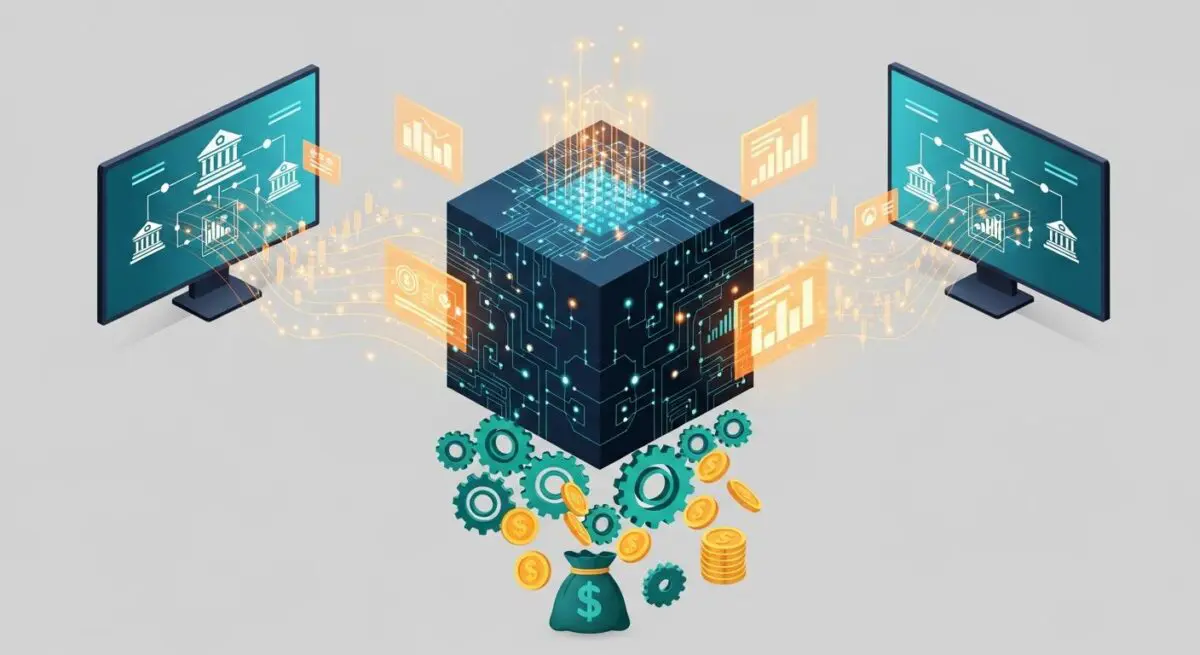
The strategic advantage now lies in the ownership of the ‘financial engine.’ Companies that control their own ledger systems, payment rails, and compliance logic are outperforming those that simply act as resellers of legacy bank products. This shift toward vertical integration allows for better data granularity, faster transaction speeds, and a significant reduction in intermediary fees, which directly impacts the bottom line and long-term valuation.
The Architecture of Resilience
Modern financial systems must be designed for a world of constant volatility and shifting regulatory landscapes. The legacy approach of building ‘walled gardens’ is no longer viable. Instead, the most successful FinTech 2.0 architectures utilize microservices and APIs to create a flexible core. This modularity ensures that if one component—such as a specific payment gateway or a KYC provider—fails or becomes obsolete, it can be replaced without dismantling the entire system.
The evolution of financial infrastructure is akin to the transition from localized power generators to a national smart grid; it is no longer about the individual source of energy, but the efficiency, reliability, and ubiquity of the distribution network that defines its value to the economy.
The Regulatory Moat and Embedded Compliance
One of the most significant shifts in the FinTech 2.0 era is the perception of regulation. Previously viewed as a hurdle to be bypassed, regulatory compliance is now being leveraged as a strategic moat. Sophisticated players are embedding compliance directly into their codebases. By automating Anti-Money Laundering (AML) and Know Your Customer (KYC) protocols through machine learning and real-time data analysis, these firms reduce operational risk while simultaneously improving the user experience.
Furthermore, the rise of ‘RegTech’ within the FinTech 2.0 ecosystem allows institutions to adapt to new jurisdictions with minimal friction. For global founders, this means the ability to scale across borders is no longer limited by the size of their legal teams, but by the robustness of their automated compliance engines. This operational efficiency is a key differentiator for investors looking for scalable, institutional-grade opportunities.
Market Positioning & Long-term Vision
At Andres SEO Expert, we analyze the intersection of financial infrastructure and digital visibility through a lens of long-term asset appreciation. The transition to FinTech 2.0 requires a fundamental shift in how organizations position themselves in the digital marketplace. It is no longer sufficient to rank for high-volume keywords; institutional leaders must cultivate an aura of technical authority and systemic reliability. The winners in this space will be those who successfully communicate their architectural superiority and regulatory foresight to a global audience of sophisticated stakeholders.
Strategic positioning in this new era demands a focus on ‘trust-based authority.’ As the market becomes saturated with commoditized financial products, the value of a brand is increasingly tied to its perceived stability and the transparency of its underlying technology. We advise our clients to move beyond superficial marketing and instead focus on demonstrating the depth of their technical stack and the resilience of their operational models. This is the only way to secure a dominant market position that survives the inevitable cycles of consolidation and disruption.
Architecting the Future of Finance
The move toward FinTech 2.0 is not merely a technological upgrade; it is a strategic imperative. As the boundaries between traditional finance and digital assets continue to blur, the organizations that prioritize modularity, regulatory integration, and architectural resilience will be the ones to define the next century of global commerce. The path forward requires a sophisticated understanding of both the technology and the strategic landscape in which it operates.
Navigating the intersection of generative search and operational efficiency requires more than just tools—it requires a roadmap. If you’re ready to evolve your strategy through specialized SEO, GEO, or AI-driven automation, connect with Andres at Andres SEO Expert. Let’s build a future-proof foundation for your business together.”