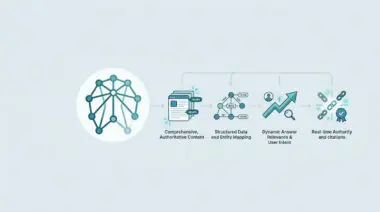
Key Points
- API-Driven Payload Injection: Delivering semantically dense JSON-LD payloads bypasses traditional HTML parsing friction. This ensures immediate ingestion by Perplexity-Bot and Google-Extended.
- Automated Citation Pipelines: Triggering E-E-A-T verification via Schema.org ‘reviewedBy’ properties is now a mandatory architectural requirement. It is essential for penetrating the LLM quality wall.
- Dynamic Bot Throttling: Implementing intelligent Permissions-Policy headers prevents bandwidth drain. It selectively throttles non-attributable AI scrapers while authorizing verified citation bots.
Table of Contents
The Attribution Deficit in RAG Architecture
The traditional concept of search engine market share is dead. It has been replaced by an invisible void of zero-click interactions. We are witnessing the rapid erosion of deterministic referral data caused by LLM-based Retrieval-Augmented Generation (RAG) responses.
This fundamental shift prevents traditional analytics platforms from identifying the specific AI search engine responsible for inbound traffic.
The result is a massive attribution deficit, currently estimated at 35% of total organic reach. Engineering teams and search strategists are flying blind. They are unable to map revenue back to the conversational interfaces that initiated the user journey.
The days of relying on simple HTTP referrers to gauge market penetration are over.
To survive this transition, organizations must master generative search attribution and LLM market penetration. This is the ultimate architectural framework for reclaiming visibility in an AI-first ecosystem.
It requires a hard pivot from optimizing for keyword rankings to engineering content specifically for vector database ingestion.
Analyzing the Displacement of Informational Queries
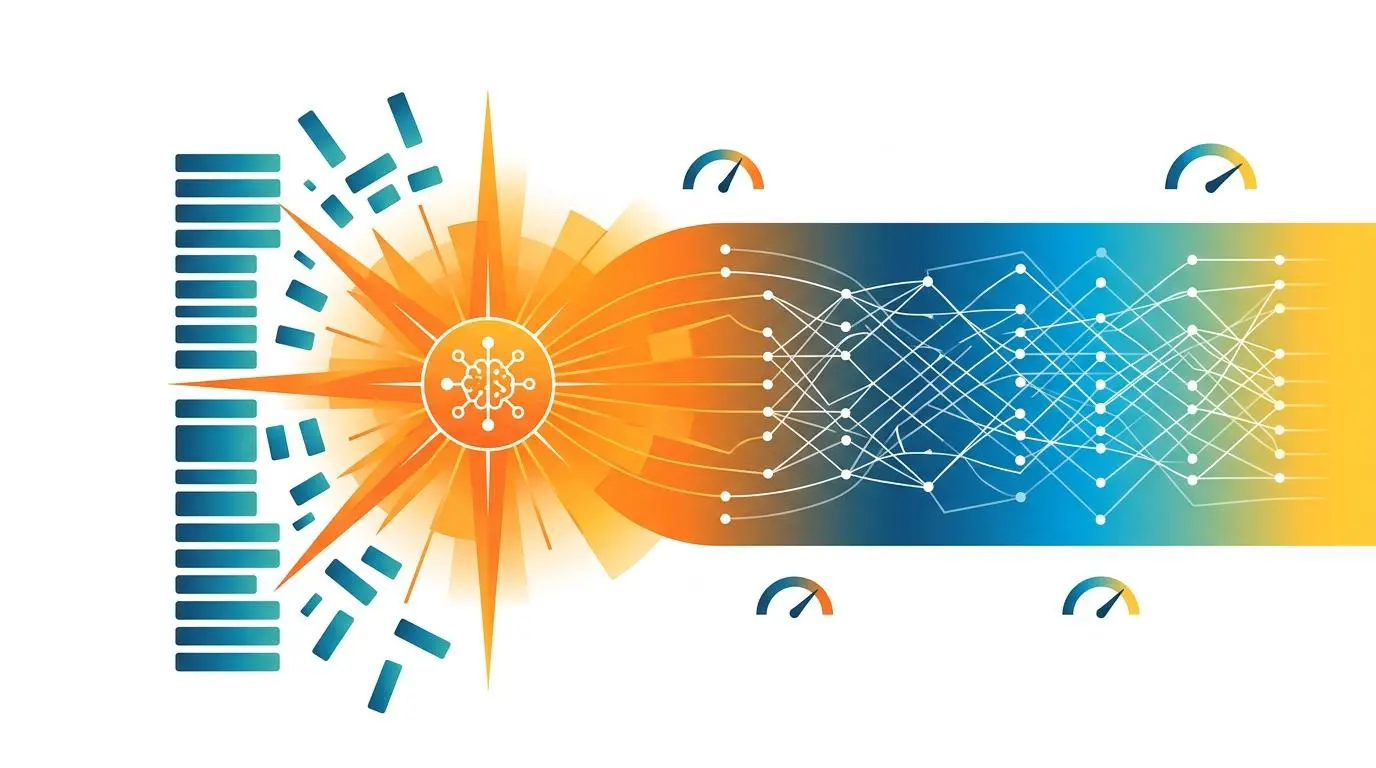
Independent generative engines like Perplexity and SearchGPT have captured nearly a quarter of the global informational query volume as of Q2 2026. This displacement represents a catastrophic loss of top-of-funnel traffic for legacy websites.
This massive shift is corroborated by Statcounter AI chatbot market share data. It highlights how users increasingly prefer direct, synthesized answers over scrolling through fragmented links.
Simultaneously, Google’s AI Overviews are now triggered for 88% of high-intent commercial queries in the US. This extreme query saturation effectively pushes traditional organic results below the second fold on mobile devices.
If your brand is not the primary entity cited in that generative overview, your market share effectively drops to zero for that query cluster.
The reality of this architectural shift is starkly illustrated by SparkToro’s zero-click search study. It notes that 18.5% of previous search volume has migrated to integrated OS-level agents.
These agents, like Siri and Gemini, bypass traditional browsers entirely. This fundamentally decouples search market share from web browser usage, forcing a complete redesign of how we track generative attribution.
Structuring Payloads for AIO and Perplexity

Traditional HTML-heavy websites are actively being deprioritized in LLM context windows. AI engines favor clean, semantically dense JSON payloads that allow for faster inference and highly accurate citation.
Think of standard HTML as a sprawling, disorganized warehouse. In contrast, structured JSON is a perfectly labeled shipping container ready for immediate transport.
To solve this real-world friction, search architects must implement API-driven structured data injection. By utilizing highly specific JSON-LD schemas, you can serve machine-parsable facts directly to Google-Extended and Perplexity-Bot.
This ensures your core entities are seamlessly ingested into the RAG context window during the crucial retrieval phase.
This payload structuring requires decoupling your content presentation from your data architecture. When an AI crawler requests a page, the server must dynamically prioritize the delivery of factual nodes over CSS or visual DOM elements.
This streamlined ingestion pathway is what guarantees your brand is selected as the primary source during generative inference.
Building Automated Citation Pipelines
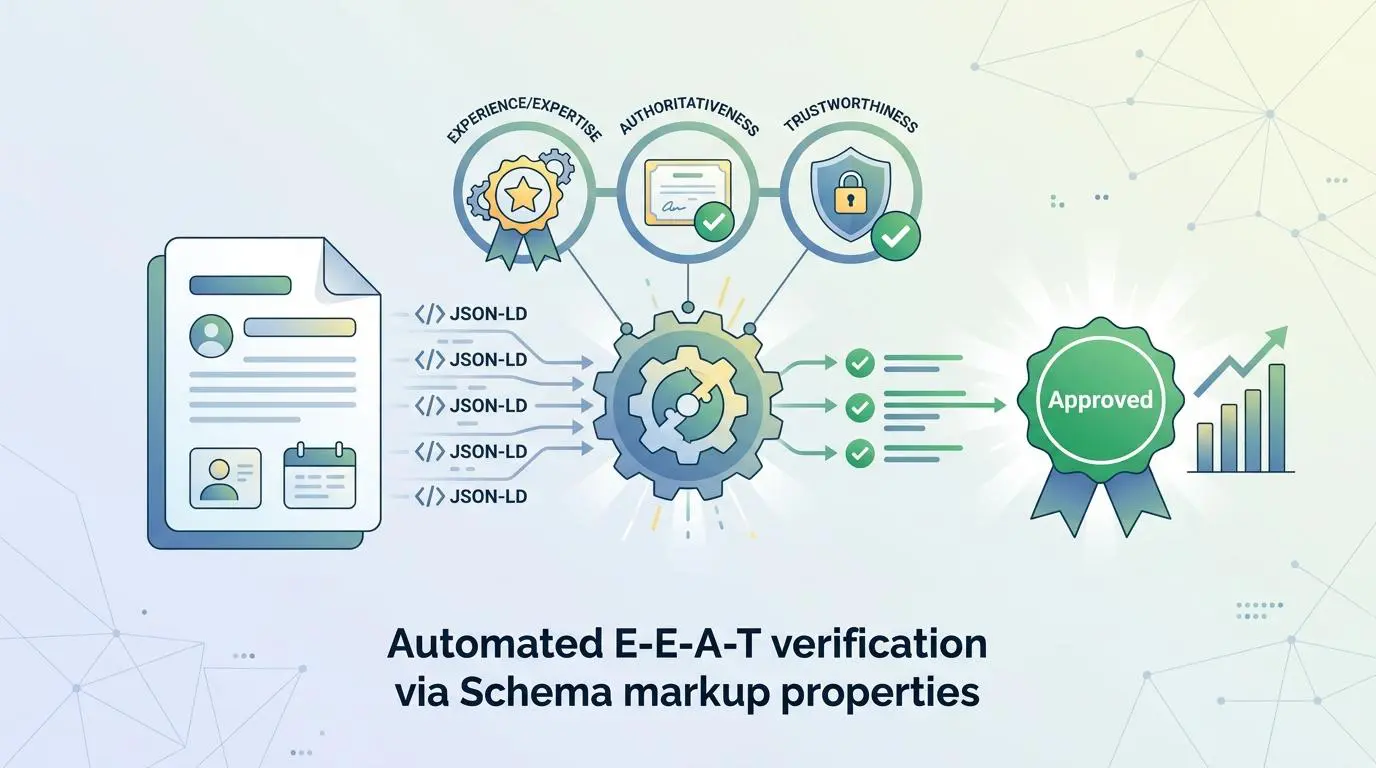
AI engines are increasingly filtering out non-authoritative sources to prevent hallucination and maintain user trust. This has resulted in a massive quality wall that currently excludes roughly 60% of legacy long-tail content from generative indices.
If an LLM cannot cryptographically or semantically verify your expertise, your content is simply dropped from the retrieval queue.
The solution is the deployment of automated E-E-A-T verification pipelines. By injecting precise OpenGraph metadata and Schema.org properties, you provide the deterministic signals that LLMs require to validate source authority.
This acts as a digital passport, proving the authenticity and expert review status of your digital assets.
When SearchGPT or Claude 4 construct their cited sources carousels, they heavily weight these verifiable semantic properties. Brands that automate this pipeline ensure their content consistently triggers higher weighting in the final generative output.
It transforms your website from a passive brochure into an active, trusted node in the LLM knowledge graph.
Predictive Mapping for Conversational Prompts
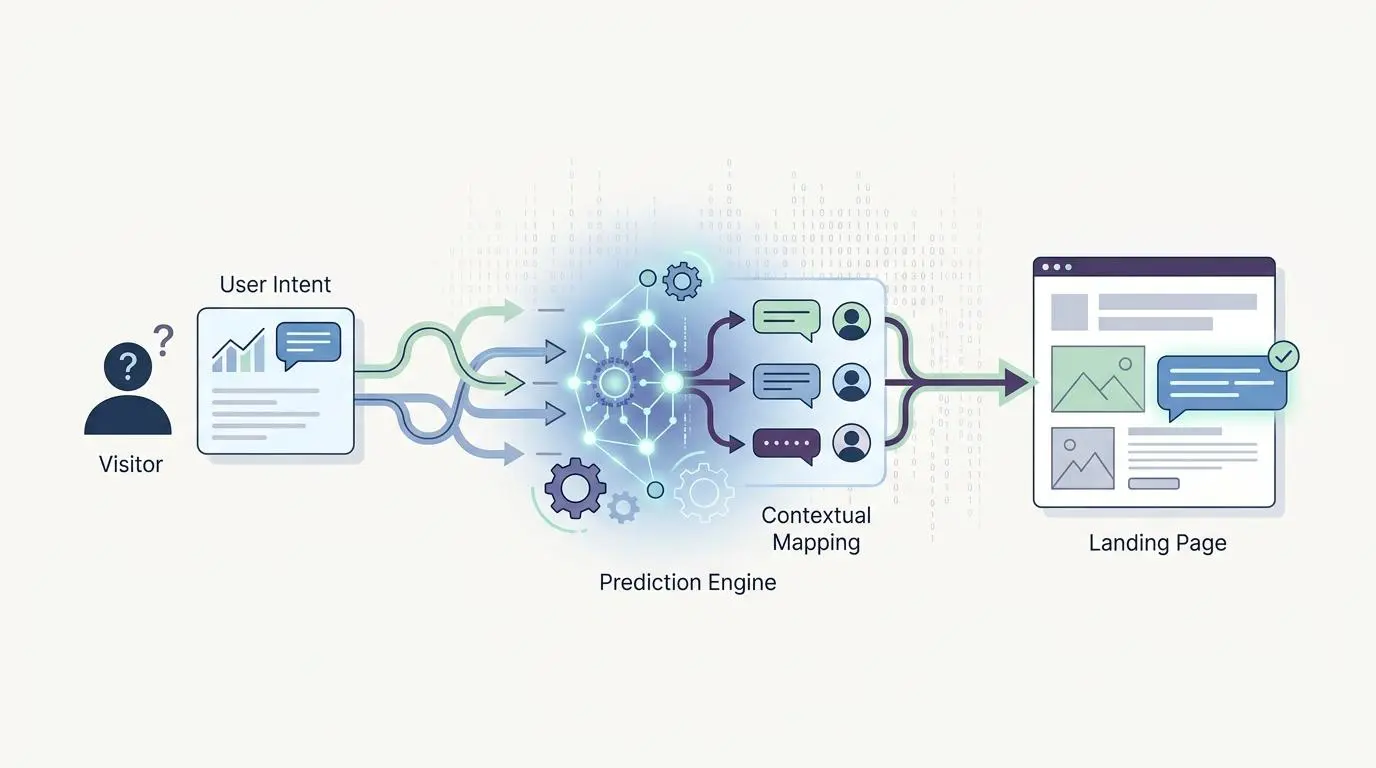
Market share is rapidly shifting toward complex, problem-solving queries where the user never enters a traditional keyword. They are engaging in multi-turn, conversational prompts that lack clear commercial intent markers.
This evolution makes traditional keyword-based tracking and attribution models entirely obsolete by the end of 2026.
To capture this new conversational market share, technical SEOs must utilize advanced APIs for predictive mapping. By analyzing server logs and semantic search data, these APIs can predict the trajectory of a multi-turn user conversation.
This allows architects to dynamically map these complex prompts back to static landing page assets.
Instead of optimizing a page for a single search term, you are optimizing an entity cluster to answer a sequence of logical questions.
This predictive mapping ensures that when an LLM agent reaches the final step of a user’s task, your API or landing page is the deterministic endpoint recommended for completion.
Dynamic Bot Throttling and Traffic Management
Uncontrolled AI crawling has become a severe infrastructure liability. Aggressive LLM scrapers consume up to 45% of server bandwidth without providing any corresponding increase in attributable traffic.
If a bot does not support verifiable citations or drive brand visibility, it is effectively executing a distributed denial-of-service attack on your resources.
The architectural defense against this friction is the implementation of dynamic robots.txt and advanced server headers. These server-side controls allow you to selectively authorize valuable crawlers while aggressively throttling parasitic scrapers.
It is a precise, surgical approach to traffic management.
By managing bot access at the edge, you preserve server resources for the generative engines that actually contribute to your LLM market penetration.
This ensures your infrastructure is optimized for high-value RAG ingestion rather than being bogged down by low-value data harvesting.
The 2027 Shift Toward Agentic Share
By 2027, the very concept of search engine market share will be entirely eclipsed by agentic share. The dominant metric will no longer be clicks or impressions.
Instead, it will be the percentage of autonomous AI agents that select your brand’s API as their primary knowledge source. Dominating this space requires a flawless, machine-readable architecture.
Navigating the intersection of generative engine optimization, AI search architecture, and workflow automation requires a sharp strategy.
To future-proof your brand’s visibility in LLMs and scale with precision, connect with Andres at Andres SEO Expert.
Frequently Asked Questions
What is generative search market displacement?
Generative search market displacement refers to the transition where informational query volume shifts from traditional search engines to LLM-driven platforms. This results in a significant loss of top-of-funnel traffic for legacy websites.
How does RAG architecture impact marketing attribution?
Retrieval-Augmented Generation (RAG) architecture creates an attribution deficit by facilitating zero-click interactions.
This prevents traditional analytics platforms from identifying the specific AI search engine responsible for inbound traffic, decoupling referral data from the user journey.
Why is structured JSON-LD essential for AI-first optimization?
AI engines prioritize clean, semantically dense JSON payloads over traditional HTML because they allow for faster inference and more accurate citation.
This structured data injection ensures core entities are seamlessly ingested into the LLM context window during retrieval.
What is Agentic Share in the context of 2027 search trends?
Agentic Share is a future-facing metric that measures the percentage of autonomous AI agents that select a brand’s API as their primary knowledge source.
It is expected to replace clicks and impressions as the dominant measure of market penetration by 2027.
How do E-E-A-T verification pipelines affect AI citations?
E-E-A-T verification pipelines use metadata and Schema.org properties to provide deterministic signals of authority.
LLMs use these signals to validate source authenticity, ensuring content is not excluded from the retrieval queue during the generation of cited sources.
What is predictive mapping for conversational search?
Predictive mapping involves using advanced APIs to analyze server logs and semantic search data to predict the trajectory of multi-turn user prompts.
This allows technical SEOs to map complex, non-keyword-based questions back to specific brand assets or landing pages.