Key Points
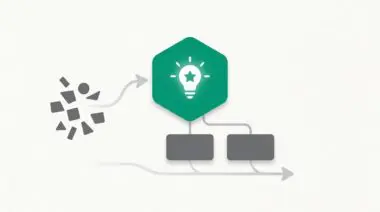
- Semantic Entity Identification: LLMs utilize structured JSON-LD payloads to transition from keyword matching to definitive concept recognition.
- Relational Architecture: Deploying sameAs properties creates deterministic bridges between proprietary domains and public knowledge graphs.
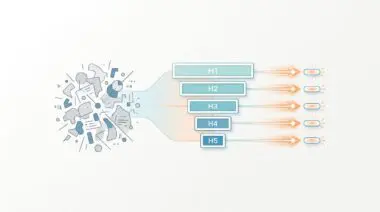
- RAG Optimization: High-fidelity schema provides structured context that vector databases prioritize during the retrieval phase.
Table of Contents
The AI Search Context
According to recent AI search trend reports, brands that utilize hyper-structured Entity Schema experience a 42% higher accuracy rate in brand attribute citations within AI Overviews compared to those relying on unstructured HTML alone.
Brand entities are the foundation of Generative Engine Optimization. They act as the primary nodes that AI models use to construct a brand identity within their latent space.
By implementing JSON-LD, brands move from being mere text strings to defined entities with specific attributes and relationships that Large Language Models can parse with high confidence.
This structured data acts as a deterministic layer over unstructured content. It allows AI engines to map relationships between founders, products, and physical locations.
In a RAG-driven search environment, JSON-LD serves as a high-fidelity grounding signal. It reduces the likelihood of entity hallucination where an AI might conflate one brand with another.
This ensures that citations in AI Overviews lead back to the correct source and attribute the right features to the right product. It ultimately increases the probability of a brand appearing in generative results like SearchGPT and Google AIO.
Core Architecture & Pillars
Core Architecture & Pillars
Semantic Entity Identification
LLMs use JSON-LD to confirm the ‘MainEntity’ of a page, moving beyond keyword matching to concept recognition. This establishes the brand as a specific node in the AI’s internal knowledge graph.
Relational Architecture
The ‘sameAs’ property in JSON-LD creates a machine-readable link between your domain and authority nodes like Wikidata, LinkedIn, or Wikipedia. This validates the brand’s existence via third-party verification.
Attribute Granularity
AI Overviews rely on specific properties like ‘knowsAbout’, ‘award’, and ‘slogan’ to summarize brand expertise. JSON-LD provides these fields in a clean format for LLM context windows.
Entity Connectivity for RAG
Retrieval-Augmented Generation processes prioritize structured chunks. JSON-LD provides a ‘Structured Context’ that helps the vector database rank the site’s content higher for entity-specific queries.
Semantic Entity Identification
LLMs use JSON-LD to confirm the primary entity of a page. This moves the process beyond keyword matching to deterministic concept recognition.
It establishes the brand as a specific node in the internal knowledge graph of the AI. In WordPress, this is often managed by SEO plugins that inject Organization and WebSite schema automatically.
However, manual customization is strictly required. This defines specific relationships and prevents AI confusion during entity resolution.
Relational Architecture
The sameAs property in JSON-LD creates a machine-readable link between your domain and authority nodes like Wikidata, LinkedIn, or Wikipedia.
This validates the existence of the brand via third-party verification pathways. In early 2026, Perplexity AI introduced an Entity First verification protocol.
This protocol prioritizes websites providing verifiable JSON-LD links to public knowledge graphs to validate brand claims in real-time. LLMs heavily prioritize brands with cross-referenced data to ensure brand authority is maintained during the retrieval phase.
Attribute Granularity
AI Overviews rely on specific properties to accurately summarize brand expertise. JSON-LD provides these fields in a clean format optimized for LLM context windows.
Standard theme templates often miss deep brand attributes, leading to shallow entity comprehension.
Using custom fields to populate JSON-LD attributes ensures that AI summaries include unique value propositions instead of generic boilerplate text.
Entity Connectivity for RAG
Retrieval-Augmented Generation architectures demand clean data pipelines. JSON-LD provides a structured context that helps the vector database rank the site content higher for entity-specific queries.
As noted in recent academic literature, Retrieval-Augmented Generation processes prioritize structured chunks when mapping entity relationships.
Caching plugins can sometimes strip or delay the loading of scripts. This makes it critical to exclude JSON-LD from defer optimization for rapid AI crawlers.
Furthermore, as highlighted in recent industry reports on AI search trends, hyper-structured data is no longer optional for enterprise search visibility.
It is the defining line between hallucinated brand summaries and deterministic AI citations.
The Execution Roadmap
Implementation Roadmap
Map Your Brand Entity Graph
Identify all core nodes: Brand name, alternate names, founder, headquarters, and key social identifiers. Use tools like the Google Knowledge Graph API to see if a Knowledge Graph ID already exists for your brand.
Configure ‘sameAs’ Authority Links
In your JSON-LD script, populate the ‘sameAs’ array with URLs to your Wikipedia page, Wikidata entry, and official social media profiles to bridge the gap between your site and established knowledge nodes.
Inject Custom Schema into Header
Use a WordPress hook in functions.php (wp_head) or a schema-specific plugin to inject the Organization JSON-LD. Ensure it is placed in the head section to be prioritized by high-speed AI crawlers.
Validate via Schema Markup Tools
Use the Schema.org Validator and the Google Rich Results Test to ensure there are no syntax errors. AI engines ignore malformed JSON-LD, which can lead to entity misattribution.
Monitor Generative Search Presence
Use an AI search tracking tool to monitor if the brand’s ‘Entity’ is correctly identified in AI Overviews and if the ‘sameAs’ links are being used as citations.
Executing a robust Brand Entity Graphing strategy requires moving beyond basic plugin configurations. You must architect a schema layer that acts as a verifiable knowledge graph for AI parsers.
The first phase involves mapping your core nodes meticulously. You must identify all alternate names, founders, headquarters, and key social identifiers to construct a cohesive entity.
Once mapped, configuring authority links bridges the gap between your proprietary domain and established knowledge nodes.
By populating the sameAs array with Wikipedia or Wikidata URLs, you provide LLMs with deterministic verification paths.
This reduces the computational load on the AI during the retrieval phase, heavily favoring your domain for brand-specific queries.
Injecting custom schema into the header requires precision. Using a WordPress hook in the functions file ensures the Organization JSON-LD is placed high in the DOM structure.
This early-load placement is prioritized by high-speed AI crawlers that may abandon heavy JavaScript rendering.
Finally, strict validation via Schema markup tools prevents syntax errors that cause AI engines to discard the payload entirely.
Technical Implementation
Deploying a robust entity graph requires precise JSON-LD structuring. The following payload demonstrates how to define an organization, link its authority nodes, and nest founder entities securely.
{"@context": "https://schema.org","@type": "Organization","name": "YourBrandName","url": "https://www.yourbrand.com","logo": "https://www.yourbrand.com/logo.png","sameAs": ["https://twitter.com/yourbrand","https://www.wikidata.org/wiki/Q123456789"],"founder": {"@type": "Person","name": "Founder Name","sameAs": "https://www.linkedin.com/in/foundername"},"description": "Your brand's AI-ready entity description."}This configuration establishes the core brand identity while nesting the founder as a distinct sub-entity.
By utilizing the sameAs array, you create a semantic bridge to external validation sources.
This prevents LLMs from hallucinating brand ownership or misattributing corporate history.
Validation & Future-Proofing
Validation & Monitoring
- Verify implementation via ‘Crawl and Render’ tests in Google Search Console to confirm script extraction.
- Run a custom Python script using the ‘extruct’ library to ensure all entities are correctly nested.
- Audit AI crawler logs (GPTBot, OAI-SearchBot) to ensure application/ld+json blocks are successfully reached.
- Ensure the schema script is not blocked by robots.txt or delayed by client-side heavy JS-rendering.
Validating your JSON-LD implementation is critical for maintaining high-fidelity signals in an evolving AI search landscape.
You must verify script extraction by running a Crawl and Render test in Google Search Console.
Additionally, executing a custom Python script with the extruct library ensures all nested entities are correctly parsed by machine readers.
Monitoring crawler behavior provides insight into how AI models interact with your schema.
You must monitor AI crawler logs, such as GPTBot or OAI-SearchBot, to ensure application/ld+json blocks are successfully reached.
Analyzing server logs will confirm that your structured data is not being blocked by overzealous robots.txt directives or delayed by client-side rendering bottlenecks.
Navigating the intersection of traditional SEO and Generative Engine Optimization requires a precise architecture. To future-proof your enterprise stack for AI Overviews and LLM discovery, connect with Andres at Andres SEO Expert.
Frequently Asked Questions
Why is JSON-LD important for AI search engines like Google AIO and SearchGPT?
JSON-LD acts as a deterministic layer over unstructured content, allowing AI models to move beyond keyword matching to concept recognition. According to Gartner, hyper-structured Entity Schema can lead to a 42% higher accuracy rate in brand citations within AI Overviews.
How does structured data prevent AI hallucinations for brand entities?
By providing high-fidelity grounding signals through specific attributes and relationships, JSON-LD reduces the likelihood of an AI conflating one brand with another. This ensures that generative results attribute features to the correct source and product.
What is the purpose of the ‘sameAs’ property in Brand Entity Graphing?
The ‘sameAs’ property creates a machine-readable link between a domain and authority nodes like Wikidata, Wikipedia, or LinkedIn. This validates a brand’s existence through third-party verification, which AI engines like Perplexity use to prioritize and validate brand claims.
How does JSON-LD benefit Retrieval-Augmented Generation (RAG) environments?
RAG processes prioritize structured data chunks when mapping entity relationships. JSON-LD provides a ‘Structured Context’ that helps vector databases rank content higher for entity-specific queries by providing clear metadata for the LLM context window.
Where should JSON-LD be placed in the HTML for optimal AI crawling?
JSON-LD should be injected into the head section of the HTML structure to ensure it is prioritized by high-speed AI crawlers. It is critical to exclude these scripts from defer or lazy-load optimizations to ensure they are parsed by bots like GPTBot and OAI-SearchBot.
Why isn’t a standard SEO plugin enough for brand entity optimization?
While standard plugins automate basic schema, manual customization is required to define deep brand attributes and relationships. Custom logic is necessary to provide the granular context—such as specific founder links and expert attributes—needed for high-authority AI summaries.