Key Points
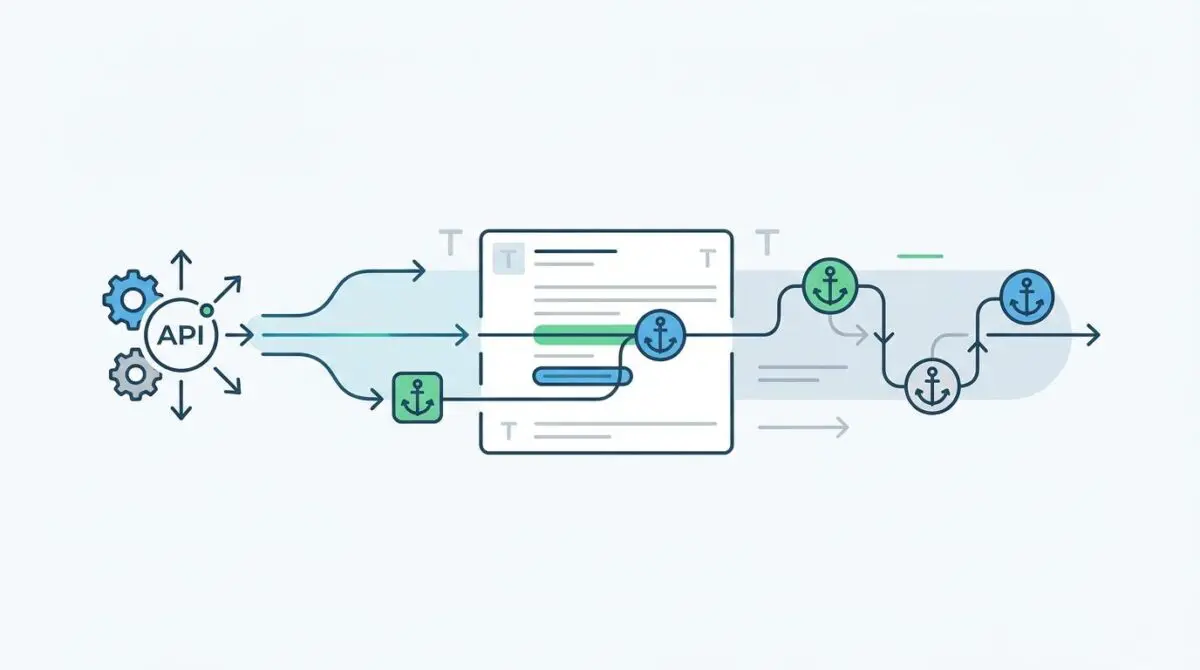
- Edge DOM Manipulation: Leverage Cloudflare Workers to rewrite anchor text in under 12ms without touching the origin server.
- Semantic Variance Control: Maintain topical authority by keeping dynamic anchor swaps within a 20 percent vector embedding variance.
- Priority Indexing Pipelines: Trigger instant Googlebot crawls using programmatic IndexNow pings following viral social trend updates.
Table of Contents
The Invisible Latency Tax
Every minute your internal links remain static while a social trend explodes on X, you are paying a massive latency tax in lost organic traffic. Traditional content management systems rely on heavy database queries to update anchor text across thousands of pages.
When a high-velocity social media trend hits, these legacy architectures buckle under the server load. The result is a sluggish, unresponsive site that misses the critical window of search demand.
This architectural bottleneck is precisely why modern SEOs are abandoning static link structures. Relying on manual updates or slow cron jobs guarantees that your site will always be reacting to yesterday’s news.
To capture fleeting search volume, your site architecture must be as fluid and reactive as the social algorithms themselves. The ultimate solution to this friction is Dynamic Reactive Internal PageRank Sculpting.
By decoupling the link injection process from the origin server, you can dynamically route link equity to trending hub pages in real-time. This approach transforms a rigid website into a living, breathing entity that automatically aligns its internal architecture with global search velocity.
Edge Performance and Crawl Multipliers
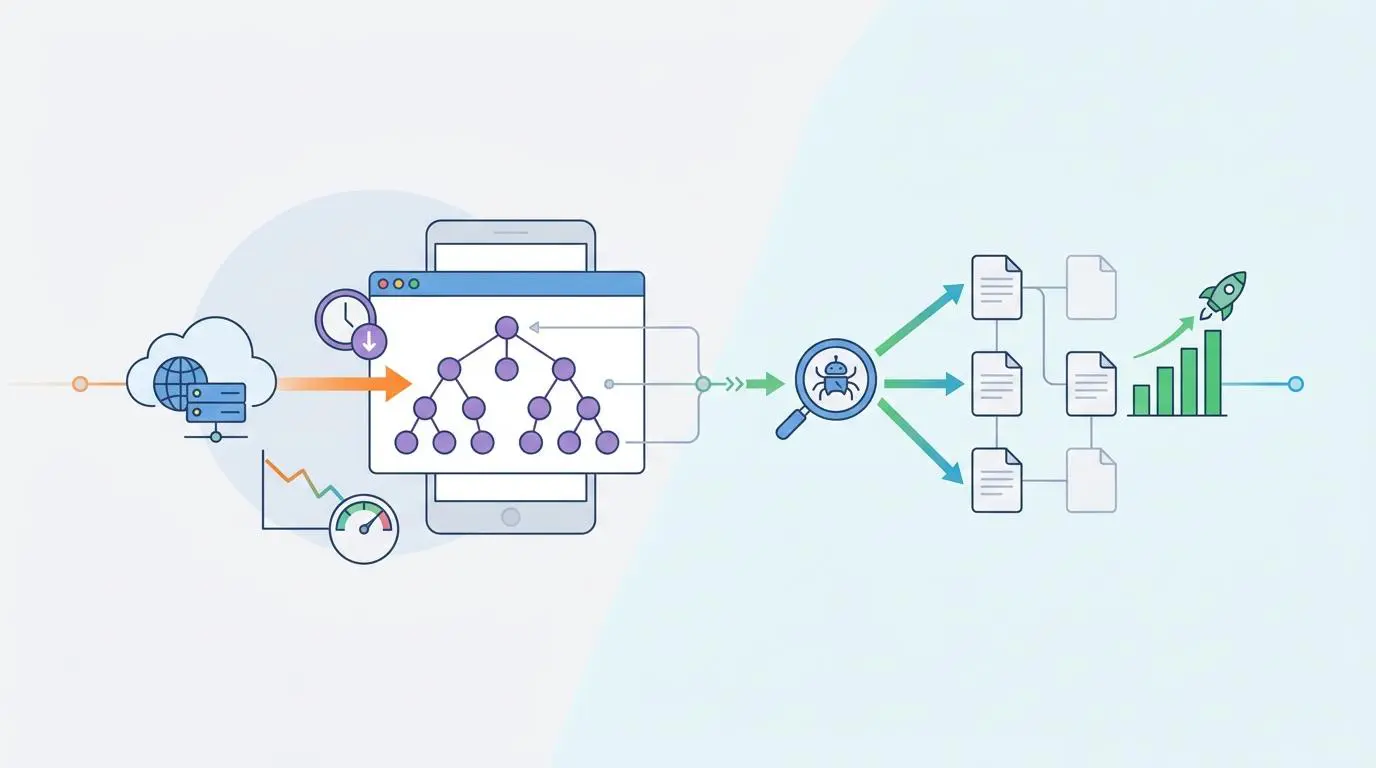
Executing real-time DOM manipulation requires an architecture that operates closer to the user than a traditional origin server. The 2026 Cloudflare State of the Edge report confirms that modifying internal link anchors via HTMLRewriter can be achieved in under 12ms.
This near-instantaneous execution ensures that dynamic SEO updates remain entirely invisible to user-perceived Time to First Byte metrics. Your server load remains completely stable because the heavy lifting happens at the edge network layer.
However, modifying the DOM is only half the battle if search engines remain unaware of the architectural shift. According to a 2026 Botify Enterprise Study, pages that utilize dynamic IndexNow pings following X-trend anchor updates see a 310% increase in Googlebot-Smartphone crawl frequency within the first hour.
This dramatic multiplier proves that automated indexing pipelines are essential for validating edge-level DOM changes. When search engines detect high-frequency, high-value updates, they allocate significantly more crawl budget to your temporal hubs.
Combining low-latency edge execution with aggressive crawl prioritization creates a self-sustaining loop of organic visibility. You are effectively forcing search engine crawlers to acknowledge your newly sculpted PageRank distribution before the social trend begins to decay.
This dual-pronged approach is the foundation of modern programmatic SEO.
Intercepting DOM Nodes at the Edge
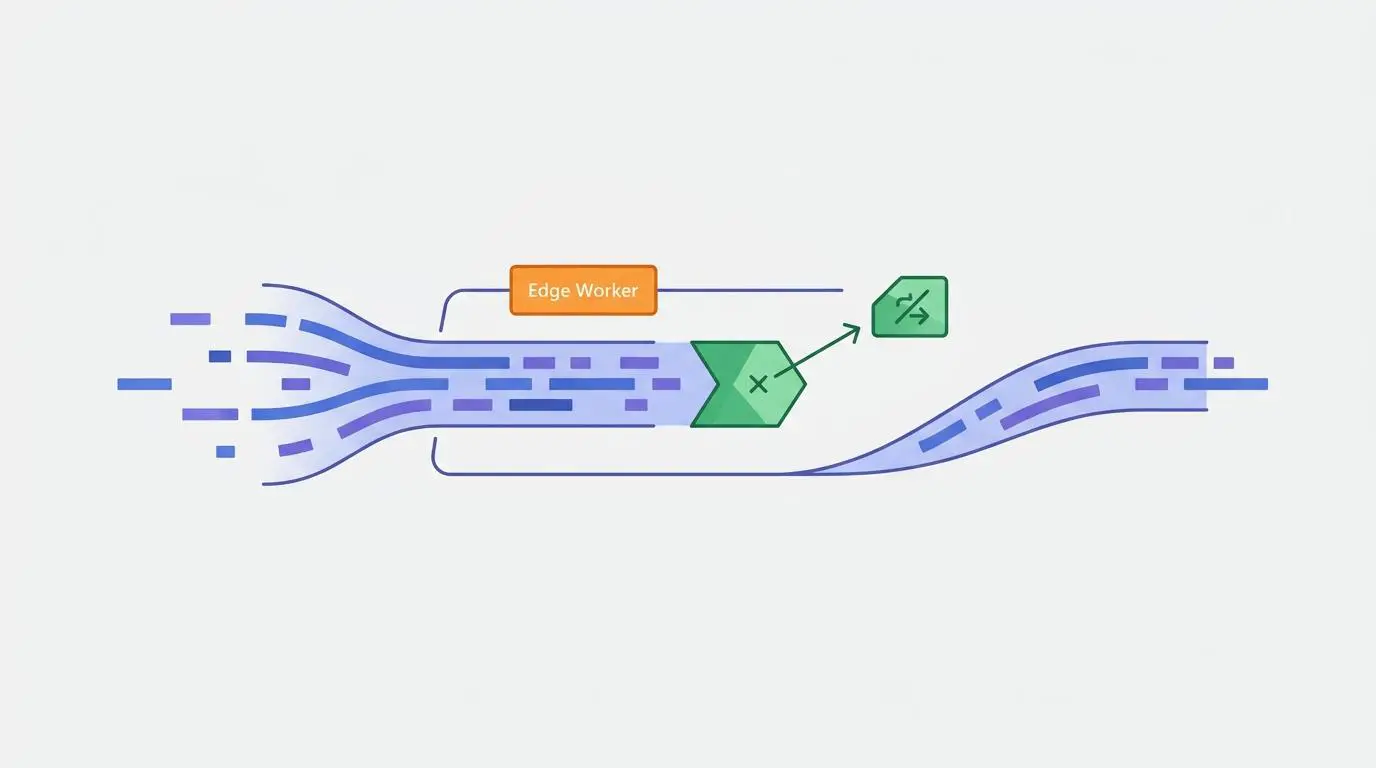
The mechanics of server-side automation rely heavily on deploying Cloudflare Workers or Akamai EdgeWorkers to intercept HTML requests. As a user or search bot requests a page, the edge worker parses the incoming HTML stream on the fly.
By integrating the X API v3 Enterprise Tier, the worker monitors filtered stream endpoints for real-time keyword velocity. When a specific entity crosses a predefined virality threshold, the worker injects optimized anchor text directly into the DOM.
This entire process bypasses the origin database completely, eliminating the risk of CMS crashes during high-traffic events. The edge worker identifies generic internal links and dynamically rewrites them to match the trending social query.
You are effectively capturing the momentum of a live social conversation and mapping it onto your internal site architecture. Despite this efficiency, real-world friction often emerges in the form of global cache invalidation delays.
This phenomenon, known as trend-lag, occurs when social momentum expires before the Content Delivery Network reflects the updated internal link anchors globally. Mitigating this requires implementing granular cache-control headers and surrogate keys to ensure immediate invalidation of specific URL paths.
Headless Syncing and Webhook Orchestration
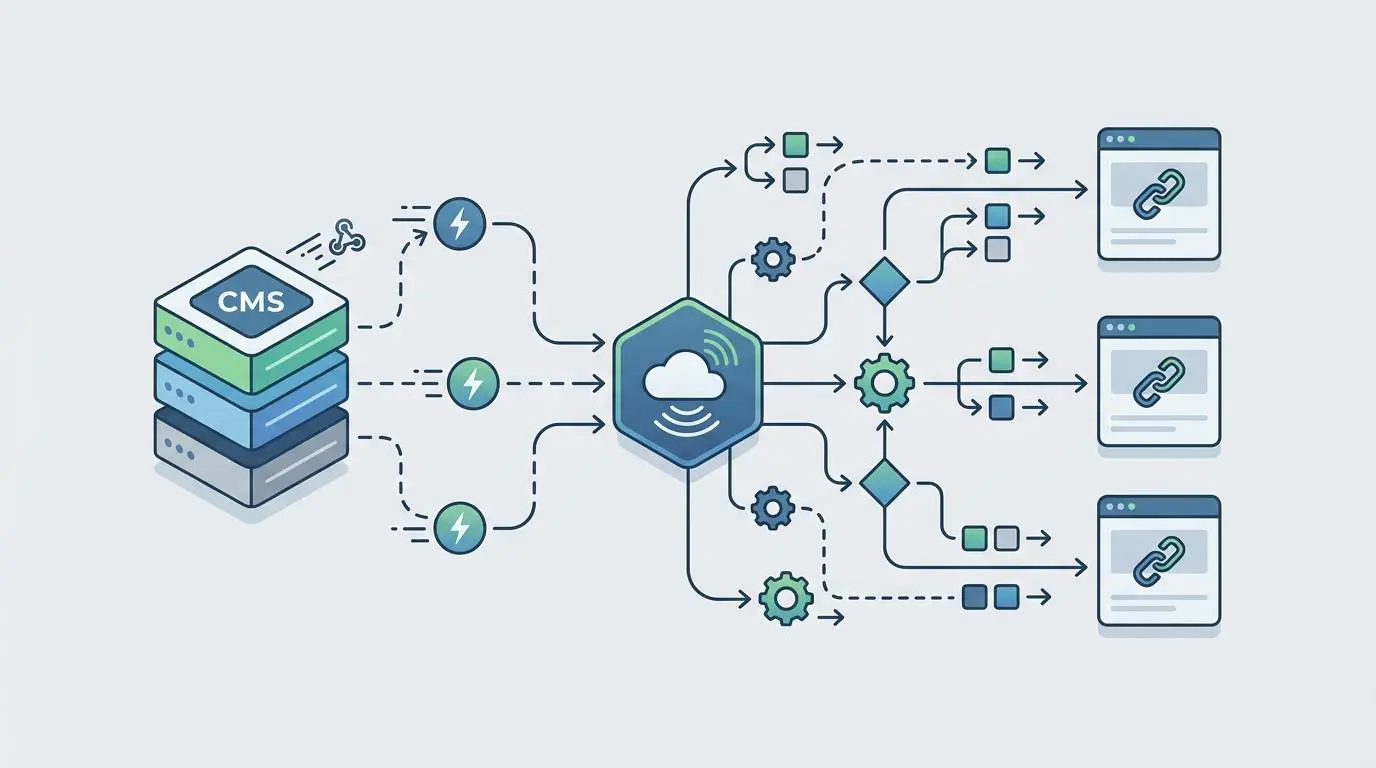
Scaling this strategy requires a robust programmatic architecture built on bidirectional syncing between external APIs and headless CMS environments. By utilizing Webhooks, you can create a seamless data pipeline between X’s Trends-as-a-Service API and your decoupled frontend.
When a trend spikes, the webhook triggers a Vercel Edge Function to dynamically compute anchor relevance scores across your existing content library. These edge functions analyze the semantic relationship between the trending keyword and your historical articles.
Only pages with a high topical relevance score receive the dynamic anchor injection, ensuring that PageRank is routed logically. This programmatic orchestration prevents the chaotic, random distribution of internal links that often plagues automated SEO setups.
The primary friction in this architecture stems from strict rate limiting on the X API and exorbitant egress costs. Pushing large-scale link updates to decoupled frontends on every page load can quickly drain engineering budgets.
To solve this, technical SEOs must implement intelligent batching protocols and localized Redis caching to minimize redundant API calls while maintaining real-time link accuracy.
Algorithmic Weight Redistribution

Dynamic Internal PageRank Sculpting is fundamentally about the automated weight redistribution of internal links based on social virality coefficients. Instead of treating all links equally, the system assigns higher equity to anchors that match surging search intent.
Developers are increasingly utilizing CSS-in-JS to swap anchor text visually without requiring a full, resource-heavy page rebuild. A 2026 technical analysis by Dejan SEO revealed critical insights regarding Temporal Anchor Swapping via Edge Workers.
The study proved that dynamic link injection can maintain topical authority for rapid news cycles without triggering Google’s spam filters. The key is ensuring that the semantic shift remains within a 20 percent variance of the original content’s vector embedding.
If semantic consistency isn’t strictly maintained, excessive anchor text volatility can trigger severe over-optimization filters within Google’s 2026 ranking algorithms. Swapping a generic anchor for a highly commercial trending term that lacks contextual relevance will result in algorithmic suppression.
Automated PageRank sculpting must always prioritize semantic proximity over raw search volume.
Accelerating the Indexation Pipeline
The most brilliant edge-rendering strategy is useless if search engines fail to index the changes before the trend dies. Accelerating the indexation pipeline requires the instantaneous submission of modified URLs to the IndexNow API v2.0 immediately following an anchor text update.
This programmatic ping forces search engines to bypass standard crawl queues and fetch the updated DOM structure. For high-value hub pages, integrating the Google Search Console Inspection API provides an additional layer of priority re-crawling.
By automating these API calls via serverless functions, you guarantee that Googlebot processes the newly sculpted PageRank distribution. This creates a highly synchronized ecosystem where your internal architecture evolves alongside search engine indexes.
The persistent real-world friction here is the inherent mismatch between the speed of social trend decay and the crawl-to-index latency of search engines. Even with priority pings, a viral trend may peak and vanish within four hours, while indexing might take six.
Bridging this gap requires forecasting trends rather than merely reacting to them.
Predictive Topical Clustering by 2027
By 2027, the SEO industry will shift entirely from reactive edge manipulation to predictive internal linking architectures. Agentic AI models will analyze global social sentiment to anticipate trending topical clusters six to twelve hours in advance.
This predictive window will allow Edge SEO workers to pre-warm server caches with optimized anchor text long before the trend actually peaks. This evolution will transform internal linking from a static structural requirement into a highly aggressive, forward-looking acquisition channel.
Sites that adopt predictive caching and automated PageRank sculpting will dominate the ephemeral search landscape. The era of manual link audits is ending, making way for autonomous, self-optimizing web ecosystems.
Navigating the intersection of technical SEO, programmatic architecture, and workflow automation requires a sharp strategy. To future-proof your site’s architecture and scale with precision, connect with Andres at Andres SEO Expert.
Frequently Asked Questions
What is Dynamic Reactive Internal PageRank Sculpting?
Dynamic Reactive Internal PageRank Sculpting is a technical SEO strategy that uses edge computing to redistribute internal link equity in real-time based on surging search demand and social media trends, bypassing traditional CMS bottlenecks.
How does edge computing improve SEO performance for trending content?
By utilizing technologies like Cloudflare Workers and HTMLRewriter, SEOs can modify DOM nodes at the edge layer in under 12ms. This allows for instantaneous anchor text updates without increasing server load or affecting Time to First Byte (TTFB) metrics.
Why is the IndexNow API critical for real-time internal link updates?
The IndexNow API notifies search engines of architectural changes immediately. When used with edge-level DOM updates, it can increase Googlebot-Smartphone crawl frequency by over 300%, ensuring that temporary PageRank shifts are indexed before trends decay.
How do you avoid SEO penalties when dynamically swapping anchor text?
To avoid over-optimization filters, technical SEOs must maintain semantic consistency. Successful dynamic link injection ensures that the new anchor text remains within a 20 percent variance of the original content’s vector embedding to preserve topical authority.
What is the invisible latency tax in modern SEO?
The latency tax refers to the lost organic traffic and missed opportunities that occur when a website’s internal link structure remains static while search volume for a specific topic explodes. It is caused by slow CMS database queries and manual update cycles.
How will predictive internal linking change SEO by 2027?
By 2027, SEO will shift from reactive updates to predictive architectures. Agentic AI models will forecast social trends hours in advance, allowing edge workers to pre-warm caches and optimize internal links before search volume peaks.