Executive Summary
- Facilitates efficient crawling and indexing by providing clear navigational paths for search engine spiders.
- Distributes link equity (PageRank) from high-authority pages to deeper, strategic content nodes.
- Establishes a semantic hierarchy and topical relevance through the use of optimized, descriptive anchor text.
What is Internal Linking?
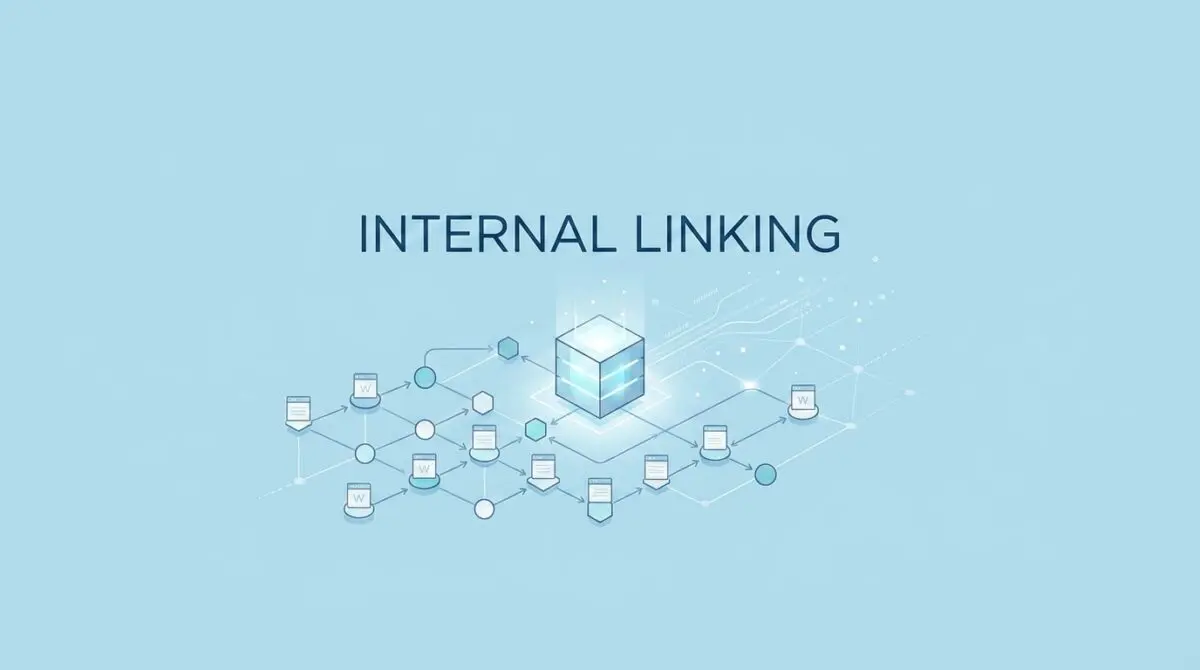
Internal linking refers to the practice of hyperlinking one page to another page within the same root domain. Unlike external links, which point to third-party websites, internal links create a network of interconnected content that defines the structural hierarchy of a website. From a technical perspective, these links are the primary mechanism through which search engine crawlers discover new URLs and understand the relationship between different content nodes.
Beyond discovery, internal links serve as conduits for the distribution of PageRank (link equity). By strategically placing links on high-authority pages—such as the homepage or cornerstone articles—SEO architects can direct “ranking power” to deeper, more specific pages that require a visibility boost. This process is essential for establishing a logical information architecture that serves both automated bots and human users.
The Real-World Analogy
Imagine a massive, multi-story department store. The internal links are the elevators, escalators, and directional signs that guide you from the main entrance to specific departments like “Men’s Footwear” or “Kitchen Appliances.” Without these connections, a customer might enter the building but remain stuck in the lobby, unable to find the products they intend to buy. Similarly, internal links ensure that search engines and users can navigate from your “front door” to every specific “shelf” of information on your site.
Why is Internal Linking Important for SEO?
Internal linking is critical for three primary reasons. First, it facilitates crawl efficiency. Search engine spiders, such as Googlebot, navigate the web by following links; a well-linked site ensures that no page remains “orphaned” or hidden from the index. Second, it establishes topical relevance. By using descriptive anchor text, you provide context to search engines about the subject matter of the destination page, strengthening the site’s semantic profile. Third, it manages link equity distribution. By controlling the flow of PageRank throughout the domain, we can prioritize high-value pages in search results.
Best Practices & Implementation
- Use Descriptive Anchor Text: Avoid generic phrases like “click here.” Instead, use keywords that accurately describe the target page’s content to provide maximum semantic value.
- Maintain a Shallow Site Depth: Ensure that every important page is accessible within three clicks from the homepage to minimize crawl depth and maximize equity transfer.
- Prioritize Contextual Links: Links embedded within the main body content carry more weight than those located in the global navigation, footer, or sidebar.
- Audit for Broken Links: Regularly scan the domain for 404 errors within the internal link structure to prevent “leaking” PageRank and degrading the user experience.
Common Mistakes to Avoid
One frequent error is the creation of orphan pages, which are URLs that have no incoming internal links, making them nearly impossible for search engines to discover or rank. Another mistake is over-optimization of anchor text; using the exact same keyword for every link to a page can trigger spam filters. Finally, many webmasters fail to use Nofollow tags correctly; internal links should almost always be “dofollow” to ensure link equity flows freely across the domain.
Conclusion
Internal linking is a fundamental technical SEO lever that optimizes crawlability and distributes authority. A strategic, hierarchical approach to linking ensures that both users and search engines can navigate and value your content effectively.