Key Takeaways
- Answer engine visibility splits into three signals — mentioned, cited, and recommended — so rankings alone no longer measure influence.
- AI-sourced visitors convert at roughly 4.4x traditional organic traffic, but 50% to 90% of LLM citations do not fully support their claims, making accuracy tracking essential.
- A no-budget AEO baseline: run 5 to 10 customer questions through ChatGPT, Perplexity, Gemini, and Google AI Mode monthly, logging mentions, citations, and competitor appearances.
Table of Contents
AI Search Has Stopped Asking for Clicks
As of September 2026, answer engine optimization has shifted from a minor experiment into a layer where WordPress content earns authority without requiring a click.
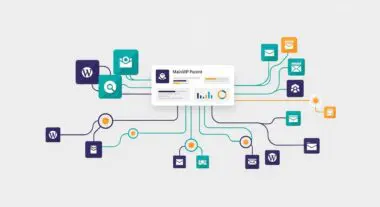
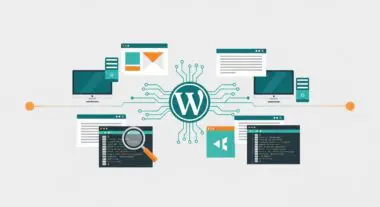
WordPress.com’s latest guide defines AEO as the practice of structuring content so AI systems can understand, cite, and recommend it in generated answers.
The terminology remains fluid, but the operational mandate is already clear: visibility in an answer engine is measured in mentions, citations, and recommendations, not just rankings.
From Blue Links to Synthesized Answers
Traditional search visibility means a page appears in a ranked list and earns a click.
In an answer engine, visibility splits into three distinct signals.
- Mentioned — the brand enters the conversation.
- Cited — the AI uses the content as a source.
- Recommended — the AI suggests the brand as an option for the user’s need.
Each signal tracks a different level of influence, and a mention alone does not guarantee selection.
AI tools do not cite the same sources across questions or industries.
Citations generally come from company websites, independent sources, and community platforms.
Large cross-platform studies show company-operated websites are the largest source category overall, which gives smaller WordPress brands a direct path into the answer layer.
The catch is that platform citation share shifts abruptly.
Reddit’s visible ChatGPT Search citations fell by roughly 86% in a single week when ChatGPT changed its web search method.
The strategic lesson is not to avoid Reddit; it is to avoid building an AEO strategy around any single platform’s current citation share.
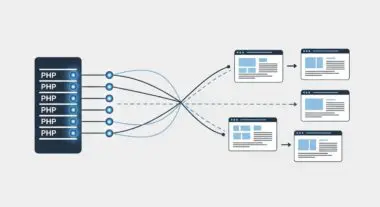
Google calls its internal process ‘query fan-out’ — AI Mode and AI Overviews run multiple related searches and stitch results into a single response.
A bakery owner asking for the best website builder is also asking about hosting reliability, ecommerce features, pricing, ease of use, and online ordering.
WordPress content that only answers the headline question misses the follow-up details an answer engine needs to assemble a useful recommendation.
As explained in WordPress.com’s guide, AEO builds on SEO instead of replacing it.
Google’s own guidance confirms that established SEO fundamentals still apply to AI Overviews and AI Mode, with no separate playbook required.
But the optimization target changes: SEO earns clicks, while AEO earns extractable authority.
The Market Data Behind the Answer Engine Shift
The shift from ranked results to synthesized answers is already measurable.
Semrush research indicates AI-sourced visitors convert at about 4.4 times the rate of traditional organic traffic, while AI Overviews appear on roughly 47% of US informational queries.
One US analysis found AI search results contained 81.9% earned content and 18.1% brand content, while traditional Google results included 39.5% brand, 15.4% social, and 45.1% earned content.
Google still holds about 90% of traditional global web search, but 34% of US adults had used ChatGPT by mid-2025.
A Princeton and IIT Delhi study found entity-rich, fact-dense content can improve AI citation visibility by up to 40% in a controlled generative-engine setting.
That figure is a research outcome, not a promise of live traffic or revenue.
Citation accuracy remains a serious problem.
A 2025 Nature Communications study reports 50% to 90% of LLM-generated citations do not fully support the attached claims.
Separate arXiv research from 2024 measured citation accuracy between 39% and 77% across frontier LLMs, with the best platform around 66% and the worst under 50%.
For WordPress teams, this means visibility without accuracy can be a brand risk, not a win.
Monitoring must therefore go beyond counting mentions and evaluate whether citations are correct and favorable.
AEO is best understood as a staged system: crawl and index eligibility, prompt-triggered retrieval, source selection or answer absorption, and downstream action.
Googlebot governs Google Search crawl access including AI feature eligibility, but inclusion does not guarantee citation.
OAI-SearchBot may surface content in ChatGPT search, but surfacing does not guarantee model training use.
Structured data can support eligible presentations when it matches visible content, but it is not a citation-ranking factor.
Google requires no special AI-readable file or llms.txt for AI Overviews or AI Mode.
Those technical controls are useful, but they sit below the editorial layer.
Pages must render reliably, use descriptive titles and meaningful HTML, and avoid hiding critical facts in scripts, images, or gated interfaces.
E-E-A-T signals — bylines, author pages, corrections policies, source links, publication dates, and a clear separation of reported facts from analysis — remain the core trust layer.
A descriptive pattern from a 10,000-query study puts the median top-cited page length near 896 words, but that is an observation, not a universal target.
A Practical Measurement Layer for WordPress Teams
Dedicated AI visibility tools can show whether a brand is mentioned or cited across answer engines, but a no-budget baseline is still valuable.
Pick five to ten customer questions that matter to the business and run the same prompts through ChatGPT, Perplexity, Gemini, or Google AI Mode.
Record whether the brand appears, whether the site is cited, and which competitors show up instead.
Then ask the AI directly about the brand and check whether the description is accurate, outdated, or inconsistent across tools.
Track the same prompts monthly in a spreadsheet and compare any new content against the baseline before and after publication.
For larger programs, a measurement scorecard should include prompt coverage, brand mention rate, citation share, citation absorption, sentiment, AI referral sessions, and assisted conversions.
Bing AI Performance defines citation share as a site’s percentage of citations for a grounding query, but the data is aggregated, sampled, and not a ranking authority score.
Diagnose visibility failures through four lenses: the page is not retrievable, other domains appear instead, the page is retrieved but not used, or the mention is inaccurate.
Each failure path points to a different fix: technical eligibility, stronger relevance, clearer verifiable evidence, or better entity consistency.
Traffic tools like native WordPress analytics and Google Analytics close the loop by showing when AI appearances turn into sessions and whether that traffic converts.
Extractable Authority Is the New Ranking Factor
The answer layer rewards WordPress sites that are specific, credible, and easy for a machine to quote. For teams building AI-citation pipelines that need repeatable, measurable visibility, programmatic SEO and AI automation is how Andres SEO Expert approaches the answer layer — contact us.
Frequently Asked Questions
What is answer engine optimization (AEO)?
Answer engine optimization is the practice of structuring content so AI systems can understand, cite, and recommend it in generated answers. It builds on SEO but targets extractable authority, not just blue-link clicks.
How is AEO different from traditional SEO?
SEO earns ranked clicks, while AEO earns mentions, citations, and recommendations inside synthesized answers. Google says established SEO fundamentals still apply to AI Overviews and AI Mode, but the optimization target changes to machine-quotable authority.
What do mentioned, cited, and recommended mean in AI search?
Mentioned means the brand enters the conversation, cited means the AI uses the content as a source, and recommended means the AI suggests the brand as an option for the user need. Each signal tracks a different level of influence, and a mention alone does not guarantee selection.
How can WordPress teams measure AI visibility without a big budget?
Pick five to ten customer questions, run the same prompts through ChatGPT, Perplexity, Gemini, or Google AI Mode monthly, and record whether the brand appears, whether the site is cited, and which competitors show up instead. Then compare new content against that baseline before and after publication.
Why is citation accuracy a risk in AI search?
Research shows 50% to 90% of LLM-generated citations may not fully support the attached claims, and separate 2024 arXiv research measured citation accuracy between 39% and 77% across frontier LLMs. Visibility without accuracy can damage brand trust, so monitoring must evaluate whether citations are correct and favorable.
Does structured data or llms.txt guarantee AI citations?
No. Structured data can support eligible presentations when it matches visible content, but it is not a citation-ranking factor. Google requires no special AI-readable file or llms.txt for AI Overviews or AI Mode. Those technical controls sit below the editorial trust layer.
What is query fan-out and why does it matter for WordPress content?
Query fan-out is Google internal process where AI Mode and AI Overviews run multiple related searches and stitch results into a single response. A user asking about the best website builder may also trigger follow-up questions about hosting, ecommerce, pricing, ease of use, and online ordering. Content that only answers the headline question misses details the answer engine needs to assemble a useful recommendation.