Executive Summary
- Centralized repository architecture that decouples Gutenberg blocks from the WordPress core and local plugin environments.
- Utilizes a cross-CMS approach, allowing standardized block components to be shared between WordPress, Drupal, and other platforms via API.
- Optimizes server-side resource allocation by reducing the overhead associated with multi-block plugins and local asset management.
What is Gutenberg Cloud?
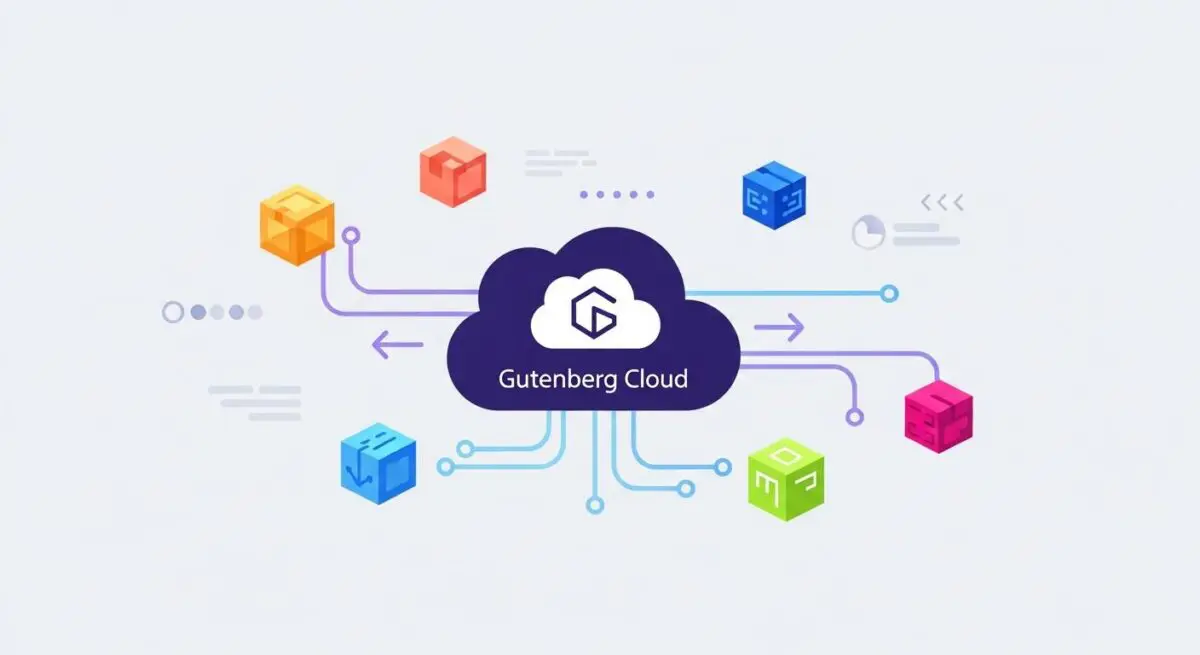
Gutenberg Cloud is an open-source, community-driven initiative designed to function as a centralized, cloud-based repository for Gutenberg blocks. Unlike the traditional WordPress ecosystem where blocks are bundled within themes or heavy plugins, Gutenberg Cloud treats blocks as independent, modular components. This architecture allows developers to discover, install, and manage individual blocks through a unified interface, effectively creating a “package manager” for the block editor. By leveraging a centralized API, it facilitates the distribution of blocks across different CMS platforms, ensuring that a block developed for WordPress can theoretically be utilized in any environment that supports the Gutenberg editor.
Technically, Gutenberg Cloud operates by hosting the JavaScript, CSS, and metadata (block.json) of a block on an external infrastructure. When a user selects a block from the cloud, the system fetches the necessary assets and registers the block dynamically. This shift from local storage to a distributed model represents a significant evolution in how WordPress handles content elements, moving away from monolithic plugin structures toward a microservices-inspired approach for UI components.
The Real-World Analogy
Imagine a professional kitchen that, instead of storing every possible specialized appliance (like a pasta maker, a sous-vide machine, or a wood-fire oven) in its limited cabinet space, uses a high-speed delivery service. When the chef needs to make a specific dish, they request the exact tool from a central hub, and it arrives instantly, ready to use. This keeps the kitchen (your WordPress server) uncluttered and efficient, ensuring you only have the tools you are currently using on your counter, rather than hundreds of unused gadgets gathering dust and taking up space.
How Gutenberg Cloud Impacts Server Performance & Speed Engineering?
The implementation of Gutenberg Cloud has profound implications for server-side optimization and front-end performance. Traditional “block library” plugins often register dozens of blocks simultaneously, even if only one or two are actually used on a site. This results in unnecessary PHP execution cycles for block registration and often leads to “asset bloat,” where CSS and JavaScript for unused blocks are enqueued, negatively impacting Core Web Vitals and increasing Time to Interactive (TTI).
By utilizing Gutenberg Cloud, developers can implement a more granular asset loading strategy. Since blocks are treated as individual entities, the server only needs to manage the specific dependencies of the blocks actively deployed in the content. Furthermore, because these assets are hosted on a centralized cloud infrastructure, they can be served via highly optimized Edge Networks (CDNs), reducing the load on the origin server and improving global latency. This modularity also simplifies the wp-content directory, reducing the backup size and the surface area for potential code conflicts within the local environment.
Best Practices & Implementation
- Granular Block Selection: Only import specific blocks required for the project’s design system to minimize the total number of external API calls during the editing experience.
- Dependency Auditing: Regularly audit the blocks sourced from the cloud to ensure they adhere to modern JavaScript standards and do not introduce redundant libraries (like jQuery) into the front-end.
- Version Pinning: When possible, pin block versions to maintain visual consistency and prevent breaking changes during automatic updates from the cloud repository.
- Performance Monitoring: Use browser developer tools to monitor the network overhead of fetching cloud-based assets and ensure that the external repository’s response time does not bottleneck the editor’s performance.
Common Mistakes to Avoid
A frequent error is the failure to implement proper fallbacks for cloud-hosted assets. If the central repository experiences downtime or the API connection is severed, the editor may fail to render the block correctly, leading to a degraded user experience. Another mistake is neglecting the security implications of third-party code; enterprise environments must ensure that any block pulled from a public cloud repository undergoes a rigorous code review to prevent the execution of malicious scripts or data exfiltration. Finally, over-reliance on too many disparate cloud blocks can lead to a fragmented design system if not governed by a strict style guide.
Conclusion
Gutenberg Cloud represents a strategic shift toward a modular, API-driven architecture for WordPress content creation. By decoupling block assets from the local server, it enables greater scalability, reduced technical debt, and improved performance for high-traffic enterprise deployments.