

Key Takeaways
- Cloudflare’s Agent Development Lifecycle (ADLC) enables AI agents to own the entire software pipeline—from planning to retirement—without constant human intervention.
- The ADLC is built on Workflows, which provide persistent, stateful orchestration for CI/CD, plus OpenTelemetry-based traces for deep observability and self-improving agents.
- This shift moves engineers from operators to architects, letting them focus on design and ethics while agents handle merge, deployment, and incident response.
Table of Contents
- Cloudflare’s Agent Development Lifecycle Signals the End of Human-Led Software Pipelines
- From CI/CD to Workflows: The Primitives That Let Agents Drive the Entire SDLC
- Why the ADLC Marks a Tectonic Shift for Software Factories and Enterprise AI
- Building the Machine That Builds the Machine, on Cloudflare’s Infrastructure
Cloudflare’s Agent Development Lifecycle Signals the End of Human-Led Software Pipelines
Cloudflare’s engineering team has unveiled the Agent Development Lifecycle (ADLC), a new paradigm designed to replace the decades-old Software Development Lifecycle (SDLC) for an era where AI agents do more than generate code. According to the company’s official blog, the announcement includes a suite of tools — @cloudflare/ci, Workflows-based CI/CD, and agent observability — that allow agents to take on the full spectrum of software delivery tasks, from planning to retirement.
The ADLC reframes the entire pipeline as something a software factory can operate autonomously, rather than a checklist that requires constant human intervention. Cloudflare argues that existing SDLC assumptions fail when agents produce code at staggering velocity, flooding review, testing, and deployment steps beyond what human teams can manage.
From CI/CD to Workflows: The Primitives That Let Agents Drive the Entire SDLC
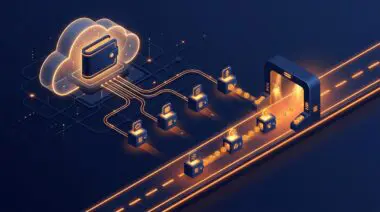
At the heart of the announcement is @cloudflare/ci, an open-source CI tool that runs atop Cloudflare Workflows, enabling pipelines that can self-heal and dynamically spawn agents for complex tasks. Unlike a linear YAML file, Workflows persist state for hours or weeks and can branch, retry, and trigger sub-workflows, creating a far more resilient orchestration layer.
As Cloudflare’s report emphasizes, a CI/CD pipeline is simply a specialized Workflow, but a Workflow can also handle post-deployment validation, feature-flag toggles, log investigation, and even spawning an agent to triage a production incident.
A CI/CD pipeline is just a Workflow. But a Workflow can be so much more than a CI/CD pipeline.
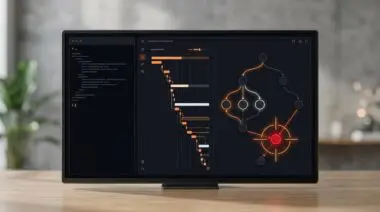
The observability story is similarly ambitious. OpenTelemetry traces are now embedded into local development tooling like Wrangler and the Cloudflare Vite plugin, giving agents access to the same telemetry in dev that they will rely on in production. A new dashboard called Agent Traces collects every agent session, providing a feedback loop that can improve future runs.
Underpinning the ADLC are six platform demands that Cloudflare identifies as non‑negotiable for autonomous software: programmatic API access, horizontal scalability per agent, reproducibility at the environment level, push‑based event triggers, atomic change management, and fine‑grained permissions. The company also stresses the need for the system to be self‑improving, using real production data to sharpen agent performance — much like a human engineer becomes faster after their first on‑call rotation.
The SDLC is for software teams. The ADLC is for software factories.
These capabilities are woven into Cloudflare’s product stack. Workers Logs and Analytics Engine provide the runtime intelligence; Preview URLs and Browser Run give every pull request a live environment. Flagship and Gradual Deployments enable safe, incremental rollouts.
The ADLC, in essence, is not a single tool but a blueprint that ties together all of these primitives so an agent can own the entire lifecycle.
Why the ADLC Marks a Tectonic Shift for Software Factories and Enterprise AI
The transition from SDLC to ADLC mirrors the leap from manual driving to autonomous vehicles. Self‑driving cars that work 80% of the time are not trustworthy enough; they need purpose‑built sensors and redundant safety systems to achieve the nines of reliability that society demands. Cloudflare’s thesis is that the same gap exists today with AI‑powered development — most organizations stop at code generation because the surrounding steps are riddled with manual, fragile, and non‑auditable toil.
By making the entire process programmatic and event‑driven, the ADLC lowers the barrier for agents to safely merge their own pull requests, manage feature flags, and even retire services without hand‑off. This doesn’t erase the need for human judgement; rather, it moves the human from operator to architect, focusing attention on design, customer experience, and ethical guardrails.
Early adopters building software factories today are often constrained by infrastructure that was never designed for autonomous operation. Cloudflare’s approach stands out because it integrates the runtime, networking, storage, and observability layers natively, reducing the integration tax that plagues CI/CD chains assembled from disparate SaaS tools. When an agent can spin up a preview that replicates production — complete with Geo‑specific edge conditions — it can validate changes in a way that a simple test suite never could.
The implications for DevOps and platform engineering are profound. If workflows become the universal abstraction, then human‑written pipeline definitions give way to dynamically generated orchestration that reacts to code changes, production anomalies, or even customer‑reported bugs. In a software factory, a single GitHub issue could kick off a Workflow that spawns an agent to reproduce the fault, draft a fix, run a multi‑environment test battery, and deploy under a feature flag — all without a Slack notification interrupting a human engineer’s weekend.
Yet the real test of the ADLC will be whether it can handle the edge cases that require creative problem‑solving, such as subjective UI decisions or ambiguous security policy violations. Cloudflare’s framing of “self‑improving” agents that learn from traces offers a path, but the leap from 80% to 99.999% reliability remains the industry’s open challenge. The company’s decision to open‑source @cloudflare/ci and build on OpenTelemetry suggests it wants this foundation to be validated and hardened across the community, not just inside its own walls.
Building the Machine That Builds the Machine, on Cloudflare’s Infrastructure
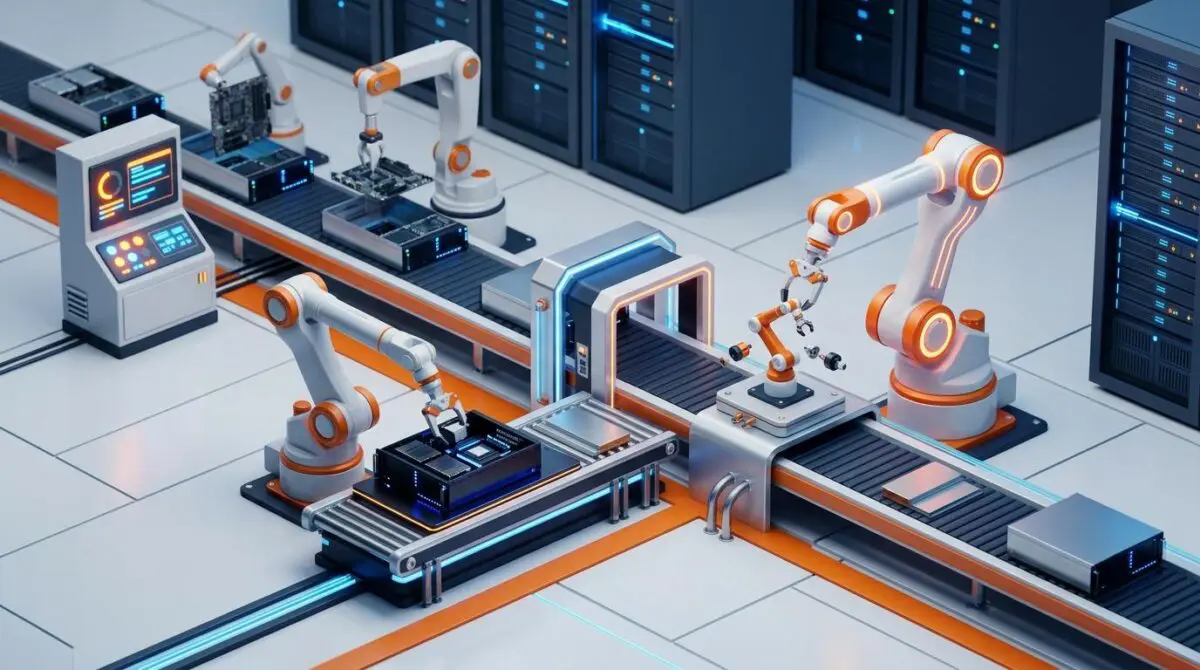
The Agent Development Lifecycle redefines what a deployment platform must be — not just a place to run code, but a programmable factory floor where AI agents can operate with the same degree of autonomy that cloud infrastructure gives to human‑driven services. By baking in reproducibility, real‑time observability, and atomic change management, Cloudflare is effectively offering the chassis and safety systems needed to move from agent‑assisted development to fully autonomous software engineering.
The vision is compelling: fewer humans stuck in review queues, more time for innovation. But achieving it demands a cultural shift as much as a technical one. Teams must learn to trust agent‑led pipelines while building the guardrails that prevent a “slop explosion.” Cloudflare’s contribution with the ADLC is not just a product release — it’s a statement that the era of software factories has arrived, and the platform layer must evolve to meet it.
For organizations aiming to automate their development pipelines with AI, leveraging a robust cloud environment becomes critical. Andres SEO Expert specializes in AI automation workflows and managed cloud hosting that can accelerate your agent‑driven projects. Explore our AI automation workflows and managed cloud hosting services, then reach out to Andres or learn more about Andres SEO Expert.
Frequently Asked Questions
What is the Agent Development Lifecycle (ADLC)?
The ADLC is a new paradigm introduced by Cloudflare to replace the traditional Software Development Lifecycle (SDLC) for an era where AI agents not only generate code but also handle planning, testing, deployment, and retirement of software. It reframes the entire pipeline as something a software factory can operate autonomously, with minimal human intervention.
How does the ADLC differ from the traditional SDLC?
The SDLC assumes constant human oversight and breaks down when agents produce code at staggering velocity. The ADLC treats the pipeline as an autonomous, event-driven workflow where agents can self-heal, spawn sub-workflows, and handle post-deployment tasks like validation and incident triage, moving humans from operators to architects.
What is @cloudflare/ci and how does it use Workflows?
@cloudflare/ci is an open-source CI tool that runs on Cloudflare Workflows. Unlike a linear YAML file, Workflows persist state for hours or weeks and can branch, retry, and trigger sub-workflows. This enables CI/CD pipelines that are more resilient and can dynamically spawn agents for complex tasks.
How does observability work in the ADLC?
OpenTelemetry traces are embedded into local development tools like Wrangler and the Cloudflare Vite plugin, giving agents the same telemetry in dev as in production. A new dashboard called Agent Traces collects every agent session, creating a feedback loop to improve future runs.
What are the six platform demands for autonomous software in the ADLC?
Cloudflare identifies six non-negotiable demands: programmatic API access, horizontal scalability per agent, reproducibility at the environment level, push-based event triggers, atomic change management, and fine-grained permissions. The system must also be self-improving using production data.
How can agents manage post-deployment tasks with the ADLC?
A CI/CD pipeline is just a specialized Workflow. A Workflow can also handle post-deployment validation, feature-flag toggles, log investigation, and even spawn an agent to triage a production incident. This allows a single GitHub issue to trigger a full autonomous response.
What role do humans play in the ADLC?
The ADLC moves the human from operator to architect. Instead of being stuck in review queues, humans focus on design, customer experience, and ethical guardrails, while agents handle merge requests, feature flags, and service retirement.