Executive Summary
- Autonomous Task Execution (ATE) is the process where AI agents perform multi-step workflows by dynamically determining actions based on environmental feedback rather than fixed scripts.
- It leverages Large Language Models (LLMs) as reasoning engines to interpret goals, select tools via API calls, and validate outputs in real-time.
- ATE is essential for scaling complex operations like programmatic SEO and AI content production by removing the bottleneck of manual human intervention.
What is Autonomous Task Execution?
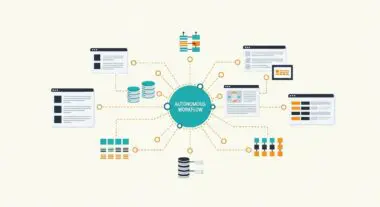
Autonomous Task Execution (ATE) represents a paradigm shift in automation from deterministic, linear sequences to goal-oriented, agentic behavior. In traditional automation, a system follows a rigid “if-this-then-that” logic. Conversely, ATE utilizes a reasoning engine—typically a Large Language Model (LLM)—to decompose a high-level objective into a series of sub-tasks. The system autonomously selects the appropriate tools, executes API requests, processes the returned data, and iterates until the primary objective is met.
At its core, ATE functions through a continuous loop of perception, reasoning, and action. The system perceives the current state of the workflow through data inputs or API responses, reasons about the next necessary step to reach the goal, and executes that action. This allows the automation to handle non-linear paths and unexpected variables that would cause traditional scripts to fail. It is the foundational technology behind AI agents capable of managing end-to-end digital marketing and SEO operations.
The Real-World Analogy
Imagine an elite executive assistant who is given the goal: “Organize a 50-person conference in New York next month.” A traditional automation is like a checklist that only knows how to book a specific hotel if it is available. If that hotel is booked, the checklist fails. Autonomous Task Execution is the assistant who realizes the hotel is full, researches three alternatives, compares prices against the budget, checks the proximity to the venue, and makes a booking without ever needing to ask the manager for the next step. It solves problems in real-time to achieve the final outcome.
Why is Autonomous Task Execution Critical for Autonomous Workflows and AI Content Ops?
In the context of AI Content Ops and programmatic SEO, ATE is critical because it enables the management of complexity at scale. When generating thousands of pages of content, a system must handle diverse data sources, varying API response formats, and quality control checks. ATE allows the workflow to self-correct; for instance, if a data scraping tool returns an error, the autonomous agent can switch to an alternative source or retry with different parameters without halting the entire pipeline.
Furthermore, ATE facilitates stateless automation. By maintaining the context of the goal within the reasoning engine, the system can operate across distributed serverless architectures. This ensures that high-volume tasks, such as real-time SERP analysis or bulk content optimization, are executed with maximum efficiency and minimal latency, as the system dynamically allocates resources and logic based on the immediate task requirements.
Best Practices & Implementation
- Define Granular Toolsets: Provide the autonomous agent with specific, well-documented API tools rather than broad permissions to ensure precision in execution.
- Implement Robust Guardrails: Use system prompts and validation layers to prevent the agent from entering infinite loops or exceeding token and budget limits.
- Structured Data Outputs: Force the agent to communicate between steps using structured formats like JSON to maintain data integrity across the workflow.
- Observability and Logging: Maintain detailed logs of the agent’s reasoning process (the “thought” chain) to facilitate debugging and performance tuning.
- Human-in-the-Loop Triggers: Designate specific high-stakes nodes where the autonomous execution pauses for human verification before proceeding.
Common Mistakes to Avoid
One frequent error is the lack of explicit exit conditions, which can lead to recursive loops where the agent repeatedly attempts a failing task. Another mistake is over-reliance on the LLM for deterministic logic, such as complex mathematical calculations, which should instead be delegated to specific code-based tools. Finally, many organizations fail to implement sufficient monitoring, leading to “black box” executions where the cause of a workflow failure is impossible to trace.
Conclusion
Autonomous Task Execution is the engine of modern AI-driven efficiency, transforming static workflows into dynamic, self-optimizing systems. By mastering ATE, technical teams can build resilient, scalable infrastructures that operate at the speed of AI-search evolution.