



Executive Summary
- Integration of AI-driven predictive analytics for real-time inventory and demand forecasting.
- Utilization of RESTful APIs and Webhooks to synchronize data across ERP and WMS ecosystems.
- Implementation of stateless, event-driven architectures to reduce latency in global logistics pipelines.
What is Supply Chain Automation?
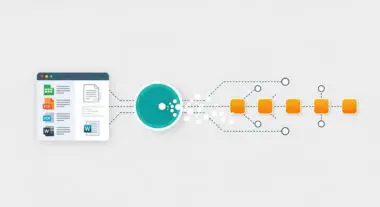
Supply Chain Automation refers to the strategic integration of digital technologies—including Artificial Intelligence (AI), Machine Learning (ML), and Robotic Process Automation (RPA)—to execute end-to-end logistics processes with minimal human intervention. At its core, it involves replacing manual data entry and fragmented legacy workflows with unified, event-driven architectures. This transformation enables the seamless flow of information, goods, and capital across a global network of suppliers, manufacturers, and distributors.
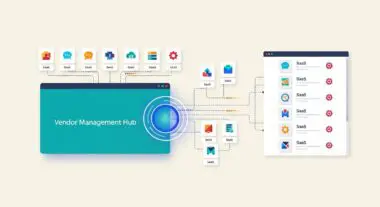
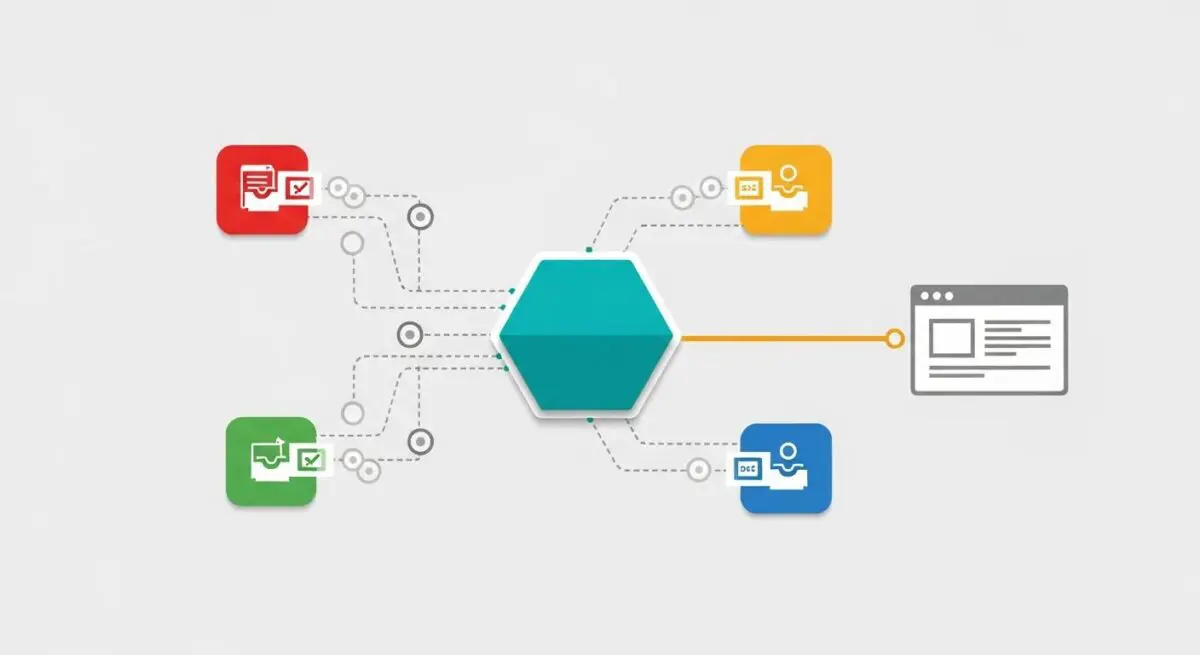
In the context of modern engineering, this concept relies heavily on RESTful APIs and Webhooks to synchronize data across Enterprise Resource Planning (ERP) systems and Warehouse Management Systems (WMS). By leveraging a stateless automation approach, organizations can process massive JSON payloads in real-time, ensuring that inventory levels, shipping statuses, and procurement triggers are updated across all nodes of the digital ecosystem simultaneously.
The Real-World Analogy
Imagine a professional orchestra where every musician is blindfolded but equipped with a haptic earpiece. Instead of a conductor waving a baton, a central computer monitors the acoustics of the room and the timing of every note. When the violins finish a phrase, the computer instantly sends a precise vibration to the cellists’ earpieces, telling them exactly when and how loud to play. Supply Chain Automation is that central computer, ensuring every part of the business “plays” in perfect sync based on real-time data rather than waiting for a human conductor to give a signal.
Why is Supply Chain Automation Critical for Autonomous Workflows and AI Content Ops?
For organizations scaling autonomous workflows, Supply Chain Automation serves as the authoritative data source for programmatic execution. In AI Content Ops, for instance, an automated supply chain ensures that product descriptions, pricing, and availability data are fed into Large Language Models (LLMs) via Retrieval-Augmented Generation (RAG) pipelines with high accuracy. Without this automated data layer, AI-generated content risks hallucinating product details or promoting out-of-stock items, leading to significant operational friction.
Furthermore, it enables serverless architecture scaling. By treating logistics events as discrete triggers, developers can build microservices that handle specific tasks—such as generating a shipping label or updating a CRM—only when needed. This reduces server overhead and allows the infrastructure to scale horizontally in response to fluctuating market demands and high-velocity data streams.
Best Practices & Implementation
- Standardize data formats using JSON Schema to ensure interoperability between disparate vendor APIs and internal data lakes.
- Implement circuit breaker patterns in automation scripts to prevent cascading failures when a third-party logistics provider’s API experiences downtime.
- Use idempotent API design to ensure that retried requests due to network timeouts do not result in duplicate orders or inventory errors.
- Integrate real-time telemetry from IoT devices to provide the AI layer with granular, ground-truth data for predictive modeling.
Common Mistakes to Avoid
One frequent error is the reliance on “polling” instead of “push” architectures; frequently querying an API for updates wastes compute resources compared to using Webhooks. Another critical mistake is failing to sanitize and validate incoming data payloads, which can lead to corrupted database states or security vulnerabilities within the automation pipeline in the AI era.
Conclusion
Supply Chain Automation is the fundamental framework for building resilient, data-driven logistics that operate at the speed of AI. By prioritizing API connectivity and stateless design, enterprises can achieve unprecedented levels of operational efficiency and data integrity.