




Executive Summary
- SpeedCurve integrates Real User Monitoring (RUM) and Synthetic Monitoring to provide a holistic view of web performance and Core Web Vitals.
- The platform enables the creation of performance budgets and competitive benchmarking to prevent regressions and maintain industry leadership.
- Detailed visualization of the critical rendering path helps engineers optimize Hero Elements and mitigate the impact of third-party scripts.
What is SpeedCurve?
SpeedCurve is an enterprise-grade web performance monitoring and visualization platform that synthesizes data from two primary sources: Synthetic Monitoring and Real User Monitoring (RUM). By leveraging the WebPageTest engine for synthetic testing and its proprietary LUX (Live User Experience) library for RUM, SpeedCurve provides a granular view of how websites load and perform across diverse network conditions, devices, and geographies. It is designed to bridge the gap between technical metrics and business outcomes by correlating load times with user engagement and conversion rates.
The platform excels in visualizing the critical rendering path, offering detailed filmstrips and video comparisons of page loads. This allows performance architects to pinpoint exactly when hero elements—such as the Largest Contentful Paint (LCP)—appear on the screen. Beyond standard metrics, SpeedCurve enables the tracking of custom timings, third-party script impact, and CPU long tasks, providing a comprehensive diagnostic suite for modern front-end engineering.
The Real-World Analogy
Imagine you are managing a global logistics fleet. Synthetic monitoring is like running a test truck on an empty track under perfect conditions to see its maximum theoretical speed. Real User Monitoring, provided by SpeedCurve, is like having a GPS and telemetry sensor in every single customer’s vehicle, recording how they navigate actual traffic, weather, and road construction. SpeedCurve is the command center that aggregates both sets of data, showing you not just how fast your trucks should go, but exactly where they are slowing down in the real world and how that delay affects your delivery success rate.
Why is SpeedCurve Critical for Website Performance and Speed Engineering?
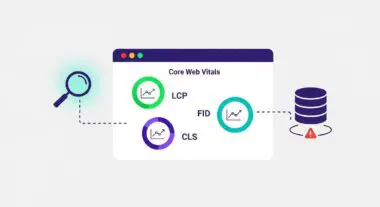
SpeedCurve is essential for maintaining high-performance standards in complex web environments where Core Web Vitals (CWV) directly influence search engine rankings and user retention. It provides the infrastructure to implement performance budgets, which act as automated guardrails against regression. By monitoring metrics like Cumulative Layout Shift (CLS) and First Input Delay (FID) in real-time, engineering teams can identify whether a performance dip is caused by a recent code deployment, a slow third-party provider, or specific browser-level bottlenecks.
Furthermore, SpeedCurve’s ability to perform competitive benchmarking allows organizations to visualize their performance relative to industry peers. This data is vital for SEO and GEO (Generative Engine Optimization) professionals who need to ensure that their content is not only discoverable but also delivered with the lowest possible latency, as speed is a primary signal for both user satisfaction and algorithmic preference.
Best Practices & Implementation
- Establish Performance Budgets: Define strict thresholds for critical metrics like LCP and Total Blocking Time (TBT) within SpeedCurve to trigger alerts when deployments exceed resource limits.
- Leverage LUX for RUM Data: Deploy the LUX snippet to capture actual user experiences, allowing for the segmentation of performance data by device type, connection speed, and geographic location.
- Identify Hero Elements: Use SpeedCurve’s synthetic testing to identify and optimize the rendering of Hero Elements, ensuring that the most important content is visible to the user as early as possible.
- Monitor Third-Party Impact: Regularly audit the Third Party dashboard to identify scripts that contribute to main-thread blocking and prioritize their optimization or removal.
- Integrate with CI/CD Pipelines: Automate synthetic tests during the deployment process to catch performance regressions before they reach the production environment.
Common Mistakes to Avoid
A frequent error is over-relying on synthetic data while ignoring Real User Monitoring (RUM). Synthetic tests occur in controlled environments and may not reflect the high-latency or low-powered device realities of a global user base. Another mistake is failing to correlate performance improvements with business KPIs, which makes it difficult to justify the ROI of speed engineering efforts to non-technical stakeholders.
Conclusion
SpeedCurve is a sophisticated diagnostic and monitoring ecosystem that empowers performance architects to optimize the critical rendering path through data-driven insights. Its integration of RUM and synthetic testing is fundamental for maintaining competitive Core Web Vitals and superior user experiences.