Executive Summary
- Automated recurring revenue cycles managed via API-driven billing engines.
- Real-time entitlement synchronization through event-driven webhook architectures.
- Scalable dunning management and proration logic for complex SaaS lifecycles.
What is Subscription Billing?
Subscription billing is a recurring revenue model where customers are charged at predefined intervals—such as monthly or annually—for ongoing access to a product or service. In the context of AI automations and SaaS architecture, it involves the deployment of sophisticated billing engines that manage the entire customer lifecycle, from initial sign-up and trial periods to renewals and cancellations. These systems operate as the financial layer of an application, handling complex logic such as tax calculation, currency conversion, and proration.
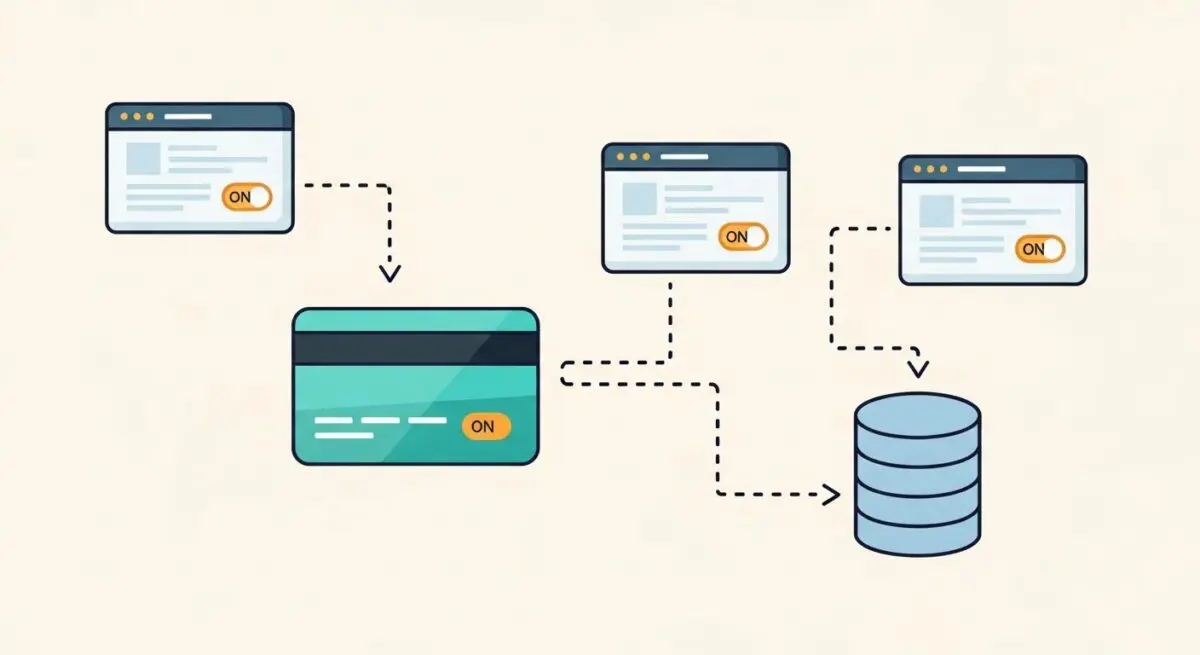
From a technical standpoint, subscription billing relies on API-first platforms like Stripe, Chargebee, or Recurly to decouple payment processing from core business logic. This allows developers to programmatically manage user permissions and access levels based on the status of their subscription. By utilizing idempotent API calls and secure tokenization, organizations can ensure that financial transactions are executed reliably within autonomous workflows without storing sensitive credit card data on their own servers.
The Real-World Analogy
Think of subscription billing like a modern utility service, such as electricity or water. Instead of you manually sending a check every time you turn on a light, a meter tracks your usage (or your flat-rate plan) and automatically processes a payment at the end of the month. If the payment fails, the system sends an automated notification, much like a digital dunning process, ensuring the service remains active as long as the parameters of the agreement are met, without requiring a human clerk to intervene for every transaction.
Why is Subscription Billing Critical for Autonomous Workflows and AI Content Ops?
For AI content operations and programmatic SEO platforms, subscription billing is the engine that enables stateless automation and resource allocation. When an AI agent generates content or performs data analysis, the system must verify in real-time whether the user has the necessary credits or “entitlements” to perform that action. Subscription billing engines provide the source of truth for these permissions via high-speed API lookups.
Furthermore, it facilitates usage-based scaling. As AI workflows consume more tokens or API calls, subscription billing systems can automatically adjust invoices or trigger upgrades, allowing the infrastructure to scale financially in tandem with technical demand. This creates a seamless loop where the automation of content production is directly tied to the automation of revenue collection, reducing operational overhead and eliminating manual billing bottlenecks.
Best Practices & Implementation
- Implement Webhook Redundancy: Ensure your application can handle asynchronous notifications from the billing provider to update user status immediately upon successful payment or failure.
- Decouple Entitlements from Billing: Store subscription status in a local cache or database to avoid making external API calls for every user action, improving latency in AI workflows.
- Automate Dunning Management: Use automated retry logic and email sequences for failed payments to reduce involuntary churn without manual intervention.
- Use Hosted UI Components: Leverage pre-built payment elements provided by gateways to maintain PCI compliance and reduce the security surface area of your application.
Common Mistakes to Avoid
One frequent error is hardcoding pricing logic directly into the application code, which makes it difficult to update tiers or offer promotions without a full deployment. Another mistake is failing to account for edge cases in proration, such as mid-cycle upgrades or downgrades, which can lead to inaccurate billing and customer friction. Finally, many brands neglect to implement robust logging for webhook events, making it nearly impossible to debug failed synchronization between the billing engine and the user database.
Conclusion
Subscription billing is a foundational component for scaling AI-driven enterprises, providing the automated financial infrastructure necessary to manage recurring revenue and user entitlements at scale.