



Executive Summary
- Provides deep-code visibility and full-stack observability to identify server-side bottlenecks.
- Monitors Business Transactions to correlate technical performance with user experience and revenue.
- Facilitates rapid root cause analysis through automated diagnostic snapshots and AI-driven insights.
What is AppDynamics?
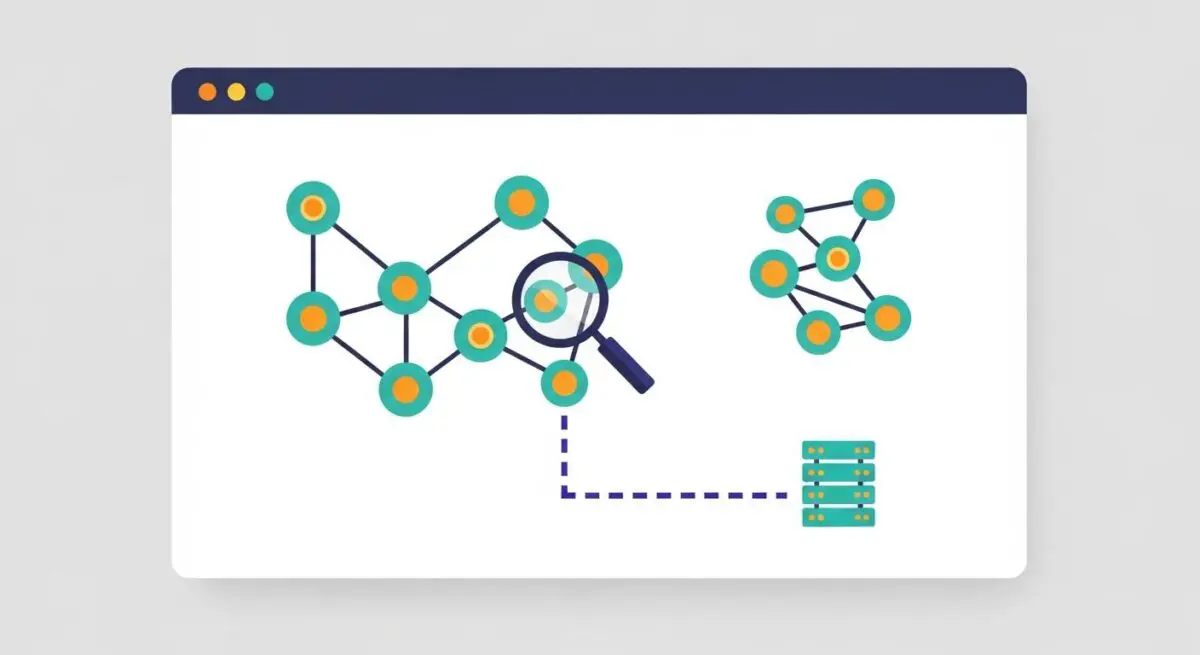
We at Andres SEO Expert recognize AppDynamics as an enterprise-grade Application Performance Management (APM) and full-stack observability platform designed to monitor, correlate, and optimize the performance of complex, distributed software environments. By deploying intelligent agents across the application stack—including the code level, database, server infrastructure, and end-user devices—AppDynamics provides real-time visibility into how application health impacts business outcomes. It operates by mapping application topologies and automatically baselining performance metrics to detect anomalies.
At its core, AppDynamics focuses on Business Transactions, which are the end-to-end paths taken by a user request through the system. This granular visibility allows performance architects to trace a single slow request back to a specific line of code, a slow SQL query, or a latent third-party API call. In the context of modern web performance, it serves as the diagnostic engine for maintaining high availability and low latency in microservices and cloud-native architectures.
The Real-World Analogy
Imagine a massive international airport with thousands of moving parts: planes, luggage belts, security checkpoints, and fuel trucks. Without a central control tower, if a flight is delayed, you might not know if it is due to a mechanical failure, a slow baggage handler, or a backup at the runway. AppDynamics acts as a Super Control Tower that not only sees every plane but also has a sensor on every single suitcase and a monitor on every pilot’s dashboard. It can instantly tell you that a flight is delayed specifically because a single luggage belt in Terminal 3 is moving 5% slower than usual, allowing you to fix that specific belt before the entire airport schedule collapses.
Why is AppDynamics Critical for Website Performance and Speed Engineering?
AppDynamics is vital for speed engineering because it addresses the “black box” of server-side processing. While front-end tools measure Core Web Vitals like Largest Contentful Paint (LCP), AppDynamics identifies the backend inefficiencies that cause high Time to First Byte (TTFB). By providing visibility into the execution of server-side code, it allows engineers to optimize resource-heavy functions that block the main thread or delay the delivery of the initial HTML document.
Furthermore, in an era of AI-search and GEO (Generative Engine Optimization), server reliability and speed are non-negotiable. AppDynamics ensures that the infrastructure supporting these dynamic queries remains performant under load. It also monitors the impact of third-party integrations—such as payment gateways or social scripts—which are frequent culprits for Cumulative Layout Shift (CLS) and Interaction to Next Paint (INP) issues when they fail to respond within acceptable thresholds.
Best Practices & Implementation
- Define Business Transactions: Prioritize monitoring for the most critical user paths, such as checkout or login, to ensure that performance optimizations directly support business goals.
- Establish Dynamic Baselines: Utilize the platform’s machine learning capabilities to set automated performance baselines, reducing alert fatigue by only triggering notifications when performance deviates from historical norms.
- Instrument the Full Stack: Deploy agents across all layers, including the database and network, to eliminate visibility gaps that could hide the root cause of intermittent latency.
- Integrate with CI/CD Pipelines: Use AppDynamics during the staging phase to catch performance regressions before code is deployed to production.
Common Mistakes to Avoid
A frequent error is over-instrumentation, where teams attempt to monitor every minor function, leading to unnecessary overhead and data noise. Another mistake is treating AppDynamics as a siloed tool for IT operations; without integrating its insights into the broader SEO and digital marketing strategy, brands miss opportunities to correlate site speed with conversion rates. Finally, many organizations fail to act on diagnostic snapshots, ignoring the deep-dive data that reveals the specific code-level bottlenecks responsible for performance degradation.
Conclusion
AppDynamics is an essential tool for enterprise performance architecture, providing the deep-stack visibility required to minimize server-side latency and ensure a seamless user experience. By correlating technical metrics with business outcomes, it empowers speed engineers to maintain optimal Core Web Vitals in complex environments.