Executive Summary
- Backend latency is the primary driver of Time to First Byte (TTFB), dictating the start of the browser’s rendering process.
- Optimization requires addressing server-side bottlenecks including inefficient database queries, unoptimized application code, and hardware limitations.
- Reducing backend latency is essential for maintaining a healthy crawl budget and improving Core Web Vitals like Largest Contentful Paint (LCP).
What is Backend Latency?
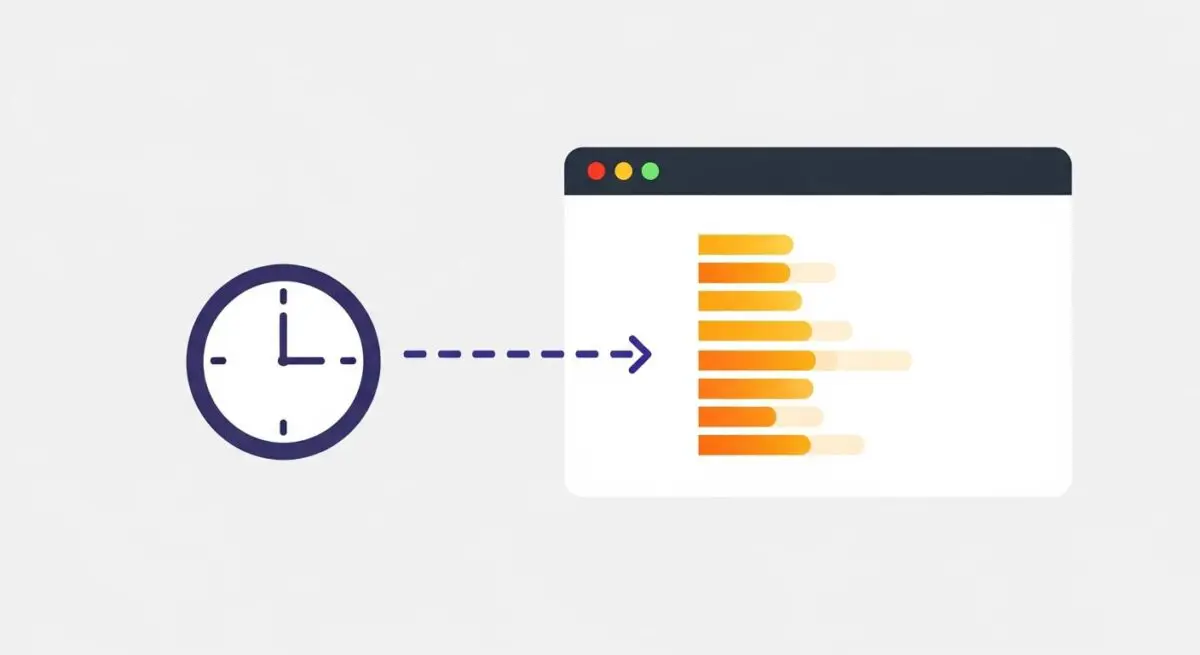
Backend latency, often quantified through the metric Time to First Byte (TTFB), refers to the duration of time elapsed between a client-side request reaching the server and the server dispatching the first byte of data back to the client. This interval encompasses the network transit time from the edge to the origin, the time required for the server to process the request, and the time taken to initiate the response. In complex enterprise architectures, this involves multiple layers of interaction, including application logic execution, database I/O operations, and third-party API calls.
At its core, backend latency is a measure of server-side efficiency. While front-end performance focuses on how resources are loaded and rendered in the browser, backend latency determines how quickly those resources are made available in the first place. High latency at this stage creates a bottleneck that no amount of front-end optimization can fully circumvent, as the browser remains idle while waiting for the initial server response.
The Real-World Analogy
Imagine you are dining at a high-end restaurant. You place your order with the waiter (the client request). The waiter takes your order to the kitchen (the server). Backend latency is the time the chefs spend preparing your meal—chopping ingredients, cooking, and plating—before the waiter brings out the very first course. If the kitchen is disorganized or understaffed, you will sit at your table with an empty glass, regardless of how fast the waiter can walk or how beautifully the table is set. In website performance, the kitchen must be efficient to ensure the meal (the data) reaches the diner (the user) without delay.
Why is Backend Latency Critical for Website Performance and Speed Engineering?
Backend latency is the foundation upon which all other performance metrics are built. From an SEO perspective, search engines like Google utilize TTFB as a signal for site quality and crawling efficiency. If a server takes too long to respond, it consumes more of the allocated crawl budget, potentially leading to slower indexing of new content. Furthermore, backend latency directly impacts the Largest Contentful Paint (LCP), a Core Web Vital. Since the browser cannot begin parsing HTML or discovering sub-resources until the initial document is received, every millisecond of backend delay is a millisecond added to the final render time.
In the context of AI-Search and Generative Engine Optimization (GEO), low backend latency ensures that data is served rapidly to scrapers and LLM-based agents, facilitating real-time information retrieval. For e-commerce and enterprise platforms, reducing latency minimizes the risk of session abandonment, as users equate server responsiveness with brand reliability and technical competence.
Best Practices & Implementation
- Database Query Optimization: Implement proper indexing, avoid N+1 query problems, and utilize query caching to reduce the time the server spends fetching data.
- Server-Side Caching: Deploy caching layers such as Redis or Memcached to store frequently accessed data in memory, bypassing expensive disk I/O and application logic.
- Asynchronous Processing: Move non-critical tasks, such as sending emails or generating logs, to background workers to prevent them from blocking the primary request-response cycle.
- Hardware and Environment Scaling: Utilize high-performance NVMe storage, increase available RAM, and ensure the web server (e.g., Nginx or LiteSpeed) is tuned for concurrent connection handling.
- PHP/Application Profiling: Use tools like Xdebug or New Relic to identify specific functions or scripts that contribute most to execution time and refactor them for efficiency.
Common Mistakes to Avoid
A frequent error is attempting to solve backend latency issues solely through front-end hacks like prefetching or lazy loading; while useful, these do not address the root cause of a slow server. Another common mistake is neglecting the impact of bloated CMS plugins or unoptimized third-party integrations, which can add significant overhead to every request. Finally, many organizations fail to monitor latency at the origin, relying only on CDN-cached performance data which masks underlying server inefficiencies.
Conclusion
Backend latency is a critical performance bottleneck that dictates the speed of the entire delivery pipeline. By optimizing server-side processes and database interactions, engineers can ensure a rapid TTFB, providing a stable foundation for superior user experience and search engine visibility.