Executive Summary
- Automated tax calculation leverages real-time API integrations to determine nexus and apply precise jurisdictional rates dynamically.
- Stateless automation workflows rely on accurate JSON payloads to pass transaction data to tax engines for immediate validation.
- Scalable implementation requires robust error handling and fallback mechanisms to maintain compliance during high-volume programmatic operations.
What is Tax Calculation?
Tax calculation in the context of modern automation refers to the programmatic determination of financial liabilities—such as Sales Tax, VAT, or GST—based on the geographical and jurisdictional attributes of a transaction. Unlike manual entry, automated tax calculation utilizes specialized tax engines and APIs to evaluate nexus (the legal connection between a seller and a taxing authority) in real-time. This process involves parsing complex JSON payloads containing product SKUs, origin addresses, destination addresses, and customer exemptions to return a precise tax amount that is then appended to the transaction metadata.
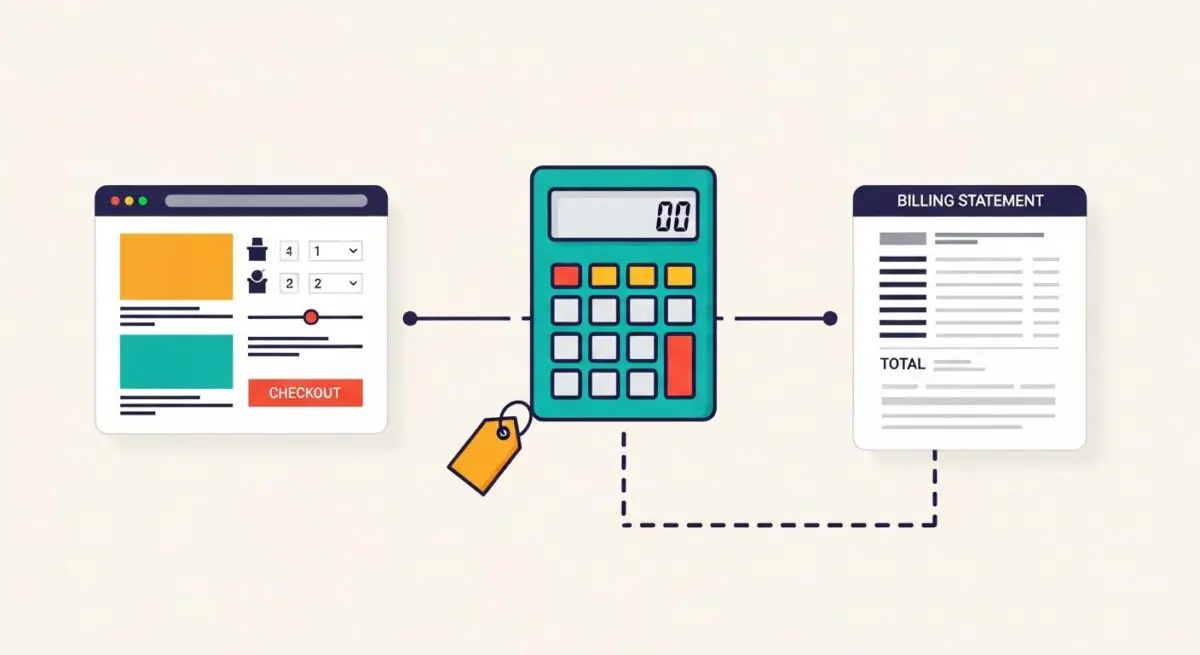
In autonomous workflows, tax calculation functions as a stateless microservice. When a webhook triggers a checkout or billing event, the automation layer transmits the transaction data to a third-party tax service (e.g., Avalara, Stripe Tax, or TaxJar). The service processes the data against current legislative databases and returns a structured response. This ensures that every programmatic transaction remains compliant with local laws without human intervention, effectively decoupling the business logic from the ever-changing regulatory landscape.
The Real-World Analogy
Imagine a world-class travel concierge who accompanies you on a global journey. Every time you cross a border or enter a new city, this concierge instantly knows the local laws, the specific sales taxes of that village, and whether your specific purchase is exempt. You do not have to stop and research the local tax code; the concierge simply whispers the correct total in your ear the moment you reach for your wallet. In the digital space, automated tax calculation is that concierge, providing instant, localized expertise for every transaction across thousands of jurisdictions simultaneously.
Why is Tax Calculation Critical for Autonomous Workflows and AI Content Ops?
For organizations scaling via programmatic SEO and AI-driven content operations, tax calculation is a fundamental component of the conversion pipeline. When AI agents or automated systems generate thousands of dynamic landing pages or localized storefronts, the underlying infrastructure must handle tax liabilities across diverse regions without manual configuration. Stateless automation requires that each request carries all necessary data to be processed independently; therefore, tax calculation must be integrated directly into the API payload flow to maintain data integrity.
Furthermore, in serverless architectures, the ability to offload tax logic to specialized APIs reduces the computational overhead on the primary application. This allows for rapid scaling during high-traffic events, such as automated product launches or global marketing campaigns. By ensuring that tax calculation is handled programmatically, brands avoid the catastrophic risks of non-compliance, such as audits, fines, and the suspension of payment processing accounts, which could halt autonomous operations entirely.
Best Practices & Implementation
- Implement Address Validation: Always pass customer addresses through a normalization API before tax calculation to ensure the tax engine identifies the correct jurisdiction and avoids ‘not found’ errors.
- Utilize Idempotency Keys: When making API calls to tax engines, use idempotency keys to prevent duplicate tax transactions and ensure that retries in a distributed system do not result in over-reporting.
- Map Product Tax Codes (PTCs): Ensure your product database includes standardized tax codes. This allows the tax engine to distinguish between taxable goods, services, and exempt items like digital downloads or groceries.
- Establish Fallback Logic: Design your automation to handle API timeouts or service outages by implementing a default tax rate or a ‘retry’ queue to prevent transaction failures during peak loads.
Common Mistakes to Avoid
One frequent error is hardcoding tax rates within the automation logic, which fails to account for legislative changes or local ‘tax holidays.’ Another common mistake is ignoring ‘economic nexus’ thresholds; automation systems must be configured to alert administrators when sales volumes in a specific region trigger new tax collection requirements. Finally, failing to log the full JSON response from the tax API can make financial audits and troubleshooting nearly impossible in a high-volume programmatic environment.
Conclusion
Automated tax calculation is a non-negotiable component of scalable, compliant AI-driven commerce, transforming complex regulatory requirements into seamless, API-mediated data points.