Executive Summary
- Replaces the native WordPress MySQL LIKE search with a sophisticated full-text indexing engine for improved precision.
- Utilizes weighted scoring algorithms to prioritize content based on titles, tags, and custom field relevance.
- Introduces specific database management requirements due to the creation of dedicated index tables and potential storage expansion.
What is Relevanssi?
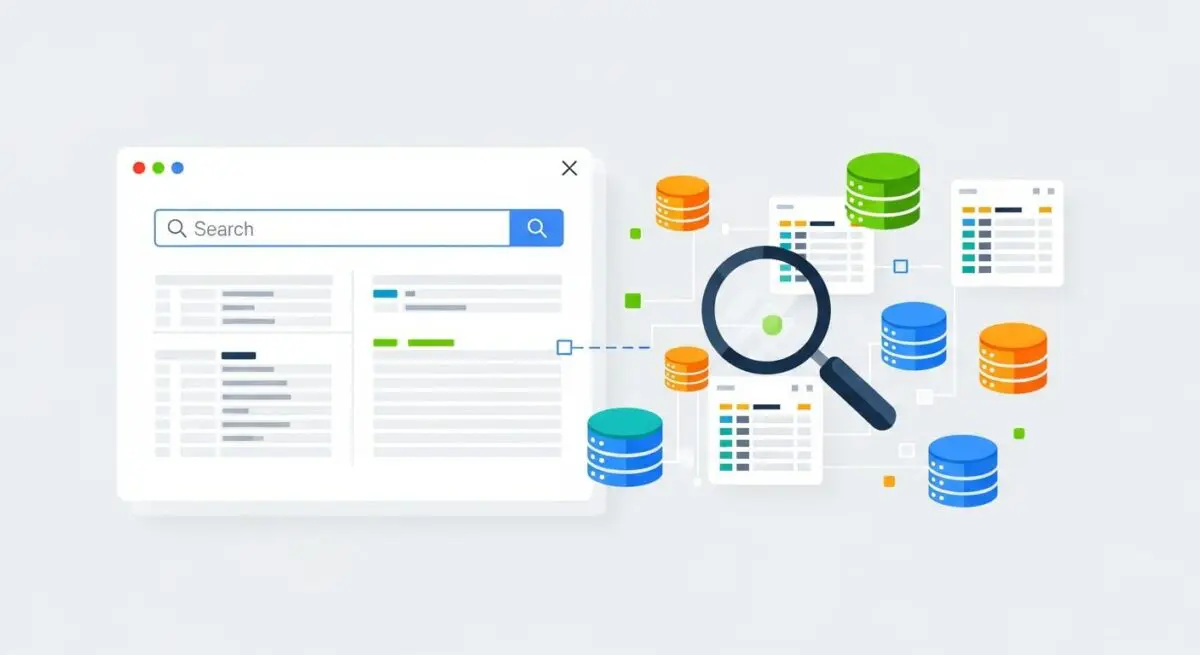
Relevanssi is a high-performance search enhancement plugin for the WordPress CMS that replaces the standard search functionality with a full-text search engine. While the native WordPress search relies on basic MySQL LIKE queries—which are often inefficient and lack relevance-based ranking—Relevanssi builds a custom inverted index of the site’s content. This index allows for advanced features such as fuzzy matching, phrase searching, and boolean logic (AND/OR/NOT), significantly improving the user experience for content-heavy installations.
From a technical architecture perspective, Relevanssi operates by intercepting the standard WP_Query search parameters. It bypasses the default wp_posts table scan and instead queries its own dedicated database tables, such as wp_relevanssi and wp_relevanssi_log. This architectural shift enables the engine to assign weights to different post elements, ensuring that a keyword match in a title carries more significance than a match in the comment section or a custom field.
The Real-World Analogy
Imagine a massive metropolitan library containing millions of volumes. The default WordPress search is equivalent to a librarian walking through every single aisle, looking at every book cover one by one to find a specific word. This process is slow and often misses books where the word is inside the text but not on the spine. Relevanssi is the equivalent of a comprehensive, digitized card catalog and index. Instead of searching the shelves, you consult the index, which immediately tells you every book, page, and line where your search term appears, ranked by how central that term is to the book’s subject matter.
How Relevanssi Impacts Server Performance & Speed Engineering?
The implementation of Relevanssi introduces a trade-off between search quality and server resource allocation. During the initial indexing phase, the plugin requires significant PHP memory and execution time to parse the wp_posts table and populate the wp_relevanssi index. On enterprise-level sites with hundreds of thousands of rows, this can lead to temporary CPU spikes and increased I/O wait times. Furthermore, the database footprint will expand; the Relevanssi index can often grow to be several times larger than the original wp_posts table, which must be accounted for in managed WordPress hosting environments with strict storage quotas.
However, from a front-end performance standpoint, Relevanssi can actually improve server response times for search queries. Because it utilizes a pre-built index, the database can return results faster than it could by performing a resource-intensive LIKE scan across a bloated wp_posts table. To maintain optimal speed engineering, developers must implement database maintenance routines and consider the impact of the relevanssi_log table on long-term query performance.
Best Practices & Implementation
- Selective Indexing: Limit the index to essential post types and custom fields to prevent unnecessary database bloat and reduce indexing time.
- Enable Throttling: On high-traffic websites, use the throttling feature to limit the number of results analyzed, preventing search queries from exhausting server CPU resources.
- Database Optimization: Regularly run the OPTIMIZE TABLE command on Relevanssi tables to reclaim unused space and maintain index efficiency.
- Exclude Common Terms: Utilize a robust stop-word list to prevent the indexing of high-frequency, low-value words (e.g., “the”, “and”, “is”), which keeps the index lean.
- Cache Search Results: Implement persistent object caching (like Redis or Memcached) for search result pages to minimize repetitive database hits for common queries.
Common Mistakes to Avoid
A frequent error is indexing large PDF files or massive custom field arrays on low-resource shared hosting environments, which can lead to PHP fatal errors due to memory exhaustion. Another common mistake is failing to update the index after performing bulk database operations or migrations, resulting in a “stale” search experience where new content is unfindable. Finally, many administrators neglect to monitor the size of the wp_relevanssi_log table, which can grow exponentially and degrade overall database performance if not periodically cleared.
Conclusion
Relevanssi is a powerful architectural upgrade for WordPress search that requires a balanced approach to database management and server resource allocation. When properly configured with selective indexing and regular maintenance, it provides a superior search experience without compromising enterprise-level scalability.