Executive Summary
- TTFB measures the latency of a web server’s responsiveness, encompassing DNS lookup, socket connection, and server-side processing.
- It serves as a foundational metric for Core Web Vitals, directly influencing the Largest Contentful Paint (LCP) and overall user experience.
- Optimizing TTFB involves reducing server processing time through efficient database queries, robust caching strategies, and Content Delivery Network (CDN) integration.
What is Time to First Byte (TTFB)?
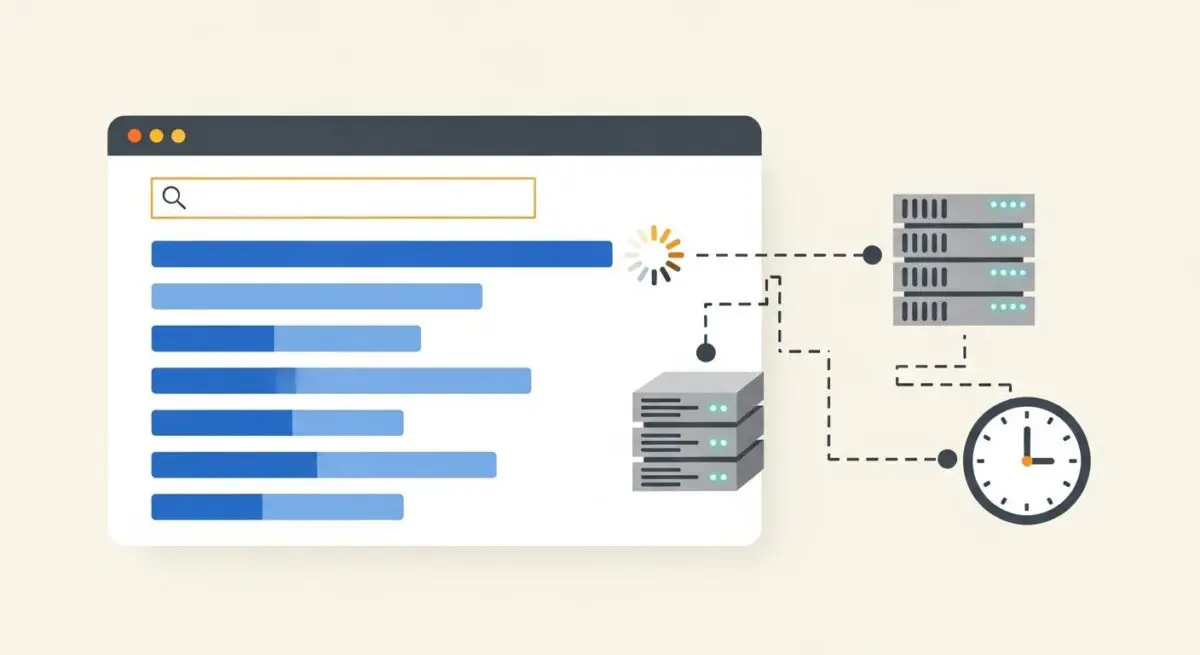
Time to First Byte (TTFB) is a foundational performance metric that measures the duration from the moment a client makes an HTTP request to the moment the first byte of the page content is received by the browser. It is a multi-stage measurement that includes the time taken for DNS lookup, the establishment of a TCP connection, the TLS handshake (for HTTPS), and the time the server spends processing the request to generate a response.
Technically, TTFB is composed of three distinct components: the time to send the request over the network to the server, the time the server spends processing that request and generating the response, and the time it takes for the first byte of that response to travel back to the client. While often used as a proxy for server speed, it is influenced by network latency and routing efficiency as much as by backend application performance.
The Real-World Analogy
Imagine walking into a high-end restaurant and placing an order with a waiter. The Time to First Byte is the interval between the moment you finish telling the waiter what you want and the moment they place the very first item—perhaps a glass of water or a breadbasket—on your table. It doesn’t represent the time it takes to finish the entire meal, but it is the first tangible sign that the kitchen has received your order and is actively working on it. If you sit for twenty minutes before even receiving water, your perception of the restaurant’s service quality drops immediately, regardless of how good the main course eventually tastes.
Why is Time to First Byte (TTFB) Important for SEO?
TTFB is a critical metric for SEO because it represents the bottleneck for all subsequent page load events. From a search engine perspective, a high TTFB slows down the crawl rate. If Googlebot encounters high latency when requesting pages, it may reduce the number of pages it crawls on a site to avoid overloading the server, potentially leading to delayed indexing of new or updated content.
Furthermore, TTFB is a precursor to the Largest Contentful Paint (LCP), one of Google’s Core Web Vitals. Since the browser cannot begin rendering any part of the page until it receives the first byte, a high TTFB mathematically guarantees a higher LCP. In the competitive landscape of modern search, where user experience signals are integrated into ranking algorithms, a fast TTFB is essential for maintaining high visibility and reducing bounce rates caused by perceived site instability or slowness.
Best Practices & Implementation
- Implement Edge Caching and CDNs: Utilize a Content Delivery Network (CDN) to cache static and dynamic content closer to the user’s geographic location, significantly reducing network round-trip time.
- Optimize Server-Side Processing: Refactor inefficient database queries, upgrade to the latest version of server-side languages (e.g., PHP 8.x), and implement object caching (like Redis or Memcached) to reduce the time the server spends generating HTML.
- Utilize Premium DNS Providers: DNS resolution is the first step in the TTFB chain. Switching to a high-performance, distributed DNS provider can shave milliseconds off the initial connection time.
- Enable HTTP/2 or HTTP/3: Modern protocols allow for multiplexing and reduced header overhead, which streamlines the communication between the client and the server.
Common Mistakes to Avoid
A frequent error is focusing solely on front-end optimizations, such as image compression, while ignoring a slow backend infrastructure; no amount of CSS minification can compensate for a two-second server delay. Another common mistake is over-reliance on complex, unoptimized CMS plugins that execute numerous database calls before the server can send a response, unnecessarily inflating the processing time.
Conclusion
Time to First Byte is the primary indicator of server responsiveness and network efficiency. For technical SEO, minimizing TTFB is a non-negotiable prerequisite for achieving optimal Core Web Vitals and maximizing crawl efficiency.