



Executive Summary
- Facilitates the capture of granular user interactions to serve as triggers for complex, multi-step autonomous workflows.
- Provides the high-fidelity data payloads necessary for training machine learning models and refining Generative Engine Optimization (GEO).
- Ensures data integrity across stateless architectures by standardizing JSON schemas for server-side and client-side event logging.
What is Event Tracking?
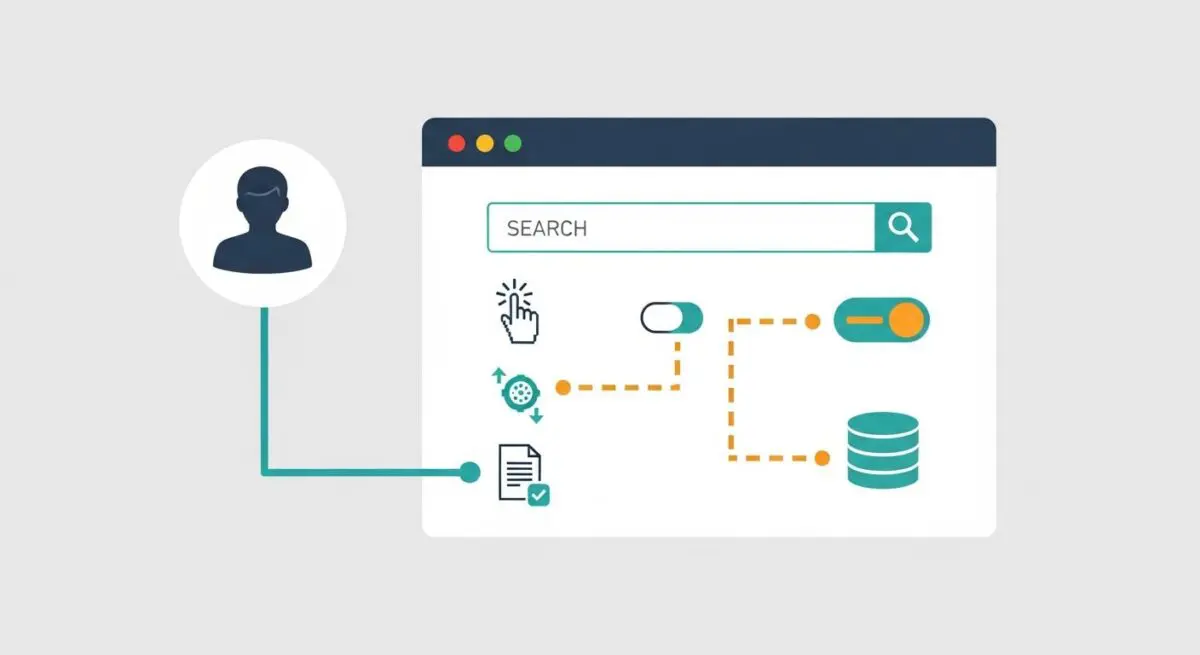
Event tracking is the technical process of capturing specific user interactions or system-level occurrences within a digital environment, such as a web application, mobile interface, or server-side process. Unlike traditional page-view tracking, event tracking focuses on discrete actions—clicks, form submissions, file downloads, or video plays—that are transmitted as data packets to an analytics engine or an automation middleware. At its core, it involves the deployment of listeners or hooks that intercept Document Object Model (DOM) changes or API requests to generate structured logs.
In the context of AI and automation, event tracking serves as the primary sensory input for autonomous systems. Each event typically carries a JSON payload containing metadata such as the event name, timestamp, user identifiers, and contextual properties. This structured data allows developers to build state-aware logic within stateless environments, ensuring that every automated response is triggered by a verified and specific user intent or system state change.
The Real-World Analogy
Imagine a sophisticated, automated warehouse. Standard tracking is like knowing a truck arrived at the loading dock. Event Tracking, however, is like having sensors on every individual shelf, conveyor belt, and robotic arm. It doesn’t just record that a shipment arrived; it logs exactly when a specific box was lifted, how much it weighed, which robot moved it, and the precise second it was placed on a delivery vehicle. This level of detail allows the warehouse manager to automate the entire supply chain, predicting bottlenecks before they happen and ensuring that every moving part is synchronized without manual intervention.
Why is Event Tracking Critical for Autonomous Workflows and AI Content Ops?
For professionals at Andres SEO Expert, event tracking is the backbone of stateless automation. In modern serverless architectures, workflows do not maintain a constant memory of user sessions. Instead, they rely on the event payload to provide all the necessary context for execution. When an event is tracked, it can trigger a webhook that initiates a sequence of AI-driven tasks, such as generating personalized content, updating a programmatic SEO database, or adjusting bidding strategies in real-time.
Furthermore, event tracking is essential for Generative Engine Optimization (GEO). By tracking how users interact with AI-generated summaries or search results, developers can create feedback loops. These loops feed interaction data back into LLMs (Large Language Models) to refine content relevance and authority. Without granular event data, AI content operations remain “blind,” unable to iterate based on actual performance metrics or user engagement signals.
Best Practices & Implementation
- Adopt a Standardized Naming Convention: Utilize an ‘Object-Action’ framework (e.g., ‘button_click’ or ‘form_submit’) to ensure consistency across different platforms and prevent data fragmentation.
- Implement Server-Side Tracking: Move beyond client-side scripts to server-side event logging to bypass ad-blockers and ensure 100% data accuracy for critical conversion events.
- Schema Validation: Use JSON schema validation at the ingestion point to ensure that all incoming event data meets the required technical specifications before it enters the automation pipeline.
- Minimize Payload Bloat: Only include essential metadata in the event properties to reduce latency and processing costs in high-volume autonomous workflows.
- Privacy-First Architecture: Integrate consent management parameters directly into the event tracking logic to ensure compliance with global data protection regulations like GDPR and CCPA.
Common Mistakes to Avoid
One frequent error is over-tracking, which creates excessive noise and increases the computational cost of data processing without providing actionable insights. Another critical mistake is failing to account for asynchronous event delivery, where events may arrive out of chronological order, potentially breaking logic in time-sensitive automated sequences. Finally, many organizations neglect cross-platform identity resolution, leading to duplicated or disconnected event streams that provide an incomplete picture of the user journey.
Conclusion
Event tracking is the fundamental data layer that transforms static analytics into dynamic, responsive automation. By mastering the engineering of event-driven data pipelines, organizations can build highly scalable, AI-powered workflows that react with precision to every digital interaction.