



Executive Summary
- Filter hooks enable the modification of data variables during the WordPress execution process without altering core source code.
- They are essential for maintaining the decoupling of themes and plugins from the WordPress core architecture.
- Optimization of filter callbacks is vital for minimizing PHP execution time and reducing Time to First Byte (TTFB).
What is Filter Hooks?
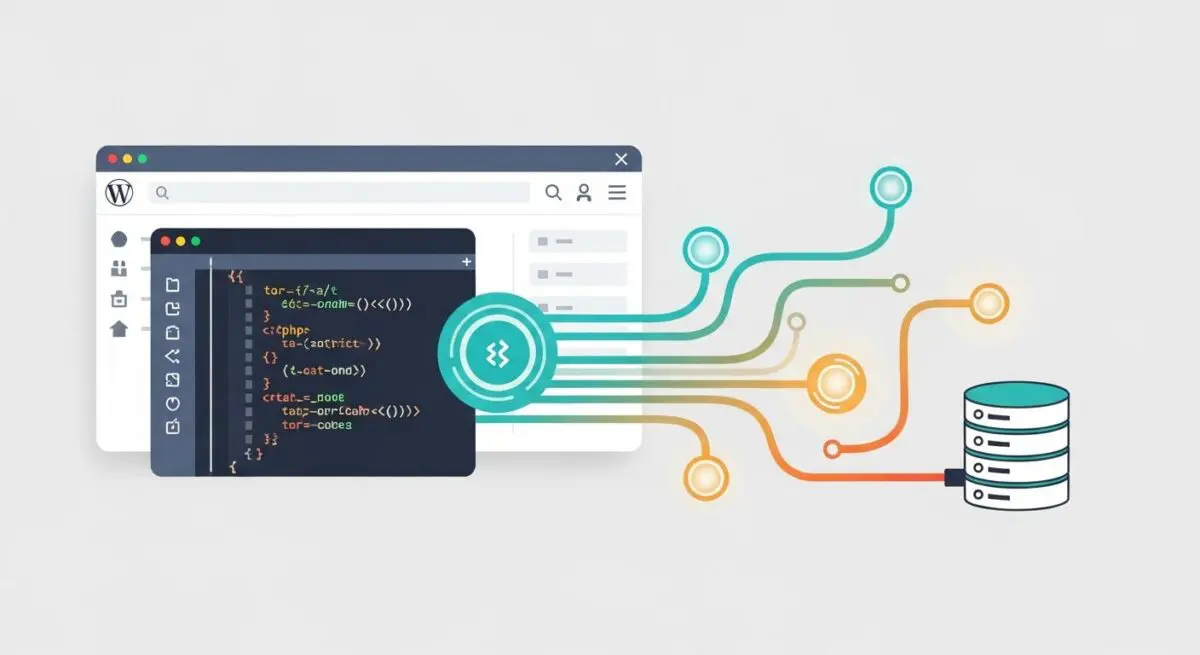
Filter hooks are a fundamental component of the WordPress Plugin API, designed to allow developers to intercept and modify data before it is saved to the database or rendered to the browser. Unlike action hooks, which are triggered at specific points in the execution lifecycle to perform a task, filter hooks are specifically intended to process a variable and return it. This mechanism utilizes the apply_filters() function to initiate the hook and the add_filter() function to attach custom callback functions to it.
In the context of WordPress architecture, filter hooks provide a non-destructive way to alter core functionality, theme output, and plugin data. This event-driven pattern ensures that the core software remains extensible while maintaining a clear separation of concerns. By passing data through a series of registered filters, WordPress allows for complex data manipulation, such as content sanitization, metadata formatting, and dynamic adjustment of query parameters, all while preserving the integrity of the original source code.
The Real-World Analogy
Consider a filter hook as a professional quality-control station on a high-speed manufacturing assembly line. As a product moves down the belt, a specialist (the filter) can intercept it, refine its components, or polish its surface before it reaches the final packaging stage. The assembly line never stops, but the product is enhanced based on specific criteria before the consumer ever sees it. The original blueprint remains unchanged, yet the final output is customized to meet specific standards.
How Filter Hooks Impacts Server Performance & Speed Engineering?
Filter hooks have a direct impact on server-side performance, specifically affecting the Time to First Byte (TTFB) and overall PHP memory consumption. Every time apply_filters() is called, the WordPress core must traverse the global $wp_filter array to identify and execute all registered callbacks for that specific hook. In enterprise-level environments with numerous active plugins, the cumulative overhead of these lookups and the subsequent execution of callback logic can lead to increased CPU cycles and latency.
From a speed engineering perspective, inefficiently coded filters—such as those performing heavy database queries or external API requests within the callback—can significantly delay the rendering process. Furthermore, because filters are often executed within The Loop or during critical initialization phases, any bottleneck introduced here is amplified across the entire page load. Optimizing filter execution through efficient PHP logic and caching mechanisms is essential for maintaining high-availability and high-performance WordPress deployments.
Best Practices & Implementation
- Always Return a Value: Every filter callback must return the modified or original variable to prevent breaking the data chain and causing fatal errors or missing content.
- Prioritize Execution Order: Utilize the priority parameter in add_filter() to ensure that data is processed in the correct sequence, especially when multiple plugins target the same hook.
- Minimize Logic Complexity: Keep filter callbacks lightweight by avoiding resource-intensive operations like nested loops or unoptimized database calls within the function.
- Use Type Hinting: Implement strict type hinting for callback parameters to ensure data integrity and prevent unexpected behavior during server-side processing.
Common Mistakes to Avoid
One frequent error is the introduction of side effects within a filter hook, such as updating database records or sending emails, which should strictly be handled by action hooks. Another common mistake is failing to account for the number of arguments passed to the callback, leading to PHP warnings. Finally, developers often neglect to remove unnecessary filters in specific contexts, resulting in redundant processing that degrades server performance.
Conclusion
Filter hooks are the backbone of WordPress extensibility, allowing for sophisticated data manipulation without compromising core stability. Proper implementation and optimization of these hooks are critical for achieving superior server performance and scalable CMS architecture.