Executive Summary
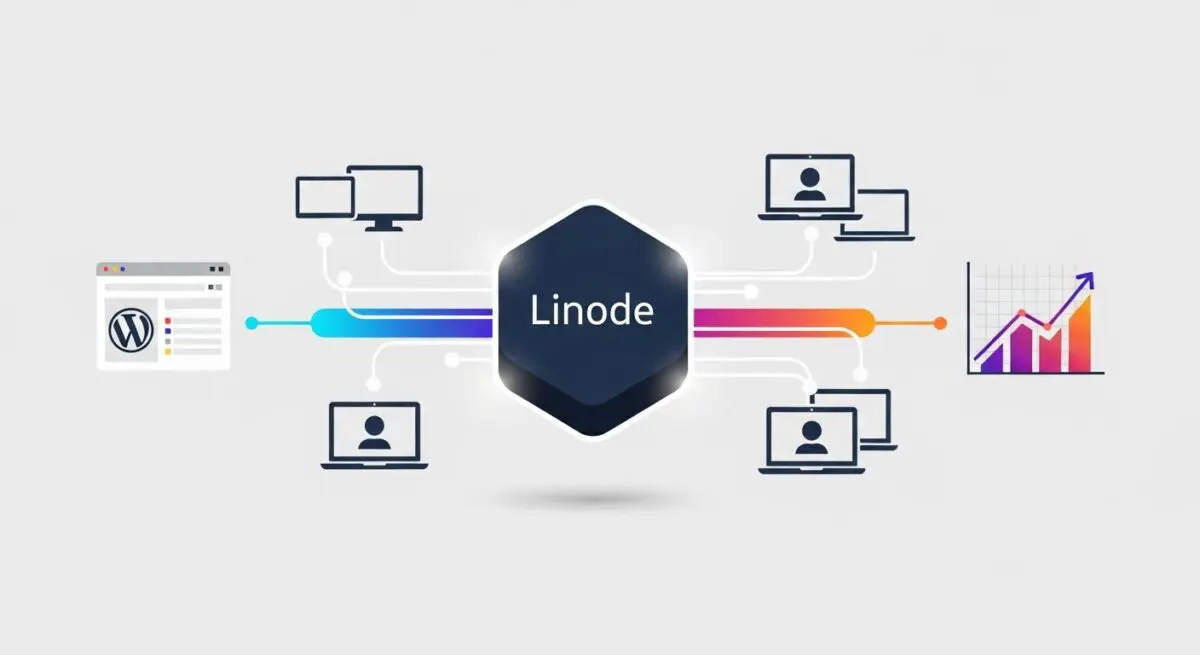
- Linode provides high-performance Infrastructure-as-a-Service (IaaS) solutions, offering granular control over Linux-based virtual private servers for WordPress deployments.
- The platform enables advanced server-side optimizations, including custom LEMP stack configurations and NVMe storage integration for reduced TTFB.
- Integration with Akamai’s global edge network enhances content delivery and security through advanced WAF and DDoS mitigation layers.
What is Linode?
Linode is a pioneer in the Infrastructure-as-a-Service (IaaS) sector, providing high-performance cloud hosting solutions through Virtual Private Servers (VPS). Now a part of Akamai, Linode offers developers and system administrators raw access to Linux-based environments, allowing for the deployment of highly customized WordPress architectures. Unlike shared hosting, Linode provides dedicated slices of physical hardware, ensuring that system resources such as CPU cycles, RAM, and NVMe storage are allocated specifically to the user’s instance.
For WordPress professionals, Linode serves as a foundational layer for building scalable, high-availability environments. It supports a wide array of distributions, including Ubuntu, Debian, and CentOS, enabling the implementation of optimized LEMP (Linux, Nginx, MySQL, PHP) stacks. This level of control is critical for enterprise-level WordPress sites that require specific server-side modules, custom caching layers like Redis or Memcached, and fine-tuned database configurations that standard managed hosting providers may restrict.
The Real-World Analogy
Imagine you are a professional chef. Using a standard managed hosting provider is like renting a station in a shared commercial kitchen where the equipment, layout, and even the temperature are pre-set by the facility manager. While convenient, you cannot change the stove’s BTU output or install a specialized wood-fired oven. Linode, by contrast, is like leasing a completely empty, high-end industrial space with premium utility hookups. You have the total freedom to install exactly the appliances you need, arrange the workflow for maximum efficiency, and scale the operation by knocking down walls as your restaurant grows. You are responsible for the maintenance, but the performance potential is limited only by your engineering skill.
How Linode Impacts Server Performance & Speed Engineering?
Linode significantly impacts WordPress performance by eliminating the noisy neighbor effect common in shared environments. By utilizing dedicated CPU instances and high-speed NVMe storage, Linode ensures that disk I/O operations—critical for WordPress database queries—are executed with minimal latency. This directly translates to a lower Time to First Byte (TTFB) and faster overall page load times. Furthermore, the ability to configure Nginx as a reverse proxy and implement server-level fastcgi_cache allows WordPress to serve static HTML snapshots of dynamic pages, drastically reducing PHP processing overhead.
The integration with Akamai’s global backbone further optimizes speed engineering through edge computing capabilities. By deploying Linode instances in data centers geographically proximal to the target audience, latency is minimized. Additionally, the platform’s API-driven infrastructure allows for automated scaling, ensuring that during traffic spikes, the WordPress environment can dynamically allocate more compute resources to maintain stable render-blocking resource optimization and fluid user experiences.
Best Practices & Implementation
- Implement Object Caching: Deploy a dedicated Redis or Memcached instance on the Linode server to store database query results, reducing the load on the MySQL/MariaDB engine.
- Hardened Security Configuration: Utilize Linode’s Cloud Firewall in conjunction with server-side tools like Fail2Ban and UFW to restrict access to essential ports only.
- Optimize PHP-FPM: Fine-tune the PHP-FPM process manager settings (pm.max_children, pm.start_servers) based on the specific RAM and CPU cores available on your Linode plan.
- Automated Backups and Snapshots: Enable Linode’s automated backup service and take manual snapshots before performing major WordPress core or database schema updates.
Common Mistakes to Avoid
One frequent error is under-provisioning resources, particularly RAM, which can lead to the MySQL process being terminated by the Linux OOM (Out of Memory) killer during high traffic. Another common mistake is neglecting regular kernel and OS-level security patches; since Linode is unmanaged, the responsibility for server hardening falls entirely on the administrator. Finally, many users fail to utilize a private network for database-to-web-server communication in multi-node setups, which can expose sensitive data to the public internet.
Conclusion
Linode offers the architectural flexibility and raw performance necessary for high-scale WordPress deployments. By leveraging its IaaS capabilities, developers can build optimized, secure, and highly responsive hosting environments tailored to specific enterprise needs.