



Executive Summary
- Mitigates deliverability risks by systematically removing invalid, inactive, and malicious email addresses from the MarTech ecosystem.
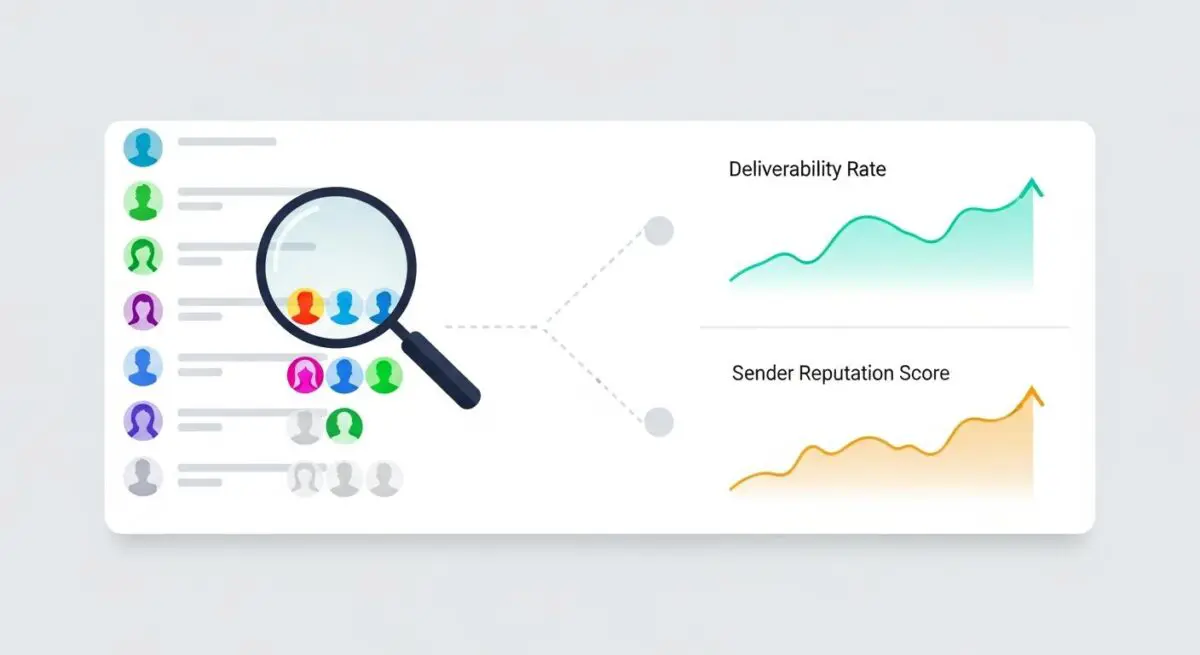
- Enhances sender reputation and domain authority by optimizing engagement signals and reducing bounce rates.
- Improves data attribution accuracy by ensuring that performance metrics reflect genuine user interactions rather than bot activity or dead accounts.
What is List Hygiene?
List hygiene is the rigorous technical process of auditing, cleaning, and maintaining an email database to ensure that all records are accurate, active, and compliant with deliverability standards. In the context of a modern MarTech stack, list hygiene is not merely a housekeeping task but a critical data integrity protocol. It involves the identification and removal of hard bounces, spam traps, disposable email addresses, and unengaged subscribers who negatively impact a sender’s reputation. By employing automated validation tools and programmatic workflows, organizations can ensure that their marketing communications reach the intended recipients’ primary inboxes rather than being diverted to spam folders or blocked by Internet Service Providers (ISPs).
From a technical perspective, list hygiene utilizes SMTP (Simple Mail Transfer Protocol) handshakes and syntax validation to verify the existence of a mailbox without sending an actual message. This proactive approach prevents the accumulation of ‘dirty data’ within Customer Relationship Management (CRM) systems and Marketing Automation Platforms (MAPs). Furthermore, list hygiene is intrinsically linked to regulatory compliance, such as GDPR and CCPA, as it ensures that consent records are up-to-date and that users who have opted out or become inactive are systematically purged from active processing pipelines. This maintains the health of the data lifecycle and protects the enterprise from legal and reputational liabilities.
The Real-World Analogy
Consider a high-end, invitation-only professional networking event hosted at a venue with strictly limited capacity. To ensure the event’s success, the organizer must maintain a guest list that consists only of active, interested, and reachable professionals. If the organizer continues to send invitations to individuals who have moved, retired, or changed industries, the venue remains half-empty, and the ‘prestige’ of the event diminishes. Worse, if the invitations are sent to incorrect addresses, the postal service may flag the organizer as a source of junk mail, eventually refusing to deliver any invitations at all. List hygiene is the process of calling every person on that list once a year to verify their current status, ensuring that every seat in the venue is filled by a high-value participant who actually wants to be there, thereby maximizing the event’s return on investment.
How List Hygiene Impacts Marketing ROI & Data Attribution?
The impact of list hygiene on Marketing ROI is profound and measurable. When a database is cluttered with invalid or unengaged addresses, the core metrics used to evaluate campaign success—such as Open Rate (OR), Click-Through Rate (CTR), and Conversion Rate (CR)—become fundamentally skewed. For instance, if 20% of a list consists of inactive accounts, a reported 2% conversion rate is actually a 2.5% conversion rate among reachable users. This discrepancy leads to flawed data attribution and suboptimal budget allocation, as marketers may undervalue the effectiveness of their content due to poor data quality. By implementing strict hygiene, the denominator in these equations is corrected, providing a transparent view of campaign performance.
Furthermore, list hygiene directly influences the Customer Acquisition Cost (CAC) and Lifetime Value (LTV) models. High bounce rates and low engagement signals trigger ISP filters, which can lead to domain blacklisting. Once a domain’s sender reputation is compromised, even the most high-intent prospects may never see the brand’s communications. This ‘deliverability tax’ increases CAC by requiring more spend on alternative channels to compensate for the lost reach in email. Conversely, a clean list ensures high deliverability, lowering the cost per touchpoint and increasing the LTV by maintaining a consistent, high-quality connection with the customer base over time. In the era of AI-driven marketing, where algorithms optimize based on engagement data, clean lists provide the high-fidelity signals necessary for machine learning models to function effectively.
Strategic Implementation & Best Practices
- Implement Real-Time API Validation: Integrate email verification APIs at the point of data entry (e.g., sign-up forms) to prevent syntax errors, disposable emails, and non-existent domains from entering the CRM in real-time.
- Establish a Sunset Policy: Define a technical workflow that automatically segments and eventually removes subscribers who have not engaged with any communication within a specific timeframe (e.g., 90 to 180 days), protecting the sender score from the ‘graymail’ effect.
- Automated Bounce Management: Configure the Marketing Automation Platform to immediately suppress or delete addresses that return a ‘hard bounce’ (5XX error codes) and to monitor ‘soft bounces’ (4XX error codes) for persistent delivery failures.
- Utilize Double Opt-In (DOI): Employ a DOI mechanism to ensure that every email address added to the database is not only valid but also owned by a user who has explicitly confirmed their intent to receive communications, significantly reducing the risk of spam complaints.
Common Pitfalls & Strategic Mistakes
One of the most frequent errors in enterprise marketing is the ‘Vanity Metric Trap,’ where stakeholders resist list cleaning because they fear a reduction in total subscriber count. This focus on quantity over quality ignores the technical reality that a smaller, highly engaged list outperforms a larger, stagnant one in every meaningful KPI. Another common mistake is the reliance on manual, periodic cleaning rather than automated, continuous hygiene. Data decays at an average rate of 22.5% per year; waiting for an annual cleanup allows significant deliverability damage to occur in the interim. Finally, many organizations fail to distinguish between different types of bounces, often treating temporary server issues with the same finality as permanent address failures, which can lead to the unnecessary loss of viable leads.
Conclusion
List hygiene is a foundational technical requirement for any data-driven marketing architecture, ensuring that deliverability, attribution, and ROI are maximized through the elimination of data decay. By prioritizing list integrity over sheer volume, organizations protect their domain reputation and ensure their MarTech stack operates at peak efficiency.