




Executive Summary
- The WordPress REST API facilitates decoupled architecture by providing a standardized JSON interface for external applications to interact with the WordPress core.
- It utilizes standard HTTP methods—GET, POST, PUT, and DELETE—to manage resources, enabling WordPress to function as a headless CMS.
- Optimizing API performance requires advanced server-side caching, granular endpoint management, and robust authentication protocols like JWT or OAuth2.
What is WordPress REST API?
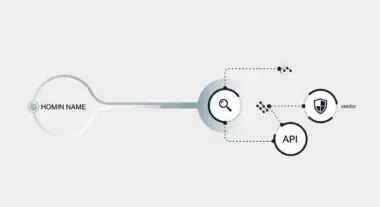
The WordPress REST API is a collection of HTTP endpoints that allow developers to interact with a WordPress site’s data remotely. By utilizing JavaScript Object Notation (JSON) as the primary data exchange format, the API breaks the traditional monolithic structure of WordPress, where the front-end and back-end are tightly coupled. This interface allows for the retrieval and manipulation of content, including posts, pages, taxonomies, and user metadata, through standard HTTP request methods. Architecturally, it is built upon the WP_REST_Server class, which handles the routing, authentication, and response generation for every request sent to the /wp-json/ namespace.
From an engineering perspective, the WordPress REST API represents a shift toward a service-oriented architecture. It provides a schema-driven environment where each endpoint defines the structure of its data, ensuring consistency across different platforms. This allows WordPress to serve as a centralized content repository for mobile applications, external web frameworks like React or Vue.js, and even Internet of Things (IoT) devices. The API is fully extensible, allowing developers to register custom routes and fields via the register_rest_route() and register_rest_field() functions, thereby tailoring the data output to specific application requirements while maintaining core security and validation standards.
The Real-World Analogy
To understand the WordPress REST API, imagine a high-end restaurant with a strictly guarded kitchen. In a traditional WordPress setup, the only way to get a meal is to sit in the dining room and accept the menu exactly as the chef has designed it. The kitchen (the database) and the dining room (the theme) are one single establishment. However, the WordPress REST API acts like a sophisticated delivery and catering interface. It allows external entities—like a food delivery app, a private party planner, or a corporate cafeteria—to send a specific order (an HTTP request) to the kitchen. The kitchen then packages the food in standardized, easy-to-transport containers (JSON objects) and sends it out. The external entity can then plate that food however they want, whether it is on a mobile phone screen, a digital billboard, or a completely different website. The kitchen remains the source of truth, but the service is no longer confined to the dining room.
How WordPress REST API Impacts Server Performance & Speed Engineering?
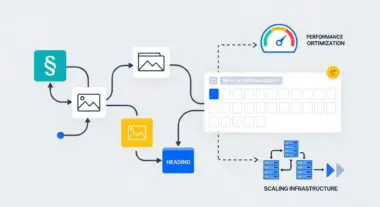
The implementation of the WordPress REST API introduces unique challenges and opportunities for server-side optimization. Unlike standard page loads that can be cached as static HTML, REST API requests often require dynamic processing. Each request typically triggers a full WordPress bootstrap process, which includes loading the core, active plugins, and the theme. This can lead to significant CPU and memory overhead, especially for high-frequency requests or complex queries. To mitigate this, enterprise-level hosting environments must implement object caching (such as Redis or Memcached) to store the results of expensive database queries, reducing the load on the MySQL server.
Furthermore, the REST API impacts Time to First Byte (TTFB) because the server must parse the request, authenticate the user, and serialize the data into JSON before sending the response. Speed engineering in this context involves leveraging the _fields parameter to limit the data returned, thereby reducing the payload size and the time spent on data serialization. Additionally, implementing a dedicated caching layer at the edge (using a CDN or Nginx FastCGI cache) for GET requests can drastically improve response times for public endpoints. By offloading the delivery of static JSON data to the edge, the origin server is protected from the resource exhaustion often associated with high-traffic decoupled applications.
Best Practices & Implementation
- Implement Granular Data Filtering: Always use the
_fieldsglobal parameter in your API requests to retrieve only the specific data points required by your application. This reduces the processing time for the server to build the JSON object and minimizes the bandwidth consumed during transmission. - Utilize Custom Endpoints for Complex Queries: Instead of making multiple calls to default endpoints and joining data on the client side, register custom REST routes that perform optimized SQL queries. This minimizes the number of HTTP requests and shifts the computational logic to the server where it can be more efficiently managed.
- Enforce Strict Authentication and Permission Callbacks: Every custom route should include a
permission_callbackto ensure that only authorized users or applications can access or modify data. Use modern authentication methods like JSON Web Tokens (JWT) or Application Passwords rather than passing sensitive credentials in plain text. - Leverage Transients for Expensive API Responses: For data that does not change frequently, use the WordPress Transients API to cache the processed JSON response. This prevents the server from re-calculating complex data sets on every request, significantly lowering the execution time for subsequent calls.
Common Mistakes to Avoid
One frequent error is leaving the REST API entirely open to the public without assessing the security implications. While the API is public by default, exposing user lists or sensitive site metadata can facilitate brute-force attacks or data scraping. Developers should use filters like rest_authentication_errors to restrict access to specific endpoints for non-authenticated users. Another common mistake is neglecting to disable unused default endpoints. If an application only requires access to ‘posts’, leaving ‘users’, ‘settings’, and ‘comments’ endpoints active creates unnecessary attack surfaces and potential performance bottlenecks.
Conclusion
The WordPress REST API is a foundational component for modern, scalable web architecture, enabling WordPress to operate as a powerful headless CMS. By mastering its routing, security, and caching mechanisms, developers can build high-performance, decoupled applications that leverage the robust content management capabilities of WordPress while maintaining enterprise-grade speed and security.