




Key Points
- Music-Asset Tokenization is transforming passive audio consumption into a speculative, yield-bearing asset class, effectively bridging the historical Capital Gap for independent creators.
- Layer 2 blockchain protocols and Zero-Knowledge Proofs (ZKPs) are powering sub-second Programmable Royalties, enabling non-dilutive credit lines without exposing sensitive contract terms.
- The integration of Algorithmic A&R and cross-platform identity layers is paving the way for Artist-Specific Micro-Bonds and real-time, on-chain Music Index Funds.
Table of Contents
The Financial Tech Friction: Liquidity in the Creator Economy
The global financial architecture is undergoing a seismic shift, moving away from static assets and toward dynamic, programmable intellectual property. According to a May 2026 report from Goldman Sachs, the total addressable market for fractionalized music rights has expanded to $14.8 billion, representing a 210% increase since the widespread adoption of streaming-collateralized lending in 2024. This explosion of capital is not an anomaly, but rather the direct result of solving one of the most archaic bottlenecks in modern entertainment. For decades, the music industry has operated on a delayed-gratification financial model, stifling innovation and starving creators of immediate liquidity.
Historically, the primary friction in the creator economy has been the dreaded Capital Gap. Independent artists and even established labels routinely waited anywhere from six to eighteen months for royalty distributions to clear through labyrinthine legacy banking systems. This latency trapped billions of dollars in transit, rendering the capital completely illiquid and useless for immediate reinvestment or growth. Today, the ultimate FinTech stack for a music lover has evolved to eradicate this latency entirely.
Enter the era of Music-Asset Tokenization & Streaming-Collateralized Finance (Music-DeFi). This core financial technology entity represents a fundamental rewiring of how audio intellectual property is valued, traded, and leveraged. By migrating streaming data onto decentralized ledgers, the industry is bypassing traditional clearinghouses and creating a frictionless environment for capital deployment. It is no longer just about listening to a song; it is about participating in the micro-economy of that specific audio asset.
This technological leap effectively turns a passive consumption expense into a speculative or yield-bearing asset class. Fans who previously had no way to participate in the financial upside of the music they helped trend are now becoming active liquidity providers. By leveraging the current FinTech stack, the historical settlement latency is reduced to sub-one-second transactions, transforming the very nature of digital ownership and creator financing.
Market Intelligence & Capital Flow
Market Intelligence & Data
On-Chain Royalty Volume
Annualized music royalty payments processed via decentralized smart contracts reached $5.1 billion in 2025, per a MIDiA Research report.
Active Music Investors
The number of unique retail wallets holding fractional music shares surpassed 1.4 million in early 2026, according to Dune Analytics.
Payment Latency Reduction
A 2026 Deloitte FinTech study confirms that blockchain-based royalty stacks have reduced payment wait times for independent artists by 94% compared to 2023 legacy systems.
VC Investment Shift
Data from PitchBook shows that 38% of all ‘Creator Economy’ venture capital is now specifically targeting ‘Fin-Music’ infrastructure startups.
The data presented above illustrates a massive reallocation of institutional and retail capital toward decentralized music infrastructure. Disruption is currently being led by platforms like Opulous and Royal, which have successfully evolved into full-service decentralized investment banks for modern creators. These platforms are not merely selling digital collectibles; they are underwriting complex financial instruments backed by verifiable streaming data.
Smart money from top-tier venture firms like Andreessen Horowitz, alongside specialized music funds like Hipgnosis, is rapidly flowing into Liquidity Pools for IP. In these decentralized pools, retail fans provide upfront capital to artists in exchange for a guaranteed percentage of future on-chain royalties. This democratizes the investment landscape, allowing retail participants to capture yield that was historically reserved for elite institutional players and major record labels.
The threat to legacy tech monopolies is palpable, forcing traditional giants to adapt or face irrelevance. Platforms like Spotify are responding aggressively by testing integrated Wallet-to-Ear features directly within their user interfaces. This innovation allows fans to seamlessly purchase equity in emerging artists without ever leaving the playback screen, merging the acts of consumption and investment into a single, fluid user experience.
This convergence of streaming and decentralized finance is creating a highly liquid secondary market for music rights. As more retail wallets actively hold fractional music shares, the velocity of money within the creator economy accelerates exponentially. The result is a robust, self-sustaining financial ecosystem where capital flows instantly to where it is most valued, driven entirely by real-time listener engagement.
The FinTech Deep Dive: Programmable Royalties & ZKPs
The Yield-on-Listen Ecosystem
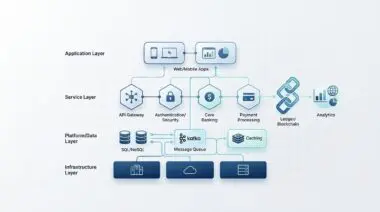
In 2026, the music FinTech stack has officially transitioned from simple, centralized streaming to a highly sophisticated Yield-on-Listen ecosystem. This landscape is powered by advanced, AI-driven royalty forecasting engines that provide real-time valuation of intellectual property. These algorithmic engines ingest billions of data points, from social media velocity to historical streaming curves, to accurately predict the future cash flow of a single audio track.
Cutting-edge financial stacks now utilize Layer 2 blockchain protocols to execute Programmable Royalties. Through these high-throughput networks, revenue splits are calculated and distributed at the micro-cent level the exact moment a song is played. This eliminates the need for manual auditing, reducing administrative overhead and ensuring that every stakeholder, from the producer to the fractional retail investor, is compensated instantly.
The true architectural marvel of this stack is the integration of Zero-Knowledge Proofs within the lending protocols. ZKPs allow artists to cryptographically prove their streaming health and revenue consistency to potential lenders without exposing sensitive underlying contract details. This cryptographic privacy enables a new class of instant, non-dilutive credit lines, giving creators the leverage to fund global tours or marketing campaigns without surrendering their master rights.
Collateralizing Streams: The New Asset Class
As the Yield-on-Listen ecosystem matures, the concept of collateralizing digital streams has moved from a theoretical whitepaper to a dominant financial primitive. Data from Chainalysis reveals that in Q1 2026, over 22% of all decentralized finance (DeFi) micro-loans were secured using future royalty smart contracts as the primary collateral, surpassing traditional digital assets in stability metrics. This is a watershed moment, proving that predictable audio consumption is a highly reliable hedge against broader market volatility.
By treating future streams as collateral, artists can bypass predatory lending rates typically associated with unsecured personal loans. The smart contracts act as an automated escrow, redirecting a portion of incoming streaming revenue directly to the lending protocol until the micro-loan is fully amortized. If an artist’s track goes viral, the increased streaming volume automatically accelerates the loan repayment, creating a perfectly elastic credit facility.
From a regulatory standpoint, global compliance frameworks are rapidly adapting to classify these fractionalized streams as utility-backed digital commodities rather than traditional securities. This critical distinction streamlines Know Your Customer (KYC) and Anti-Money Laundering (AML) processes for decentralized investment banks, ensuring institutional-grade security without stifling the rapid pace of on-chain innovation.
The stability of this new asset class is attracting a sophisticated breed of algorithmic traders and quantitative analysts. These market participants deploy automated trading bots that arbitrage fractional music shares across different decentralized exchanges, seeking inefficiencies in the pricing of emerging artists. This institutional-level trading activity provides massive liquidity to the ecosystem, ensuring that fans and creators can enter or exit their positions with minimal slippage.
The Strategic Action Plan
Strategic Trajectory
- Capitalize on the emergence of Artist-Specific Micro-Bonds to diversify creator financing.
- Integrate ‘Algorithmic A&R’ credit scoring to quantify artist potential and risk.
- Architect cross-platform identity layers to unify fan data across fragmented ecosystems.
- Deploy fan ‘reputation scores’ to reward early discovery with priority access to high-yield royalty drops.
- Engineer the first major ‘Music Index Fund’ for traditional exchanges with real-time on-chain settlement via streaming data.
The next 24 months will be defined by hyper-personalization and the financialization of fandom. Founders and financial architects must prepare for the mainstream emergence of Artist-Specific Micro-Bonds. These instruments will allow creators to issue debt directly to their most loyal listeners, bypassing traditional venture capital entirely while offering fixed-income yields backed by algorithmic royalty projections.
To accurately price these micro-bonds, institutions must integrate Algorithmic A&R credit scoring systems. These proprietary models will replace human talent scouts, using machine learning to quantify an artist’s viral potential, audience retention rate, and default risk. By turning cultural momentum into a measurable credit score, FinTech platforms can confidently underwrite larger, more complex financial products for independent creators.
Furthermore, visionary developers are already moving toward building cross-platform identity layers. These decentralized identity protocols will unify a fan’s listening data, concert attendance, and merchandise purchases across highly fragmented ecosystems. This unified data profile will generate a verifiable reputation score, transforming a fan’s historical loyalty into tangible financial leverage.
This reputation score will act as a VIP pass in the decentralized economy, granting top-tier fans priority access to highly anticipated, high-yield royalty drops. Finally, we expect to see the launch of the first major Music Index Fund that trades on traditional equities exchanges but settles entirely on-chain. This hybrid financial vehicle will allow conservative institutional investors to gain broad exposure to the global streaming economy, utilizing real-time data to automatically rebalance the portfolio based on shifting cultural trends.
Conclusion: The Future of Fin-Music
The convergence of decentralized finance and audio intellectual property is no longer a fringe experiment; it is the foundational architecture of the next-generation creator economy. By tokenizing music assets and collateralizing streaming data, we are witnessing the birth of a hyper-liquid, globally accessible market that rewards both artistic innovation and early-adopter intuition. The ultimate FinTech stack for a music lover is one that seamlessly blends the emotional resonance of discovering a new track with the financial upside of early-stage venture capital.
As Layer 2 protocols become faster and Zero-Knowledge Proofs become more robust, the friction between creation and compensation will drop to absolute zero. Institutions, founders, and retail investors who fail to recognize the transition from passive streaming to active yield generation will be left holding illiquid, obsolete assets. The smart money is already building the infrastructure for Programmable Royalties, and the window to capture early market share is closing rapidly.
Navigating the intersection of financial technology, institutional capital, and market psychology requires a sharp strategy. To future-proof your FinTech architecture and scale with precision, connect with Andres at Andres SEO Expert.