
Key Points
- Culture-as-a-Service (CaaS) Dominance: AI-driven ecosystems are replacing traditional, generic corporate gifting with hyper-personalized, autonomous appreciation models.
- Predictive Burnout Prevention: Generative AI agents now analyze internal social signals to trigger recognition events before employees experience fatigue, drastically improving retention.
- Liquid Rewards Portfolios: The future of employee recognition lies in digital assets and carbon credits, turning corporate appreciation into a tangible wealth-building tool.
Table of Contents
The Core Friction and the Recognition Gap
According to a 2026 Enterprise Intelligence report by Deloitte, corporations utilizing AI-integrated recognition systems saw a 42% higher employee Net Promoter Score (eNPS) compared to those using traditional tenure-based rewards.
This data reveals a fundamental shift in human capital management. The era of bulk-shipped, generic merchandise is officially over.
Today’s workforce demands hyper-personalized appreciation, birthing the era of AI-Driven Corporate Gifting & Employee Recognition Ecosystems.
Historically, global HR departments suffered from severe logistical fatigue. Managing rewards for a distributed, international workforce meant navigating a labyrinth of tax jurisdictions and shipping zones.
This created a massive recognition gap where the intent to appreciate was bottlenecked by administrative friction. The manual labor required to execute a global gifting campaign often outweighed the psychological benefit to the employee.
Now, disruptive innovation is automating this entire lifecycle. Smart money is placing heavy bets on platforms that eliminate friction and transform soft HR metrics into hard operational strategies.
Market Intelligence and Smart Capital
Market Intelligence & Data
Total Addressable Market
The global corporate gifting market is projected to reach this valuation by the end of 2026 as organizations prioritize retention over recruitment, according to data from Statista.
AI Adoption Rate
A 2026 SHRM study indicates that nearly 9 out of 10 Fortune 500 companies now use AI-driven sentiment analysis to trigger employee recognition events.
Return on Investment
Research from the Harvard Business Review Analytics Services shows that for every dollar spent on AI-personalized gifting, firms see over four dollars in productivity gains via reduced turnover.
VC Inflow
According to Crunchbase, venture capital investment into ‘Recognition Tech’ startups reached record highs in the first quarter of 2026, driven by advancements in Large Behavior Models (LBMs).
The numbers above paint a picture of a sector undergoing rapid financialization. The global corporate gifting market is projected to reach this valuation by the end of 2026, driven largely by organizations prioritizing retention over recruitment.
Smart money is moving aggressively into this space. Venture capital firms like Andreessen Horowitz are funding startups focused on impact gifting and digital twin rewards for the industrial metaverse.
This capital influx signals that employee recognition is no longer viewed as a discretionary expense. It is a critical infrastructure requirement designed to maximize human output and institutional loyalty.
When impact gifting matches a reward to a social cause the recipient cares about, the psychological bond between employer and employee deepens exponentially.
The Strategic Deep Dive: Culture-as-a-Service
Market dominance is currently held by platforms that have evolved into Culture-as-a-Service providers. Companies like Alyce and Giftbit are now competing directly with legacy tech giants.
Microsoft, for instance, recently integrated AI gifting directly into the Viva employee experience suite. This turns daily digital workflows into continuous recognition opportunities.
The integration of gifting into enterprise software means appreciation is no longer siloed in HR departments. It becomes an ambient feature of the corporate ecosystem.
Autonomous Appreciation and Burnout Prevention
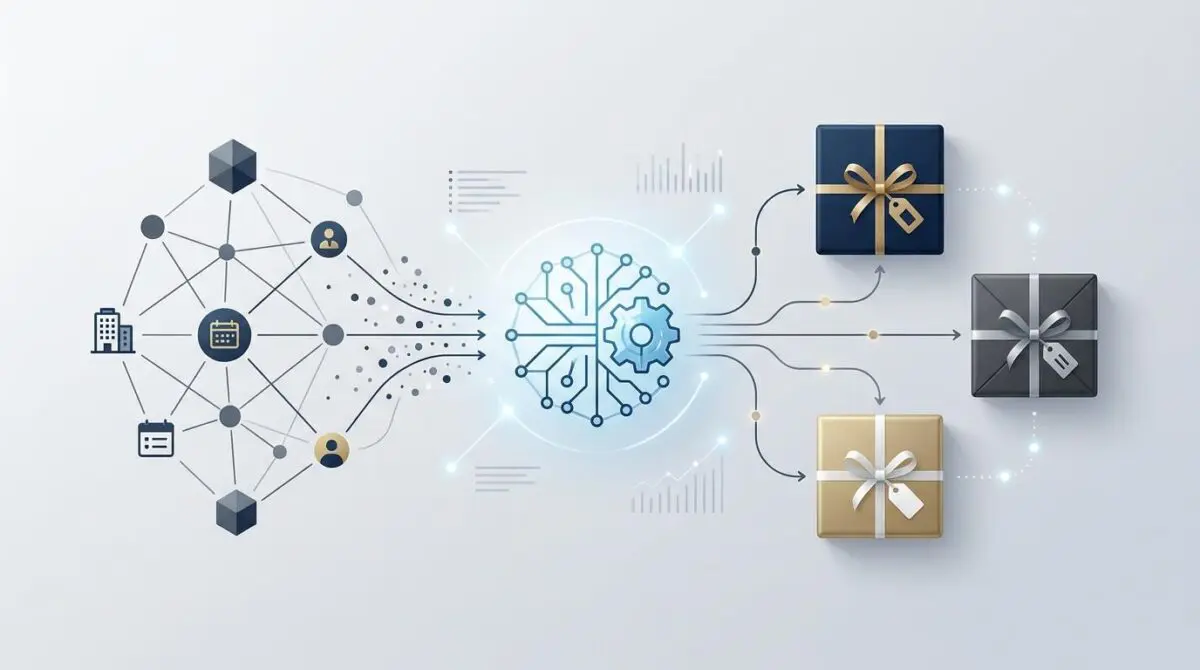
The killer strategy in 2026 involves Generative AI agents that scrape internal social signals. These models analyze Slack kudos, project milestones, and professional anniversaries with zero human oversight.
They then curate gift options tailored to an individual’s specific hobbies and psychographics. This ensures that a software engineer who loves artisanal coffee does not receive the same generic corporate mug as a sales executive who prefers vintage wines.
Real-world adoption features autonomous appreciation where AI-enabled platforms like Snappy and Sendoso utilize predictive analytics. These systems suggest the exact moment an employee is at risk of burnout.
This triggers a recognition event before the employee even feels the fatigue. By intervening at the precise moment of psychological friction, companies can salvage productivity and morale.
Data from Gartner reveals that by early 2026, 35% of Global 2000 companies have implemented ‘Autonomous Budgeting Agents’ that dynamically reallocate unused department travel funds into real-time employee gifting micro-budgets based on weekly performance surges.
This dynamic capital allocation ensures that high performers are rewarded immediately, rather than waiting for an annual review cycle. It creates a real-time feedback loop that supercharges motivation.
Solving the Global Logistics Friction
Modern AI solutions automate cross-border compliance, currency conversion, and localized sourcing. This reduces the administrative overhead of recognition programs by up to 70%.
Simultaneously, it ensures gifts are culturally relevant and tax-compliant in real-time across 50+ jurisdictions. HR leaders no longer need to be international tax experts to reward their global teams.
By eliminating these operational bottlenecks, organizations unlock massive productivity gains via reduced turnover. The focus shifts entirely from managing logistics to cultivating a high-performance culture.
The AI handles the supply chain, the currency exchange, and the cultural nuance. The executive simply approves the budget and watches the employee engagement metrics climb.
The Executive Action Plan: Future Trajectory
Strategic Trajectory
- Transition to Predictive Neuro-Recognition systems to anticipate employee engagement needs.
- Integrate workplace wellness data to deliver rewards that prioritize neurological recovery and mental well-being.
- Implement AI-managed Liquid Rewards portfolios consisting of digital assets, experiences, and carbon credits.
- Enable flexible asset swapping to allow employees to customize and appreciate their reward value.
- Transform corporate recognition into a genuine wealth-building tool for the modern workforce.
The next evolution in this space is Predictive Neuro-Recognition. Founders are moving toward systems that integrate securely with workplace wellness data.
These platforms offer rewards that actively optimize for neurological recovery and mental well-being. Imagine an AI detecting high cognitive load and automatically sending a premium meditation subscription or a weekend getaway voucher.
We are also witnessing the rapid rise of liquid rewards. In this model, AI manages a portfolio of digital assets for each employee.
Employees can swap carbon credits, digital experiences, or tokenized assets seamlessly. This flexibility acknowledges that value is subjective and constantly shifting based on personal life circumstances.
This turns corporate recognition into a genuine wealth-building tool. It fundamentally rewrites the psychological contract between employer and employee, moving from transactional labor to shared prosperity.
The Final Verdict on AI Recognition
AI-driven ecosystems are dismantling the archaic, spreadsheet-driven models of corporate gifting. They replace administrative friction with fluid, hyper-personalized appreciation.
For enterprise leaders, adopting these intelligent tools is no longer optional. It is a critical infrastructure requirement for retaining top-tier talent in a hyper-competitive global market.
Those who cling to tenure-based pins and generic gift cards will watch their top performers migrate to organizations that understand the true value of autonomous, predictive recognition.
Navigating the intersection of technology, capital, and market psychology requires a sharp strategy. To future-proof your business architecture and scale with precision, connect with Andres at Andres SEO Expert.