



Key Points
- Contextual Continuity: Transition from static keywords to multi-turn conversational journeys by maintaining entity coherence across your content graph.
- Semantic Chunking: Refactor long-form content into atomic, 200-word blocks that directly answer and anticipate next-token predictions in RAG systems.
- Conversational Schema: Deploy advanced JSON-LD structures with suggestedAnswer properties to pre-digest data for Large Language Models.
Table of Contents
The AI Search Context
By May 2026, over 52% of all organic search traffic originates from conversational prompts rather than traditional keyword strings. (Source: Gartner Search Evolution Report 2026)
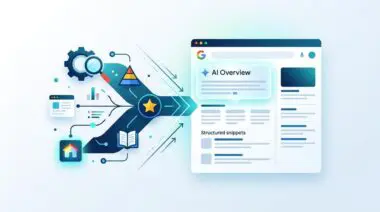
Search intent has fundamentally transitioned from static keyword-based taxonomies to dynamic Conversational Search Intent (CSI). In the modern ecosystem, Large Language Models and RAG-driven engines like Google AI Overviews no longer just match queries to documents. They actively interpret the latent semantic trajectory of a user’s multi-turn dialogue.
This means intent is now fluid. It evolves with every follow-up prompt, requiring content to be structured as a conversational progression rather than an isolated information node. Content that fails to anticipate the next logical question is swiftly excluded from the Retrieval-Augmented Generation context window.
For brands and publishers, this shift necessitates a decisive move away from basic Answer Engine Optimization toward Contextual Continuity. Sites providing structured, modular data that an LLM can easily synthesize into a multi-step conversational journey are seeing drastically higher citation rates in generative responses.
Core Architecture & Pillars
Core Architecture & Pillars
Latent Contextual Resolution
LLMs use transformer-based attention mechanisms to resolve pronoun references and maintain state across a session. Technical optimization requires content to maintain ‘Entity Coherence,’ ensuring that the subject of the conversation is clearly defined through linked data to avoid ambiguity in long-turn sessions.
Predictive Follow-up Mapping
Modern AI engines utilize ‘Next-Token-Prediction’ logic to anticipate user needs. Content must be engineered with a ‘Recursive Information Architecture,’ where each data point logically triggers a high-probability follow-up question that is also answered on-page or within the same site graph.
Multi-Hop Entity Synthesis
Conversational AI often performs ‘Multi-Hop’ retrieval, pulling facts from multiple sources to answer a complex query. Content must be granular and self-contained (atomic) so it can be extracted and merged with other data points without losing its semantic meaning.
Synthesis-Ready Data Structuring
RAG systems prefer content that is pre-digested for synthesis. This involves using ‘Conversational JSON-LD’ to define not just what an object is, but how it relates to common user tasks and conversational flows.
Understanding these pillars is critical for restructuring your digital assets. Latent Contextual Resolution dictates that your internal linking must use explicit entity-based anchor text. Generic link text confuses the context window mapping of the LLM.
Predictive Follow-up Mapping relies on next-token-prediction logic. Your content must employ a recursive information architecture where every data point triggers a high-probability follow-up. As noted by industry analysts, Gartner predicts traditional search engine volume will drop by 25% by 2026 due to AI chatbots, making this predictive mapping essential for survival.
In early 2026, Perplexity AI introduced ‘Intent-Stream Probing,’ a technology that allows their engine to pre-fetch website data based on the predicted 3rd and 4th follow-up questions in a user session. (Source: Neural Information Processing Systems – NIPS 2026)
Multi-Hop Entity Synthesis demands that content be granular and self-contained. AI crawlers index specific answer nuggets independently of the full page layout via fragment-based caching. Synthesis-Ready Data Structuring ensures RAG systems can digest this content effortlessly through block-level schema.
The Execution Roadmap
Implementation Roadmap
Conversational Intent Gap Analysis
Use an AI-native SEO tool to crawl your top-performing pages and identify the ‘Next-Best-Question’ (NBQ) for each. Map these NBQs against existing content to identify gaps in the conversational funnel.
Deploy Semantic Chunking
Refactor long-form content into ‘Semantic Chunks’ of 200-300 words. Each chunk should lead with a H2 or H3 that mirrors a conversational prompt and concludes with a link or teaser for the next logical step in the user journey.
Implement Conversational Schema
Modify the functions.php file or use a custom schema builder to inject ‘Speakable’ and ‘FAQPage’ schema that includes ‘suggestedAnswer’ properties to guide the AI’s response generation.
Optimize for RAG Retrieval Latency
Ensure that your ‘Answer Nuggets’ are placed within the first 1000ms of the Document Object Model (DOM) load and are not hidden behind JavaScript interactions, as RAG crawlers prioritize immediate semantic accessibility.
Executing this roadmap transforms a static website into a dynamic semantic graph. Conversational Intent Gap Analysis is your starting point. You must crawl top-performing pages to map the Next-Best-Question against existing content funnels.
Deploying semantic chunking is where structural optimization occurs. You must refactor long-form content into isolated semantic chunks of 200 to 300 words. This aligns perfectly with modern engineering practices for implementing semantic chunking strategies to optimize Retrieval-Augmented Generation (RAG).
Each chunk must lead with an optimized heading that mirrors a conversational prompt. Concluding each chunk with a teaser for the next logical step maintains the user journey. This is a critical factor in optimizing LLM context windows through advanced semantic chunking strategies.
Implementing conversational schema bridges the gap between raw text and machine understanding. Optimizing for RAG retrieval latency ensures your answer nuggets load within the first 1000ms of the Document Object Model execution.
Technical Implementation
To achieve synthesis-ready data structuring, you must inject Speakable and FAQPage schema with suggestedAnswer properties. This explicit markup guides the AI response generation engine directly.
{ "@context": "https://schema.org", "@type": "FAQPage", "mainEntity": [{ "@type": "Question", "name": "How has search intent evolved with AI?", "acceptedAnswer": { "@type": "Answer", "text": "Search intent has shifted from static queries to multi-turn conversational journeys where context is maintained across multiple prompts." }, "suggestedAnswer": { "@type": "Answer", "text": "Users now expect engines to anticipate follow-up needs, such as 'How do I implement this?' immediately after asking 'What is it?'" } }] }Validation & Future-Proofing
Validation & Monitoring
- Execute a SearchGPT Citation Audit to identify high-value content nodes referenced by conversational agents.
- Run simulations via Google AI Overview Simulator to verify accuracy and intent fulfillment.
- Monitor ‘Citation-to-Click’ ratios in Search Console to ensure conversational presence drives traffic.
- Validate primary node status by correlating rising citation counts with stable user engagement metrics.
Validation is no longer about tracking keyword positions. It requires a holistic view of how often your content serves as a primary node in conversational intents. The SearchGPT Citation Audit is a mandatory diagnostic process.
Monitoring the Citation-to-Click ratio in your Search Console logs reveals the true value of your generative presence. A rising citation count coupled with stable or rising clicks proves your architecture is functioning correctly.
As LLMs evolve, their context windows will expand, demanding even tighter entity coherence. Continuous simulation via the Google AI Overview Simulator ensures your semantic chunks remain highly relevant to multi-turn dialogues.
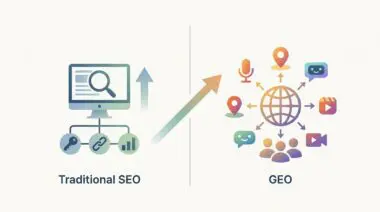
Navigating the intersection of traditional SEO and Generative Engine Optimization requires a precise architecture. To future-proof your enterprise stack for AI Overviews and LLM discovery, connect with Andres at Andres SEO Expert.
Frequently Asked Questions
What is Conversational Search Intent (CSI) and how does it differ from traditional search?
Conversational Search Intent (CSI) represents a shift from static keyword-based queries to dynamic, multi-turn dialogues. Unlike traditional search, which matches keywords to documents, CSI involves AI engines interpreting the latent semantic trajectory of a user session, requiring content to be structured as a continuous conversational progression rather than isolated data nodes.
Why is semantic chunking critical for Retrieval-Augmented Generation (RAG)?
Semantic chunking refactors long-form content into focused blocks of 200-300 words. This allows AI engines to perform fragment-based caching, indexing specific “answer nuggets” independently. By providing granular and self-contained data, publishers ensure their content is easily extractable for multi-hop retrieval and synthesis by RAG systems.
How does Predictive Follow-up Mapping impact content discovery in AI engines?
Predictive Follow-up Mapping uses next-token-prediction logic to anticipate a user’s subsequent queries. By engineering a recursive information architecture where each data point triggers the next logical question, sites can capture traffic from AI features like ‘Intent-Stream Probing’ which pre-fetch data based on predicted user journeys.
What is Multi-Hop Entity Synthesis and how should content be structured for it?
Multi-Hop Entity Synthesis occurs when an AI pulls facts from multiple sources to answer a complex query. To optimize for this, content must be atomic and granular, ensuring that individual facts can be extracted and merged with other data points without losing their core semantic meaning or context.
How can technical SEOs optimize for RAG retrieval latency?
Optimizing for RAG retrieval latency requires ensuring that primary “answer nuggets” are accessible within the first 1000ms of the Document Object Model (DOM) load. Content should not be hidden behind JavaScript interactions or complex user triggers, as RAG crawlers prioritize immediate semantic accessibility for rapid response generation.
How does Conversational JSON-LD differ from standard schema markup?
Conversational JSON-LD goes beyond standard object definition by using properties like ‘suggestedAnswer’ and ‘Speakable’ within FAQPage schema. This explicit markup guides the AI’s response generation engine, providing a clear path for how information relates to specific conversational flows and user tasks.