Key Points
- Autonomous Forensic Orchestration: The transition from reactive reporting to real-time, AI-driven shadow accounting eliminates the threat of the synthetic insider.
- Semantic Intent Analysis: Smart capital is funding graph-based fraud detection to monitor psychological markers and digital footprints before theft occurs.
- Self-Healing Governance: Future-proof enterprises are deploying predictive integrity scores that automatically restrict access upon detecting behavioral anomalies.
Table of Contents
The Core Friction: The Rise of the Synthetic Insider
According to a 2026 report from Deloitte, enterprises implementing autonomous forensic AI have reduced ‘invisible’ internal leakage by 42% compared to the fragmented, human-led systems of 2024. This metric is not just a marginal improvement in IT security protocol. It represents a fundamental paradigm shift in how modern corporations manage trust, govern access, and protect capital at scale. AI-Powered Internal Fraud Mitigation has evolved from a defensive luxury into a core structural requirement for enterprise survival.
For decades, corporate security architectures relied heavily on static permissions and reactive, post-incident audits. These legacy frameworks assumed that an authenticated identity equated to a trustworthy actor. Today, that assumption is the most dangerous vulnerability in business.
The massive friction point in 2026 is the emergence of the “Synthetic Insider.” These are sophisticated threats where employees—or compromised internal credentials—utilize deepfake audio and generative AI documents to bypass traditional internal controls. Traditional rule-based systems are entirely powerless against these high-velocity, high-complexity scams.
Eradicating Invisible Leakage
To combat this, AI-driven mitigation solves the synthetic identity crisis by implementing multi-modal verification. Every high-value internal action now requires a proof of presence. This is validated by continuous biometric and behavioral heartbeat monitoring, effectively eliminating the possibility of unauthorized digital impersonation.
We are witnessing the death of the password and the birth of continuous behavioral authentication. When a user logs in, the AI does not just check their credentials; it continuously measures their keystroke dynamics, mouse movements, and navigation habits. If the digital heartbeat deviates from the established baseline, the system instantly flags the anomaly.
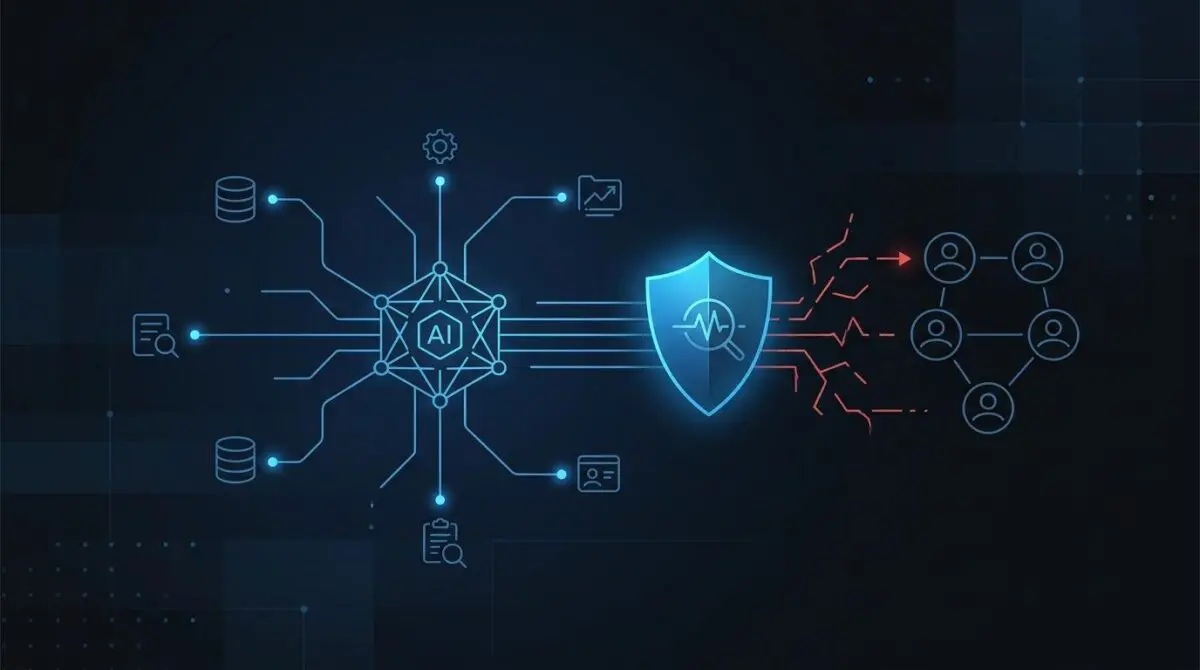
This approach transforms corporate security from a static checkpoint into a dynamic, fluid environment. It creates an invisible shield around sensitive financial data, ensuring that only the true, verified human operator can execute critical enterprise functions.
Market Intelligence & Smart Capital
Market Intelligence & Data
Global Internal Fraud Loss
PwC’s 2026 Global Economic Crime Survey indicates that AI-enabled internal theft now accounts for over $310 billion in annual enterprise losses globally.
Fortune 500 Adoption
According to IDC data from Q1 2026, 68% of Fortune 500 companies have fully transitioned to ‘Autonomous Auditors’ for real-time procurement monitoring.
Real-Time Detection Speed
Data from NVIDIA’s 2026 Enterprise Security Summit demonstrates that edge-AI now flags unauthorized internal database queries in under 11 milliseconds.
AI Security ROI
A 2026 Forrester Total Economic Impact study found that for every dollar invested in AI fraud mitigation, companies realize a 4.5x return in recovered capital and avoided legal fees.
The data presented above illustrates a brutal, undeniable reality for legacy enterprises. As highlighted in PwC’s 2026 Global Economic Crime Survey, the sheer volume of capital evaporating through internal channels is staggering. Smart money recognizes that plugging these invisible leaks is the fastest path to immediate margin expansion and operational efficiency.
Venture capital is aggressively pivoting away from traditional perimeter defense models. Instead, billions are pouring into internal behavioral analytics and graph-based fraud detection startups. Institutional investors understand that the true threat vector has moved inside the corporate firewall.
The market is clearly signaling that the era of the human auditor is ending, replaced by autonomous, highly scalable intelligence.
The Strategic Deep Dive: Autonomous Forensic Orchestration
In 2026, the overarching security strategy has fundamentally shifted from “detect and report” to Autonomous Forensic Orchestration. Leading enterprises are actively deploying Agentic AI models that act as invisible, real-time auditors across every node of the corporate network. These agents do not simply flag suspicious transactions based on static rules.
Instead, they perform continuous shadow accounting. This means the AI is constantly reconciling internal ledgers against external supply chain data, vendor histories, and employee behavioral biometrics. It operates silently in the background, identifying microscopic financial discrepancies that a human auditor would never catch.
This space is currently dominated by Zero-Trust security giants and specialized startups like SentinelOne and DataVisor. These companies have pivoted heavily into Behavioral Integrity suites, leaving legacy antivirus and firewall providers scrambling to catch up. The technological moat in this industry is now defined by the quality of a platform’s behavioral telemetry.
Behavioral Integrity and Graph-Based Detection
Significant venture capital, specifically from tier-one firms like Sequoia and Andreessen Horowitz, is flowing directly into Graph-Based Fraud Detection startups. These advanced platforms map the complex, hidden relationships between employees, vendors, and obscure shell companies. By analyzing these multidimensional graphs, the AI can uncover sophisticated kickback schemes and procurement fraud instantly.
Tech giants like Microsoft and Google have recognized this shift and integrated Identity-as-a-Service (IDaaS) with real-time risk scoring. This integration makes static permissions a relic of the past. Access to sensitive corporate data is now a fluid privilege, continuously negotiated by the AI based on real-time behavioral integrity.
If an executive suddenly attempts to download a massive client database at 3 AM from an unrecognized IP address, the system does not just ask for a password. It demands a cryptographic proof of presence, analyzing the user’s micro-behaviors to ensure they are not a synthetic clone or under duress.
Cognitive Load and Semantic Intent
The killer strategy today is Semantic Intent Analysis. Enterprise AI now monitors internal communications not just for flagged keywords, but for psychological markers of fraudulent intent. It scans for linguistic shifts that indicate financial distress, rationalization, or pressure, allowing HR and Security to intervene before the first cent is stolen.
A 2026 Gartner analysis reveals that Microsoft’s latest Security Copilot update now uses ‘Cognitive Load Monitoring’ to detect spikes in employee stress during sensitive financial transfers. By analyzing typing speed, hesitation, and biometric feedback, this advanced telemetry identifies potential coercion or internal theft with 89% accuracy.
We are essentially witnessing the digitization of human intent. By correlating an employee’s cognitive load with their transactional behavior, enterprises can predict malicious actions before they are executed. This is the absolute bleeding edge of corporate risk mitigation.
The Executive Action Plan: Self-Healing Governance
Strategic Trajectory
- Develop a Predictive Integrity Score framework to shift security from reactive to preventative models.
- Implement real-time Risk Delta adjustments based on multi-dimensional digital footprints and access patterns.
- Integrate external financial stressors as key indicators within the corporate risk profile.
- Architect Self-Healing Governance systems that automate access restriction upon anomaly detection.
- Enable corporate infrastructure to trigger autonomous audits the moment an Integrity Profile deviation is detected.
Founders and C-suite executives must prepare for a landscape where an employee’s Risk Delta is adjusted in real-time. This dynamic adjustment is based on their digital footprint, network access patterns, and even external financial stressors. Building a Predictive Integrity Score framework is the critical first step toward achieving true enterprise resilience.
The ultimate destination for forward-thinking organizations is Self-Healing Governance. In this advanced state, the corporate infrastructure automatically restricts access or triggers a deep forensic audit the exact moment an anomaly is detected. Human intervention is only required for final adjudication, not initial discovery.
This architectural shift moves corporate security from a reactive cost center to a preventative, autonomous engine. It empowers executives to scale their operations globally without proportionally scaling their risk exposure. The business can finally move at the speed of AI without compromising its internal integrity.
Conclusion: Future-Proofing Corporate Trust
The transition to AI-driven internal security is not merely a technological upgrade; it is an absolute mandate for corporate survival in the modern era. Enterprises that fail to adopt Autonomous Forensic Orchestration will find themselves systematically drained by invisible, synthetic threats. The legacy approach of trusting but verifying is officially dead.
The future belongs to organizations that architect trust directly into their digital infrastructure. By leveraging behavioral biometrics, cognitive load monitoring, and semantic intent analysis, businesses can eradicate the synthetic insider threat entirely. This is how market leaders protect their capital, their reputation, and their future.
Navigating the intersection of technology, capital, and market psychology requires a sharp strategy. To future-proof your business architecture and scale with precision, connect with Andres at Andres SEO Expert.
Frequently Asked Questions
What is a “Synthetic Insider” in corporate security?
A Synthetic Insider refers to a sophisticated threat where internal actors or compromised credentials utilize generative AI, such as deepfake audio and synthetic documents, to bypass traditional security controls. Unlike legacy threats, these AI-driven scams are high-velocity and high-complexity, making them invisible to standard rule-based systems.
How does behavioral heartbeat monitoring prevent internal fraud?
Continuous behavioral heartbeat monitoring tracks a user’s digital patterns, such as keystroke dynamics, mouse movements, and navigation habits, during an active session. If these micro-behaviors deviate from an established baseline, the AI-driven system can instantly flag the anomaly and demand cryptographic proof of presence to prevent unauthorized access.
What is the ROI of implementing AI-powered internal fraud mitigation?
According to research from Forrester, companies investing in AI-driven fraud mitigation realize an average 4.5x return on investment. This ROI is achieved through the significant recovery of capital otherwise lost to invisible leakage and a substantial reduction in legal fees and liabilities associated with internal theft.
How does Semantic Intent Analysis identify potential security threats?
Semantic Intent Analysis uses AI to monitor internal communications for psychological markers such as linguistic shifts that indicate financial distress or rationalization. It also utilizes cognitive load monitoring to detect spikes in employee stress during sensitive financial transfers, identifying potential fraud or coercion with high accuracy.
What is Autonomous Forensic Orchestration?
Autonomous Forensic Orchestration is a strategy where Agentic AI models act as real-time auditors across a network. These agents perform continuous shadow accounting by reconciling internal ledgers against supply chain data and behavioral biometrics, identifying discrepancies that human auditors cannot catch.
What is Self-Healing Governance in enterprise security?
Self-Healing Governance is a security framework where the corporate infrastructure automatically adjusts an employee’s Risk Delta in real-time. If an Integrity Profile deviation is detected, the system autonomously restricts data access or triggers an audit without requiring manual discovery by human security teams.